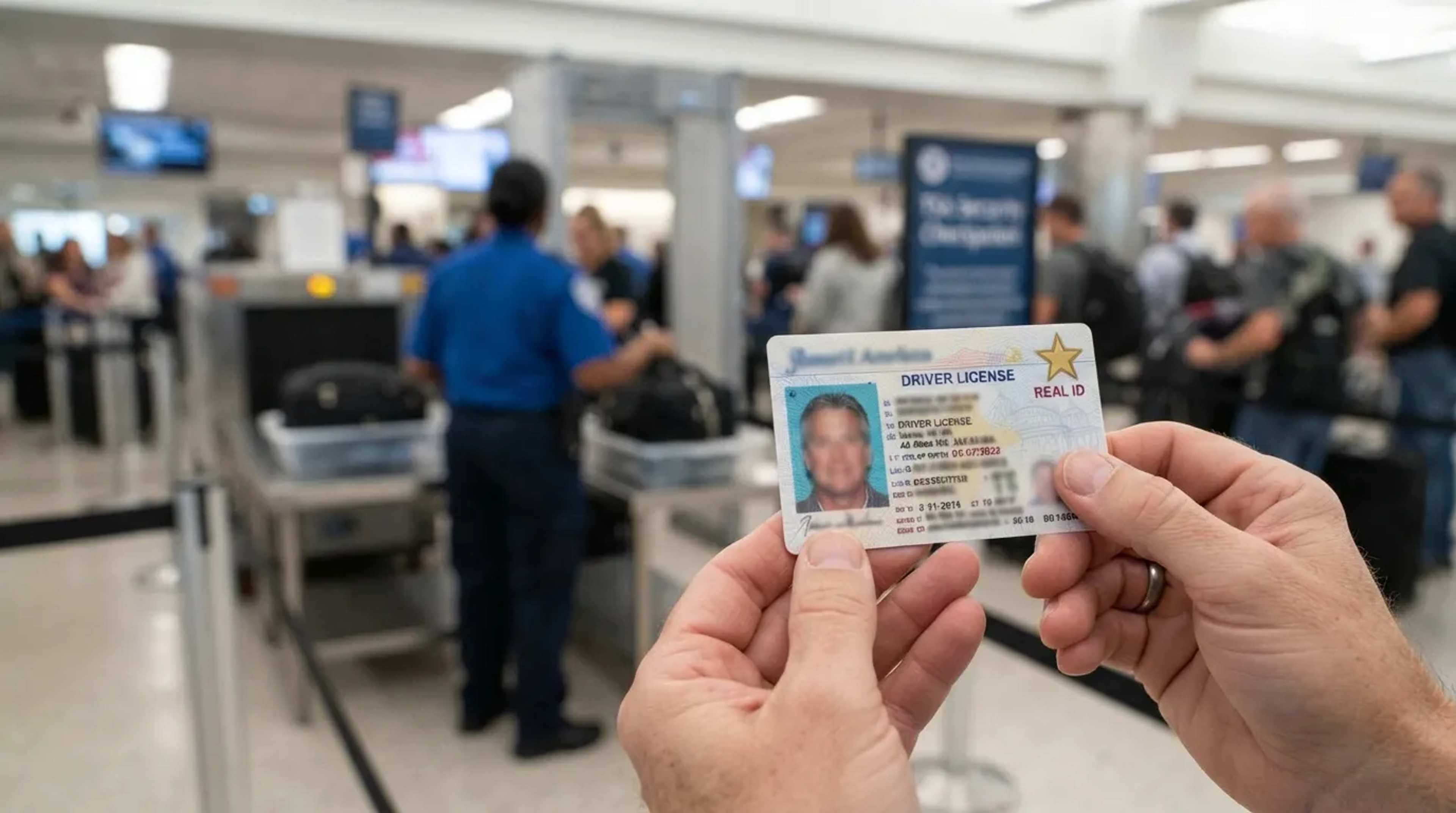

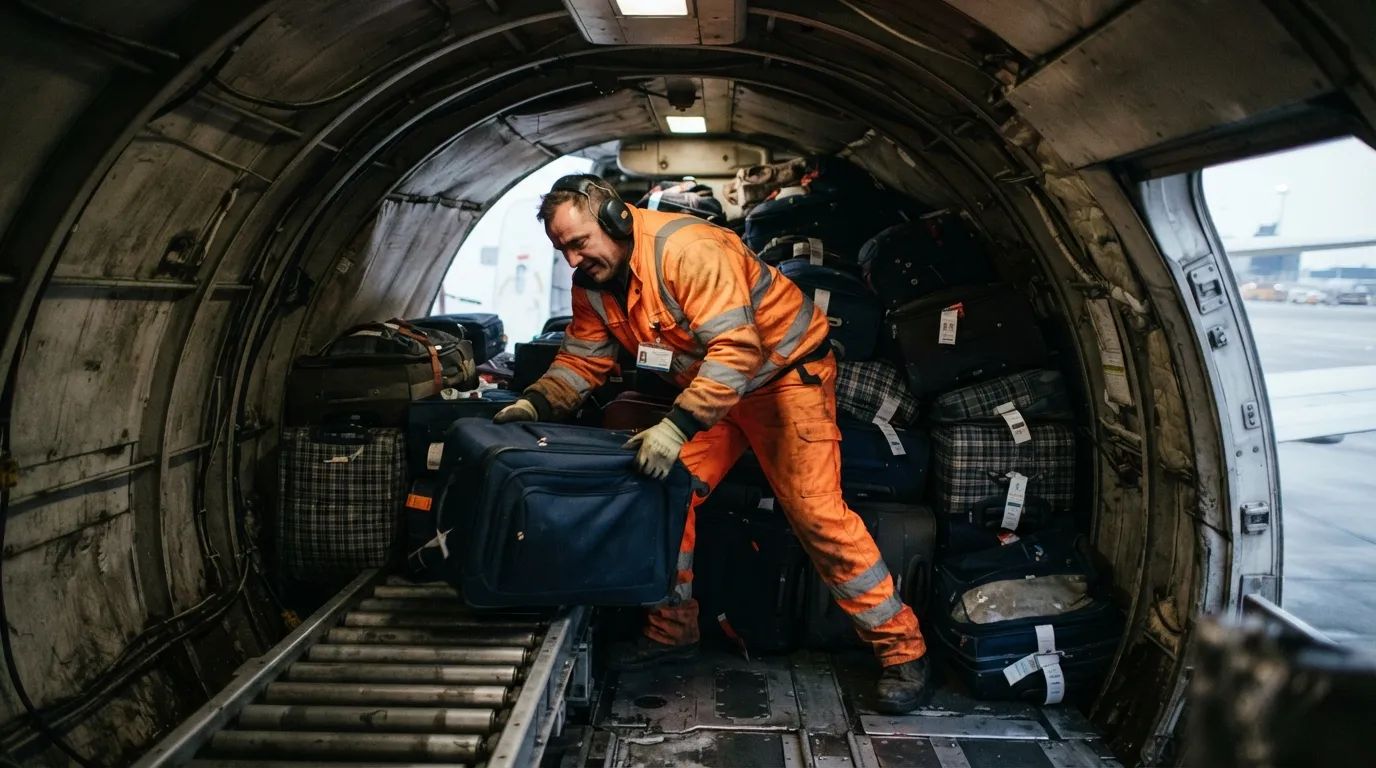
Between January and June 2026, U.S. airlines mishandled 1,052,492 checked bags out of roughly 213 million, according to the Department of Transportation’s Air Travel Consumer Report.1 2 That’s more than a million suitcases, and each one belonged to someone standing at a carousel after a long trip, trying to work out the rules on the spot. The details below are the ones that most often catch travelers off guard once a bag disappears behind that curtain.
Here’s the twist: the giant number isn’t the scary part. The real surprises hide in small print, like a battery rule that changes at the gate, a 12-hour clock that only starts if you file the right form, and a famous dollar cap that is a ceiling rather than a check in the mail. We’ll start with the odds, which are better than the headline suggests, and finish with the number that surprises people most.
#13 – One Million Mishandled Bags Sounds Terrible Until You See the Math
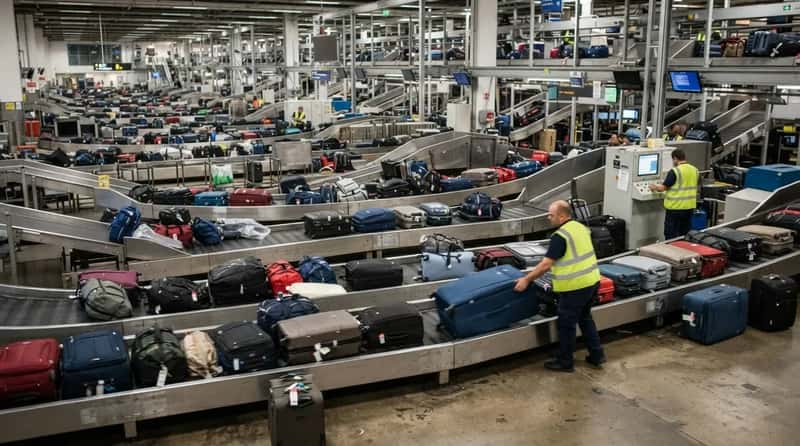
The 1,052,492 figure looks a lot smaller next to the total. The reporting airlines’ rate fell from 0.52 mishandled bags per 100 in the first half of 2025 to 0.49 in the first half of 2026.3 That means roughly 99.5 of every 100 bags came through with no mark against them.
The headline number is large mainly because the denominator is enormous. Millions of bags move every month, so even a tiny failure rate produces a seven-figure pile.
The word “mishandled” also covers a lot of ground. It includes bags that were lost, delayed, damaged or pilfered, so the rate can’t tell you how many suitcases never came home. The fair reading is that trouble is uncommon and still worth planning for.
#12 – American’s Rate Is Six Times Allegiant’s
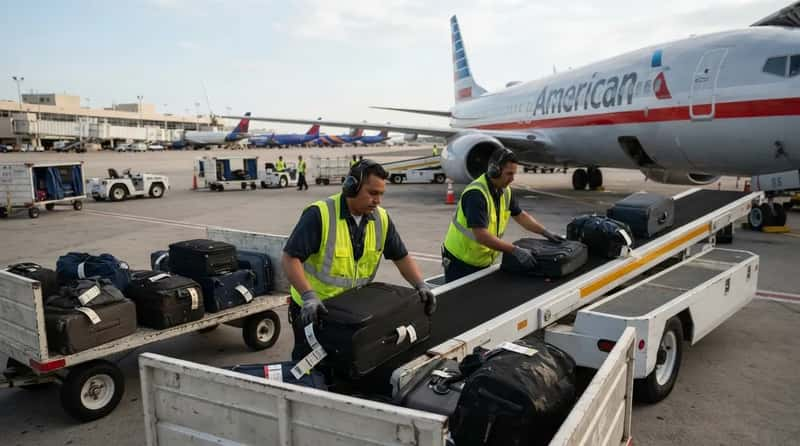
For the first half of 2026, American Airlines mishandled 0.73 bags per 100, Delta 0.38 and Southwest 0.32. Allegiant had the best rate at 0.12.3 Regional partners are counted separately, and Envoy Air, which flies for American, posted 0.72 while United came in at 0.66.2
It’s a striking gap on paper, but these are carrier-wide averages across every route in the system. Even the highest, 0.73, is under one bag per 100.
Quick Compare
- Allegiant: 0.12 mishandled bags per 100, the best rate
- Southwest: 0.32 per 100
- Delta: 0.38 per 100
- American: 0.73 per 100, the highest of these four
That’s why it rarely makes sense to pay extra, or accept an awkward schedule, just to dodge the airline at the top of the list. Your route matters more than your carrier’s average, especially when the bag has to change planes along the way.
#11 – Your Bag Has to Make the Connection Without You
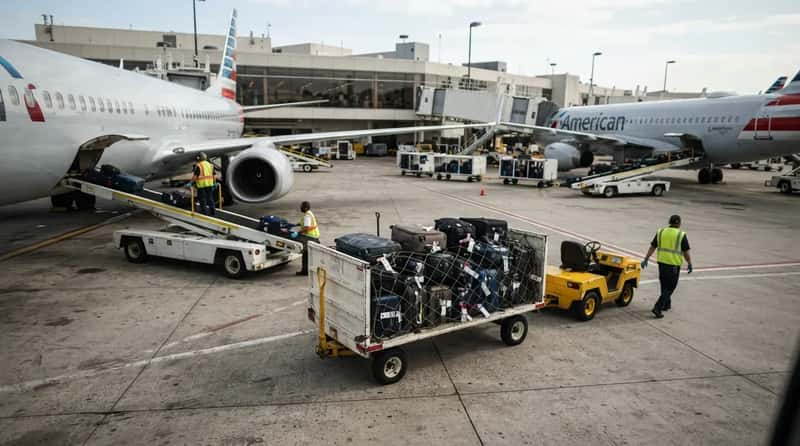
On a long route you often change planes, and your bag changes planes too, with no one escorting it. Ground crews have to unload it, move it across the ramp and load it onto the second aircraft, all inside the same layover you’re using to sprint across the terminal. If the connection is short, you can make your flight while the suitcase misses it, and that’s how a bag ends up in a different city from its owner.
Separate tickets add another wrinkle. When the two legs are booked as separate itineraries, you usually have to collect the bag and check it in again, and that eats layover time you may not have.
If you can choose between a tight connection and a roomier one, the roomier one is cheap protection for the suitcase. And the paper tag on the handle is what tells the system where the bag is supposed to go, so it deserves a look before you leave the counter.
#10 – Three Letters on the Bag Tag Decide Where Your Suitcase Lands
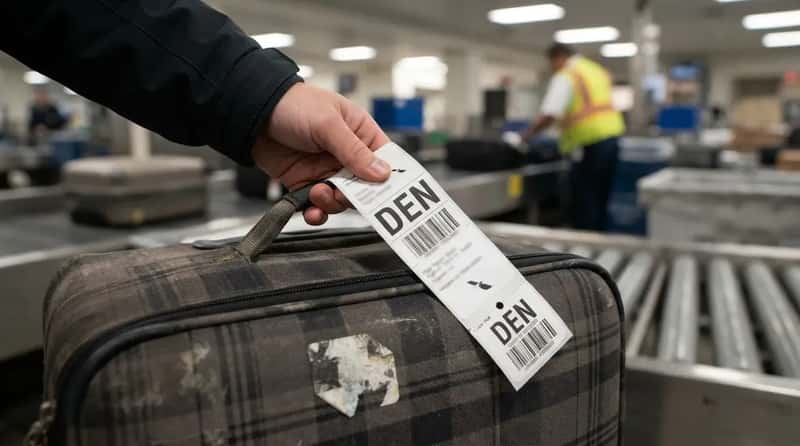
Every checked-bag tag carries a three-letter airport code and a barcode. The barcode gets scanned along the way, but the code is the part you can verify before you walk off. On a single ticket it should match your final airport, and it should match the connecting airport only when the legs are booked separately.
Take off any old tags from earlier trips, because stray barcodes on the handle can confuse the people reading them. Keep the claim sticker the agent gives you too. That small stub carries the number tied to your bag, and it’s what you’ll hand over if you ever have to file a report.
#9 – A Power Bank in the Hold Breaks a Federal Rule
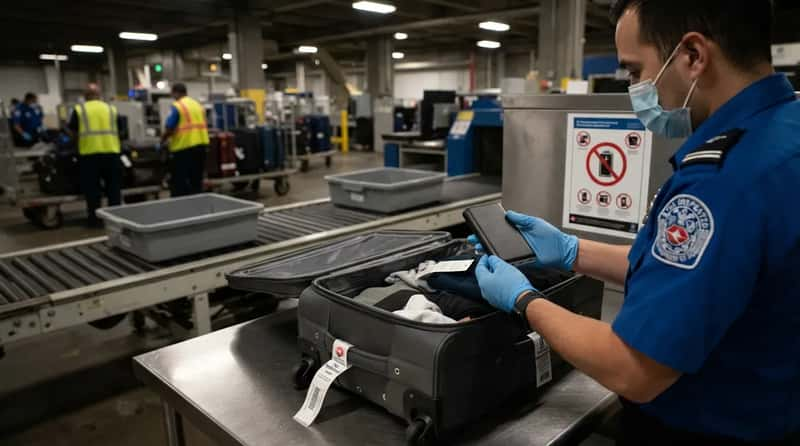
The FAA is plain about this: spare lithium batteries, including power banks and portable chargers, must be carried on and cannot be checked.4 Lithium-ion batteries are limited to 100 watt-hours each, and batteries rated 101 to 160 watt-hours are limited to two spares per person.5 Anything above 160 watt-hours is prohibited on passenger aircraft. Most phone power banks fall well under the first limit.
The rule follows the battery, not the suitcase. That matters most when a carry-on suddenly becomes a checked bag at the gate.
#8 – The Gate-Check Surprise Hiding in Your Carry-On Pocket
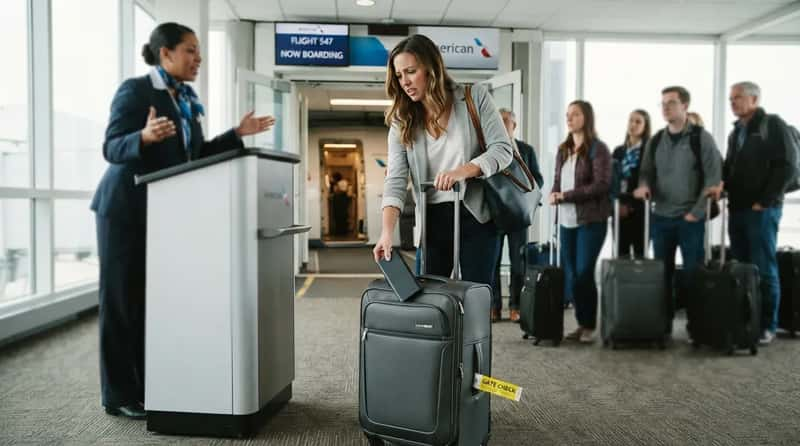
On a full flight, an agent may ask you to check your rolling carry-on at the gate or at the plane door. The FAA covers this case directly: when a carry-on is checked at the gate or planeside, any spare lithium batteries must be removed and kept with the passenger in the cabin.5 That means the power bank you tucked into a side pocket two weeks ago has to come out in a hurry, with a line forming behind you.
It also makes the roller bag the wrong home for spare batteries from the start. Keep them in a personal item that stays under the seat, such as a small tote, and a forced gate-check costs you nothing.
Fast Facts
- Spare batteries and power banks ride in the cabin, never in the hold.
- A gate-checked roller means every spare battery comes out first.
- A small under-seat tote is the safest home for chargers and power banks.
- Do a pocket sweep of your carry-on before you reach the gate.
Phones and laptops with batteries built in are a different case, and they come with their own conditions.
#7 – Laptops and Jewelry Are the Items Airlines Least Want to Cover
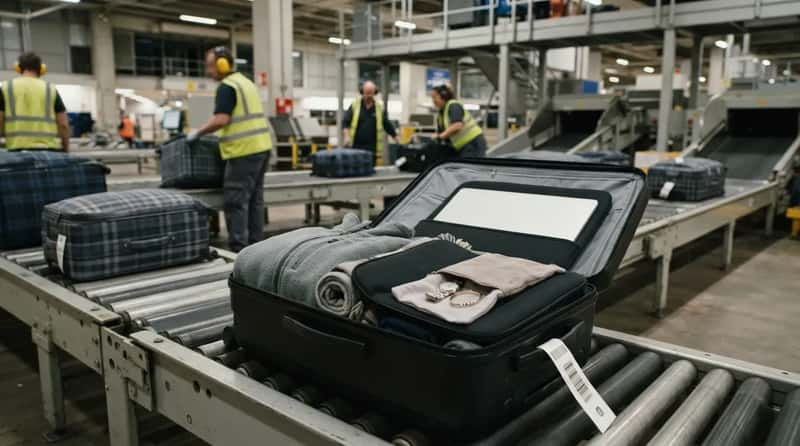
Devices with built-in lithium batteries are allowed in checked bags, but they must be completely powered off and protected against unintentional activation or damage.6 Putting a laptop in the hold therefore means shutting it down fully and padding it well. Even then, the airline’s responsibility for it is limited.
Airlines can exclude or limit liability for categories such as electronics, jewelry and cash, which is why those items are better kept in your carry-on. With a laptop in the hold, you carry nearly all the risk and the airline carries very little.
Medications and anything you couldn’t replace by Monday belong with you for the same reason. If something valuable has to go in the suitcase anyway, you can at least find out where the suitcase is.
#6 – A $30 Tracker Can Tell You Where Your Bag Went

Bluetooth trackers such as AirTags and Tile devices are legal in checked bags, so long as they stay inside the FAA’s lithium limits. The FAA allows them when the battery meets one of two thresholds, and the common coin-cell models do.4 Check the battery type on yours, since a different battery can fall outside the limit.
A tracker doesn’t recover the bag for you, since the airline still has to do that. What it gives you is a location and a time to quote when you file a report or phone the baggage office.
For the one bag you can’t afford to have wander, a tracker is the smallest precaution on this list.
#5 – A Burst Zipper or a Security Search May Be Your Problem, Not Theirs
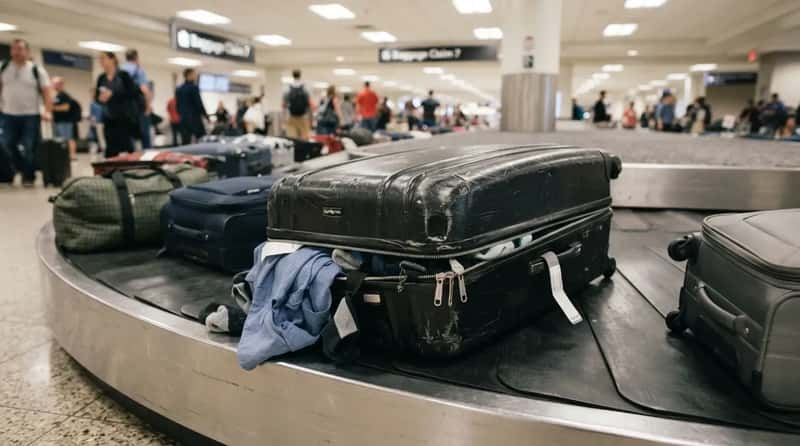
American’s liability page lists a few things it won’t cover, among them loss, damage or delay due to a security search led by local, state or federal agencies. Delta’s page says the same about searches, and adds that it assumes no liability for pre-existing damage, including minor cuts, scratches and broken zippers from overpacking. A bag that splits open because it was stuffed to the brim is therefore likely to be treated as your problem.
Leave a little room in the suitcase and photograph it closed before you hand it over. If it does go missing, the next step is the same wherever the fault lies, and it happens before you leave the airport.
#4 – The 12-Hour Refund Clock Only Starts If You File a Report
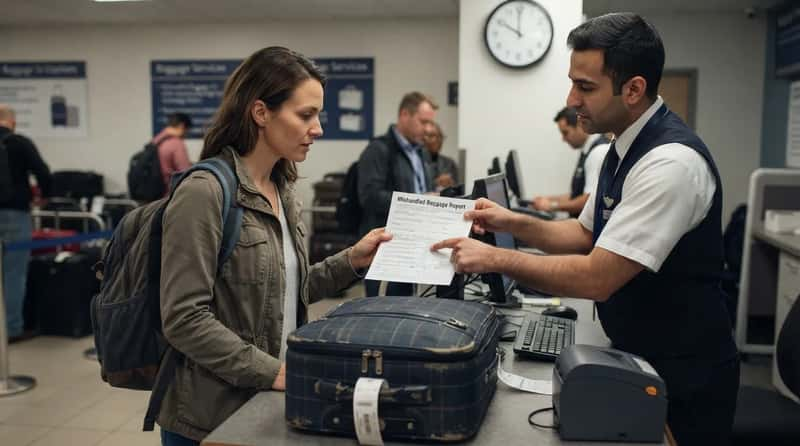
DOT’s guidance for passengers is to file a baggage claim with the airline as soon as possible. The report matters for money as well as paperwork. A domestic baggage fee refund is due when the airline fails to deliver the bag within 12 hours of the flight arriving at the gate and you have filed a Mishandled Baggage Report. Without the report, the clock doesn’t trigger a refund.7
If your trip involved more than one airline, the refund isn’t due until the passenger files the report with the last operating carrier. On a long route with a partner airline on the final leg, that means the desk at your destination, not the one where you started.
The fee refund is the simple part. The clothes and toiletries you buy in the meantime are a separate claim.
#3 – The “$50 a Day” Offer at the Desk Isn’t the Law
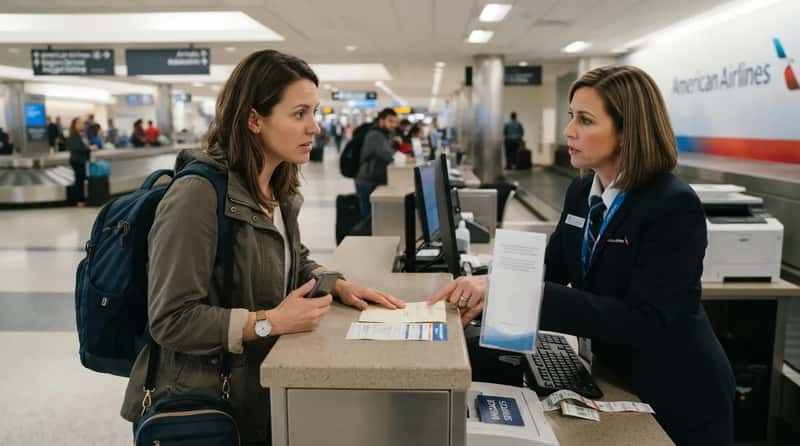
DOT rules require airlines to compensate passengers for reasonable, verifiable and actual incidental expenses incurred while a bag is delayed, subject to liability limits. Under DOT’s guidance, as travel outlets have summarized it, an airline can’t simply declare that it will reimburse only $50 per day. A flat daily figure offered at the desk is a starting position, not the rule.
“Reasonable” is the operative word. A toothbrush, a change of clothes and a phone charger fit the description, and a new wardrobe doesn’t. Keep every receipt, and expect to submit the claim yourself, because the airline waits for you to file.
#2 – The Day a Missing Bag Is Officially Declared Lost
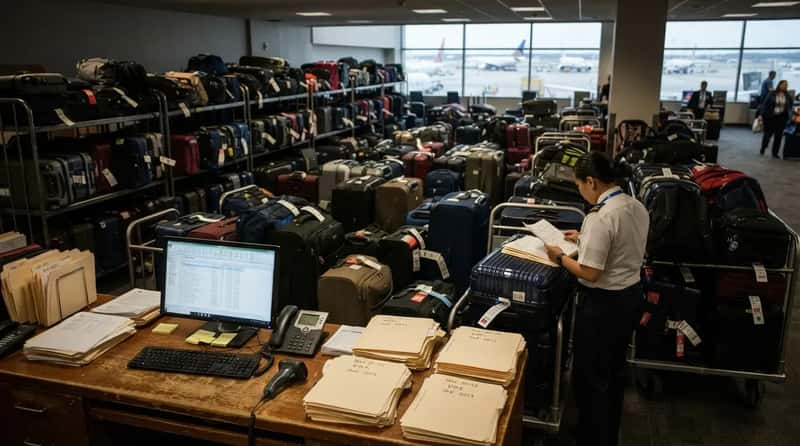
A delayed bag and a lost bag are treated differently, and the line between them is set by the airline. If the bag isn’t found within the airline’s tracing period, typically 5 to 14 days depending on the carrier’s contract, it is declared lost. From that point you can claim for the contents, and the airline must also refund any fees you paid to transport the bag. Until then you’re in the delayed category, where only expenses count.
The airline can’t leave a bag in limbo forever, since DOT says an airline that unreasonably refuses to consider a bag lost could face enforcement action. Keep following up in writing during the wait, so there’s a paper trail with dates on it.
At a Glance
- Delayed: reasonable, documented expenses are covered.
- Lost: declared after the airline’s tracing period, typically 5 to 14 days.
- Once lost: you can claim the contents, and the transport fees are refunded.
- Assistive devices: on domestic flights, the airline owes the original purchase price.
One case runs under different rules entirely: lost or damaged assistive devices on domestic flights aren’t subject to the usual limits. For everything else in the suitcase, there’s a ceiling.
#1 – The $4,700 Cap Is a Ceiling, Not a Payout
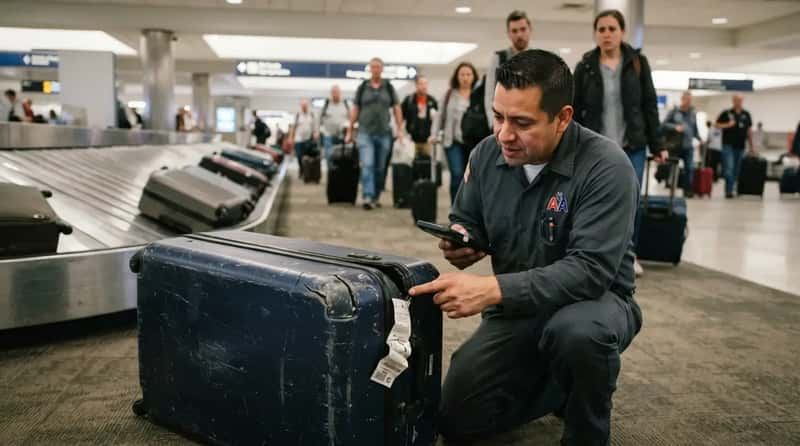
For domestic flights, the maximum liability is $4,700 per passenger for a lost, damaged or delayed bag.7 That’s per passenger rather than per bag, so a couple with three suitcases doesn’t get three limits. It’s also a maximum, and the value of the loss has to be proven. Airlines pay the depreciated value of lost items, not what you paid, so a five-year-old wardrobe is valued as a five-year-old wardrobe.
That’s why the bag-fee refund from earlier is easy to overrate: it covers the fee you paid to check the bag, not what was inside.7 Receipts, photos and purchase records help you make the contents case.
If your bag holds more than the cap, American says you can buy additional insurance for checked bags at the ticket counter. For most trips the cheaper step is to move the valuables into your carry-on, and confirm with the airline or your insurer what is covered.
Once the bag leaves your hands, the airline holds it, and the airline’s own rules decide what happens next. What stays with you is the part before and after: what goes in the cabin, what the tag says, and which receipts you keep.
A suitcase is easier to replace than the things that make a trip work. Pack the checked bag as though it might arrive a day late, and the rest tends to fall into place.
- DOT August 2026 Report: https://www.transportation.gov/resources/individuals/aviation-consumer-protection/august-2026-air-travel-consumer-report-june-and
- Global Traveler DOT Summary: https://www.globaltravelerusa.com/department-of-transportation-reveals-airlines-most-likely-to-mishandle-luggage-experience-flight-disruptions/
- Travel Market Report Analysis: https://www.travelmarketreport.com/air/articles/department-of-transportation-data-reveals-which-airlines-are-worst-for-baggage-mishandling
- FAA Airline Passengers and Batteries: https://www.faa.gov/hazmat/packsafe/airline-passengers-and-batteries
- FAA PackSafe Lithium Batteries: https://www.faa.gov/hazmat/packsafe/lithium-batteries
- FAA Devices Containing Batteries: https://www.faa.gov/hazmat/packsafe/portable-electronic-devices-with-batteries
- DOT Rules on Lost Luggage: https://travel.yahoo.com/advice/safety/articles/delayed-lost-luggage-us-airlines-103528763.html