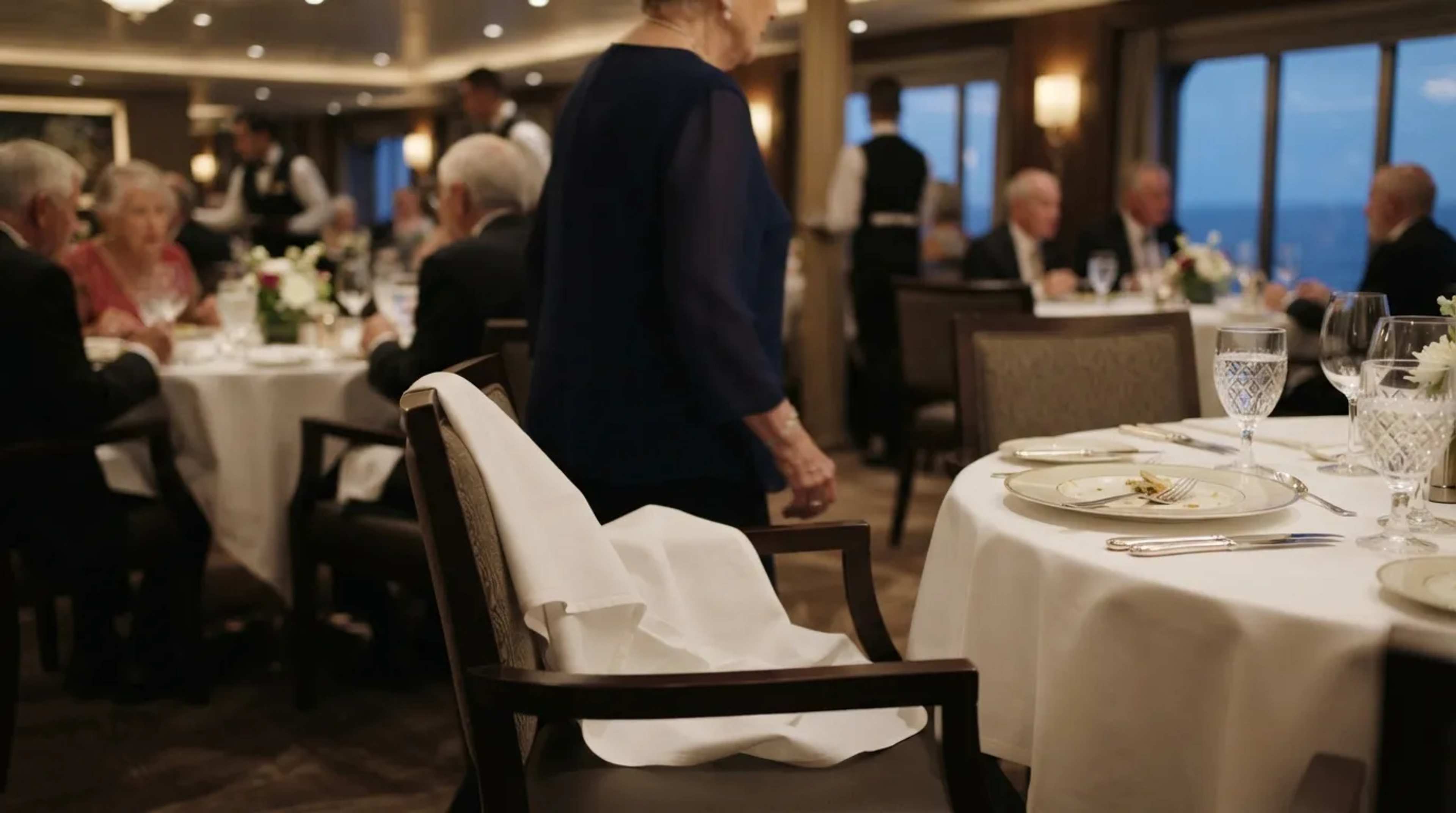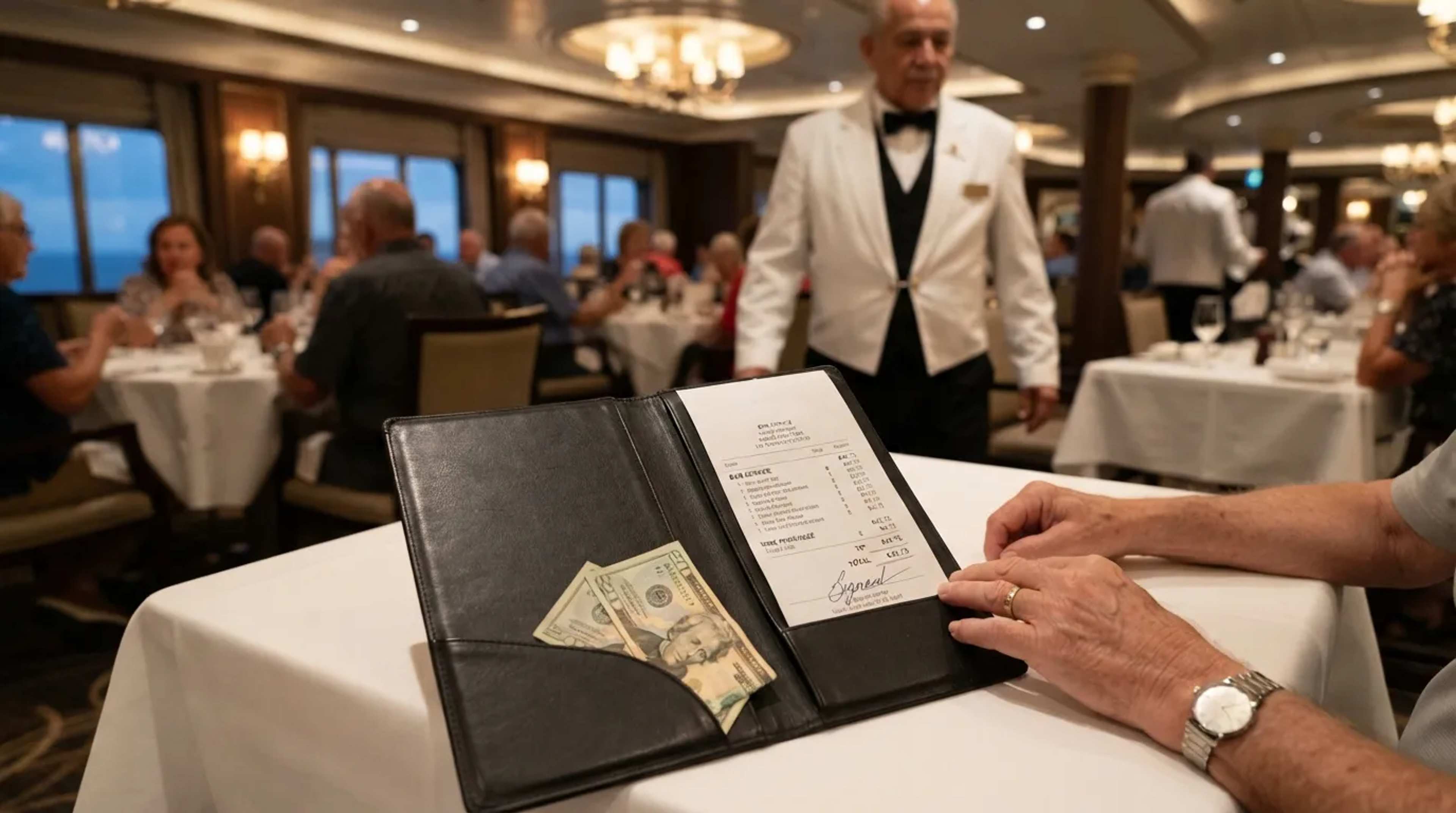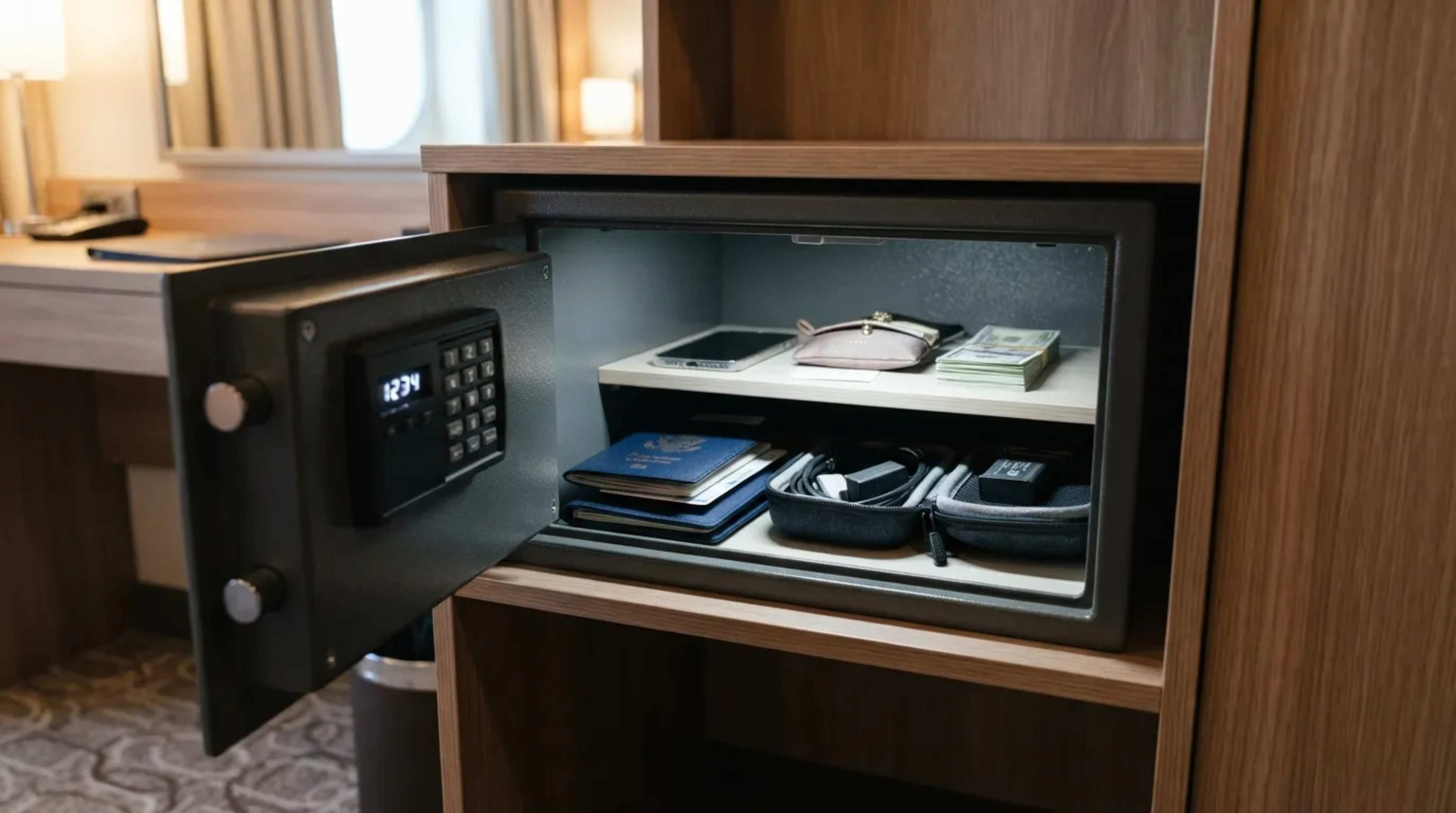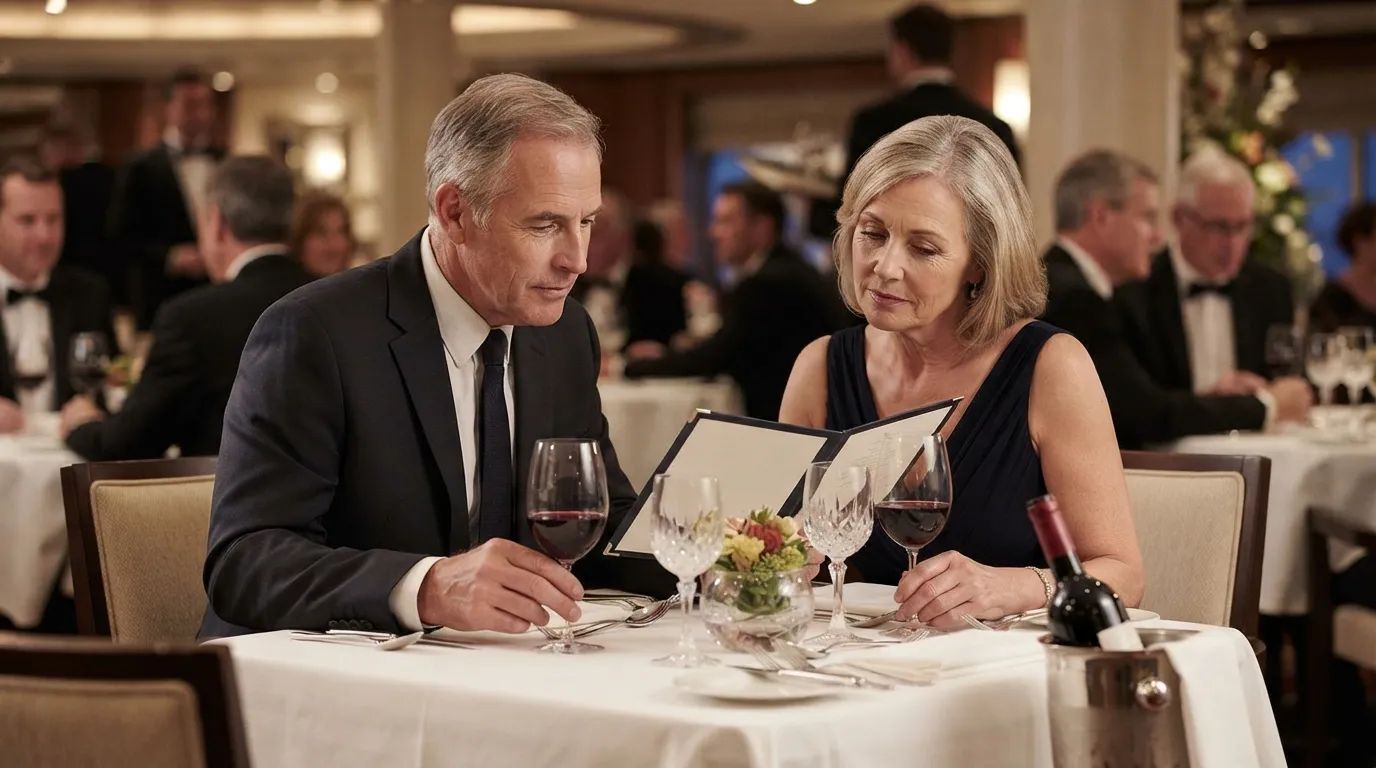
Formal night is meant to be the one evening nobody checks a price, until the wine list lands and the number beside the bottle turns out to be the polite version. Corkage runs from about $15 a bottle on Carnival to $25 on Celebrity, and lines add an automatic 18 to 20 percent service charge on drinks.
These 13 habits sit where the wine list, the bill and a body past 65 meet at the table. The cheapest change here is tied to the biggest bill of the trip, and the last item shows how, but first comes the list you are handed at seating, which is not always the full one.
#13 – The Short Wine List Inside the Menu
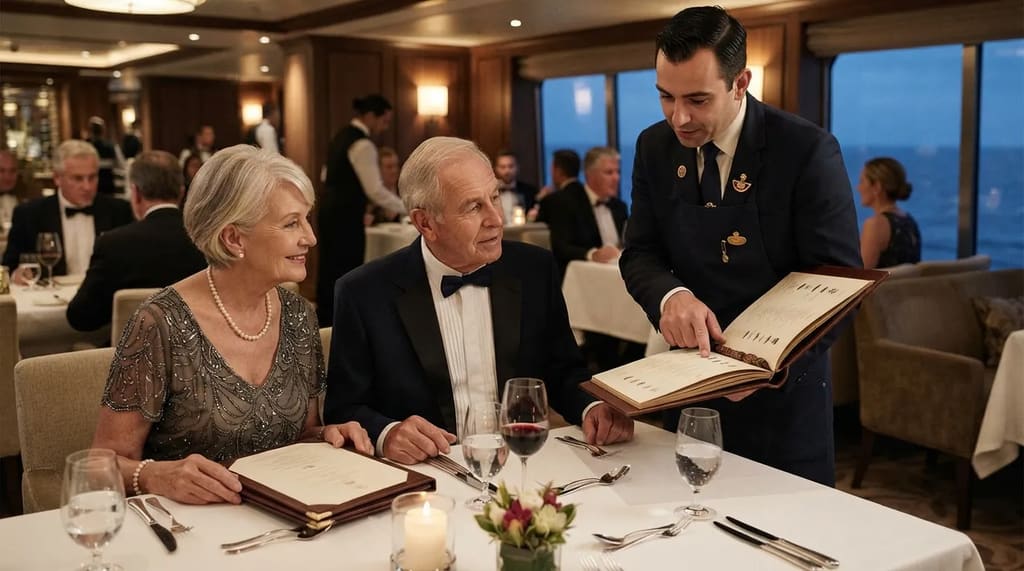
Some dinner menus print a brief wine selection that covers only part of what the ship stocks. One poster on a cruise forum wrote that the real list was not offered at seating on a Celebrity sailing, and urged others to ask for it.
That account covers one line on one sailing, yet asking for the complete list costs you a single sentence. Make the request when you sit down, before the first course arrives and the table has settled on a bottle.
A formal sommelier is common on larger ships and in specialty restaurants, while in the main dining room wine service is often shared with trained assistant waiters. So the person pouring may be well trained and still not have the whole cellar list in hand.
The list you are handed also has a lower shelf, where wines the ship is clearing out tend to land.
#12 – The Bin-End Page Near the Back

Ships often rotate their wine lists with the seasons, just as restaurants on land do, and the wines removed from the list often turn up as bin-end specials. Those specials may not appear on the main page at all, which is why you have to ask.
The ship may also carry a house wine under the name of the cruise line or its distributor, usually near the bottom of the list. Read from the bottom up before you settle on a name from the top.
Ask about the bin-end list before reading a single page of the main one. The question is free, and a special exists to move bottles.
Whether a bin-end bottle suits your plate is a question for whoever runs wine service, so ask that too.
#11 – The Sommelier’s Training and Title
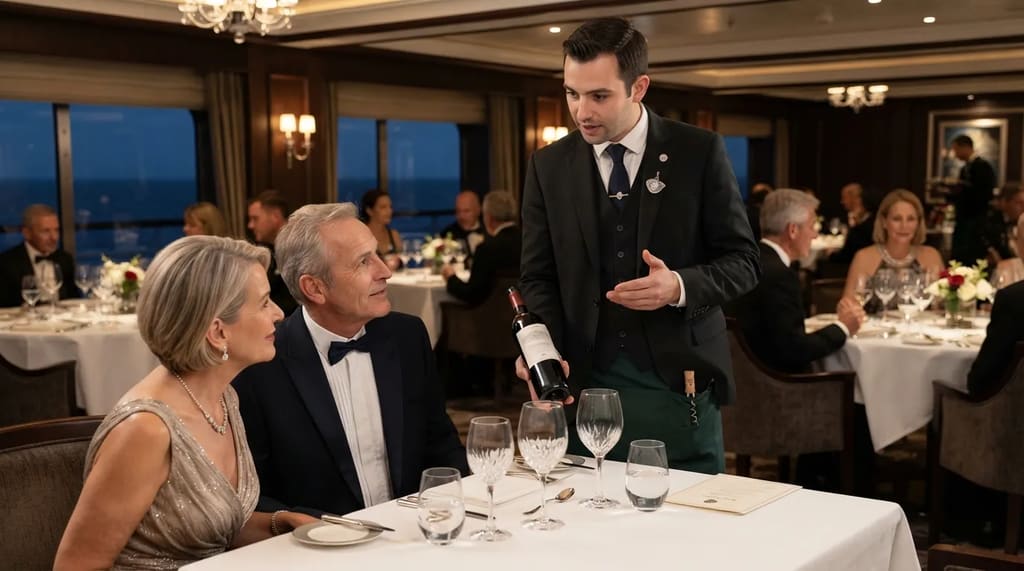
Even mainstream cruise ships employ sommeliers who have usually taken wine classes or a certification program such as WSET, according to Cruise Critic. Asking about their recommendations and credentials often gets them to open up, beyond the plain wish to sell bottles.
Cunard’s Queen Mary 2 shows the far end of the range. A Wine Enthusiast roundup from 2024 counted a chief sommelier, a wine trainer and 27 sommeliers on the 2,700-passenger ship.
A good sommelier is often willing to help you find a good deal, or to pair wines by the glass with your courses. If wine will be a daily expense for a week, a short talk on the first evening will serve you better than guessing bottle by bottle.
#10 – A Pricier Bottle Chosen for Formal Night
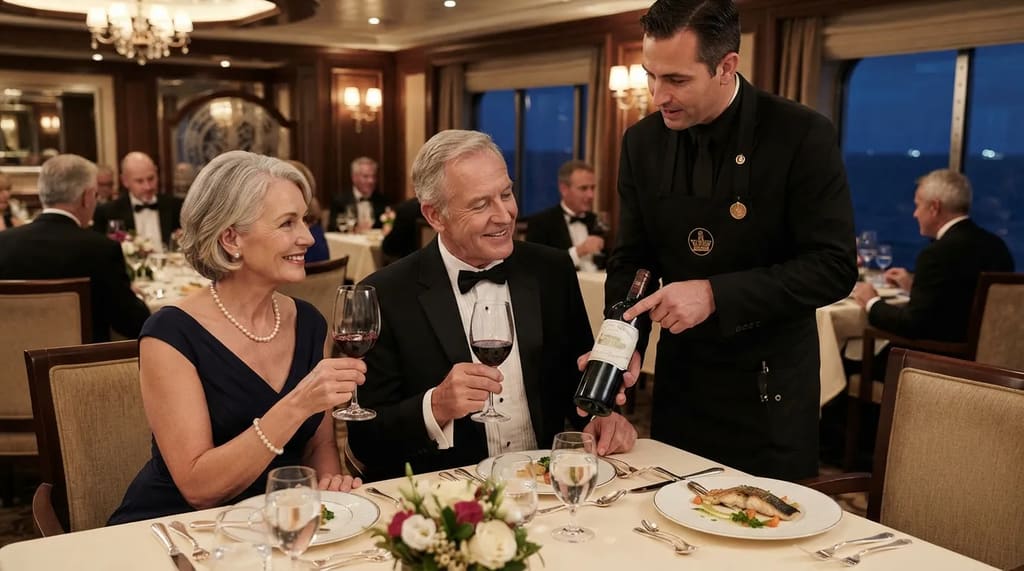
Most luxury lines, including Seabourn, Silversea, Regent and Crystal, hold a formal or elegant evening once or twice per sailing, and you can skip it by dining in casual or specialty venues. The dress code changes for the night, and the rules of wine do not.
Carnival’s own wine guide says there is really only one rule: pick what you like. A sommelier can match a style you enjoy to your meal, and the matching is more involved than white with seafood and red with beef.
Fast Facts
- Luxury lines usually hold one or two formal evenings per sailing.
- Skipping the night is possible by dining in casual or specialty venues.
- Carnival’s guide boils wine choice down to one rule: pick what you like.
- A sommelier can steer you to a style you enjoy at a fair price.
Don’t spend more just because the evening calls for a jacket. A bottle you will enjoy at the usual price beats a famous label bought for the occasion.
Once the bottle is chosen, what each person pours from it is a separate decision with its own numbers.
#9 – A 750-Milliliter Bottle Shared at Dinner
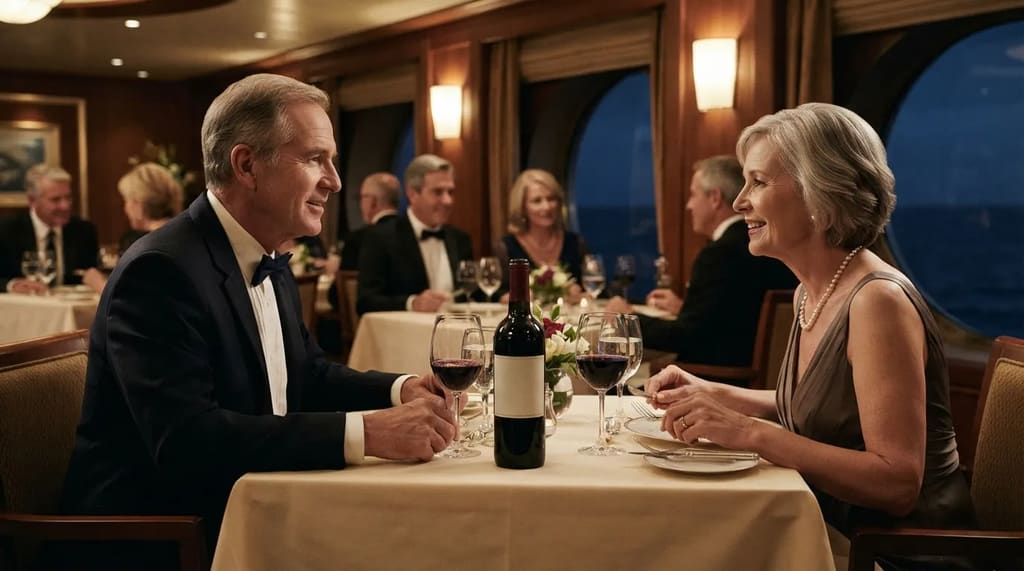
A standard bottle is 750 milliliters, the size cruise lines cap carried-aboard wine at. In health guidance, one drink of wine is 5 ounces.1
For healthy adults over 65 who take no medicines, NIAAA recommends no more than 7 drinks a week, an average of 1 a day, and no more than 3 on any one day.1 A bottle split between two puts each of you at two and a half drinks, close to the ceiling for a single evening.
The National Institute on Aging notes that the same amount of alcohol may be felt more strongly by an older adult than in earlier years, and that its effects tend to arrive more quickly. So the count at dinner matters more than it did on your first cruise.
If a whole bottle feels like too much for two, ask the sommelier about glasses chosen for each course. Wine that is already covered by your fare raises a different question, since no bottle price applies.
#8 – The Wines Already Included in Your Fare
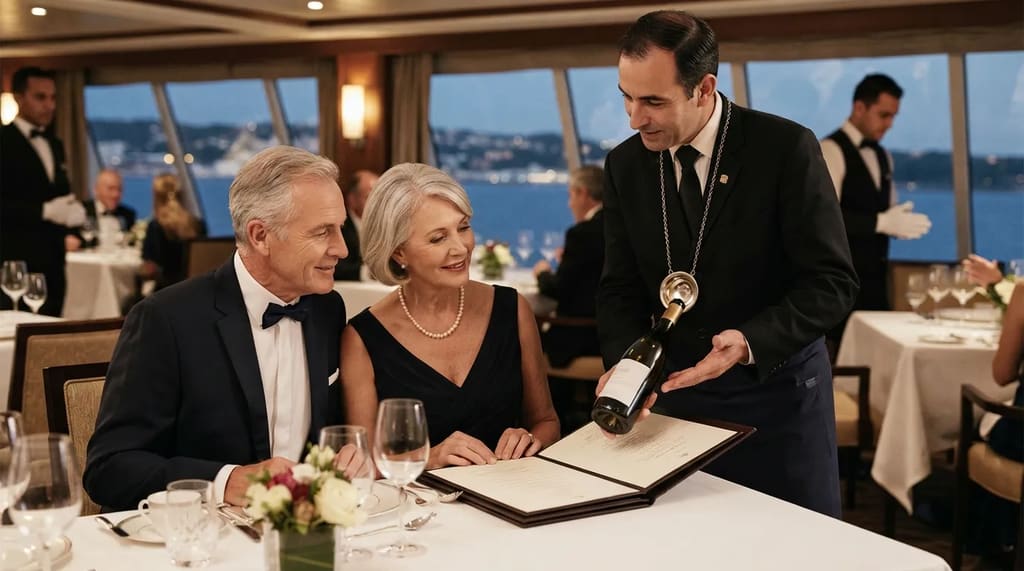
On some lines the wine list at dinner is partly or wholly paid for before you board:
- Regent, Silversea, Crystal and Seabourn include wine and all other alcohol in their prices.
- Azamara and Viking offer complimentary wine at meals.
On those lines, ask what the included list covers before you read the premium pages. The same guide advises calling over the sommelier to ask what else is available within the included options, and says you are likely to get a better suggestion than the wine featured that evening.
Its best advice for a serious wine fan is to meet the sommelier once you board. That beats memorizing a list sent weeks earlier.
If you sail on one of these lines, the largest money decision in this article never reaches you. Everything about packages and service charges below applies to the other lines.
#7 – A Stool at the Wine Bar Before Dinner
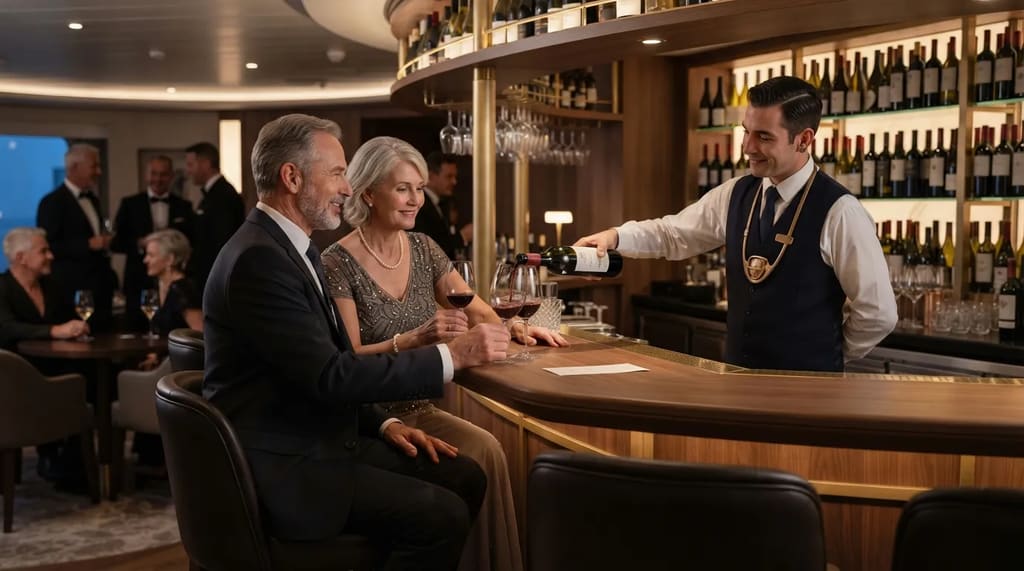
Wine bars on cruise ships are often less crowded than other venues, and the bartenders there often hold a wine certification. Tastings and other wine events show up in the daily program.
Some lines build on this. On Disney’s ships, grown-ups can join Champagne tastings led by the head sommelier.
A glass or a tasting at the bar tells you what you like before you commit to a whole bottle at dinner. It is a better guide than any menu description.
Buying every bottle at the ship’s prices is optional on most lines, since many let you carry one aboard yourself.
#6 – The Carry-On Bottle and the Corkage Fee
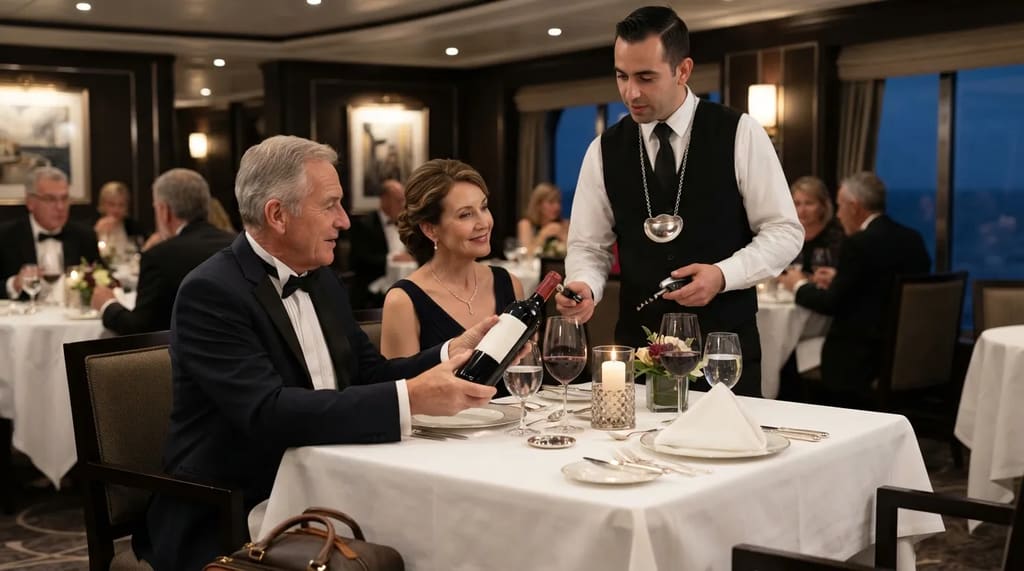
At embarkation on Carnival, passengers 21 and older may bring one sealed 750-milliliter bottle of wine or Champagne per person in carry-on luggage.2 Fees for opening it outside your cabin differ by line:
- Carnival charges $15 outside your cabin, and Celebrity charges $25 in the dining room.2
- Holland America lists $20 per bottle.3
- Norwegian lets each adult bring one bottle free in the stateroom, with extra bottles costing $15 each.
- Seabourn, Silversea and Viking charge no corkage and set no limits.
Royal Caribbean charges no corkage on wine you drink in your stateroom. A bottle opened in the cabin before dinner can cost nothing, while the same bottle carried to the table costs $15 to $25.
Carry one bottle for the stateroom and leave dinner to the ship’s list. The table fee is worth paying only for a bottle you could not buy on board.
The ship has its own route to a fee-free bottle, and it runs through the winery visits it sells ashore.
#5 – A Bottle Bought on a Winery Excursion
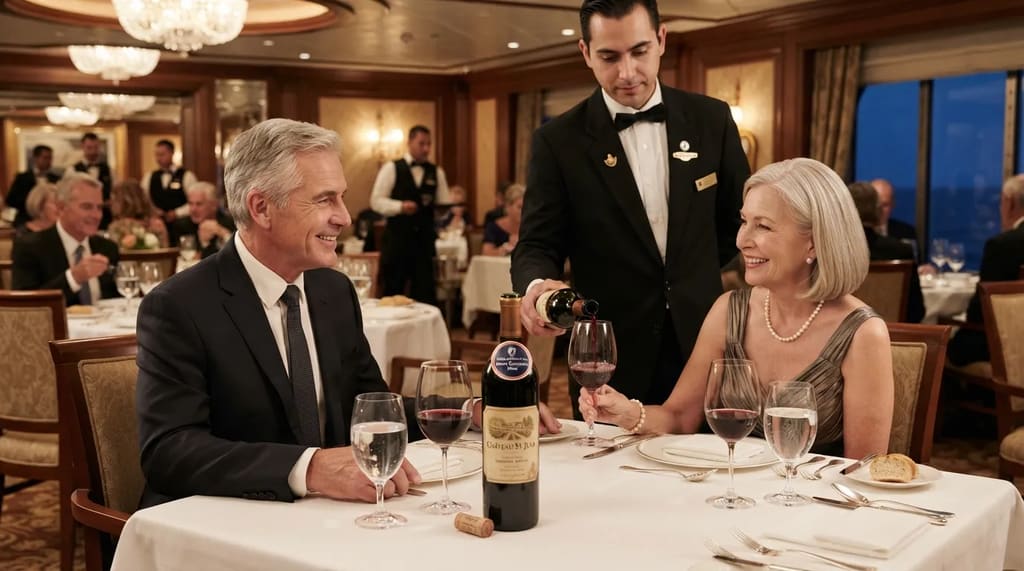
Holland America exempts wine bought on company-sponsored shore excursions that visit local wineries from its onboard corkage fee, limited to one bottle per person.3 That bottle can go to dinner without the $20 that a carried-aboard bottle would owe.
This is worth planning around only if you wanted the winery visit anyway. Booking an excursion to save one corkage fee is a poor trade, because the tour carries its own price.
Wine you buy ashore on your own is a different case. Holland America lets you bring wine on board from ports, though other liquor purchases are held until the end of the cruise.
Worth Knowing
- The exemption covers only company-sponsored winery excursions.
- It is limited to one bottle per person.
- The standard Holland America corkage fee it avoids is $20 per bottle.3
- Wine bought independently in port can come aboard, while other liquor is held until the end of the cruise.
Check the line’s current exemption rules before you book, since limits can change.
#4 – The Service Charge Added to Every Bottle
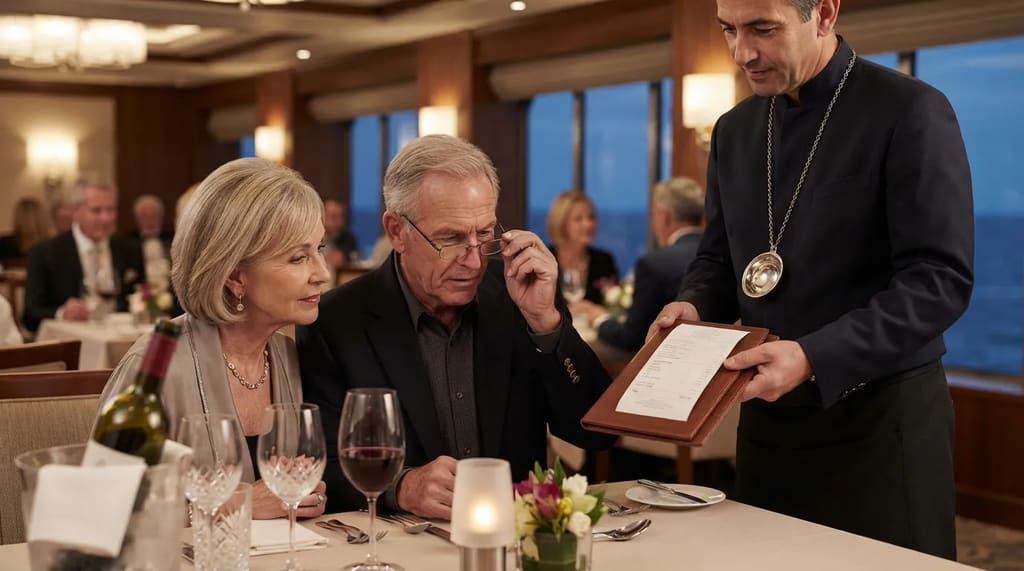
Celebrity’s mandatory 20 percent service charge is applied automatically to all beverages. Royal Caribbean’s is 18 percent, and Norwegian’s is around 20.
So the number at the right of the wine list is not the amount that lands on your onboard account. A $90 bottle is a $108 bottle on a line that adds 20 percent, so do that sum before ordering, not after signing.
Package holders get something back on bottles. Celebrity’s Classic package takes 15 percent off wine by the bottle, and its Premium package takes 20 percent.
Carnival’s package takes 25 percent off.4 That discount applies to bottles, though a package’s main promise concerns glasses, and glasses come with a price ceiling.
#3 – The Per-Glass Cap in Your Package
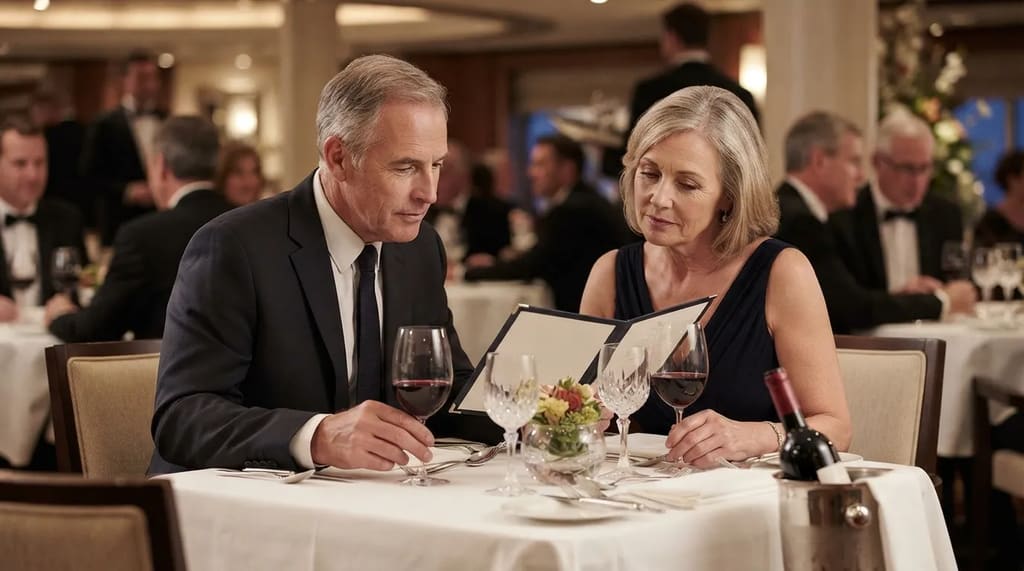
A package covers wine by the glass only up to a set price. Celebrity’s Classic tier covers wines by the glass up to $12 per serving.
Carnival’s CHEERS! covers beer and wine by the glass up to $20.4 Order something above the cap and you are charged the difference.
Quick Compare
- Celebrity Classic: wine by the glass covered up to $12.
- Carnival CHEERS!: beer and wine by the glass covered up to $20.
- Above the cap: you pay the difference, plus the service charge.
- Whole bottles: not included, though a package usually brings a discount.
Under a $15 cap, a $17 glass adds $2 plus the 20 percent service charge to your account. Whole bottles are not included in packages, though holding one usually brings a discount on them.
A guest who likes the better pours from the reserve page should compare that page against the cap before choosing a tier. A tier whose cap sits below your usual glass pays out less than it appears to.
A glass inside the cap is covered by the package, yet it still counts as a drink, and the count matters most to anyone who takes medicine.
#2 – Evening Wine and the Morning Pills
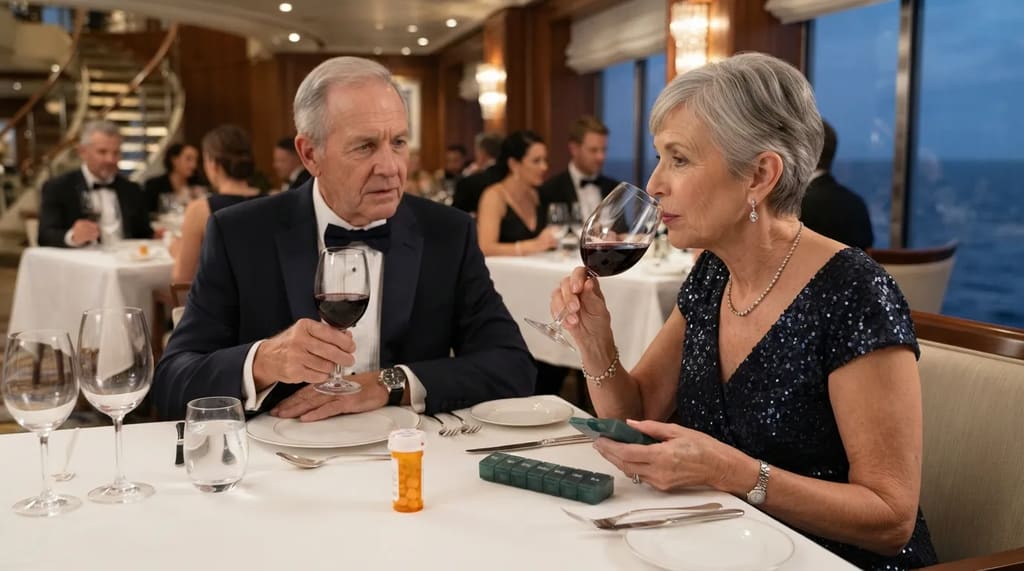
Medicines and alcohol can interact even when they are not taken at the same time. The National Institute on Aging warns that many older adults take medications that could interact with alcohol, making them work poorly or become dangerous.
Related Stories From Travelbinger



NIAAA says mixing alcohol with any drug that causes sedation can be deadly, and names sleep, anxiety, cold and allergy, and opioid pain medications. Alcohol can also change the blood levels of certain blood pressure medications and antibiotics, and raise the risk of side effects.
Falls are among the injuries the institute links to drinking in older adults. Formal night adds dress shoes, a staircase and a ship moving underfoot.
A call to your doctor or pharmacist before sailing outranks every other tip here. NIAAA says an older adult who drinks should ask a doctor whether any medicine or health condition could be made worse by alcohol.5
If the answer allows a drink or two, the arithmetic of a drink package starts to matter, because those packages are priced for far more.
#1 – A Package Priced for Several Drinks a Day
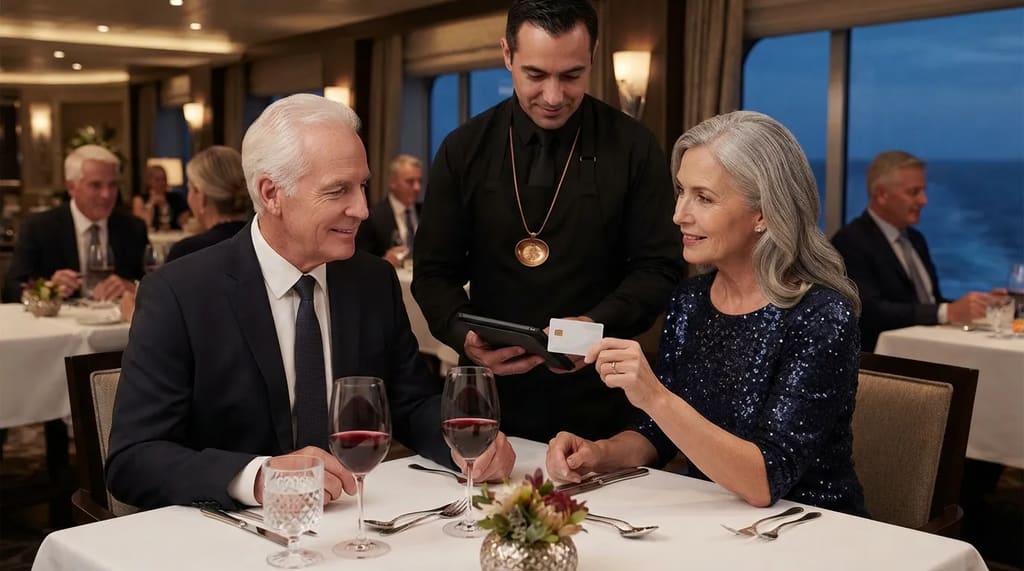
A cruise drink package pays off only if you drink several alcoholic drinks a day, every day. You pay for every day of the cruise, not only the days you drink, and most lines add a service charge on top.6
Recent pricing trackers show Celebrity’s Classic package starting around $89 per person per day and Premium around $109. A 20 percent service charge is added at checkout.
Carnival’s CHEERS! starts at $69.95 a day when bought before sailing, about $84 with the service charge.4 6 Over seven nights that comes to roughly $588 per person.
Set that against NIAAA’s guidance of no more than 7 drinks a week, and 3 on any one day, for healthy adults over 65 who take no medicines. A package built to pay off at several drinks a day assumes a heavier pace than that.
If you drink a glass or two with dinner, skip the package and pay by the glass, or by the bottle with the service charge worked out first. Check the line’s current terms and your medication list before you decide, since both can change the answer.
That brings back the cheapest item in this piece. On lines that waive the stateroom fee, the bottle you carry aboard covers an evening glass for nothing, while the package is the largest bill on this page.
What to Settle Before the First Formal Night
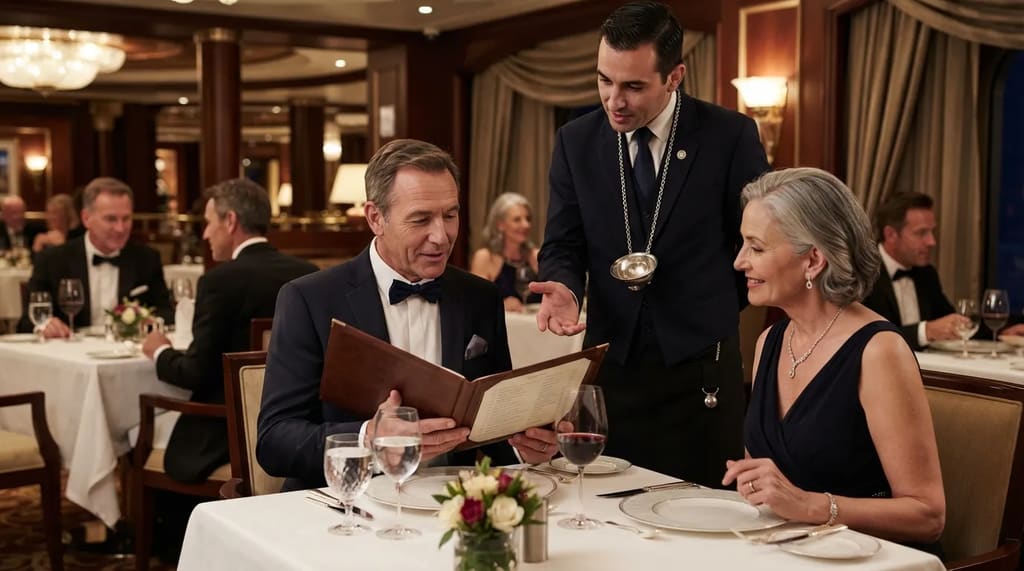
The price on a wine list is only the start of the cost. The cheapest habits here, asking for the full list, asking about the bin ends and talking to the sommelier, take a sentence each, and they come before any bottle is chosen.
Treat your first evening on board as the time for those questions, and your last evening at home as the time for the pharmacist’s. A formal night is easier to enjoy when the bill and the medicine cabinet have already been checked.
On a formal night you have sat through, was the full wine list in your hands when you sat down, or did you have to ask for it?
- Hopkins Alcohol and Older Adults: https://www.hopkinsmedicine.org/health/wellness-and-prevention/alcohol-and-older-adults
- Points Guy Corkage Guide: https://thepointsguy.com/cruise/cruise-ship-bring-your-own-alcohol-rules
- Holland America Bringing Beverages Policy: https://www.hollandamerica.com/en/us/faq/cruise-planning/general-information/alcoholic-non-alcoholic-beverages-brought-onboard
- Carnival Cheers Package: https://www.carnival.com/drink-packages/cheers-package
- NIAAA Older Adults Drinking: https://www.niaaa.nih.gov/about-niaaa/directors-page/niaaa-directors-blog/growing-concern-increased-drinking-among-older-adults
- Cruising Insider Drink Packages: https://thecruisinginsider.com/guides/cruise-drink-packages/