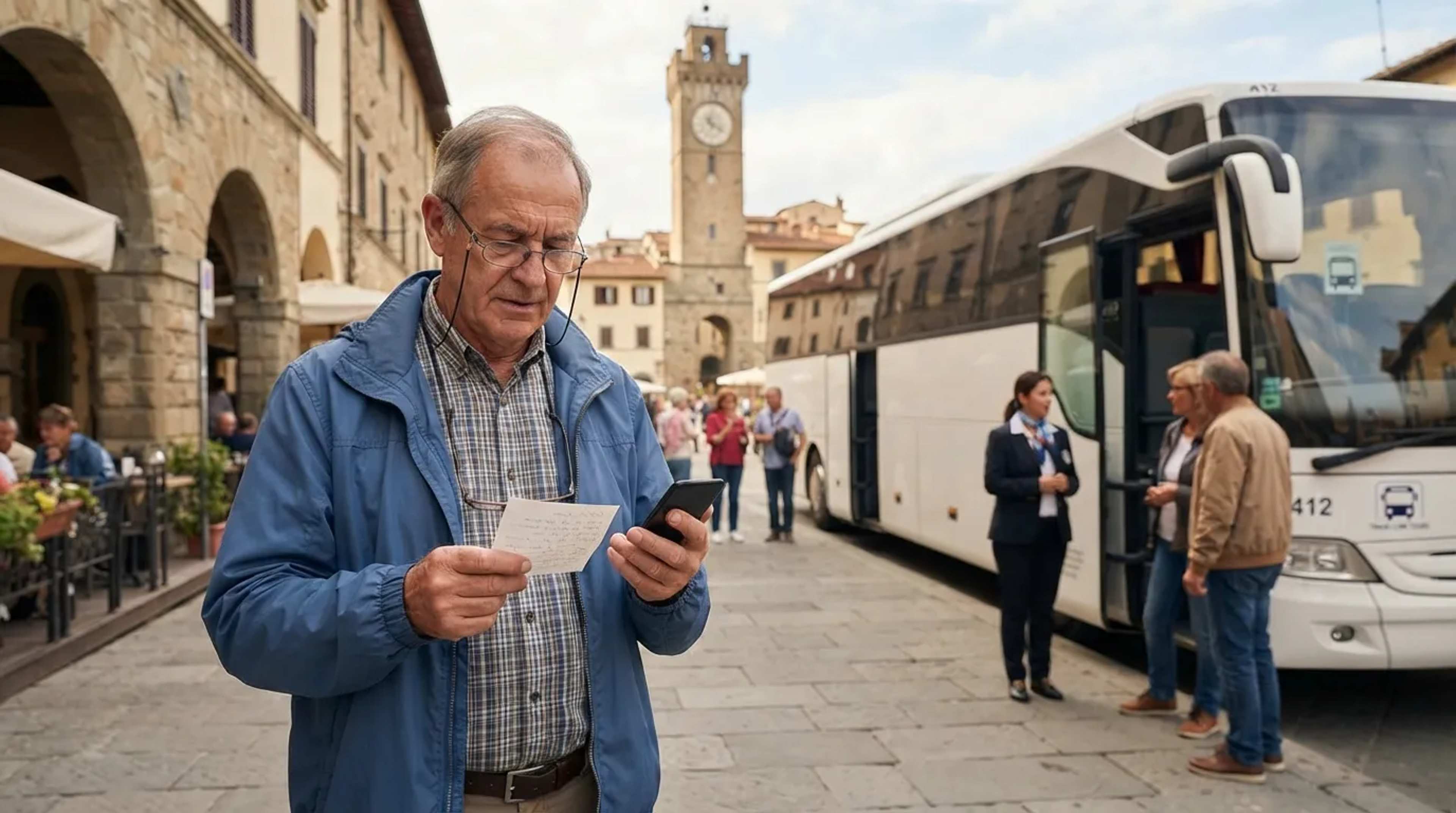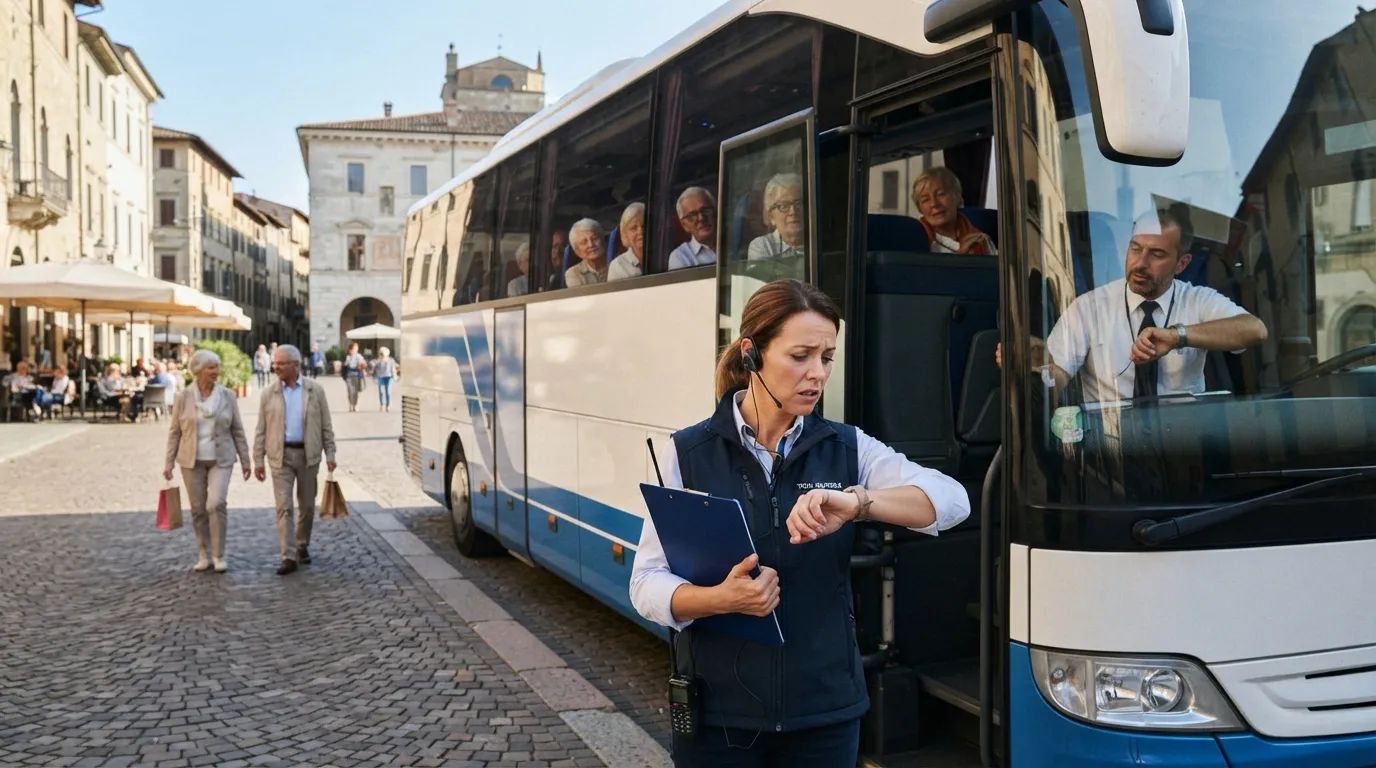
Every seat is full except one, and the whole coach is staring at the same empty patch of pavement. Nobody did anything dramatic, and that’s what makes it so hard to fix.
A touring coach runs on two clocks: the printed itinerary and the driver’s legal limit on hours behind the wheel. Federal rules cap how many hours a passenger-carrying driver can drive before a required rest, so minutes lost at one stop can’t always be made up on the road. The final item names the two habits that throw off a whole day, and they rarely look like problems while you’re doing them.
1. Window Shade Wars Between Sun and View
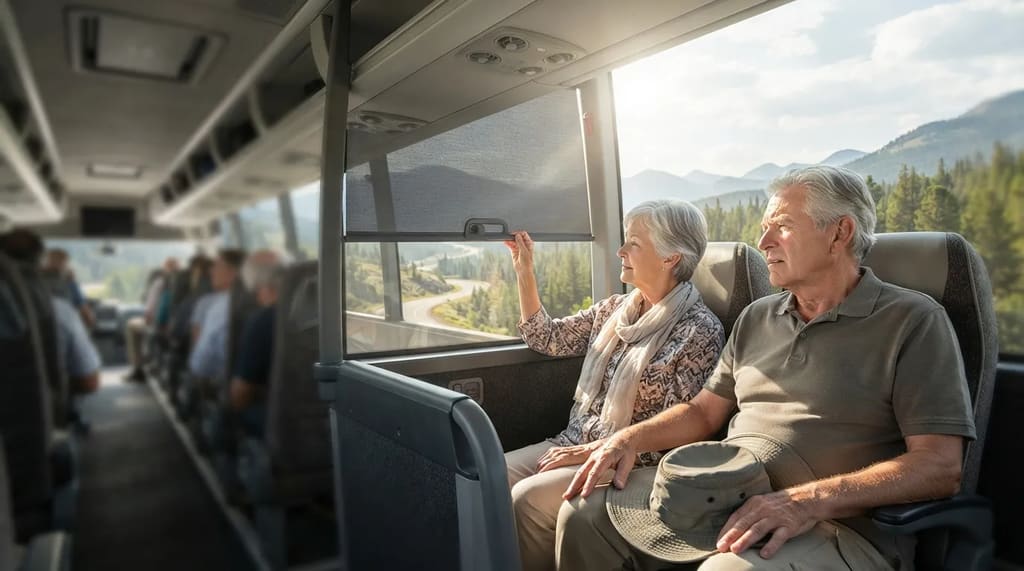
Sun comes through only one side of the coach at a time, so the shade fight is always between neighbors sharing a single window. The window seat tends to feel like the owner of the shade, while the aisle seat gets the glare and has no vote.
Ask before you touch a shade, and settle on halfway down. A shade set partway cuts the glare on faces and still leaves a strip of scenery for the person who wants to look out.
A brimmed hat or a light scarf handles glare on your own face without involving anyone else. Because the road turns and the sun moves, the side that was bright at breakfast is often the shady side by mid-afternoon.
A quick “Mind if I lower this a bit?” lands far better than a silent tug on the shade. Most neighbors are glad to be asked.
Shades only bother the person beside you. A conversation in row nine can bother the whole coach at once, and it usually starts while the director is mid-sentence.
2. Talking Over the Director’s Commentary
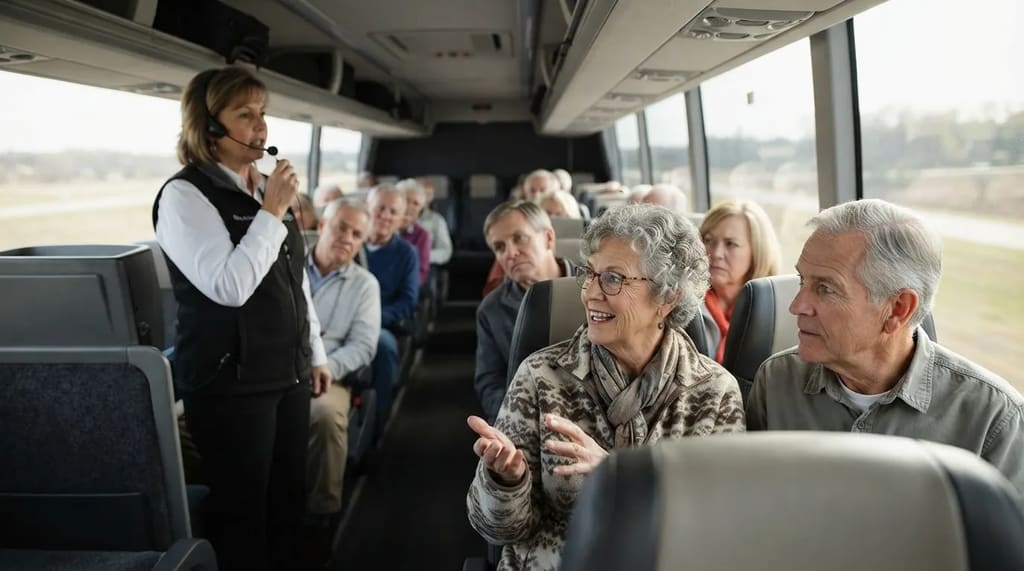
The director’s microphone carries the one part of the day you can’t rewind. When a stop is being described, the meeting time and the meeting place usually come in the same breath.
Side conversations in the middle of the coach compete with that voice, and the riders trying to listen can’t tell who to look at. A missed sentence at the wrong moment means a question later that was already answered.
If the director opens the floor for questions, keep yours to one and keep it short. My view: a question asked over the commentary is rarely urgent, and the answer is often in the next sentence.
Save side conversations for the stops, and go quiet when a meeting time is being announced. The next item is the one the director deals with at the start of day one, and it concerns the rack above your head.
3. A Cluttered Overhead Rack and Seat Pocket
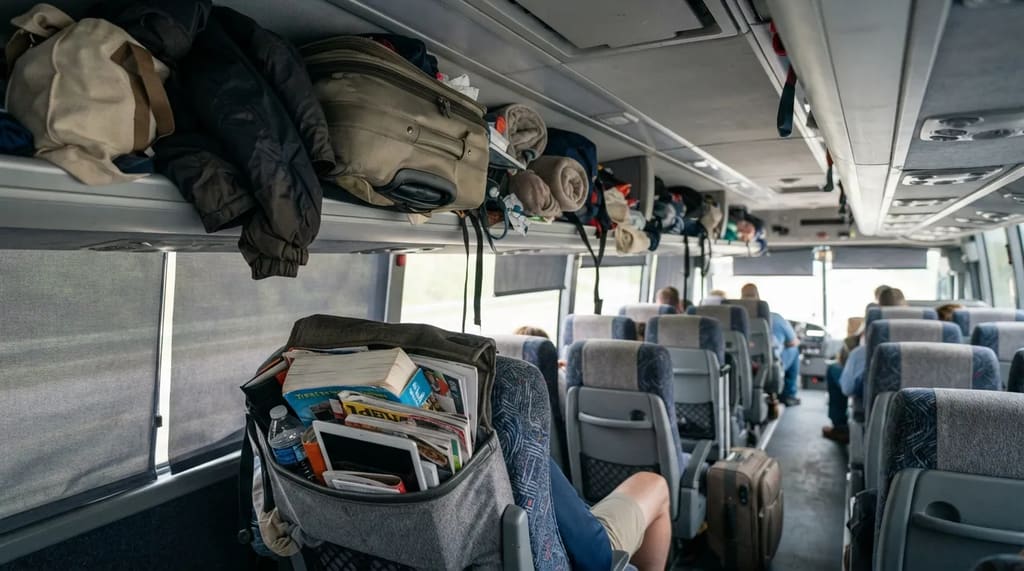
Overhead racks are built for small bags and jackets. Suitcases belong in the luggage bays under the floor.
A big bag carried aboard fills the rack early, and riders farther back end up with theirs on their laps or at their feet. That’s how a rack problem at the front becomes an aisle problem at the back.
At a Glance
- Overhead rack: one small bag, a jacket or an extra layer.
- Under your seat: glasses, reading material and water.
- Luggage bay: suitcases and anything bulky.
- Aisle: nothing at all.
Pack two small bags instead of one large one. The first goes in the rack with a jacket or extra layer, and the second goes under your seat with the things you’ll reach for on the road, such as glasses, reading and water.
Keep the rack bag small and carry a second small bag under your seat. Federal guidance on pre-trip safety information for motorcoach passengers points the same direction: stow belongings in overhead racks or under seats so the aisle stays clear.1
A tidy rack is easy to keep, but it can’t save a seat for you. That’s where the jacket on the empty seat comes in.
4. Saving Seats With a Jacket or Bag
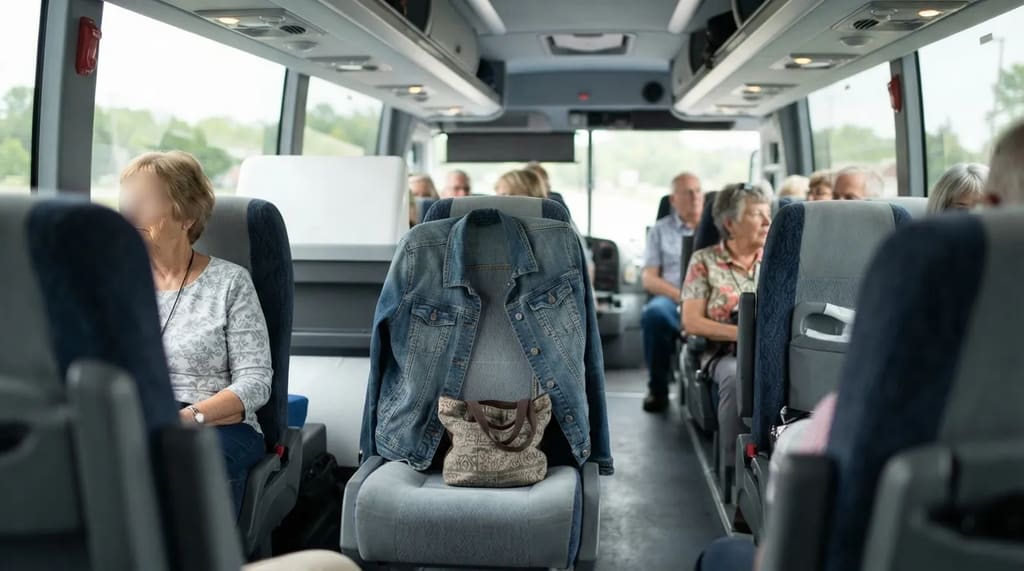
A sweater draped over the next seat looks like a harmless claim. On a tour with rotating seats, it claims something that isn’t yours to give.
On day one you can typically choose your seat, but after that the rotation system takes over. Seat policy isn’t the same on every tour, so the director’s first briefing is where to learn which rules apply to you.
Rotation also ends a habit directors dislike, which is cutting lunch short to hurry back and grab a better row. When the good seats come around on their own, no one has to guard one.
If steps, motion or a long aisle walk are hard for you, ask the director on the first morning for a fixed seat. Ask before the coach is loaded, not halfway down the route. A mid-route request means moving other people.
Seats are settled by a rule, but a photo stop has no rule at all. The view can tempt a rider a hundred feet farther from the coach than the director planned.
5. Wandering Past the Photo Stop Boundary
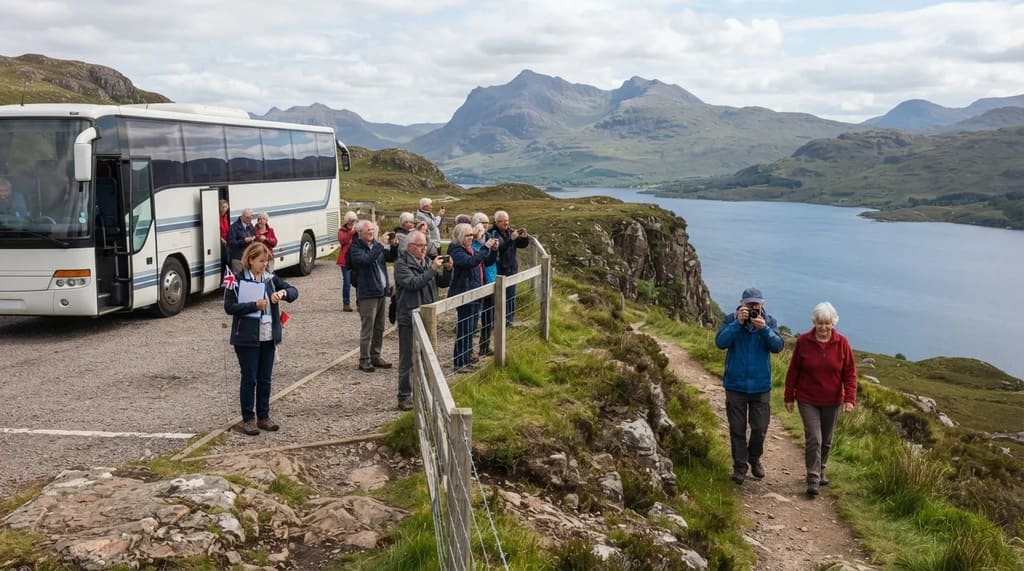
At a scenic overlook, the best angle is rarely beside the coach, and that’s exactly the temptation. The director has already fixed a meeting spot and a time before the doors open.
Walking farther for one more frame uses minutes that belong to the whole group’s departure. Because the stop was short to begin with, the extra walk is usually the part that runs late.
Take your main photo near where you stepped off, then explore only while time remains. Shoot the picture you came for first, then roam.
Photos through the coach window are fine from your own seat, and you don’t need to stand in the aisle for them. Guidance for passengers encourages staying seated as much as possible while the coach is in motion.2
A photo stop ends when the camera goes down. Lunch can run late while everyone sits perfectly still, which makes the delay harder to spot.
6. Lingering Over Lunch Past the Meeting Time

Lunch stops run late without anyone leaving the table. The delay often begins before the order, with a long walk to a better restaurant or a long wait to be seated.
Pick a lunch spot close to the coach, then check the return time. A short walk to a table, with time left over, beats a famous café across town that eats the whole stop.
Tell the server at the start that you have a group departure. Then a second cup of coffee becomes a choice you make with the clock in view, not a surprise at the bottom of the cup.
Lunch overruns happen at a table. The same drift happens at the start and end of the day in a hotel lobby, where there are armchairs, a gift counter and no clear place to stand.
7. Drifting Around the Hotel Lobby Before Departure
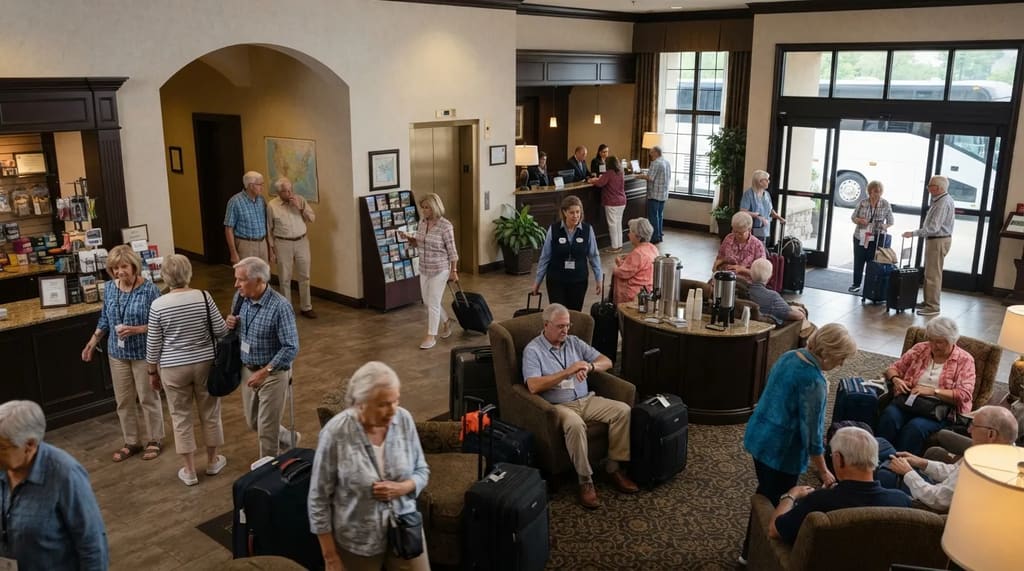
Departure morning in a hotel lobby looks calm: armchairs, a coffee urn, a gift counter and a group of travelers who each assume someone else knows where to stand. That calm is the problem.
Drift starts when the meeting spot is vague, so listen for the time and place at the evening briefing and write both down. A rider standing in the wrong corner forces the director to walk the lobby looking for them.
Be at the named meeting spot, bags beside you, before the stated time. Do any last restroom visit or desk errand before the gathering time, not during it.
The lobby is only where the problem shows up. It starts upstairs, with a suitcase that wasn’t packed the night before.
8. A Morning Routine That Starts Too Late
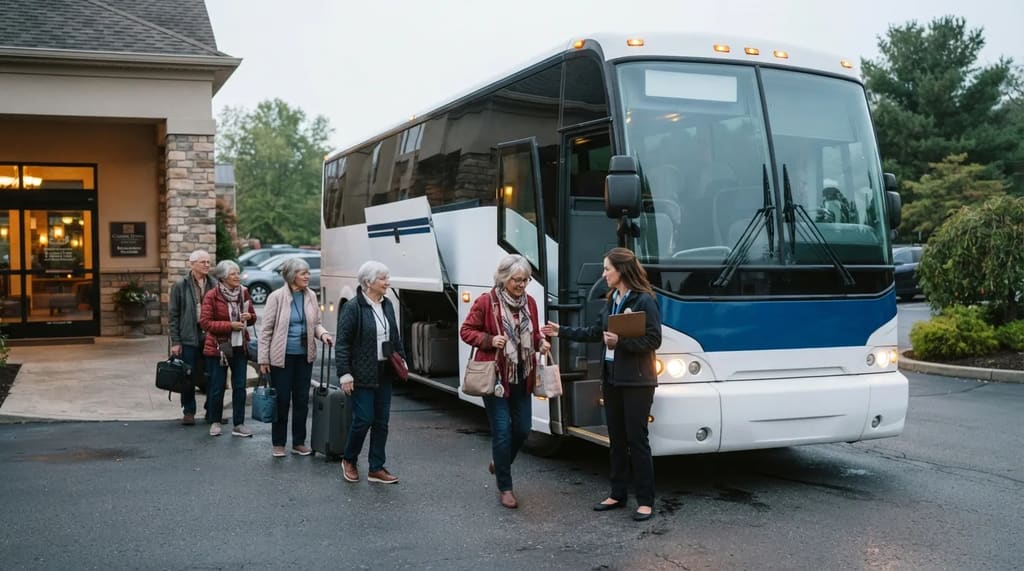
The first boarding of the day sets the pace for every stop that follows. A coach that leaves the hotel late arrives at the first rest stop late, and the day tilts from there.
Give yourself time to pack, eat breakfast and make a last restroom visit before the coach is called. Itineraries can cover remote areas where a coach goes for long stretches without facilities, so the hotel restroom is worth the extra minute.
Pack the night before and put your bag by the door. Lay out tomorrow’s layers while you’re thinking about it, because a hurried morning is when glasses and chargers get left in the room.
Once the coach is rolling, the next test comes at the first rest stop. The clock works differently there than it did at the hotel.
9. Skipping the Rest Stop or Overusing It
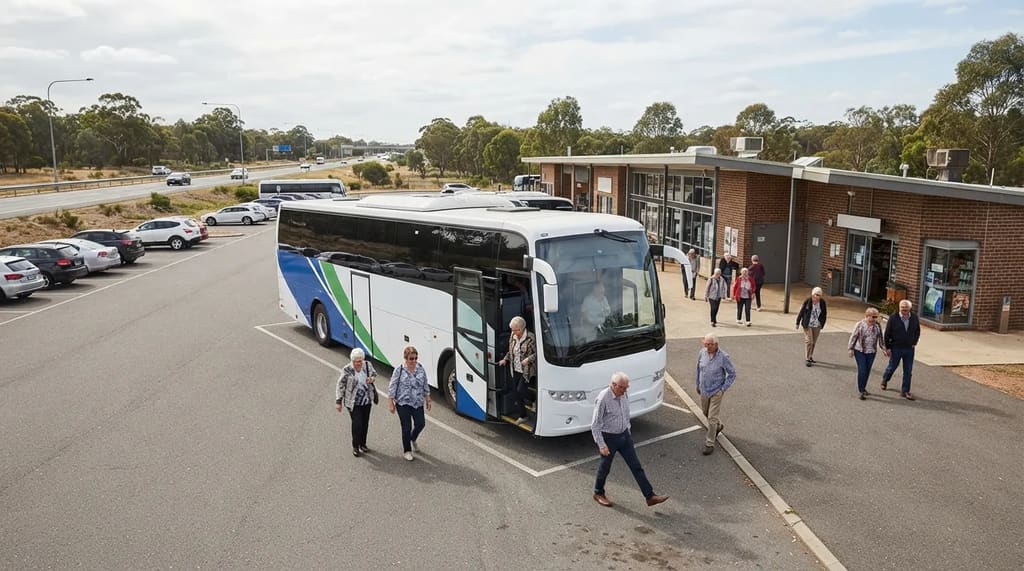
Skipping a rest stop because you don’t need the restroom right then is a poor trade. The coach may go a long way before the next opportunity, and the stop is where your legs get to move.
Ask the driver or director before a long stretch how far the next stop is. That one question lets you decide about water and the restroom with real information instead of a guess.
Quick Compare
- Skip the stop: no restroom, no stretch and a long wait for the next chance.
- Use it well: restroom, short walk, then a seat with time to spare.
- Overuse it: the last rider back sets the pace for everyone aboard.
If you’re tired, you can sit out a stop, and directors generally prefer that you say so. Tell the guide if you’re skipping the next stop, so the count at reboarding isn’t built on a guess.
Use the restroom and walk first, then rest in whatever time is left. My view: sitting out one stop to save your energy for the next ones is a better plan than dragging yourself through every stop.
When the coach reloads, a count follows. It only works if someone besides the director is watching for you.
10. Skipping the Buddy Check After Each Stop
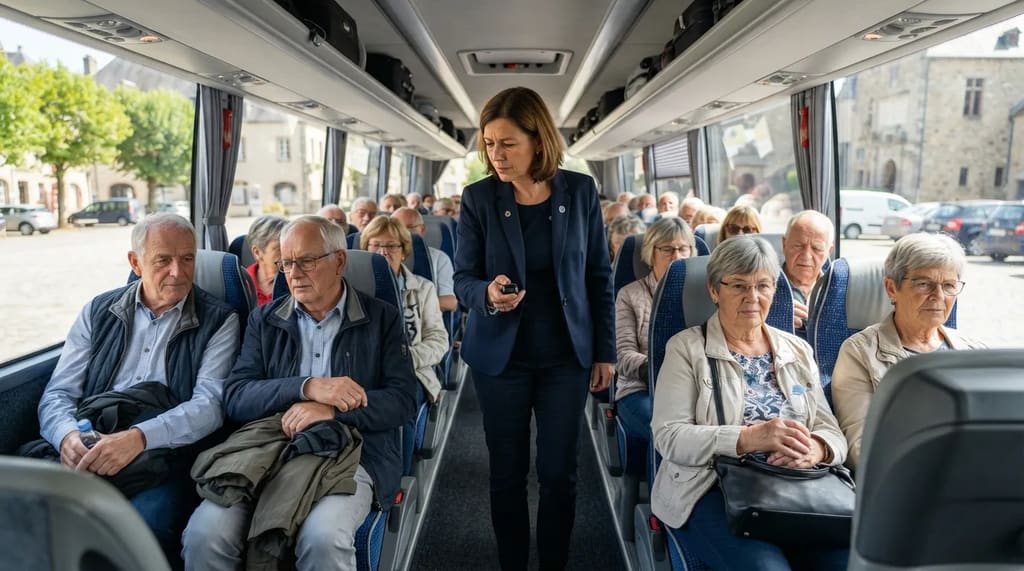
Every time the coach reloads, someone is counting, and that someone is usually the director. Tour directors do a headcount after each stop, usually before the driver releases the brakes.
The count goes fastest when you return to your usual seat and stay put until it’s finished. A traveler who wanders to chat with another row turns a quick count into a recount.
Agree with one seatmate to check each other’s seat at every reboarding. If your buddy isn’t back, you can tell the director at once, not three minutes later.
If you’re traveling alone, trade first names with the person across the aisle on the first morning and do the same check. It takes ten seconds and works the same way.
11. Walking the Aisle While the Coach Moves
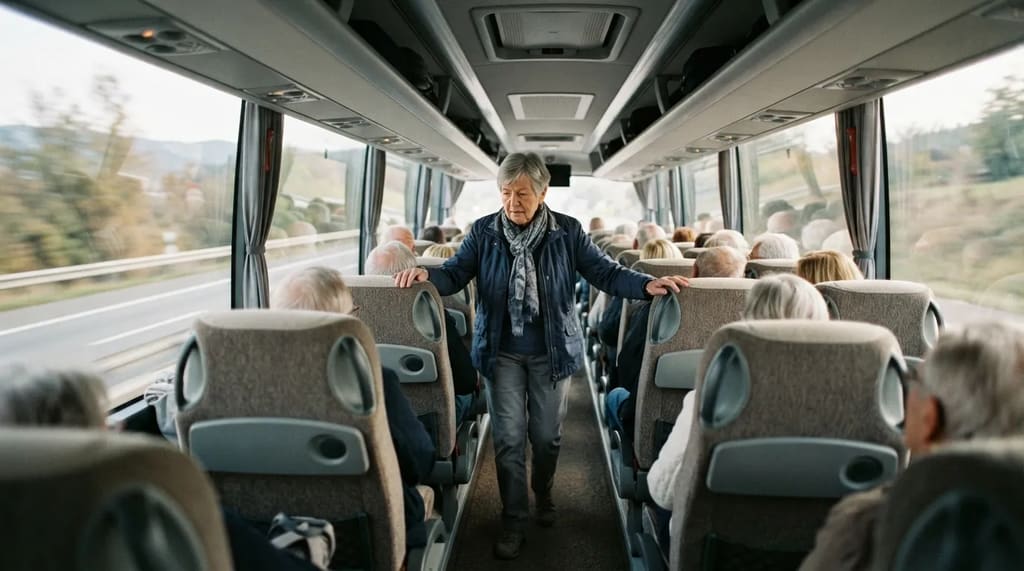
A moving coach can brake or swerve without warning, and an aisle walker has only the seat backs to hold. Federal tips say to stay seated while the bus is moving, since a quick swerve or stop could cause a fall.3
The Federal Motor Carrier Safety Administration’s pre-trip guidance encourages passengers to remain seated as much as possible and to use handrails and supports if they must walk.2 That makes a planned stop a better time for the restroom run than a bumpy stretch of highway.
If your coach has an on-board restroom, go when the road is straight and smooth, and keep a hand on a seat back the whole way. Wait for a calm moment to stand, not the moment a driver is merging.
Stay seated while moving, and wear your belt if your seat has one. Federal rules have required lap and shoulder belts on new motorcoaches since late 2016.4
Standing in the aisle puts one rider at risk. Leaving things in it affects every rider, and it matters most at a moment no one plans for.
12. Parking Bags and Feet in the Aisle
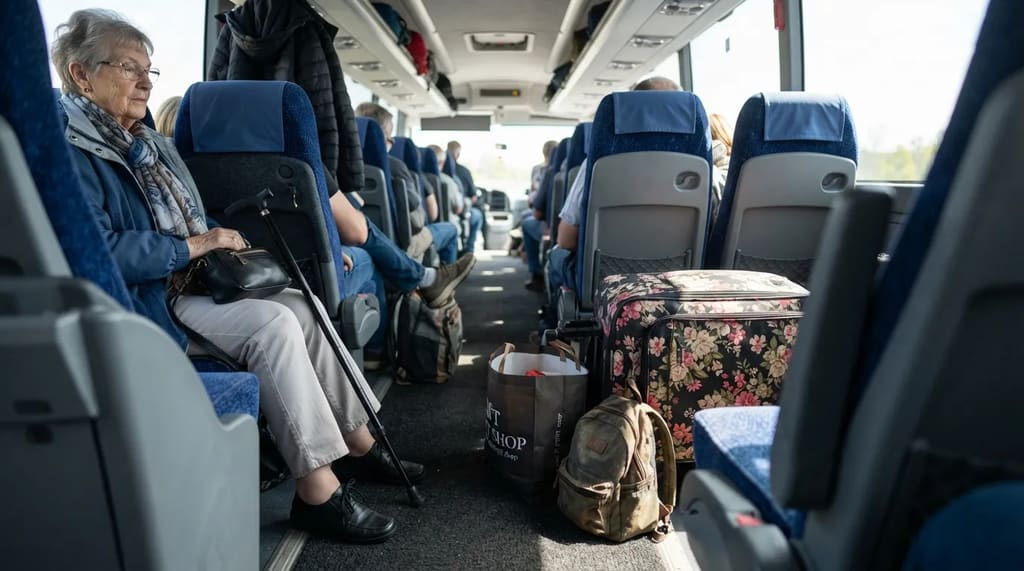
The aisle is the exit route for every seat on the coach. An aisle cluttered with passenger belongings could hinder rapid evacuation through the door in an emergency.
That’s why this habit outranks the overhead rack from earlier. A crowded rack is an annoyance, but a blocked aisle is a safety problem, and the same under-seat bag that solves one solves the other.
Keep the aisle empty, including feet, canes and shopping bags.1 3 A bag set on the empty seat beside you also gets in the way when seats rotate and someone arrives to claim it.
Related Stories From Travelbinger


Clear aisles matter most when the coach is loaded and leaving on time, which is exactly what a late rider holds up. A late return is the habit directors notice first.
13. Returning to the Coach After Departure Time
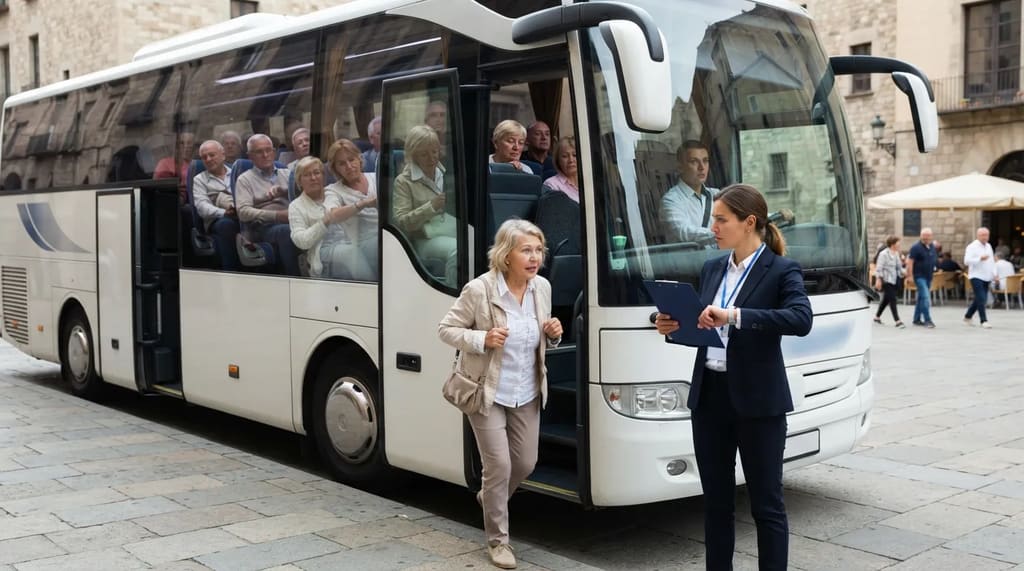
When the stated time arrives and one seat is empty, a full coach waits for one person. Everyone else is seated and ready, and that quiet stretch is when a few minutes feel very long.
The usual courtesy is simple: if you’re late, apologize to the group. My verdict is that the apology is owed even for a one-minute delay, because the coach was already seated.
On a tour that runs to a strict schedule, a missed departure can leave you catching up with the group at the next stop on your own. That’s a worse afternoon than the extra coffee was worth.
Set a phone alarm ten minutes before boarding time at every stop. Use the restroom first, then head back, so a line doesn’t make the decision for you.
A late return is easy to spot. The two habits behind much of the day’s lost time are harder to see, because they look like patience and flexibility.
14. Two Habits That Throw Off the Whole Day
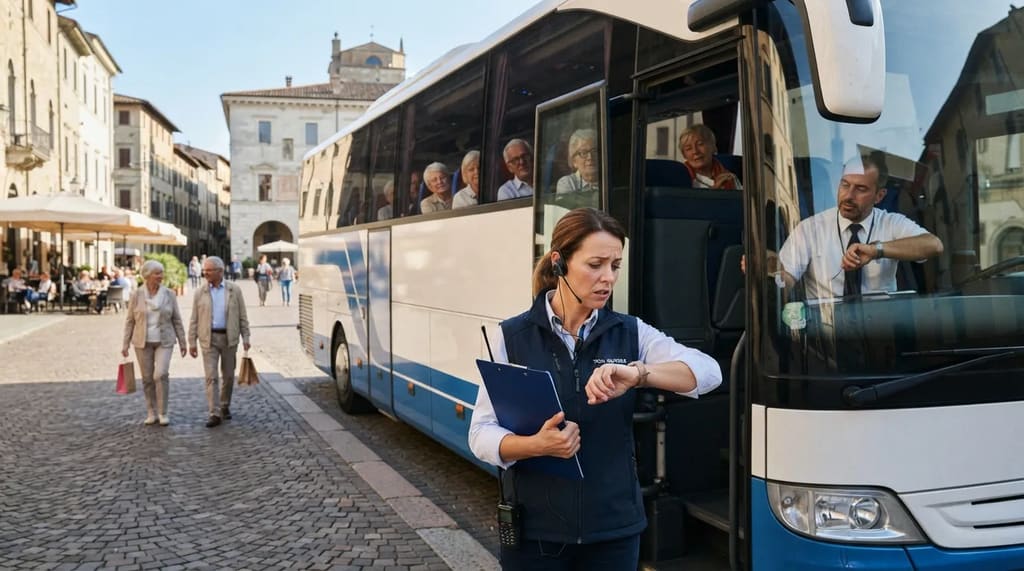
The first habit is assuming the group will wait. The second is changing your plan without telling the director.
Neither looks like a problem in the moment, which is why both repeat. A few minutes late at one stop doesn’t stay at that stop.
Each later stop starts behind, and because federal rules cap a passenger-carrying driver’s hours before a required rest, the coach can’t always make up the time by driving longer. The director builds the schedule around the driver’s clock and the stops chosen in advance, and a loose attitude toward the announced time spends both.
Fast Facts
- A passenger-carrying driver may drive up to 10 hours after 8 consecutive hours off duty.5 6
- Driving isn’t allowed after the 15th hour on duty, until another 8 hours off.6
- Time spent waiting at a stop still counts against that on-duty window.
- That’s why a few minutes lost at several stops can shorten the day’s route.
The second habit turns a stop into a search. Staying behind in a shop, switching to a different café or heading back to the hotel without a word leaves the director unable to say everyone is accounted for.
Treat the announced time as fixed, and tell the director every change of plan. Before you step off the coach, say where you’re going and when you’ll be back.
Closing Thoughts
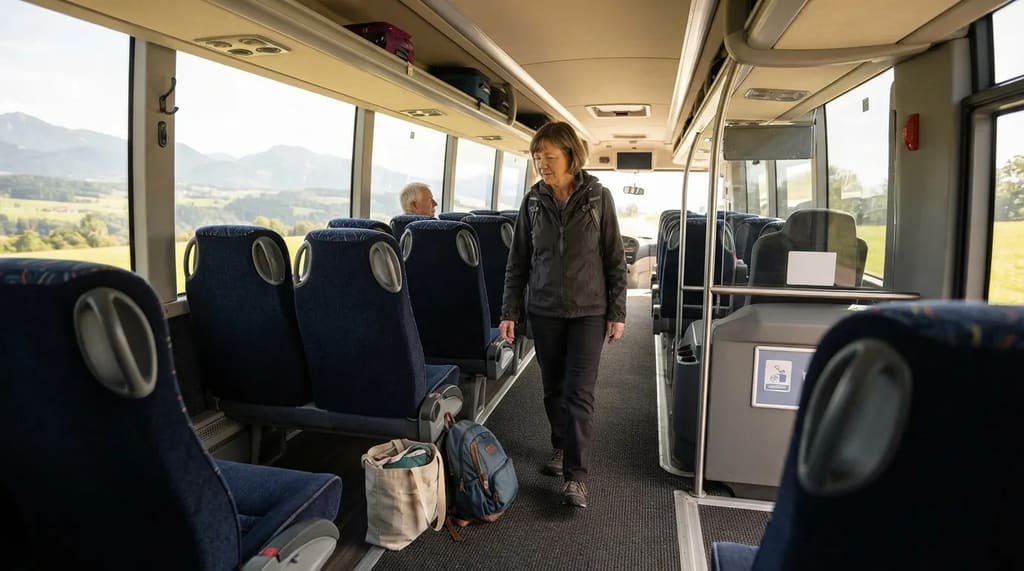
A coach is a small room that moves, and every habit on this list is a promise to the next person in it. Keeping an aisle clear, a time fixed and a seat honest costs you very little, and it buys the whole group an easier day.
Look at your own routines the same way. The ones that work, such as an alarm, a bag by the door or a seat buddy, tend to be small and repeatable.
What’s the one small routine, whether an alarm, a bag by the door or a seat buddy, that has kept your own coach days running smoothly?
Bonus: The Insider Trick Nobody Tells You
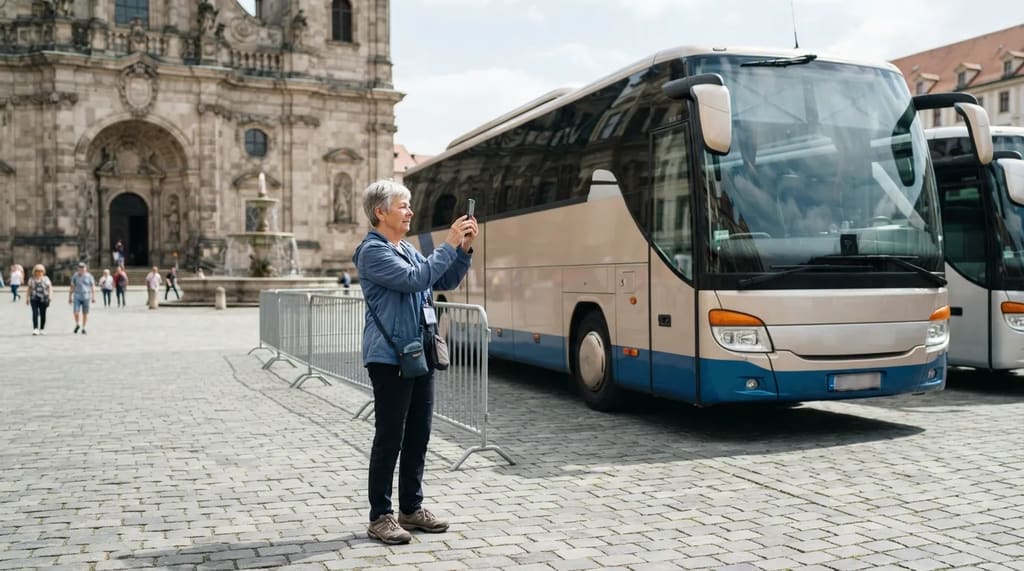
Do a 30-second “anchor check” every time you step off the coach. It protects you from the most common reason riders end up scrambling at a stop: not being able to find the coach, the meeting spot or the director.
- Photograph the coach and its surroundings. Take one picture showing the coach number or plate and one showing a landmark nearby, such as a sign, fountain or building entrance.
- Save the director’s mobile number in your phone on day one, and carry the hotel’s card in a pocket in case your phone dies.
- Say it back. Repeat the return time and meeting spot aloud to your buddy before you part ways, then set your alarm for ten minutes ahead of it.
Many coaches in a busy lot look nearly identical, and the picture settles the question quickly. Say the return time out loud, because people remember what they say far better than what they only hear.
Do this at the first stop of day one, and it will be a habit by day three.
- FMCSA Bus Safety Brochure: https://www.fmcsa.dot.gov/sites/fmcsa.dot.gov/files/docs/PreTrip-SafetyBrochure-Pull.pdf
- FMCSA Pre-trip Passenger Safety: https://www.fmcsa.dot.gov/safety/passenger-safety/pre-trip-safety-information-motorcoach-passengers
- FMCSA Bus Travel Tips: https://www.fmcsa.dot.gov/sites/fmcsa.dot.gov/files/2022-01/faa-0071_OY4_LBYB_TipSheet_Safety&Comfort_FINAL_09_2019_JS-508c.pdf
- NHTSA Motorcoach Seat Belt Rule: https://www.transportation.gov/briefing-room/nhtsa-announces-final-rule-requiring-seat-belts-motorcoaches
- FMCSA Hours of Service Summary: https://www.fmcsa.dot.gov/regulations/hours-service/summary-hours-service-regulations
- FMCSA Passenger Carrying HOS: https://csa.fmcsa.dot.gov/safetyplanner/MyFiles/SubSections.aspx?ch=23&sec=69&sub=177