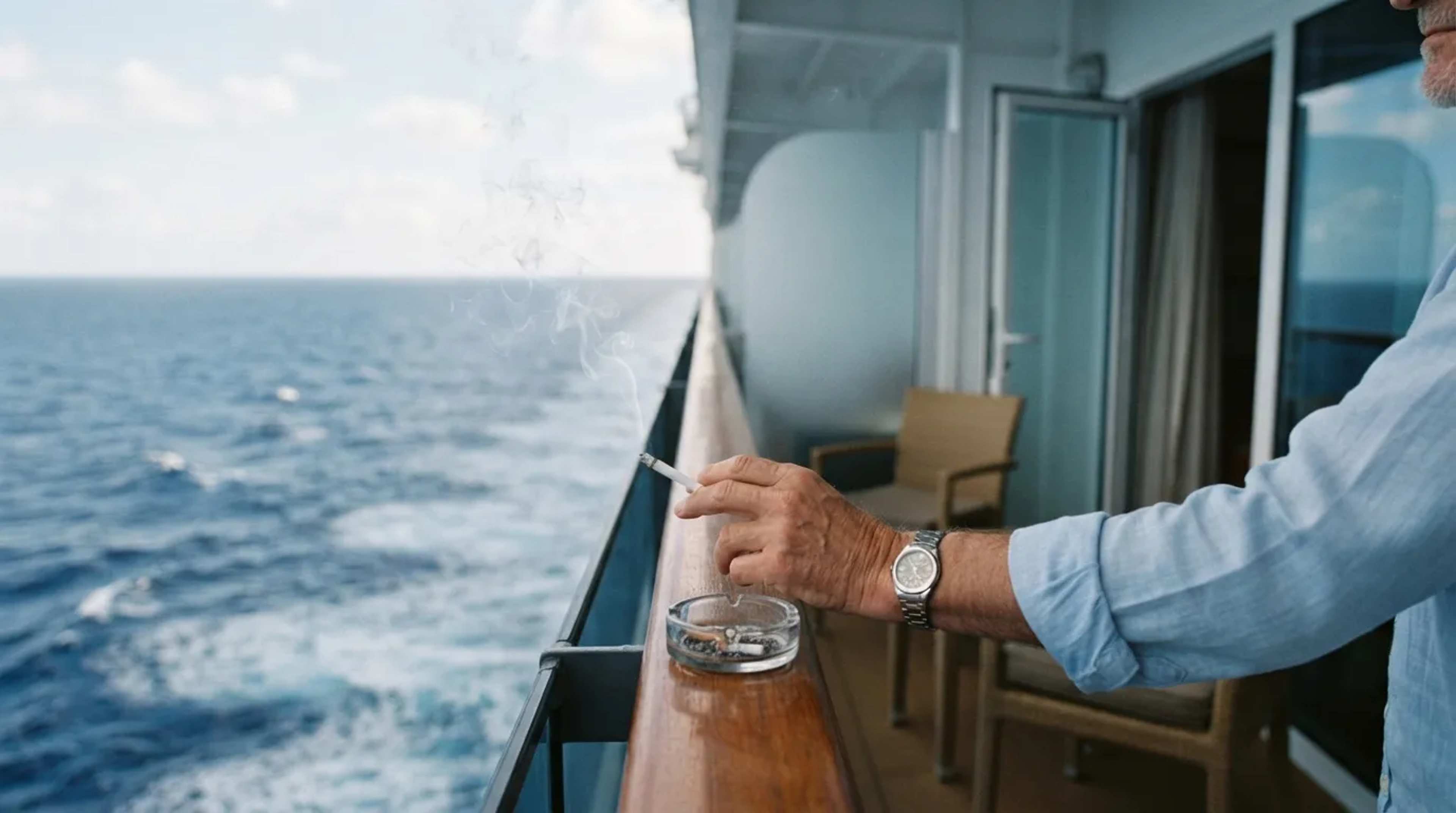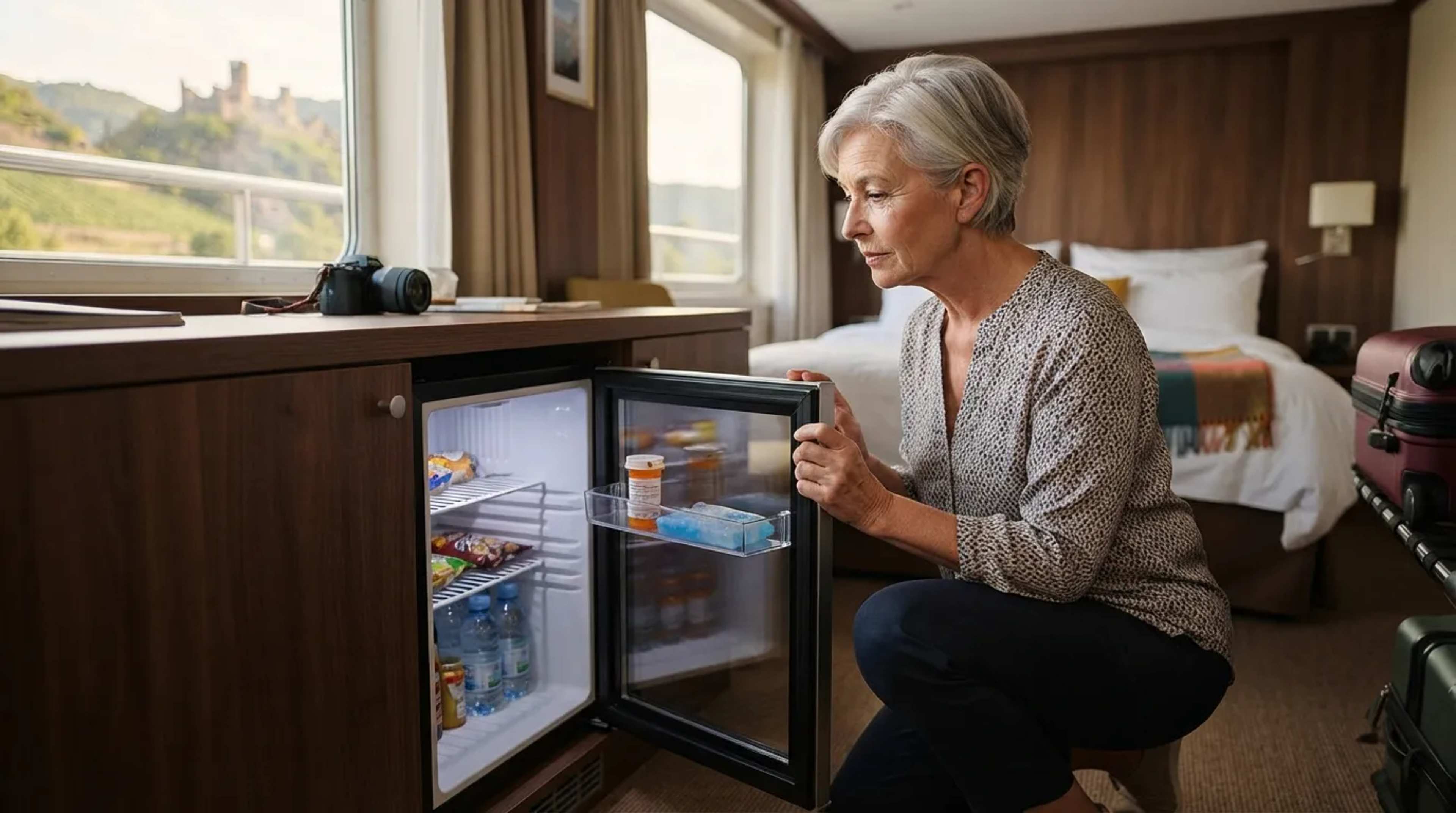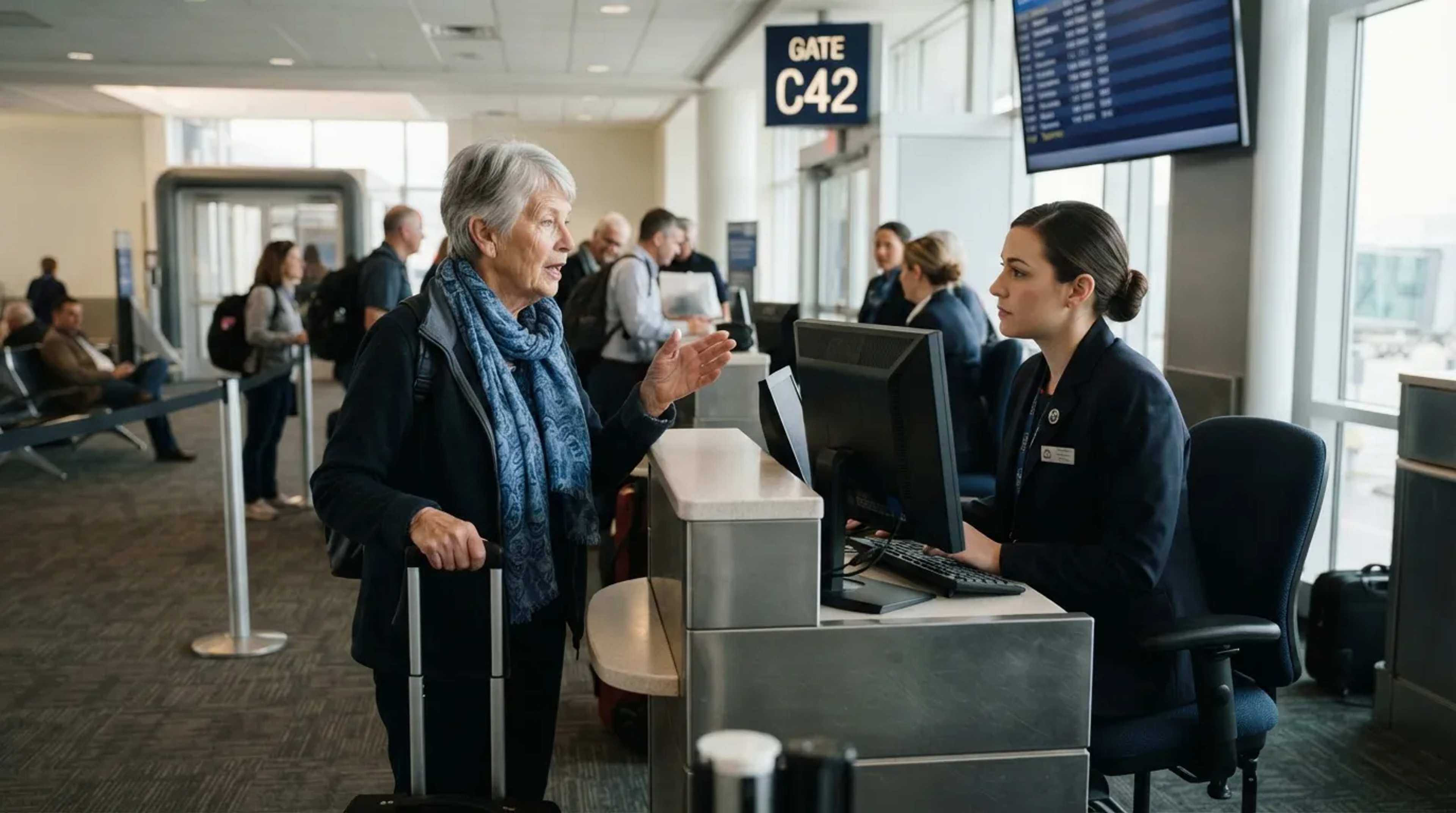
A European river ship usually carries somewhere between 100 and 180 guests1, and every one of them shares one sun deck, one lounge, one dining room and one gangway. That is why a habit that disappears on a big ocean liner lands on the same few crew members all week long.
Some of the habits below are small irritations, like a towel on a chair. One of them can leave you waving at your own ship from the pier, and it is waiting at the very end of the list.
1. Towels Left on Sun-Deck Chairs for Hours
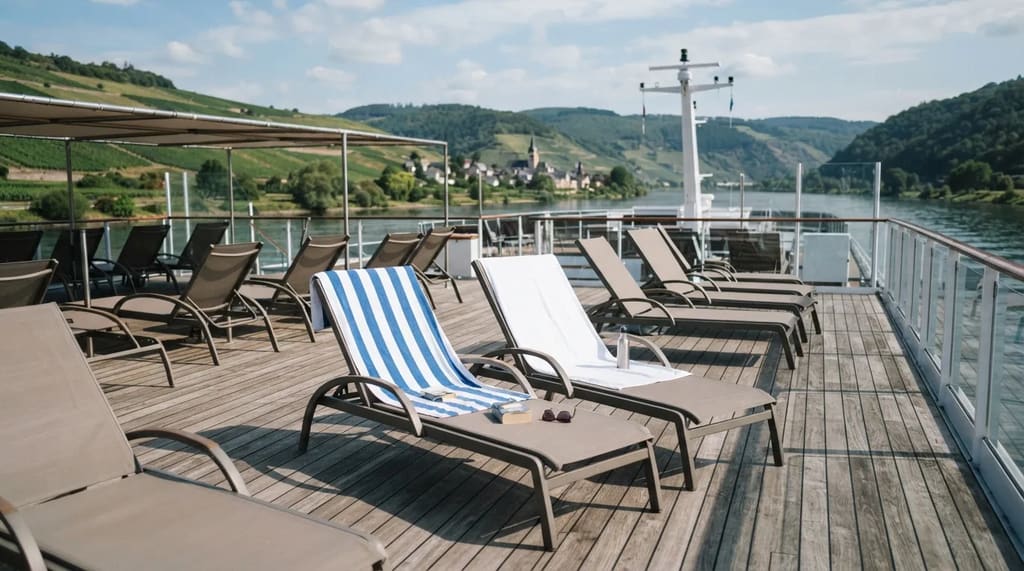
The sun deck is one of the few open-air public spaces on a river ship, so a good chair up there feels like a prize. That is exactly why a towel draped over one all morning gets noticed by everyone walking past.
A reserved chair that sits empty for hours is a chair nobody else can use. On a ship this small, other guests quickly work out which towels have an owner nearby and which have simply been abandoned.
On some routes the sun deck has to be closed for safety at low bridges. A chair held all morning on a deck that is shut is held for nothing, so I would leave the towel in the cabin until you are ready to sit.
The same instinct to hold a place follows guests downstairs, where it goes to work on the dining room.
2. Coats and Napkins Holding Dining Room Tables
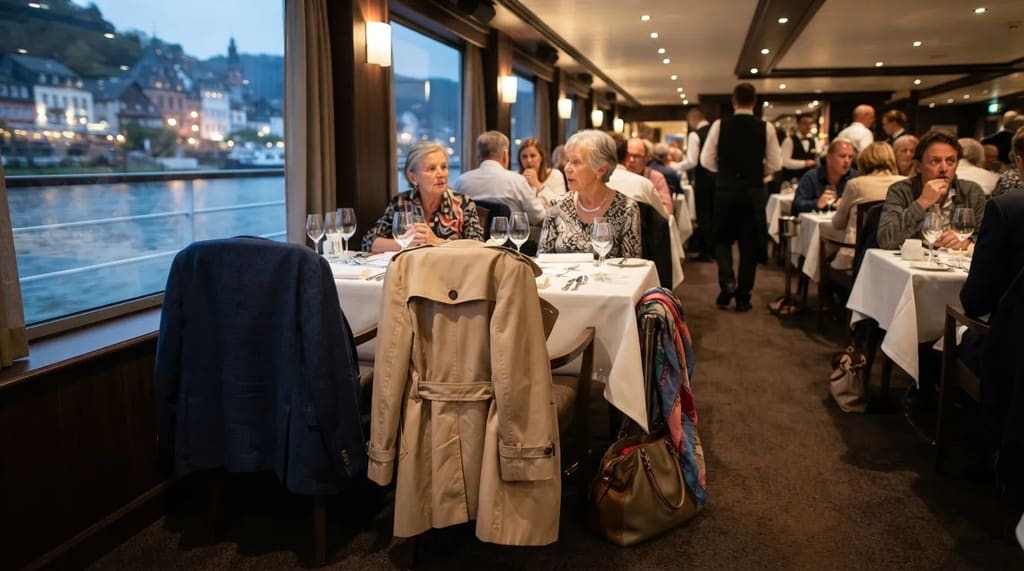
River dinners are usually open seating, which means no assigned tables, and you can sit with whomever you like from one night to the next.2 A jacket or purse draped across several chairs turns that friendly arrangement into something nobody agreed to.
On some ships the dining room opens just as the cruise director’s preview of the next day ends, so a lounge full of guests heads downstairs at once. That is the moment a few of them spread out and claim tables for friends who have not even left their cabins.
Many river dining rooms have few tables for two, and some have none at all. Late arrivals are left choosing among whatever seats remain, often with a lap of coats still sitting beside them.
- If you want a quiet table, arrive when the room opens and sit down.
- If friends are coming, sit with them as they arrive and wave them over. A person in a chair holds a place better than a coat does.
A coat on a chair is not a reservation, and the servers cannot treat it as one. The same habit that fills the sun deck with towels fills the dining room with coats.
3. Crowding the Gangway Before It Is Ready
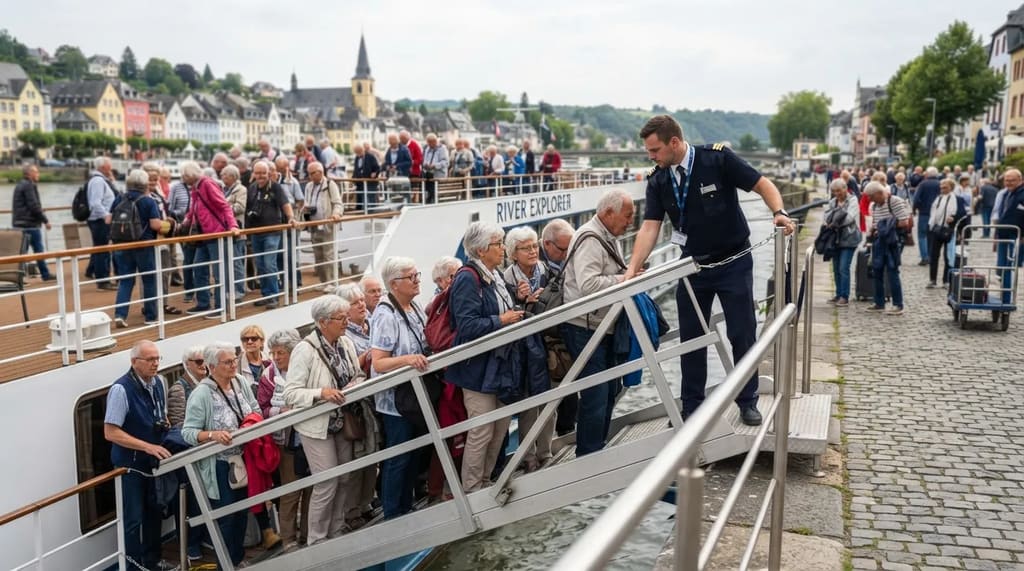
A gangway’s slope depends on the height gap between the deck and the pier, and when the river drops, that gap grows and the same gangway gets steeper.3 Someone on the crew has to set it and look it over before anyone steps on.
A cluster of guests waiting at the top does not speed that up. It gives the crew less room to work, and it puts people at the head of a steeper slope before it has been checked.
The picture changes when ships are rafted. Sometimes two or three ships are moored alongside each other, so passengers on the outermost vessels must cross narrow gangways that link the ships before they reach the shore.4
If you are in no hurry, stay in the lounge until the line thins out. The town will still be there, and you will cross with room to take each step.
Back aboard, the corridors have their own problem, and it begins with how heavy the cabin doors are.
4. Heavy Cabin Doors Let Go to Slam
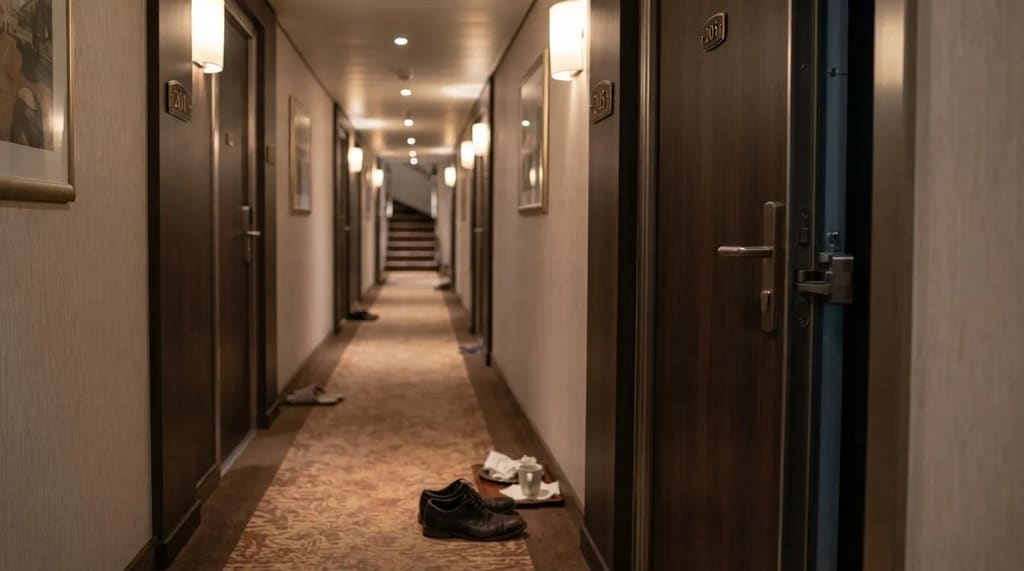
Cabin doors on ships are heavy, and they close harder than they look. Light sleepers often complain about being jolted awake by a door slamming late at night.
On a river ship the cabins sit close together along narrow corridors. Your neighbor is a wall away, and a late return from the lounge sounds very different through it.
The hallway has a second problem. Shoes, room-service trays or luggage parked outside a door turn a narrow corridor into an obstacle course, especially for crew and for anyone who moves slowly.
Housekeeping works along that same corridor, so a tray left out overnight is in someone’s way by morning. Hold the handle until the latch is nearly home and let it close the last inch.
Doors matter on the first afternoon too, when some guests try the handle of a room that is not yet ready.
5. Trying Cabin Doors Before the Rooms Are Ready
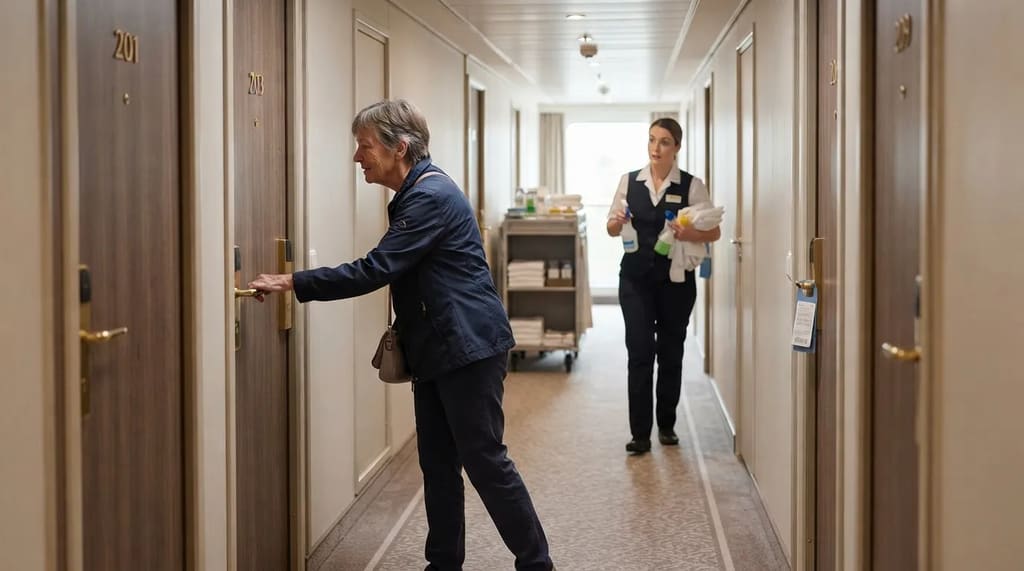
On embarkation day, crew members are busy cleaning and preparing the cabins for the guests who are arriving. Until they open the doors, those rooms are a work area, not a lobby.
Walking into that space hinders the crew, even if all you are doing is dropping off carry-on bags. Wandering the corridor and testing handles also keeps them from finishing the job.
Fast Facts
- Until the crew opens the doors, cabins are still being prepared.
- Reception can tell you where bags can wait in the meantime.
- The lounge is the natural holding spot on a small ship.
- Welcome touches in the lounge vary from ship to ship.
Ask reception where your bags can wait, and find a seat in the lounge. A river ship is small enough that the crew will tell you the moment the rooms open.
The wait feels longer than it is when you are tired from travel. Some ships soften it with a light welcome in the lounge, though that varies from ship to ship.
A few minutes on a lounge sofa with your bag is a better start to the week than walking in on a half-made bed. It also keeps the corridor clear for the people who are trying to finish.
6. Conversations That Drown Out the Evening Briefing
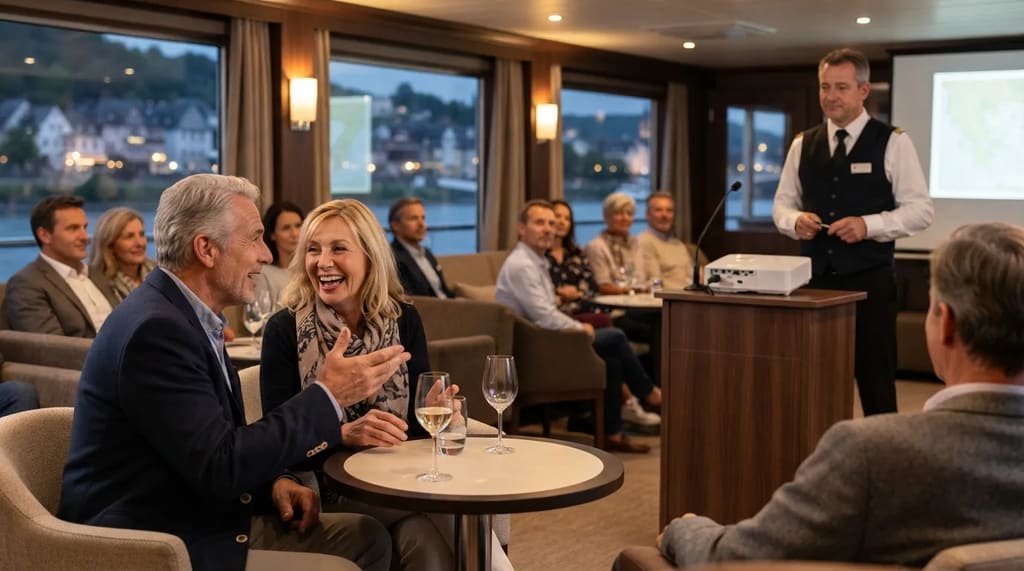
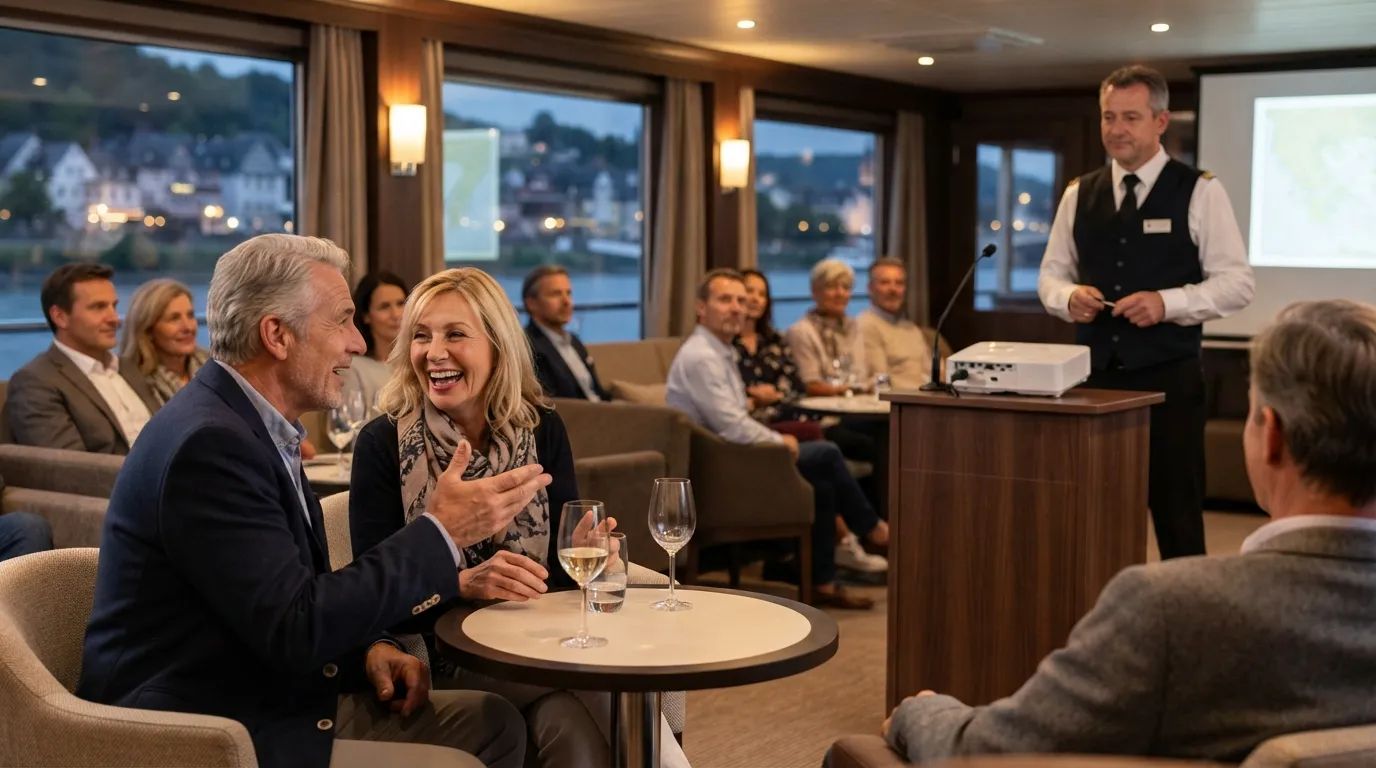
The lounge is where the cruise director goes over the next day’s plan. Guests often gather there over drinks to hear the itinerary shortly before dinner.
That briefing carries the information that matters for the next morning, such as meeting times and which group to join. Guests who talk through it tend to be the ones asking the crew to repeat it at the gangway the next day.
Phone calls and videos played aloud add to the noise. The usual courtesy is to keep calls brief and step somewhere private.
If you want a conversation, the bar side of the lounge after the briefing is the better place. The briefing itself is short and worth the quiet.
Another moment draws a crowd and a good deal of noise, which is the passage through a lock.
7. Camera Crowds at the Rail in the Locks
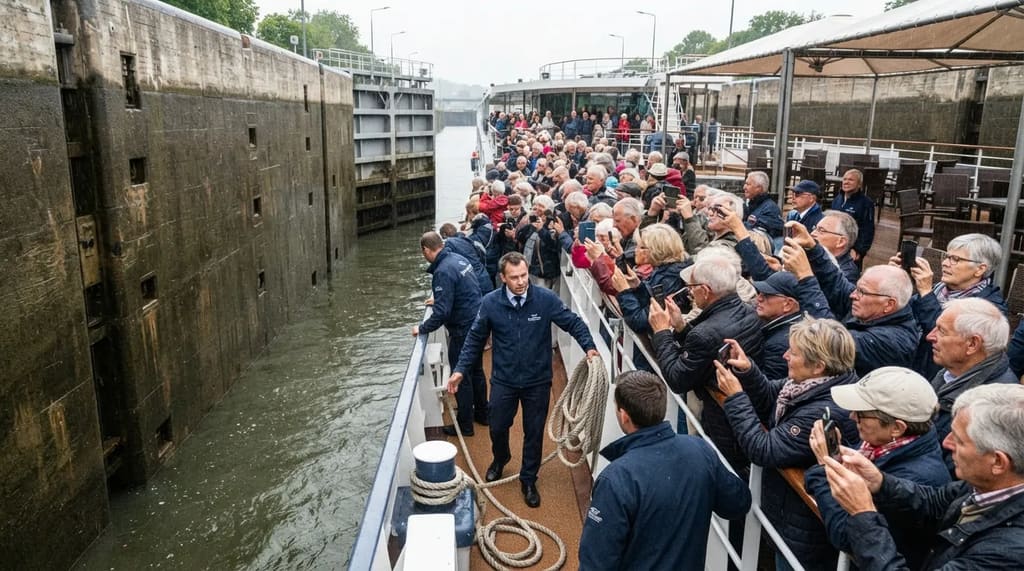
A lock is one of the high points of a river day, and guests head for the rail to see it. The crew is on deck at the same time, working the lines and watching the clearance, and they need the walkways to be open.
Blocking a walkway for a photograph is easy to do without noticing. A guest leaning out over the rail, or planted in the one passage the crew uses, creates trouble for everyone on deck.
Weather is part of it too. A sudden shower on an open deck can soak a camera bag in seconds, and a crowded rail leaves nowhere to move.
Take your photo from where you are standing, then let someone else step in. A short clip from a chair will hold as much of the lock as a place at the front rail.
Photographers cause trouble away from the rail as well, in places far narrower than a lock deck.
8. Stopping to Photograph in a Narrow Passage
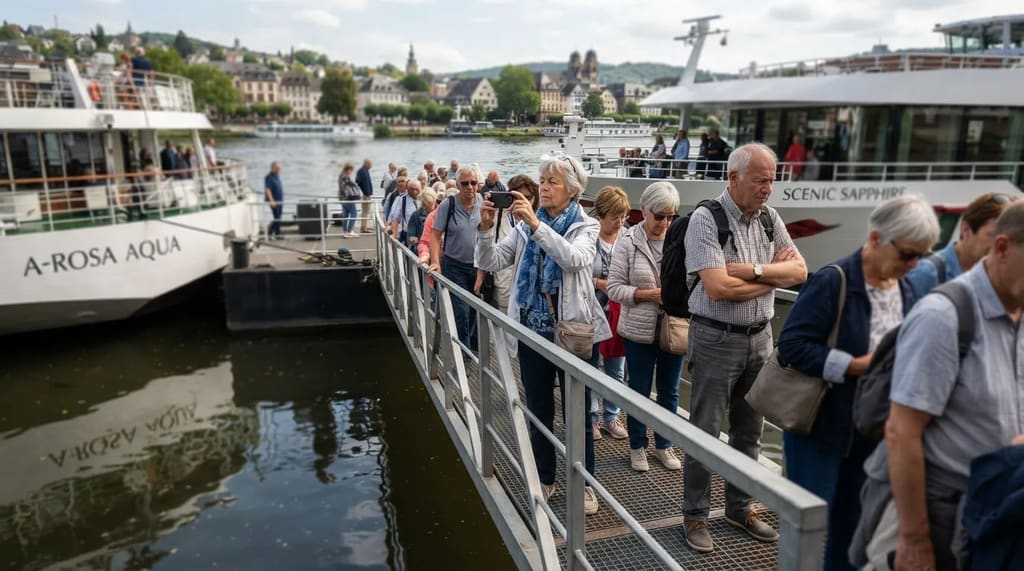
A gangway, a stairway and the link between two rafted ships are all places where one guest who stops brings the whole line behind them to a halt. The view is often good in exactly those places, which is the problem.
Stairs matter more on a river ship than on a big one. Many river ships have an elevator to the top passenger deck, but typically not one up to the sun deck.5
Quick Compare
- Ship at a regular dock: step off the gangway and walk ashore, with room to pause.
- Rafted ships: up to the top deck, across a short gangplank, then down the other ship’s stairs.
- Sun deck access: usually by stairs, since the elevator typically stops at the top passenger deck.
When ships are rafted, some guests must go up to the top deck of their own ship, cross using a short gangplank, and go down the stairs of the other ship.4 A guest who stops halfway across blocks the only route.
The view from the middle of a crossing is rarely better than the view ten steps on. Take the picture once you are ashore, where there is room to step back.
The gangway you crowded in item 3 is the same one this habit clogs on the way off.
9. Open Curtains With Another Ship Alongside
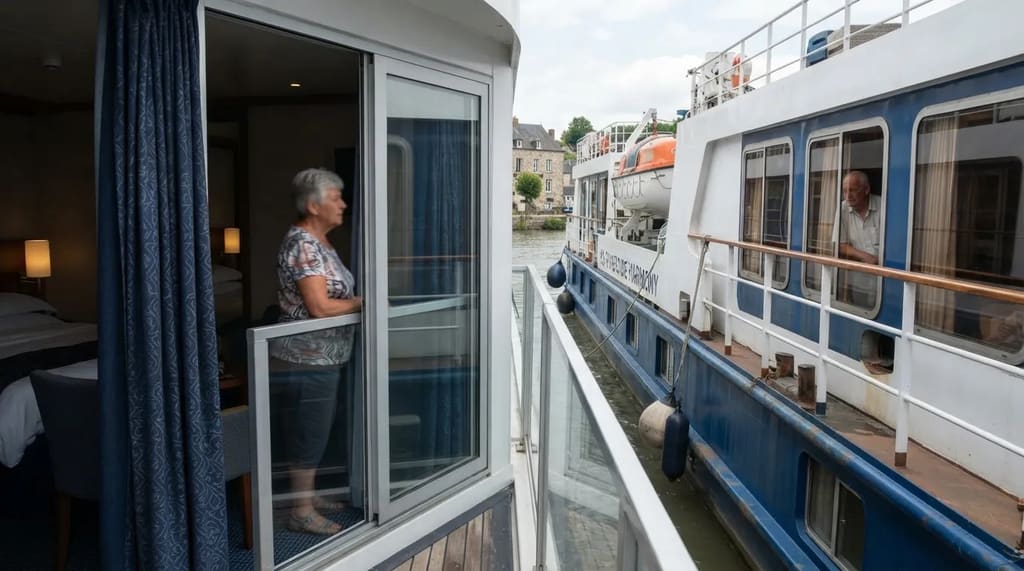
River ships sometimes dock side by side, which is known as rafting. A balcony or French balcony may then face another ship instead of the river, and passengers may need to keep curtains closed for privacy.6
A French balcony is a sliding glass door that you cannot step through, so it works like a large window. Opening the curtains out of habit means being on view to the cabins facing yours.
Guests who cross between ships have a similar duty. They are walking through a neighbor’s lobby or over its sun deck, on a vessel where other people are staying.
I would leave the curtains closed whenever the window faces another ship, whether or not anyone seems to be looking. A glance out at the river can wait until the ships separate.
Rafted or not, the day ashore starts at a meeting point, and some guests treat the time printed there as a suggestion.
10. Straggling at the Meeting Point on the Dock
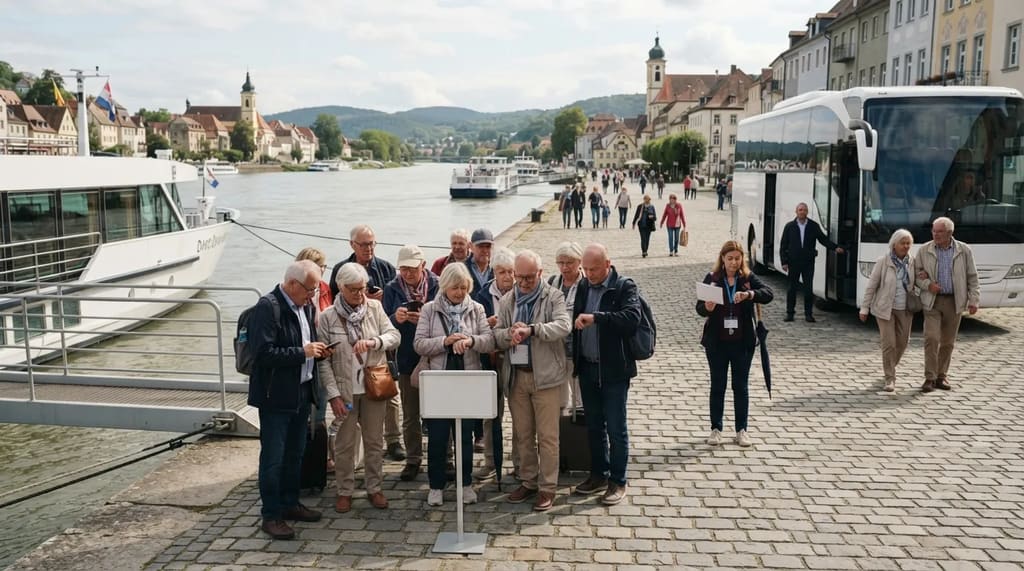
Ocean ships often use tenders to reach the shore, but river passengers often just step off the gangway and start walking. On a river ship, lateness shows up instead at the point where a tour or transfer is meant to leave.
When a group is due to leave at a set time, a few late arrivals hold up the guide and the rest of the group. The ones who arrived early end up standing on the dock, watching the clock.
Some itineraries lean on coaches more than guests expect. A coach is where a late arrival is felt most, because everyone is already seated and waiting.
Be at the meeting point a few minutes early and find a place to sit. If you are not ready, tell the cruise director that morning rather than letting the group wait.
A group that leaves on time still depends on its slowest walkers staying within the guide’s earshot.
11. Drifting From the Walking Group Without a Word

On walking tours, guides use small radio receivers so each person can hear while walking behind.7 A guest who wanders out of range stops hearing the guide, and the guide cannot see who is missing.
Falling behind is rarely the guest’s fault. Many river lines offer different pace groups on the same tour, but you usually have to ask.7
Worth Knowing
- Radio receivers let you hear the guide from several steps back.
- Out of range means out of earshot, and out of sight in a crowded old town.
- Pace groups often exist, but you usually have to ask for one.
- Ask on the first morning, before the group sets off.
That is worth doing on the first morning, before the group sets off. Joining a slower group is a far smaller matter for the crew than counting heads at the next corner of a cobbled old town.
If you would rather head back early, ask the guide how to leave the group and who to tell. Telling someone is the whole habit.
Telling the guide solves the walking, but dinner still has set hours.
12. Walking Into Dinner After the Kitchen Moves On
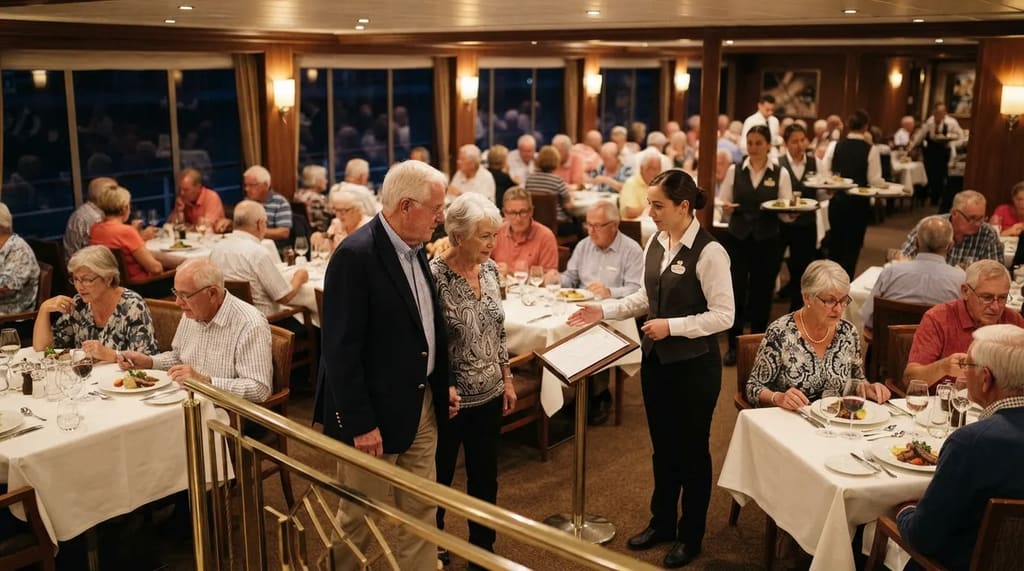
On river ships, the dining room is open at set hours and you can usually arrive without a reservation. That flexibility has an edge, because the kitchen and the servers work through the evening in a steady rhythm.
A kitchen can prepare an appetizer for someone who arrives late, but it has already moved past that course for most of the room. The dining staff on a small ship are a tight group, and a late request lands on the same few people.
Late arrivals also find the seating changed. If you enter fifteen minutes after the room opens, those who want to sit together will have done so.
Related Stories From Travelbinger

If you know the evening will run late, say so early. It is the same sort of courtesy as the seat you did not save in item 2.
The ship’s position on the river also decides when the sun deck is open, which brings guests to an instruction that is easy to ignore.
13. Ignoring the Call to Stay Seated Under Bridges
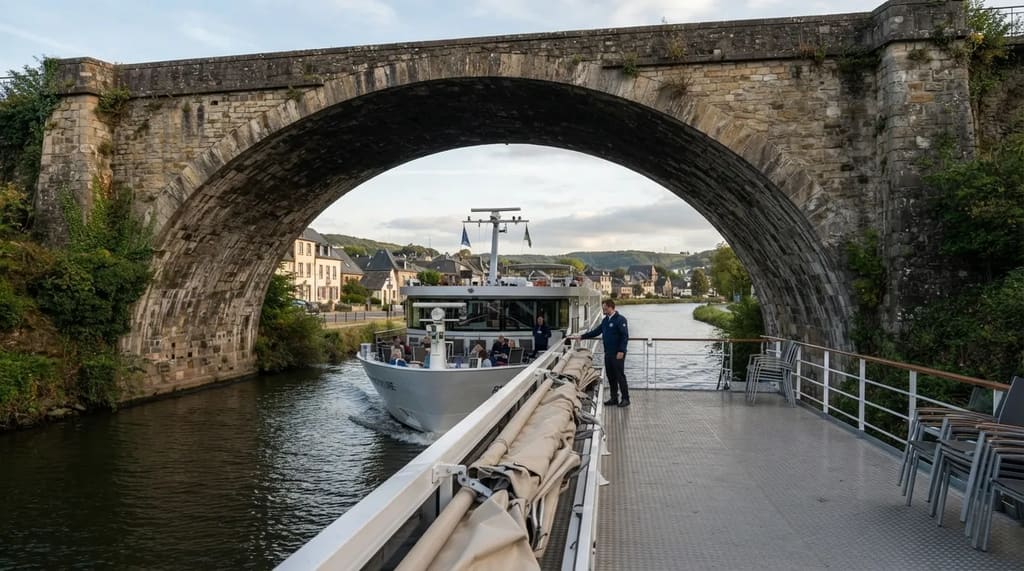
Passing under a low bridge can be a game of inches. The crew folds the canopies down and asks guests to stay seated for a short while.
The sun deck is the same place where the towels piled up on chairs in item 1. When the call comes, a guest standing at the rail for one more photograph is the one the crew has to deal with.
At a Glance
- Canopies and most deck structures come down for low bridges.
- On smaller rivers, the wheelhouse is lowered too.
- The deck closes to guests during the crossing.
- The announcement can come with little notice.
On the smaller rivers, the crew takes down most of the structures on the deck and lowers the wheelhouse, and the deck closes during the crossing.5 That is why the instruction is firm and why it often comes with little notice.
When you hear the announcement, sit down or go below, because the bridge will not wait for one more picture.
All of that is about a few minutes on a deck. The last habit is about what happens when the minutes run out ashore.
14. Cutting the Excursion Return Time Close
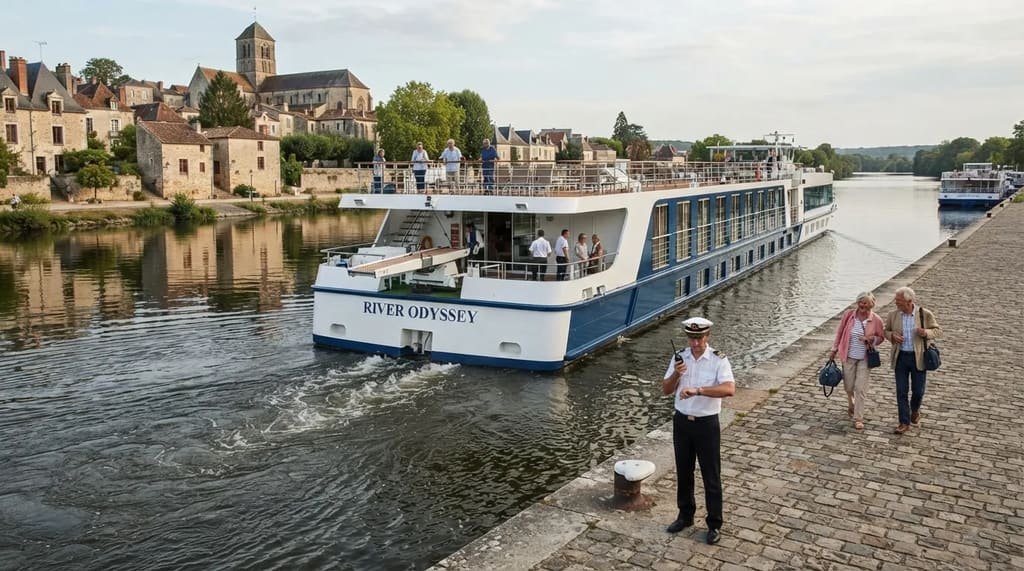
An excursion that ends shortly before the ship is due to leave feels harmless at the time you plan it. It is the habit with the largest consequences on this list, because the ship has a departure time, and it does not wait for one person.
The river itself sets that time. Rivers do not follow the schedule on paper, and a departure is built around the traffic and the berths ahead.
The terms differ by how the outing was arranged. When an excursion is booked through the cruise line, the ship generally waits if the delay is that tour running late, but that courtesy does not stretch to an independent outing.8
A good rule of thumb is to plan to return to the ship an hour before the all-aboard time. I would not book anything that leaves less room than that, however short the walk looks on the map.
Late returns also send the crew looking for a missing guest while the rest of the ship waits. The evening briefing, the guide’s exit plan and the dinner hours all exist to keep that from happening.
Check the daily program for the departure time, since ship time and local time are not always the same.8 Then set an alarm for the walk back.
Closing Thoughts
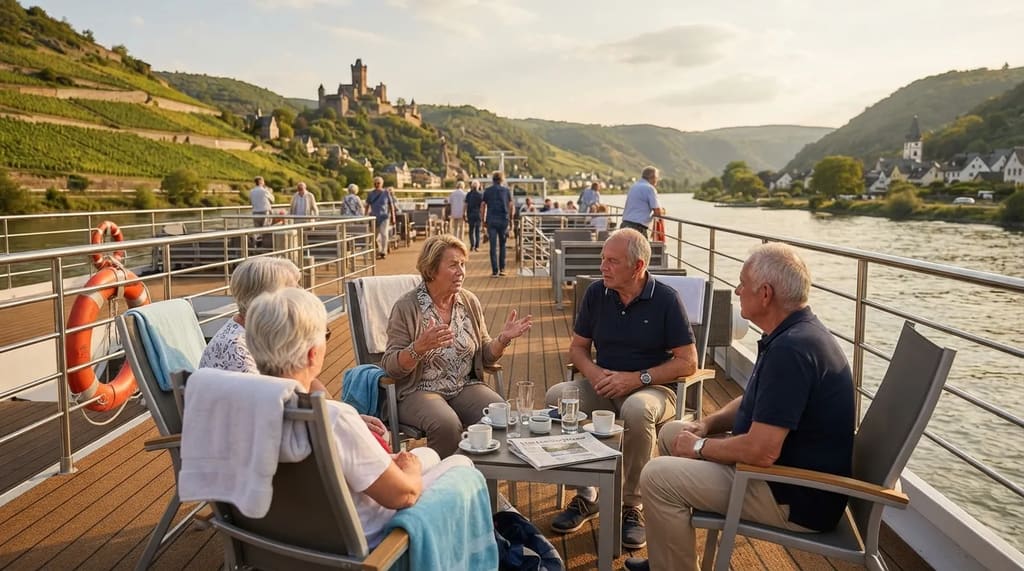
These habits have the same root, which is that a river ship is a small place that runs on a shared clock. A towel, a door or a few minutes at the meeting point looks private until a hundred people live inside the result.
Before you do something on the ship, ask what it would be like if every guest did it. Then read the daily program each evening so the next day’s times are in your head.
On a river cruise you have taken, which of these habits did you see most often on board?
Bonus: The Pre-Shore Routine Nobody Tells You
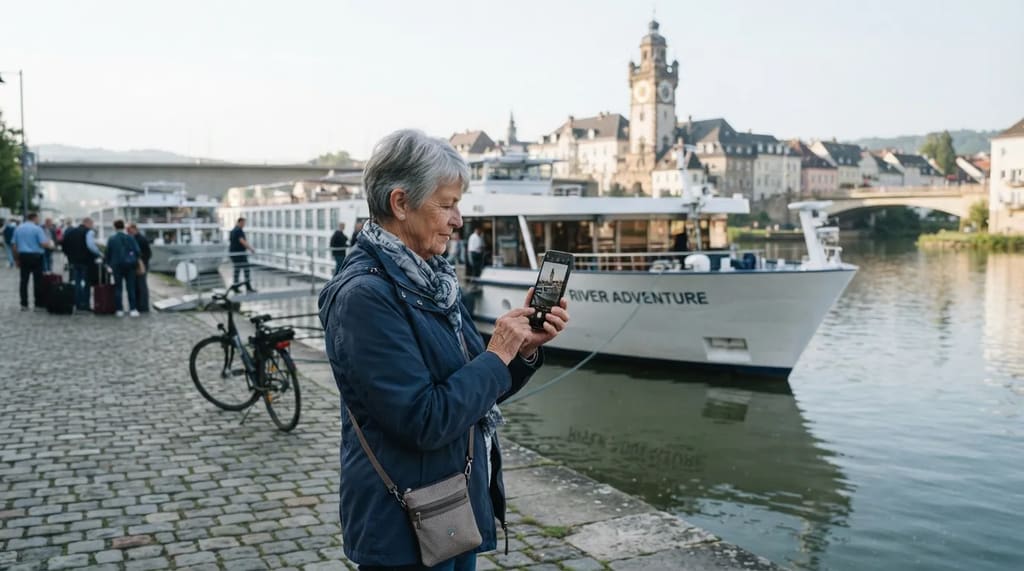
Before you step off the ship each morning, spend two minutes building a “getting back” kit on your phone. It is the one habit that quietly prevents most of the stress on this list.
- Save the ship’s contact number. Ask reception for the on-call or emergency number for the day, usually printed in the daily program, and save it in your phone under the ship’s name.
- Photograph the ship at its berth. Stand back so the ship’s name and a nearby landmark, bridge or street sign are in the frame. River towns often line several similar-looking ships along one quay, and that photo tells you which one is yours.
- Set two alarms. One goes off an hour before the all-aboard time, and one goes off when it is time to start walking back.
- Screenshot the daily program. The all-aboard time and the meeting point stay readable even if you lose signal in an old town.
Do it over breakfast and it takes less time than finding your seat in the lounge. If something goes wrong ashore, you will have the number, the place and the time already in your pocket.
- CroisiEurope Ship Capacity: https://en.wikipedia.org/wiki/CroisiEurope
- Avalon Affinity Onboard: https://cruisepassenger.com.au/ships/avalon-affinity-2/
- River Cruise Accessibility Guide: https://cruiseports.co/river-cruise-accessibility/
- River Cruise Rafting Explained: https://cruiseports.co/river-cruise-rafting-double-docking/
- Sun Deck Low Bridges: https://www.cruisemapper.com/deckplans/SS-Helen-1617/deck04-9091
- Rafting and Cabin Privacy: https://cruiseports.co/river-cruise-port-or-starboard-cabin/
- Cruise Critic Shore Excursions: https://www.cruisecritic.com/articles/shore-excursions-on-a-river-cruise-what-to-expect?stay=1&posfrom=2
- Missing Your Cruise Ship: https://www.cruiseshiptracking.com/blog/left-behind-cruise-ship-pier-runners