The brochure promises slow mornings and scenic windows. The real story is quieter. The first few hours of a long coach tour, from the wake-up call to the first rest stop, tend to set the mood for everything that follows.
These 15 missteps are small and easy to make at 7 a.m. Each one can turn into a sore back, a missed dose, or a cold shoulder by lunchtime. A couple have nothing to do with packing, and one may shape your whole trip more than any bag or shoe. Count down and see how many sound familiar.
#15 – The Suitcase That Looks Exactly Like 40 Others

Picture a hotel lobby at dawn with dozens of black rolling bags lined up like identical soldiers. Most coach tours use a porter service, so your bag leaves your sight early. When every suitcase looks alike, mix-ups happen fast. A bag that lands in the wrong room on day one can swallow the whole morning.
The fix is simple and a little silly. Tie a bold ribbon or strap on the handle, and add a tag with your name and phone number. Snap a quick photo of the bag too, so you can describe it to the driver or hotel staff in seconds. The cheapest travel gadget may be a strip of bright fabric. But that’s nothing compared to what can go wrong with what’s inside the bag at #14.
#14 – The Medication Bag Locked Under the Bus
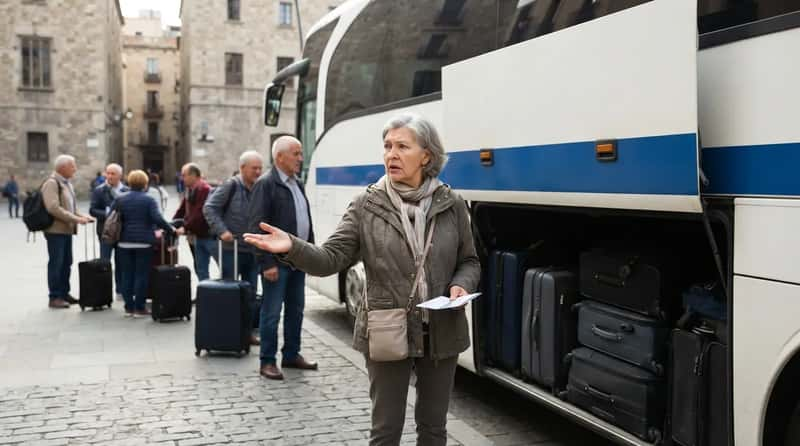
It happens in a flash. The pill organizer goes into the big suitcase, the suitcase goes into the coach hold, and the hold stays shut until the evening hotel. If a dose is due at 2 p.m., you simply can’t reach it. Prescription medicines belong in the bag that stays with you.
Travel health guidance generally says to keep medications in your carry-on, in original labeled containers, with a written list of names and doses. A copy of the prescription helps if anything is lost or questioned. Heart, blood pressure, diabetes and inhaler medicines come first, because a missed dose on the road is hard to fix. Next up is a seat choice that quietly shapes how the whole day feels.
#13 – The Front-Seat Scramble Nobody Warned You About
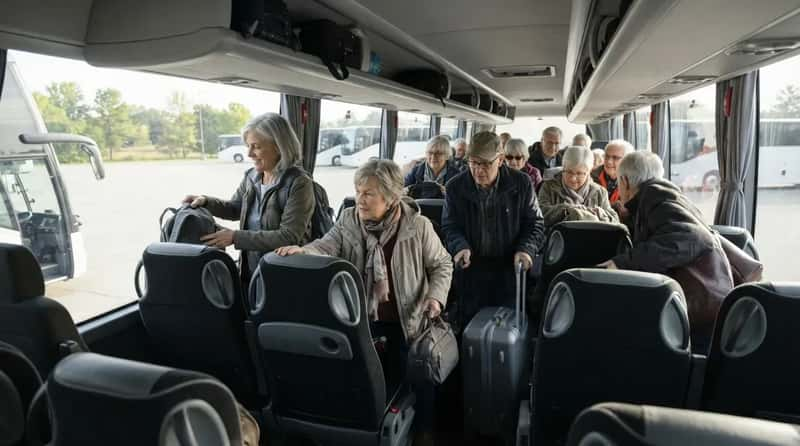
Everybody wants the front. Many travelers over 60 rush for it without asking whether it suits their body, and some regret it by noon. The front offers the best view and often a smoother ride. It can also mean less legroom and a stronger sense of speed, while the back can be bumpier and farther from the door.
Quick Compare
- Front: the widest view and often the smoothest ride, but tighter legroom and a stronger feel of speed.
- Middle: a steadier balance of ride comfort and a view, with easy access to the aisle.
- Back: usually bumpier and farther from the door, but often closer to the onboard toilet when there is one.
Plenty of tours rotate seats daily, so the day-one pick may matter less than people think. Ignoring a rotation rule is also a quick way to earn a few cold stares before anyone knows your name. If you get motion sickness or have a stiff knee that needs aisle space, say so to the guide on the first morning. Now, why does one forgotten strap matter more than any seat? That answer waits at #8.
#12 – The Breakfast Buffet Victory Lap

The hotel buffet looks like a reward. Then comes a heavy plate, three coffees, and a coach ride on winding roads. A big, rich meal right before hours of sitting is a classic recipe for feeling sluggish.
Aim for a balanced plate with protein, fruit, and something gentle on the stomach. Many medications work best with food, so skipping breakfast altogether is no better. Save the unfamiliar dishes for a calmer day. The coach doesn’t always have a bathroom nearby when you need one.
#11 – Skipping Water to Dodge the Bathroom Stop

Here’s a mistake that feels clever. You cut back on water at breakfast so you won’t need a restroom for hours. Many coaches have a toilet on board, but some don’t, and rest stops can feel rushed with a full group. So people quietly drink less and say nothing.
The trouble is that dehydration can bring on headaches, dizziness and tiredness, which are the last things you want on a sightseeing day. Sip steadily rather than gulping, and use every scheduled stop, even if you don’t feel the urge yet. A guide would much rather add two minutes than deal with a dizzy passenger. Your legs need attention too, as the next item shows.
#10 – The Brand-New Walking Shoes
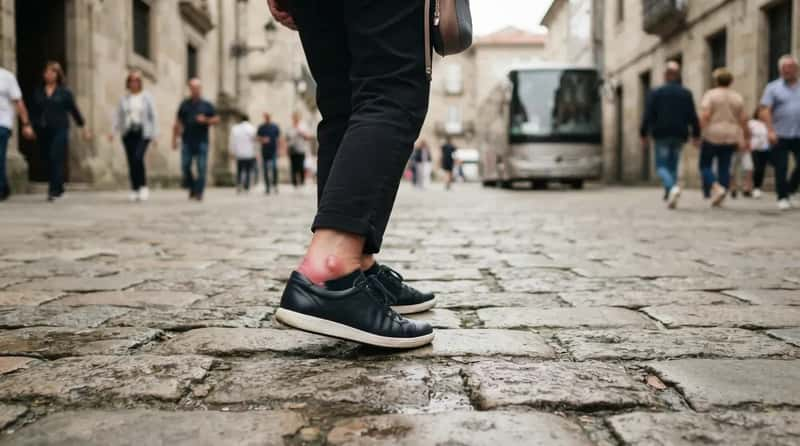
You bought them just for the trip. They looked perfect in the store. Then the first cobblestone street arrives, and by lunch the blisters do too. A pair worn for the first time on day one is a gamble many travelers lose.
Foot care matters more as we age, particularly with diabetes or circulation concerns. Break shoes in for weeks before departure, and pack a second comfortable pair. Cushioned socks and a small blister kit weigh almost nothing. The walking part of a coach tour often adds up to a surprisingly long day on foot. What happens when your legs go still is the next surprise.
#9 – Sitting Still Like It’s a Movie Theater
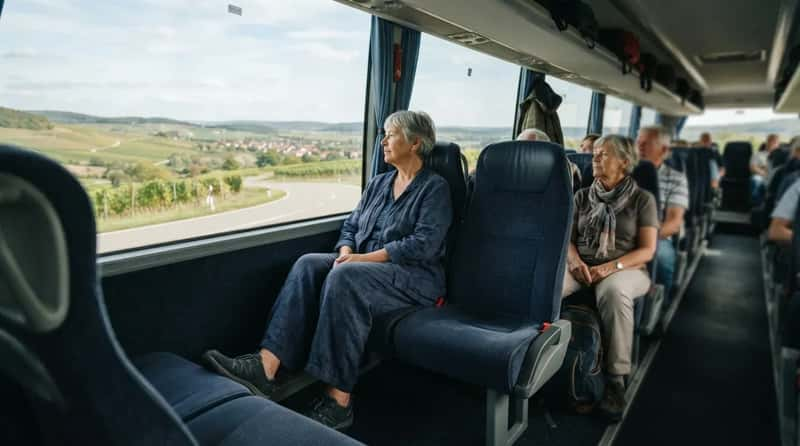
The seats are comfy and the scenery rolls by, so you simply stay put. That’s the quiet trap. The CDC notes that sitting for long periods, generally four hours or more, can raise the risk of blood clots in the legs. Age is one of the factors that can add to that risk.
Fast Facts
- The threshold: the CDC points to travel of about four hours or more as the point where clot risk can rise.
- The seat trick: flex and point your ankles and calves while you ride.
- The stop rule: stand and walk at every break, even a short one.
- The wardrobe tip: loose clothing beats anything tight around the legs.
The advice from health agencies is easy to follow. Stand and walk at every stop, flex your ankles and calves while seated, and wear loose clothing. Some travelers ask a doctor about compression stockings before a long trip. On a coach, the stretch break is not a delay. It’s part of the plan, and your legs will thank you. Speaking of safety, there’s a clip many passengers still leave undone.
#8 – Leaving the Seat Belt for “Later”
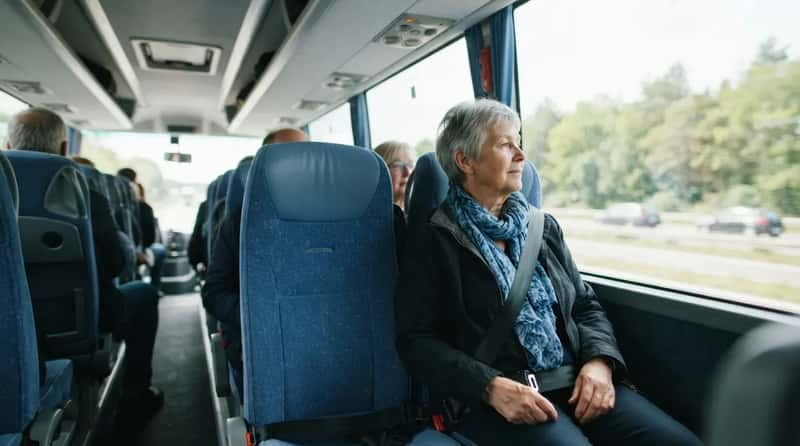
Coaches feel big and sturdy, which fools people. Plenty of passengers figure the belt can wait until the highway. But federal rules have required lap-shoulder belts on new U.S. motorcoaches built since late 2016, and safety agencies urge riders to use them.
Some passengers say buckling up on a bus feels unnecessary. Yet sudden braking on a crowded road doesn’t send a warning first. Buckle in before the engine starts, and do it again after every stop. A two-second click now beats a very bad story later. Even the best-prepared traveler can get tripped up by timing, though, as #7 shows.
#7 – Wandering Back Five Minutes Late
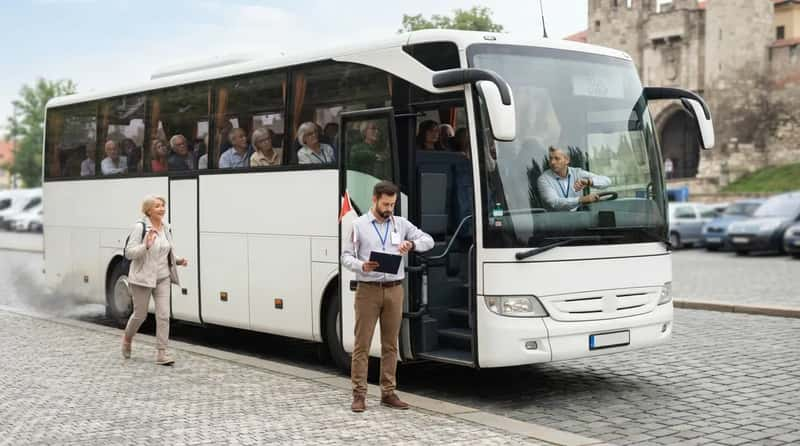
Nothing sours a group faster than a coach idling for one person. On day one nobody knows your habits yet, so every minute counts as a first impression. Tours run on tight schedules built around entry times, ferries and meals. A five-minute delay can ripple through the whole afternoon.
Set a phone alarm for the departure time, not just the end of the stop. Save the guide’s number and the coach’s number or license plate in your phone. Take a photo of where the coach parked, because identical vehicles line up at big attractions. Many travelers only realize they can’t remember their coach after they’ve stepped off it. A bigger gap hides in the paperwork, and #6 reveals it.
#6 – Assuming Your Health Coverage Follows You
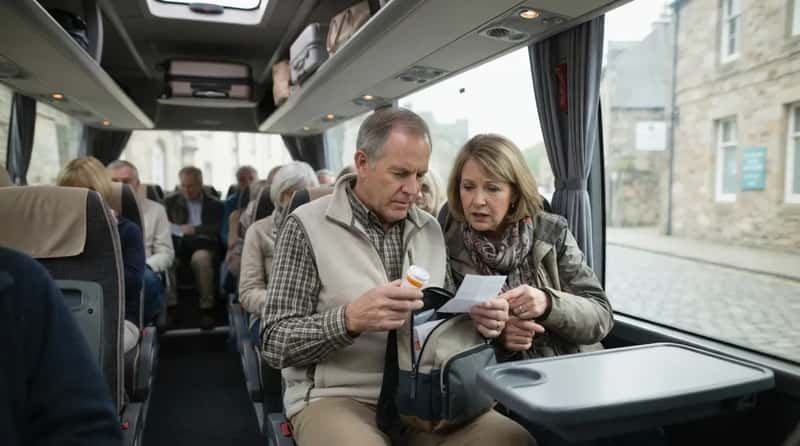
This one catches many retirees off guard. Original Medicare generally does not cover health care outside the United States, apart from a few narrow exceptions. Some Medigap or Medicare Advantage plans offer limited emergency coverage abroad, but the details vary a lot. Many people never check until a clinic bill lands.
Check your coverage before you leave, and consider travel medical insurance, especially for tours outside the U.S. Keep a card with your insurer’s number in your daypack. Carry a short list of conditions, allergies and emergency contacts. A policy in a drawer at home can’t help you on a mountain road. Next comes something far more ordinary that also bites.
#5 – The Daypack That Weighs More Than the Suitcase
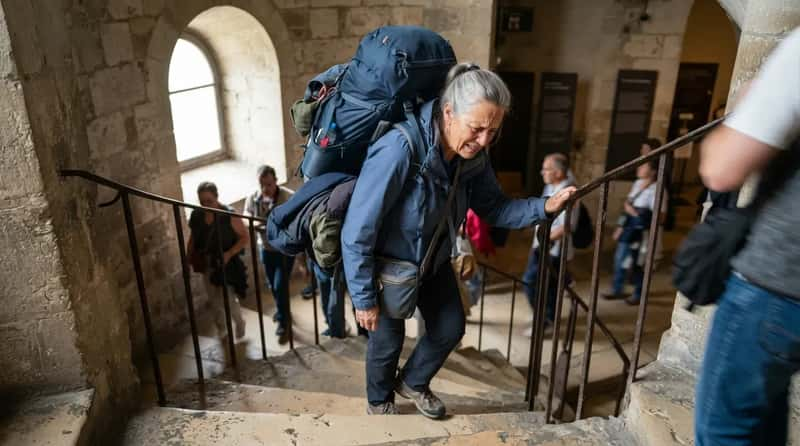
Some travelers stuff the day bag with everything they might need, just in case. By midmorning it feels like a small anvil. A heavy bag turns every museum stairwell into a workout, and shoulder and back strain are common complaints on long tours. Most days you’ll use only a fraction of what you carry.
At a Glance
- Keep: medicine, water, a light layer, tissues, a charger and your documents.
- Carry it: crossbody or light backpack, not a heavy shoulder purse.
- Leave behind: guidebooks and “just in case” extras.
Pack the essentials and trust your phone and your guide for the rest. A crossbody bag or light backpack spreads the weight better than a heavy shoulder purse. The best day bag is the one you forget you’re carrying. And there’s one thing you should always have on hand that isn’t a bag at all.
#4 – Trusting the Weather Outside the Window

The morning looks warm, so you pack nothing extra. Then the coach air conditioning kicks in, and you spend three hours shivering in short sleeves. Or the reverse happens, and a heavy coat turns your seat into a sauna. Big windows let in strong sun, so many coaches run the air cool to compensate.
Dress in thin layers you can add or remove without standing up. A light scarf or cardigan travels well, and a hat helps at stops. Sunglasses and sunscreen matter at open-air stops, even when the sky looks mild. The comfort of your whole day can hinge on one thin sweater. Still, the next slip is about speaking up, not packing.
#3 – Staying Quiet About What You Actually Need

Plenty of travelers don’t want to be “the difficult one.” So they say nothing about a bad knee, a food allergy or a need to sit closer to the door. Then dinner arrives with the one ingredient they can’t eat. Guides usually can’t fix problems they don’t know about.
Worth Knowing
- Mobility limits, such as stairs or long walks, are worth flagging early.
- Food allergies are far easier to handle before the first group dinner is ordered.
- Seating needs, like aisle access or a spot near the door, can often be arranged quietly.
- Medical details that might matter in an emergency belong in the guide’s ear on day one.
A thirty-second word with the guide on day one changes things. Tour staff handle requests like this all the time, and good ones adjust plans quietly. Most guides would rather hear about a need on the first morning than in the middle of an emergency. Yet there’s one more thing nobody warns you about: pace.
#2 – Treating Day One Like a Sprint

It’s your first day, so you try to see everything. You climb the extra staircase, join every optional walk, and skip the rest stop. By dinner you’re wiped out, and there are many days left. Travel fatigue can hit anyone, and recovery sometimes takes longer as we get older.
Plenty of seasoned tour travelers learn to save energy for the long haul. Skip one optional activity, take a seat at a café, and use the free time to rest. Nobody remembers the extra monument, but everybody remembers the day they were too tired to enjoy dinner. The final item is the one nobody puts on a checklist.
#1 – Skipping the “Hello” to the People You’ll Share the Road With

It sounds trivial, but it may be the costliest mistake on the list. On a long tour you share a coach, meals and hotel lobbies with the same faces for days. Many travelers keep to themselves that first morning, waiting for someone else to start. By the time the group settles into its cliques, the early window has quietly closed.
A simple “Where are you from?” at breakfast tends to do the job. You’ll soon find out who has a spare charger, who knows the best café, and who watches out for others. A coach tour is really a small village on wheels. The friendships often start in the first ten minutes. Say hello first, and the rest of the trip tends to feel warmer.
None of these slip-ups looks dramatic over breakfast. Each can quietly cost you comfort, health or goodwill by noon. Keep your medicine close, keep moving, speak up about what you need, and start a conversation early. The best coach tour memories rarely come from the scenery alone. They come from who sat across the aisle.
What’s the one thing you wish someone had told you before your first coach tour morning?