You hand over your suitcase, watch it slide through the rubber flaps, and assume it’s a straight shot to the carousel. It isn’t even close. On a long haul trip, your bag runs a relay race you never see, with scanners, sorting belts, carts, cargo containers and sometimes a second airline.
Airlines mishandle tens of millions of bags a year, and the people who lift them see the same avoidable problems over and over. Some of what they wish you knew is about packing. Some of it has nothing to do with you at all, and a few of these will change how you look at the bag you check next time.
#15 – The Paper Tag Is Actually the Boss, Not the Suitcase
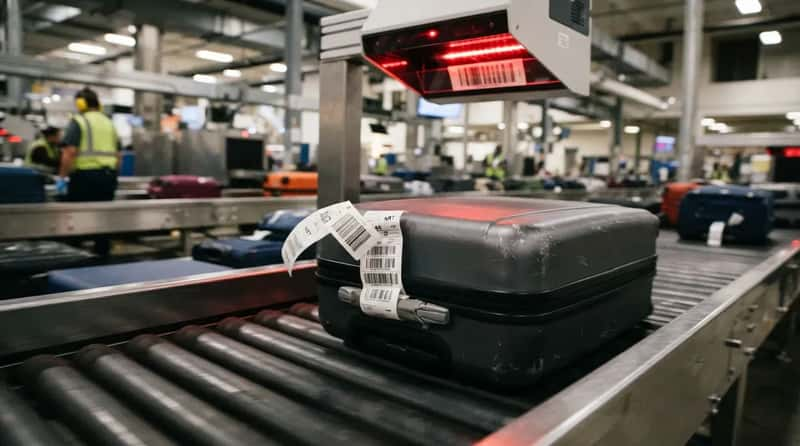
That barcode strip on your handle matters more than the bag it’s wrapped around. Scanners read it to decide where your suitcase goes next. Nobody at the sorting belt is checking whether the bag “looks” like it belongs on your flight.
A wrong tag, or a pile of old ones, can confuse the system. That’s why airlines ask travelers to pull off old tags before a new trip. SITA’s 2025 report listed tagging errors as 4% of delay causes, and bags that simply failed to load as 17%. So a bag can be delayed without ever being “lost” in the dramatic sense. It can just miss the aircraft it was supposed to board.
But that’s nothing compared to what happens when your bag has to change planes, which brings us to #14…
#14 – Your Layover Is Where Bags Secretly Go Missing
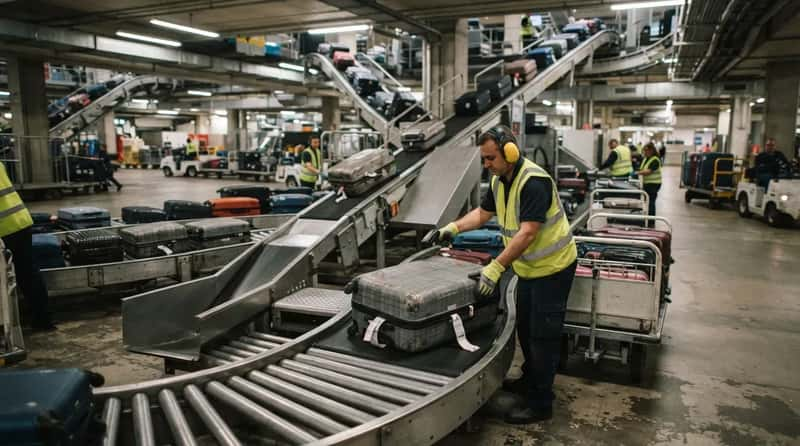
The riskiest part of your trip isn’t the flight. It’s the connection. SITA data shows transfers caused 39% of mishandled bags in 2025. That’s nearly four in ten problem bags tied to a single step.
SITA says international and connecting journeys involve more handlers, more systems and tighter connection windows. Your bag has to come off one aircraft, get sorted, and reach another, sometimes across terminals. You can make the connection and your suitcase can still miss it. A “tight but legal” layover is a bigger gamble for your bag than for you.
But the next item involves a number printed right on a sticker, and handlers care about it more than you’d guess…
#13 – The 50-Pound Line Is Where Backs Pay the Price
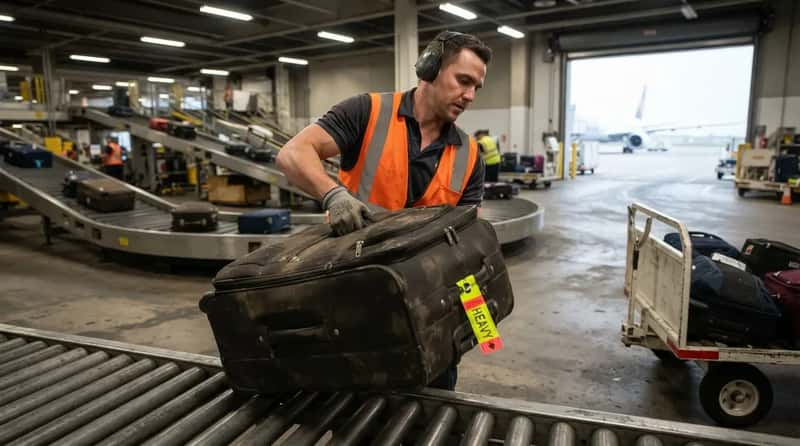
Every suitcase you check gets lifted by a human being. Citing NIOSH, one workers’ compensation law firm says handlers lift about five to ten bags a minute, and each bag weighs between 32 and 70 pounds. Do that math over a shift and it stops sounding like a job and starts sounding like a workout with no end.
Safety guidance summarized by one law firm says bags over 50 pounds should carry a high-visibility heavy tag. That tag isn’t there to annoy you. It’s a warning label for the person about to lift your bag. Handlers say the weight limit is a safety line, not a suggestion.
At a Glance
- Pace: roughly 5 to 10 bags a minute per handler
- Typical bag weight: 32 to 70 pounds
- Heavy-tag trigger: anything over 50 pounds
- Many economy allowances sit near 50 pounds (23 kg), though each airline sets its own limit
And if you think the heavy sticker is the scariest thing in your suitcase, wait until you hear about #12…
#12 – That Power Bank in Your Checked Bag Is a Fire Problem Nobody Sees Coming
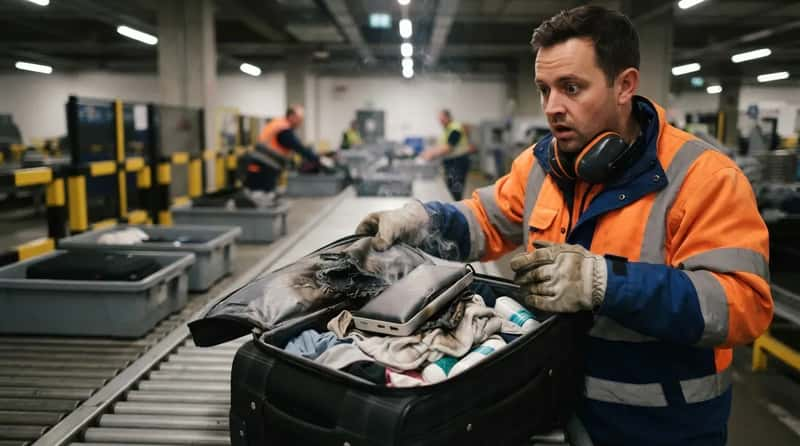
Here’s a mistake that gets bags pulled apart. The FAA says spare lithium batteries, portable rechargers, e-cigarettes and vaping devices are prohibited in checked baggage. They belong in your carry-on. A long haul bag may sit in a hold for many hours with nobody watching it.
The logic is about response time. The FAA says that if a battery overheats in the cabin, the flight crew can respond immediately. Damaged, defective or recalled lithium batteries can’t go in carry-on or checked bags at all. The FAA says they are likely to overheat or catch fire.
But even batteries you’re allowed to pack come with a rule most people miss, and it’s next at #11…
#11 – “Sleep Mode” Doesn’t Count as Off
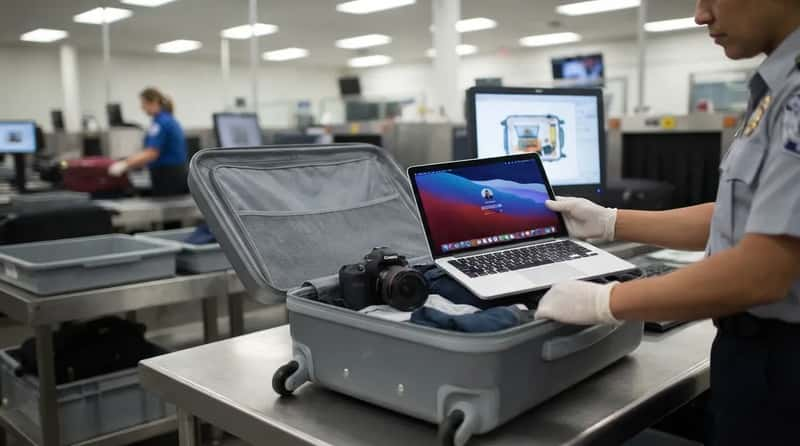
Plenty of travelers toss a laptop or camera into a checked bag and call it done. The FAA is stricter than that. Devices with lithium batteries in checked bags must be completely switched off, not in sleep or hibernation mode, and protected from accidental activation or damage.
The FAA also prefers that these items stay with you. It says phones, tablets, cameras and laptops should be kept in accessible carry-on baggage. Even a suitcase with a built-in battery has to ride in the cabin unless the battery can be removed. Removed batteries then have to follow the spare-battery rules, and smart luggage trips up a lot of people right at the counter.
Of course, batteries aren’t the only thing that causes trouble on the belts. The next item looks harmless, and it isn’t…
#10 – Dangling Straps and Loose Add-Ons Can Snag Machinery
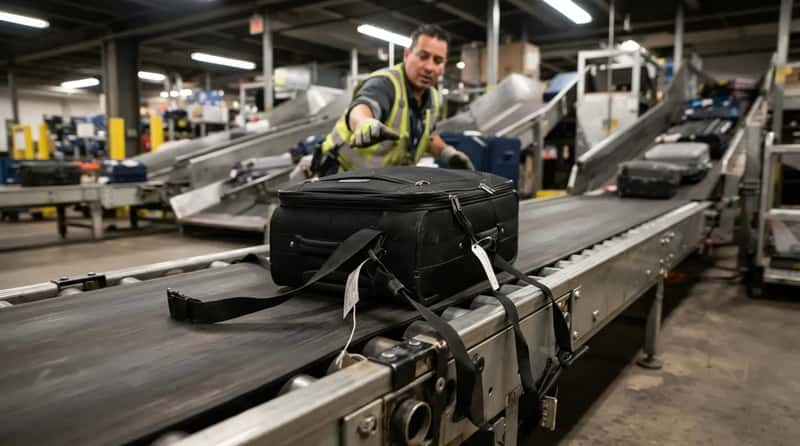
Your bag’s accessories can become a problem. OSHA’s list of baggage handling risk factors includes bags that fall from a height or snag in machinery. A long strap, a loose belt or a hanging pouch gives a conveyor something to grab.
That matters on long haul routes, where checked bags often pass through several conveyors. The same bag that rolls smoothly in your hallway can behave very differently on a sorting belt. Handlers say the best bag is a boring, compact one. Tuck in what you can, and keep anything that dangles out of the picture.
But straps are only half the story. The other culprit is something most of us do on the last night before a trip, and it’s coming at #9…
#9 – The Overstuffed Soft Bag Is Losing a Quiet Battle
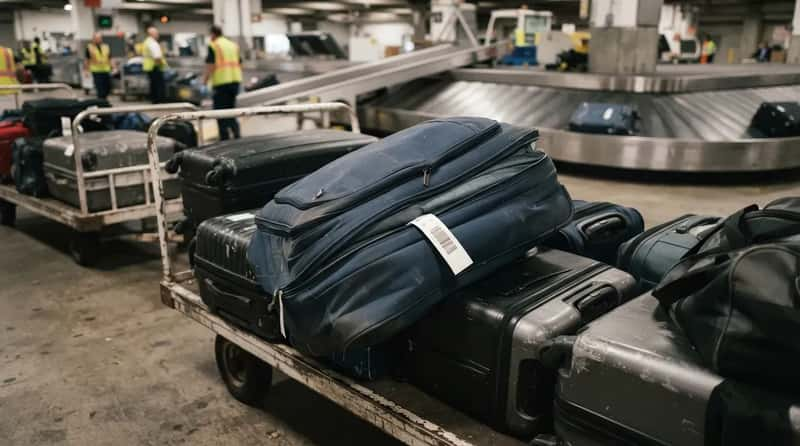
The bulging suitcase is a familiar sight on a baggage cart. Its zippers are under constant strain, and every bag stacked beside it adds pressure from another side. It might make it fine, or it might not.
Damage is a bigger slice of the problem than people assume. Reference summaries of SITA data put damaged bags at 21% of mishandled cases, with delayed and misrouted bags above 75%. That means roughly one in five problem bags arrives hurt rather than late. A bag packed to its limit has no room for the bumps of a long journey, so leave some slack in the zipper line.
Quick Compare
- Delayed or misrouted: more than 75% of mishandled bags
- Damaged or pilfered: about 21%
- Permanently lost: about 4%
Speaking of damage, there’s a sticker many people trust more than they should, and it’s up next at #8…
#8 – The “Fragile” Sticker Doesn’t Do What You Think
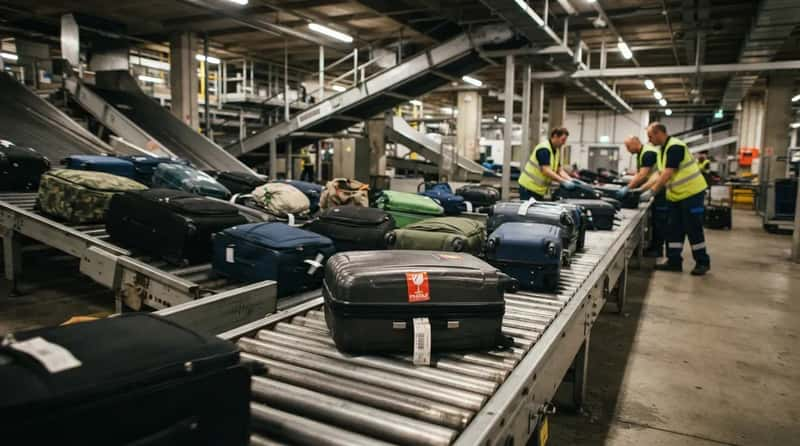
It’s the most hopeful piece of tape in travel. But a bag with a “fragile” sticker still travels through systems built for volume. Sorting belts and conveyors don’t read stickers, so the label is a request, not a different route.
There’s also a paperwork catch. Many airlines’ contracts of carriage exclude fragile items in checked bags from liability. Check your airline’s policy before you pack anything breakable. Handlers say the safest fragile item is the one in your carry-on.
But here’s something that has nothing to do with packing at all, and it’s #7…
#7 – A Full Plane Can Mean Bags Left Behind on the Ramp
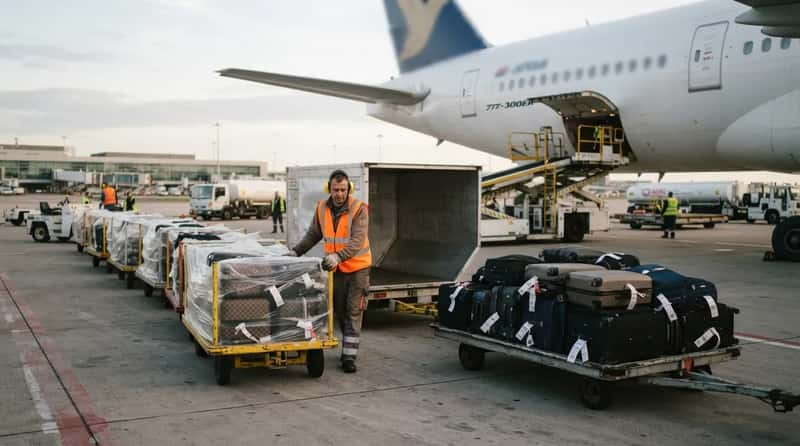
Some bags miss the flight even though they were checked on time. SITA’s list of delay causes includes operational factors such as airport processes, weather, and space or weight constraints. That category made up 10% of delays in the 2025 report. Planes, it turns out, are not infinite.
Separately, 17% of delays came from bags that were simply never loaded. Your suitcase can be in the building, tagged correctly, and still not make the aircraft. That’s frustrating, and it’s almost entirely invisible to you. The bag usually follows on a later flight.
If you think “lost” means gone forever, the truth behind #6 will change that…
#6 – Most “Lost” Bags Aren’t Actually Lost
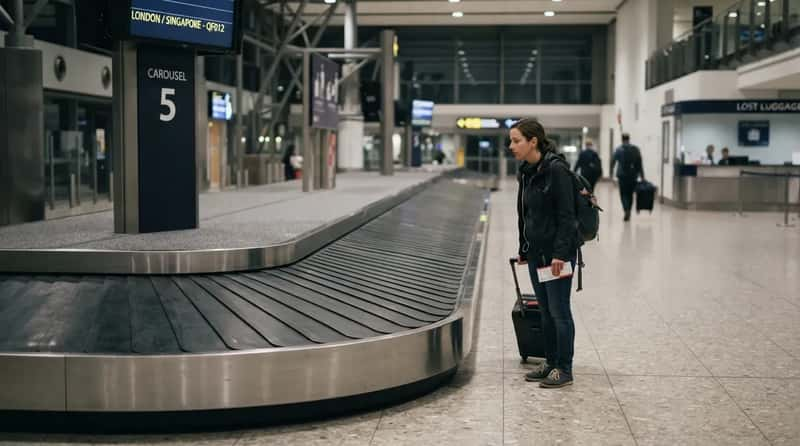
The word “lost” is doing a lot of heavy lifting. SITA tracks bags that are delayed, misrouted, damaged or lost. Delayed and misrouted bags made up more than 75% of cases, and permanently lost bags about 4%. Most missing bags are somewhere in the system.
That’s a hopeful number, even if it doesn’t feel hopeful at an empty carousel. Only about 4% of mishandled bags end up permanently lost. Handlers say the most common ending is a bag arriving a day late. The real problem is that nobody can tell you that while you stand there waiting.
But long haul routes make the odds worse, and the gap between two kinds of flights is bigger than you’d expect, at #5…
#5 – Flying Internationally Multiplies the Risk by More Than Five
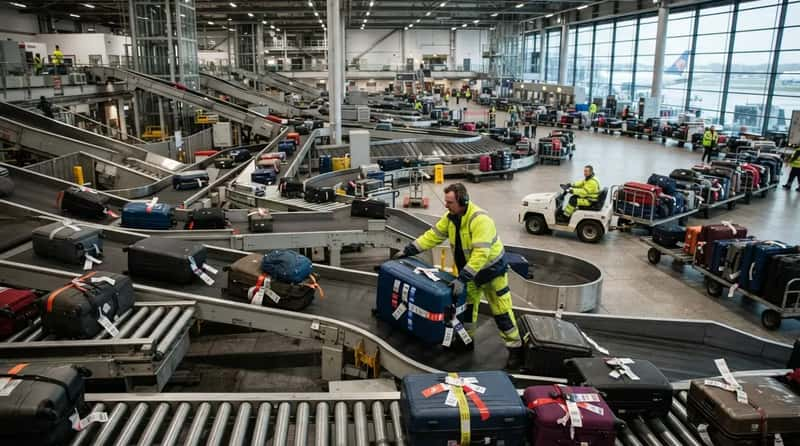
The route matters more than the airline logo. In 2025, global figures showed 9.12 mishandled bags per 1,000 passengers on international routes, against 1.65 on domestic routes. That’s a huge gap.
The explanation is the chain. Luggage is more likely to be lost or misdirected on multi-leg journeys, because each transfer adds a chance for mishandling. International bags run roughly five and a half times the domestic rate. Long haul trips also mean customs, security, and different airports with different systems. Every link has to hold.
The good news is that your bag may be more visible than ever, and #4 explains why…
#4 – Your Bag Is Being Tracked More Than You Realize
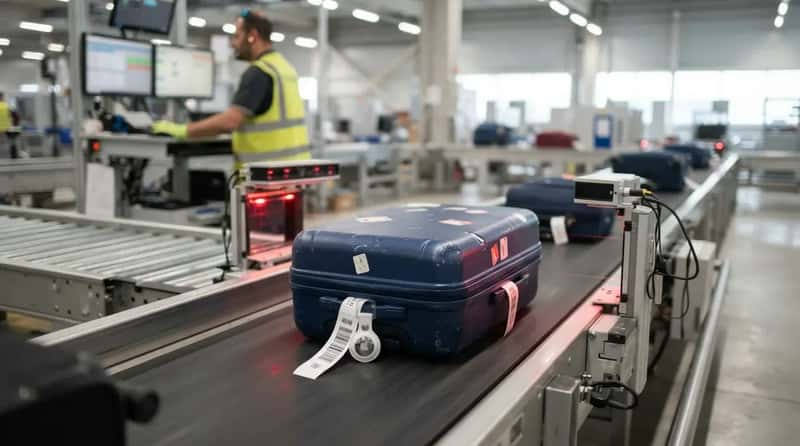
Baggage tracking is finally catching up with parcel delivery. Industry-wide tracking under IATA Resolution 753 has now passed the 50% mark, with full compliance targeted for 2027. More scans along the way means fewer mysteries at the end.
Passengers are part of the picture now too. SITA reported that Apple’s Share Item Location feature has been integrated with its WorldTracer system. Your own tracker can help the airline find your bag. There’s a catch: the FAA allows Bluetooth trackers in checked bags only if their battery stays within small limits, such as lithium content not exceeding 0.3 grams or 2.7 Wh.
Worth Knowing
- IATA Resolution 753 tracking has passed 50% adoption, with full compliance targeted for 2027
- Apple’s Share Item Location now links with SITA’s WorldTracer
- FAA tracker limit: lithium content up to 0.3 grams or 2.7 Wh
- A tracker helps you locate a bag, but it doesn’t replace the airline’s own scans
Tracking helps find a bag, but there’s one low-tech trick that does more than people think, and it’s next at #3…
#3 – A Simple Photo and an Inside Label Beat Any Gadget
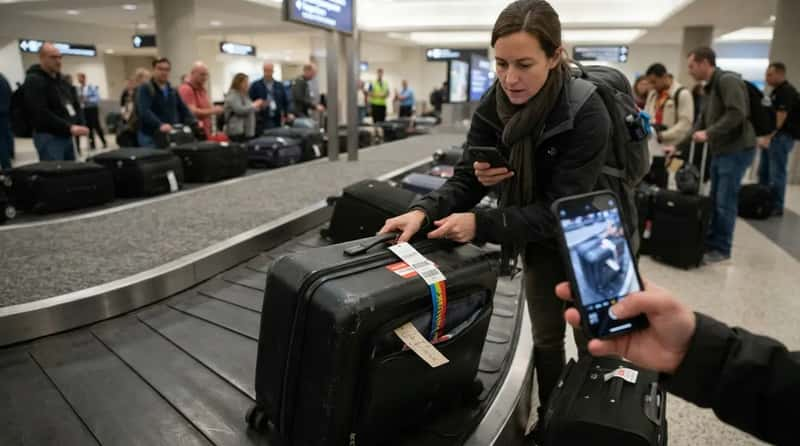
Many black suitcases look identical in a baggage hall. Handlers say a distinctive bag helps everyone, and so does contact information inside the bag. If the outside tag rips off, the inside label can still reunite you with your luggage.
A quick photo of your bag at home helps when you file a report. The clock matters too. One reference summary says complaints must be made in writing within seven days for damaged checked baggage, and within 21 days of delivery for delayed baggage. Those deadlines can be shorter than you’d expect. Check your airline’s own rules, since terms vary.
But what does one missing bag actually cost? The answer, at #2, surprises even airline insiders…
#2 – One Mishandled Bag Costs Airlines More Than You’d Think
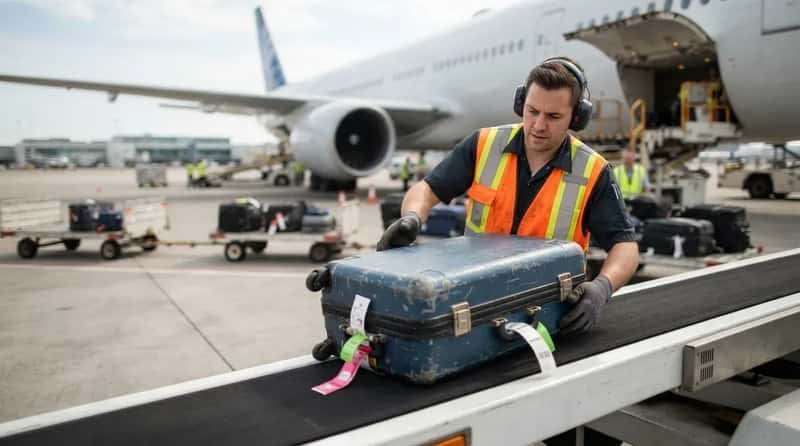
Airlines don’t shrug this off. SITA now puts the average cost at $260 per mishandled bag, replacing an older figure of $150. Across the industry, that adds up to an estimated $6.3 billion, around 15% of global airline profits.
The profit math is brutal. With net profit averaging just $8 per passenger, SITA says one mishandled bag wipes out the profit from more than 30 seats sold. Five mishandled bags can erase the profit from 150 seats or more. That’s the pressure sitting behind every handler on the ramp: move bags fast, and get them right.
Yet the most overlooked part of this whole story isn’t money, and it’s waiting at #1…
#1 – The Person Lifting Your Bag Is Working in a Cramped, Brutal Space
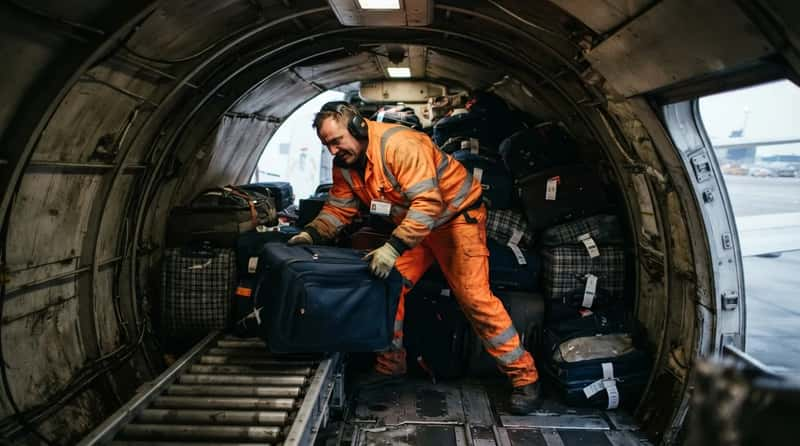
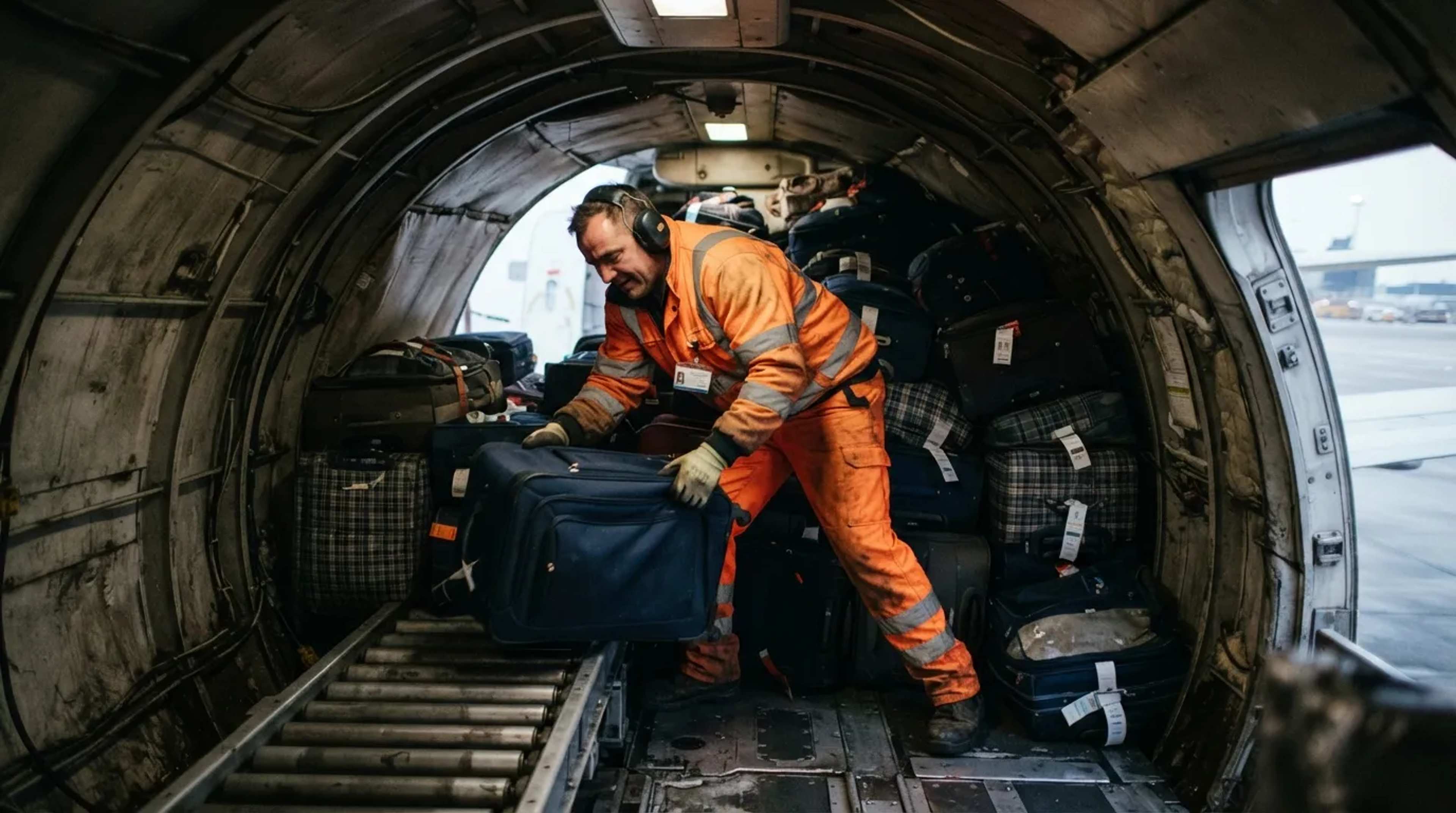
The truth most passengers never see is physical. Back and shoulder injuries are especially common because cramped cargo holds force workers to bend and twist awkwardly. Your suitcase gets stacked by hand, often in tight spaces, under a clock.
The conditions add to the strain. Baggage handlers often work outdoors in heat, rain, snow and freezing weather. One injury-law firm cites a study saying about 85% of back injuries happen while loading and unloading narrow-body aircraft. That’s why handlers wish passengers understood the weight, the tag and the packing. Every bag is someone’s lift.
Your suitcase will never thank anyone for the trip it survives. It crosses oceans, passes through dozens of hands and scans, and usually shows up right where it should. The next time it rolls out onto the carousel, remember that a lot of invisible work got it there.