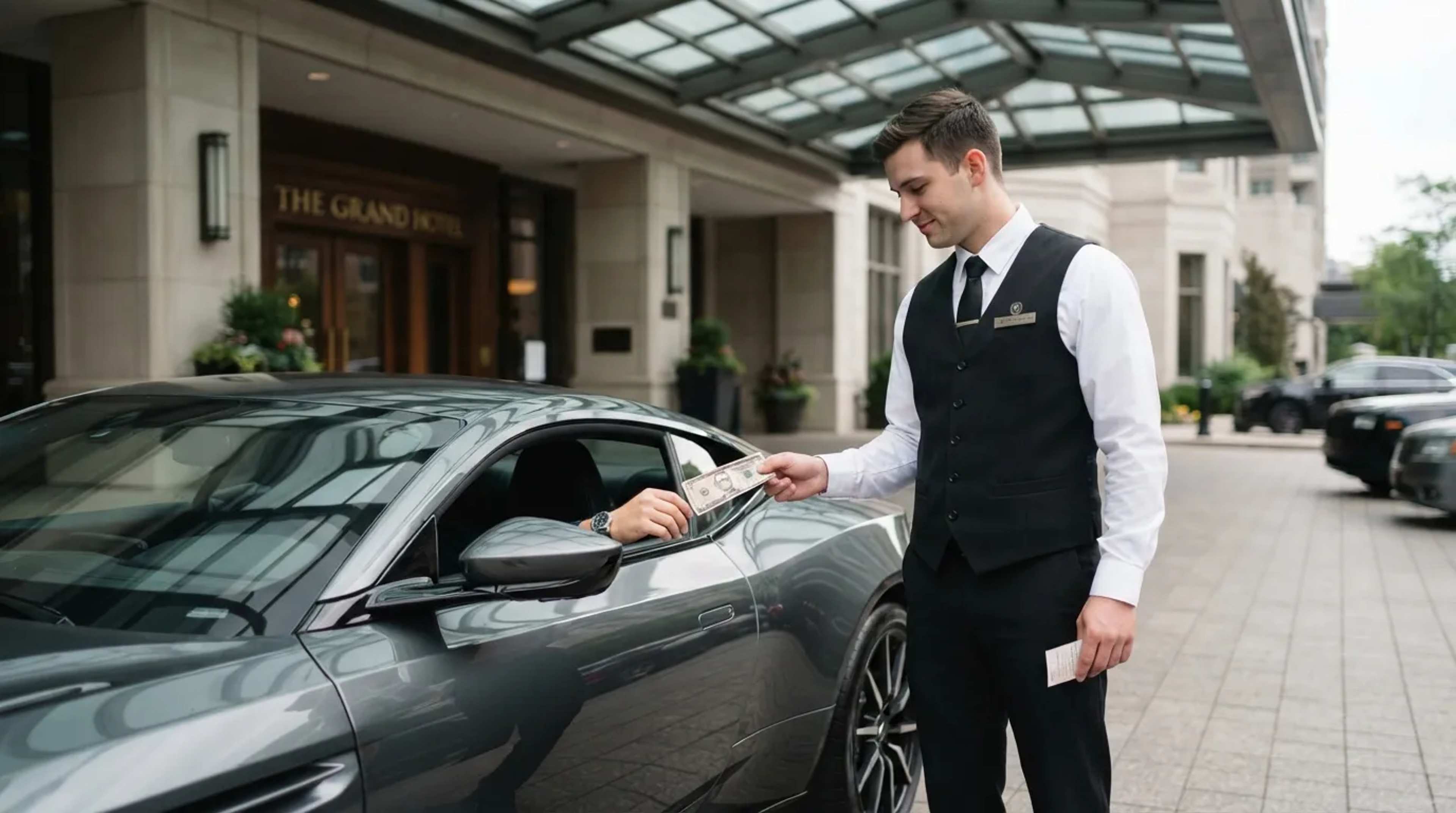
You think the valet only sees a ticket and a set of keys. In reality, your car has been talking since it turned into the driveway. Plates, stickers, seat position and the pile in the back all tell the team who just arrived, and they pick it up in seconds.
Some of these clues are practical, and some are oddly personal. A few overturn what most people assume about valets, including one about expensive cars that may surprise you. The countdown starts with a small sticker on your window, and it ends with a clue that changes how a whole team treats you.
#15 – The Barcode on the Window That Marks You as a First-Timer
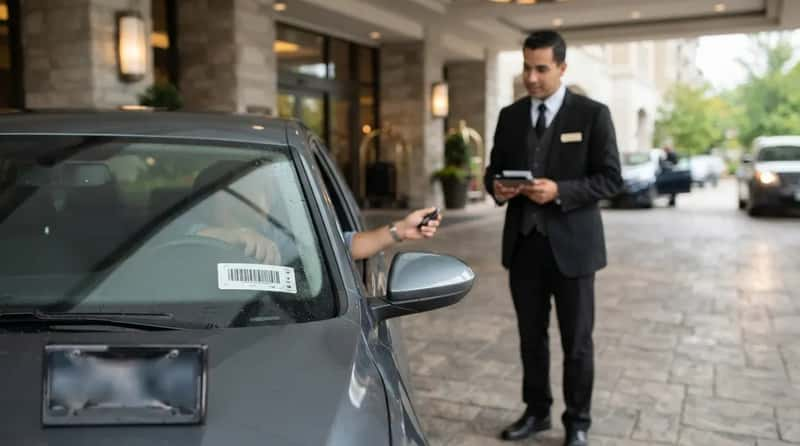
A rental sticker is the quickest tell in the driveway. Rental cars usually carry a barcode label on a window, and often a rental company plate frame. To a valet, that sticker says you probably flew in and don’t know the property yet.
That changes how a good valet greets you. Expect a quick explanation of how to request your car and where to find the nearest entrance, because first-time guests rarely know the layout. It’s a small courtesy, and it all starts with a sticker.
The plate on the back says even more, and it’s #14.
#14 – Out-of-State Plates and the Road-Trip Dirt That Gives You Away
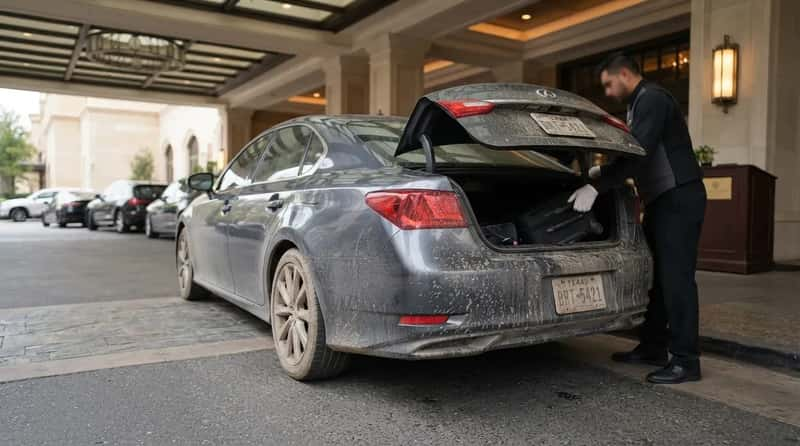
Plates from several states away, plus a bumper crusted with bugs, suggest you drove in rather than flew. Valets spot that kind of grime fast. A car that has clearly crossed a few states usually belongs to someone settling in for more than one night.
It’s an educated guess, not a rule. Still, it helps the team plan around you. A guest who drove far is more likely to have heavy luggage and a longer stay. They may also want the car back first thing for a sightseeing run.
Quick Compare
- Rental barcode on the glass: likely flew in, needs directions and a walkthrough.
- Out-of-state plates and bug-splattered bumper: likely drove in, probably staying longer.
- Local plates and a clean car: could be a dinner guest, an event attendee or a staycation.
Now look at what’s piled in the back seat. It’s #13.
#13 – The Luggage Pile That Predicts How Long You’re Staying
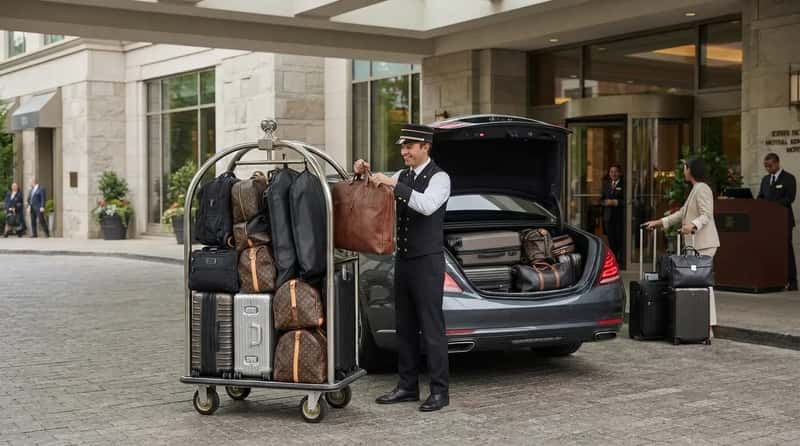
A single carry-on says something very different from a trunk packed to the roofline. Valets and bell staff see the volume of bags and quietly work out the trip length. The luggage cart is often being called before you’ve even popped the trunk.
It’s a coordination trick, not mind reading. A big load means a bellhop should meet you at the curb. A light load means you may be a quick overnighter, or a local in for dinner. The car tells the team which kind of arrival they’re handling.
A car seat in the back is a different kind of clue, and it’s #12.
#12 – Car Seats and Cracker Crumbs: The Family Stay Signal
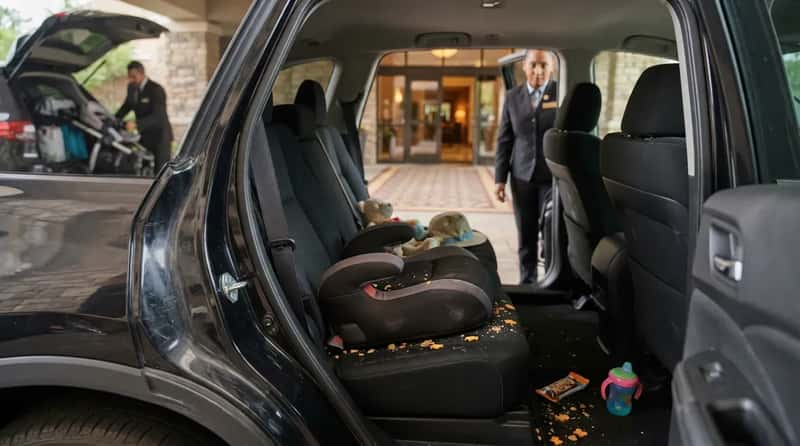
A booster seat and a few stray snacks tell the valet a family just arrived. It’s visible from the curb. Hotel teams often treat a family arrival as the most car-heavy stay on the property.
Families come and go with strollers, pool bags and sudden snack runs. That means more trips to the valet stand and more retrievals than a business traveler would make. Experienced teams plan for it by keeping those cars easier to reach. It’s a logistics call, not a judgment.
Up on the roof, there’s a problem you may not even be thinking about. It’s #11.
#11 – The Roof Box That Can Turn a Garage Into a Trap
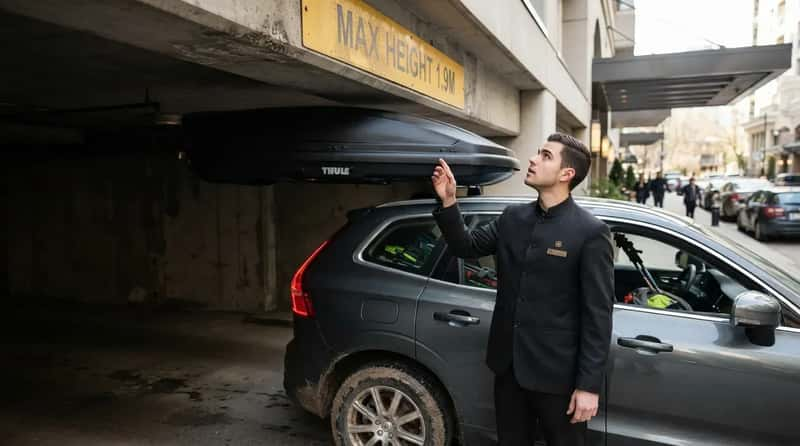
A roof cargo box, bike rack or kayak is a red flag for any valet. Parking structures have posted height limits. A roof carrier that clears the highway can still scrape a low garage ceiling.
So the valet checks the clearance before moving the car anywhere. Sometimes it ends up on a surface lot or near the front instead. It also tells them something about you, since a gear-heavy car usually means an outdoorsy trip.
The next one is a skill gap many guests never see coming. It’s #10.
#10 – The Manual Transmission That Can Stop a Valet Cold
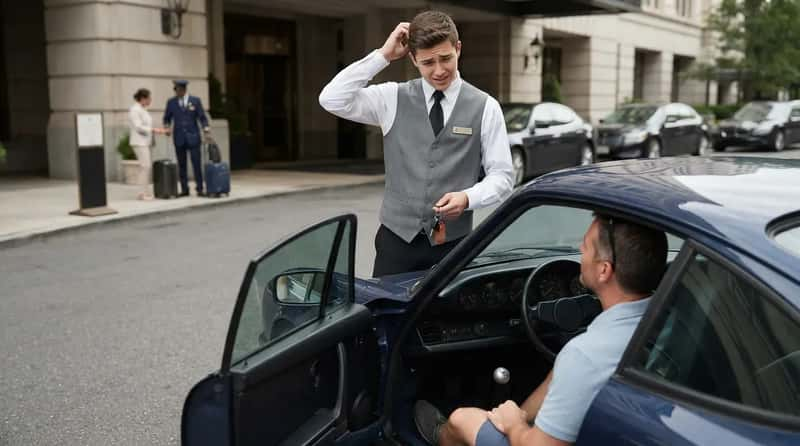
Pull up in a stick shift and some valets will pause. Plenty of drivers today have never learned to drive manual. Some valet operations won’t park a manual car at all unless a qualified driver is on shift.
Policies vary by company and property, so this isn’t universal. Still, it’s why valets glance at the shifter before they take your keys. If you drive stick, a quick heads-up at the curb can save a stalled car and an awkward delay. Some guests have ended up self-parking for exactly this reason.
Your dashboard may be giving away more than you realize at #9.
#9 – Warning Lights and an Empty Tank: The Quiet Red Flags
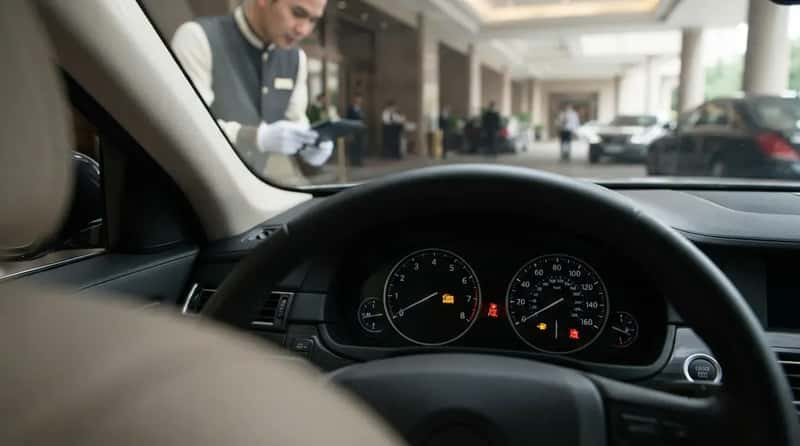
A fuel light or a glowing check-engine symbol is hard to miss once you’re in the driver’s seat. Valets sit there within seconds. They often notice a problem before the owner mentions it.
That matters because they don’t want to be blamed for something that was already wrong. Many valet operations do a quick walk-around and mark existing damage on the ticket, which protects the guest and the staff. A nearly empty tank can also hint that you’ll want the car back sooner than planned.
At a Glance
- Fuel light on: you may be heading out for gas soon after check-in.
- Check-engine light: the team notes it so it isn’t pinned on them later.
- Dents and scratches: flagged on the ticket during the walk-around.
- Dashboard clutter: a cabin full of loose items often leads to a polite reminder about valuables.
Then there’s what they notice the second they sit down. That’s #8.
#8 – The Seat Position That Gives Away Who’s Been Driving
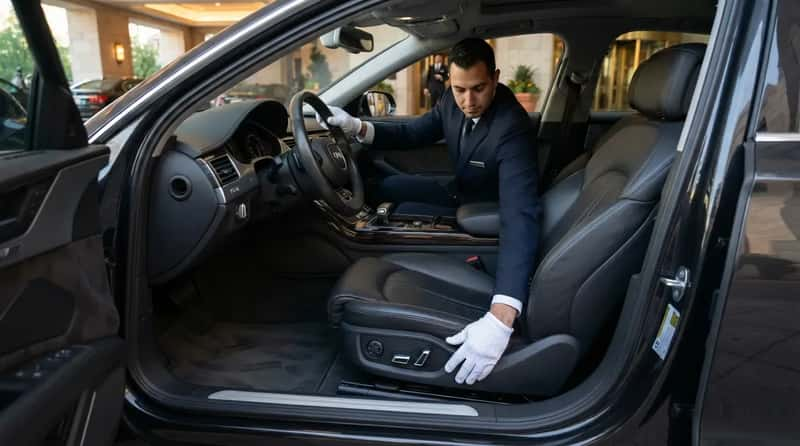
When a valet slides in, the seat tells a story. Pushed all the way back suggests a tall driver, and pulled far forward suggests a shorter one. Seat and mirror settings are often the first thing they change, and the last thing they put back.
Some guests complain that their seat was never reset. Valets argue it’s unrealistic to remember a position they only saw once, in a long line of cars. That gap causes real friction at the curb, and it starts with a seat track.
What you leave sitting out inside tells a whole other story at #7.
#7 – The Valuables Left on the Seat in Plain Sight
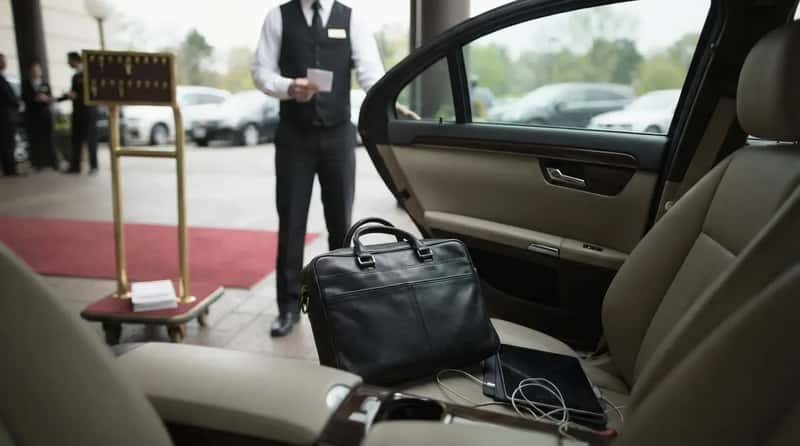
A laptop bag on the passenger seat is the first thing a valet sees, and the last thing they want to be responsible for. Hotels commonly print notices on the valet ticket about items left in the car. That small print often limits what the hotel will cover if something goes missing.
Many travelers still treat the valet stand like a vault. Valets would rather you didn’t. A clean, empty cabin is easier for everyone and removes any question later. Most security advice for parked cars says the same thing.
A small piece of paper hanging from a mirror can say even more at #6.
#6 – The Hangtag, Badge or Sticker That Says Where You Really Live
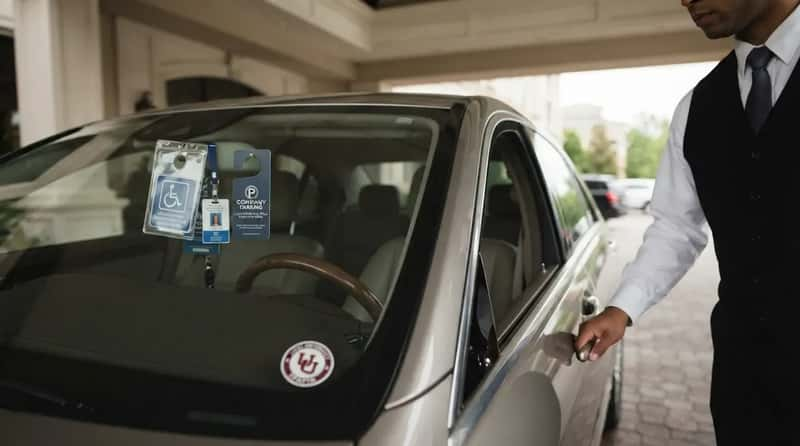
A hospital badge, a company parking pass or a local sports sticker tells a valet you may not be a typical tourist. A hangtag from a nearby employer can suggest a staycation or a work trip. Sometimes the most revealing item in the car is the smallest.
Disabled-parking placards and permits matter for a practical reason, too. They can affect how and where the car is parked, and valets are generally trained to handle them with care. Either way, stickers and tags are information, and valets read them like a name tag.
Some cars need something the hotel may not have. That’s #5.
#5 – The Electric Car That Raises a Charging Question
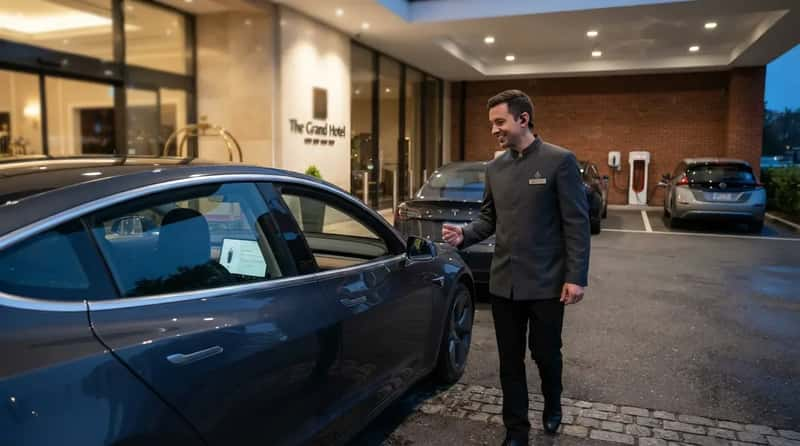
An EV pulling up starts a different conversation. Valets know that not every hotel has chargers, and the ones that do often have only a few. The driver’s real question is usually whether the car will be charged by morning.
Some electric cars also have a valet mode. On Tesla vehicles, it limits speed and power and locks the glovebox and front trunk. A valet who sees an EV may ask if you’ve turned it on. It’s a small step that protects the car and your belongings.
But the way a car pulls up can say more than its battery. That’s #4.
#4 – How You Roll In: Hazards On, Window Down, Phone Still in Hand

Arrival style is part of the vehicle story. A car that stops fast with hazards flashing and a driver on the phone signals a rushed guest. Valets say they match their pace to the energy of the arrival.
A slow approach with the window already down suggests someone who has done this before. Valets read that as a regular, and the exchange is usually brisk. It has nothing to do with the model or the price of the car. It’s all about how it enters the driveway.
Worth Knowing
- Hazards flashing: a rushed arrival, so the team moves quickly and keeps it simple.
- Window already down: a likely repeat guest who knows the routine.
- Phone in hand: a distracted handoff, which is when keys and items get left behind.
- Engine off, key ready: the smoothest handoff of all.
The next one overturns a popular assumption. It’s #3.
#3 – The Expensive Car Myth: Why Price Tags Don’t Predict Tips
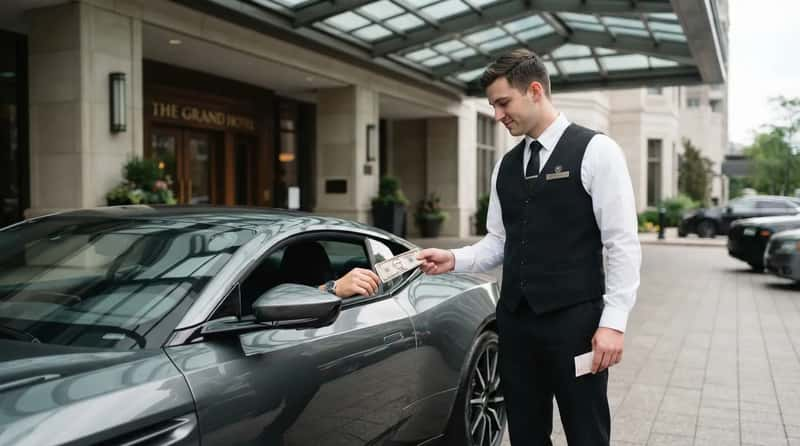
Everyone assumes a luxury car means a big tip. Plenty of valets say it doesn’t work that way. Tipping tends to track the person, not the badge on the hood.
Etiquette guidance generally suggests a few dollars when the car comes back. Some drivers of modest cars give generously, and some owners of showpiece cars skip it entirely. Treating the car as a wallet is a mistake, and plenty of valets will tell you so.
Weather turns a convertible into a gamble at #2.
#2 – The Open Top and Cracked Windows That Spell Trouble
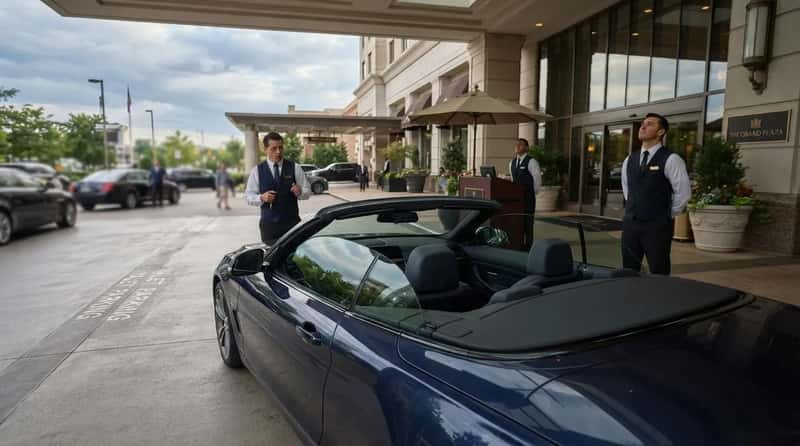
A convertible with the top down, or a sunroof slightly open, is a ticking clock. Valets watch the sky as much as the car. One surprise rain shower can soak a leather interior before the owner returns.
Good teams ask whether you want the top up, because they don’t want to make that call on their own. Closed windows and a closed roof are the easiest way to avoid a damp-seat claim. The simplest fix is also the cheapest: close it before you step out.
The last clue is the one that changes the tone of the whole exchange. It’s #1.
#1 – The Pillows, Blankets and Hospital Parking Pass That Change Everything
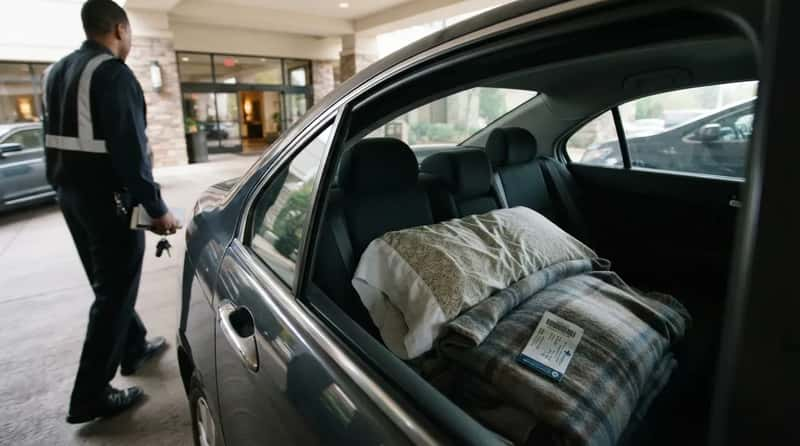
A pillow on the back seat, a folded blanket and a hospital parking pass tell a very different story from a vacation. Hotels near medical centers often host families and patients who are in town for treatment, and many offer special medical rates. The hotel is sometimes not the destination at all, just the place to sleep between hospital visits.
Staff in those properties often describe a gentler approach. They may bring the car around early, keep it close or skip the small talk. It’s one of the few cases where the vehicle changes the mood of the entire interaction. The car isn’t telling them how much you have. It’s telling them how you’re doing.
Why It Stands Out
- It’s the only clue on this list that changes the tone of the service, not just the logistics.
- The signs are soft ones: bedding, a parking pass, a tired face behind the wheel.
- The best response is usually quiet: an early car, a close spot and no fuss.
So the next time you pull up to a valet stand, remember that the car has already spoken. The price of it tells them almost nothing. The ordinary little details, like a sticker, a seat setting or a roof box, tell them nearly everything.
And the clues that matter most are often the quietest ones, like a pillow on the back seat and a long night ahead.