Most people walk up to the passport desk assuming it’s a formality. Hand over the blue book, answer two questions, get the stamp, go home. But experienced U.S. Customs and Border Protection officers are running a detailed mental checklist the entire time – and for travelers over 60, several items on that list would genuinely catch you off guard. The things that slow people down are rarely the obvious stuff. It’s the small, quiet signals that stack up in under 90 seconds.
Some of these observations work in your favor. Others can silently reroute your evening from the baggage carousel to a secondary inspection room. What follows isn’t what the pamphlets say officers are watching for – it’s what the training, the data, and the process actually reveal. A few of these will surprise you. One or two might change how you pack for your next trip.
#16 – How Dramatically Your Face Has Changed Since Your Passport Photo Was Taken
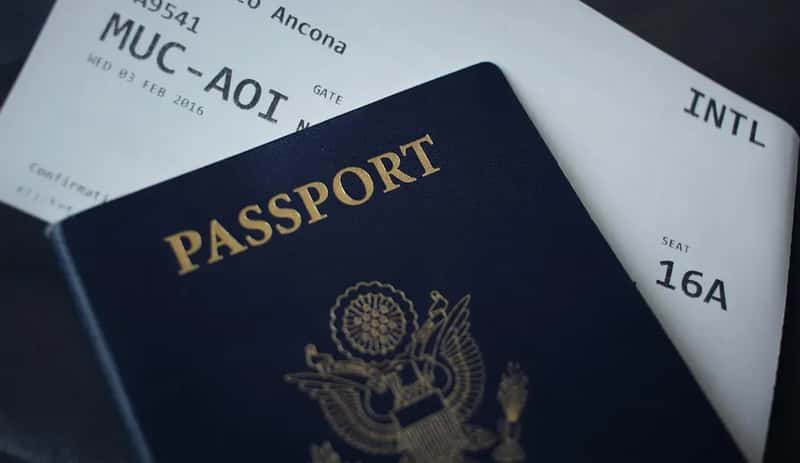
This one catches more travelers over 60 than almost any other issue at the primary desk – and most of them never see it coming. CBP’s facial biometric comparison technology matches your live features against the photo in your travel document to verify identity. For a 35-year-old, that’s usually a non-issue. For someone whose passport photo is nine years old and was taken when they were 55, the gap between that image and the face standing at the desk today can be significant enough to stop everything.
Natural aging – weight changes, hair loss, deeper lines, different glasses – all introduce visual discrepancies the system has to reconcile. If the technology can’t make a confident match, a manual document review follows, adding time, questions, and scrutiny that most returning Americans never expect to face. Officers often notice the visual gap before the technology even flags it. The fix is simple: renew your passport before it’s visually outdated, not just legally expired.
#15 – Whether Your Carry-On Looks Like It Was Packed by Someone Who Actually Took That Trip
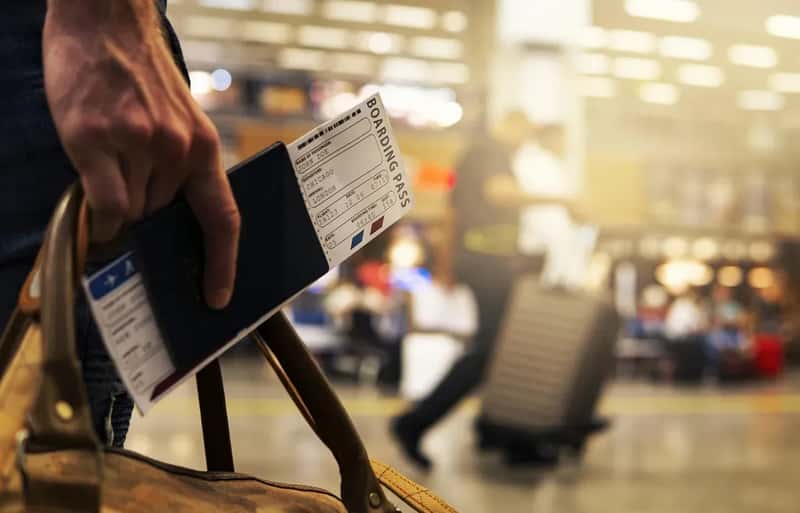
Experienced travelers over 60 tend to pack in recognizable ways – organized, practical, consistent with the trip they’re describing. Officers at the passport desk pick up on visual cues the moment your bag hits the counter or rolls past. A single small carry-on for a claimed three-week European cruise reads completely differently than a battered, overstuffed duffel for a “quick family visit.” These details register before a single word is spoken.
CBP officers build their assessment from documentation, demeanor, verbal responses, and what they observe. Luggage condition and volume are part of that picture. A traveler arriving from a long-haul flight with no checked bags and claiming an extended international stay is the kind of quiet inconsistency that earns a follow-up question. It’s not accusatory – it’s pattern recognition, and officers who do this every day are very good at it.
#14 – The Stamp Pattern in Your Passport and Whether It Actually Makes Sense
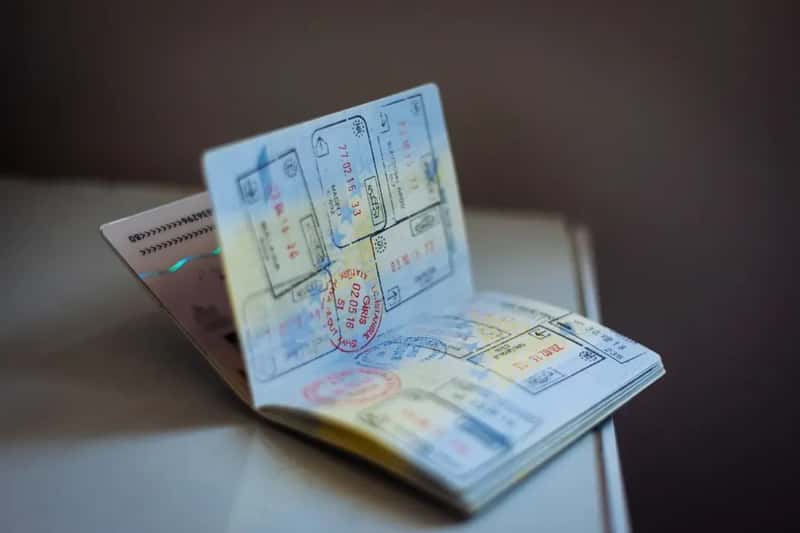
Officers flip through every passport – quickly – and the stamp pattern tells a story in seconds. A passport full of Western Europe, Canada, and Caribbean entries reads as a confident leisure traveler. But certain combinations raise questions. Repeated visits to countries flagged for drug trafficking or political instability can trigger additional scrutiny, and someone making five or more trips in 12 months to those regions may be flagged automatically. CBP actively reviews travel patterns for connections that don’t align with declared purposes.
What surprises many older travelers is that even completely innocent patterns can prompt a brief extra question. A retiree making six trips to Mexico in one year for a vacation home they own will sometimes get a follow-up simply because it stands out statistically. The officer isn’t accusing anyone – they’re checking whether the story matches the evidence. A clean, one-sentence explanation ready to go means the conversation ends in seconds.
#13 – Whether You Hesitate Before Answering the Most Basic Question

The first question at the primary desk is almost always something simple: “Where were you?” or “How long were you gone?” For most returning travelers over 60, this should be automatic. But fatigue after a 14-hour overnight flight, hearing difficulties, or the sheer abruptness of a brusque officer can create a pause that reads as uncertainty – and uncertainty gets noticed. Officers are specifically trained to distinguish between the natural slowness of exhaustion and the particular hesitation pattern of someone assembling a story rather than recalling one.
Providing inconsistent or vague responses during initial questioning can escalate a routine check to secondary screening. CBP itself recommends preparing clear, consistent answers about your travel plans before reaching the desk. The fastest way through is a confident, brief, honest answer – even if it takes a half-second to find your voice after a brutal overnight flight. The goal isn’t to sound rehearsed. It’s to sound like someone who actually took the trip they’re describing.
#12 – Signs of Physical Distress That Suggest a Medical Emergency in Progress

This one is protective, not punitive. Officers at busy international airports are trained to spot travelers in medical distress – and returning travelers over 60 on long-haul flights are statistically more vulnerable to events that need immediate attention. Pallor, unusual sweating, confusion on simple questions, or difficulty walking steadily are all things officers quietly flag and escalate fast, sometimes before the traveler realizes anything is wrong.
Deep vein thrombosis, dehydration, and cardiac events are real risks after hours in the air, and the passport desk is often the first moment a professional is face-to-face with someone after a long flight. An officer who slows you down because you look unwell isn’t being suspicious – they may be saving your life. If you’re feeling rough after a long flight, saying so directly is always the right move. Officers at every major port of entry have fast access to medical support.
#11 – Whether Your Customs Declaration Form Matches What You’re Actually Carrying

The declaration form you fill out on the plane is cross-referenced – at least mentally – against what officers can see and what you tell them. Travelers over 60 who have been shopping abroad are more likely to encounter this friction, since this demographic does tend to spend more on goods during international travel than younger age groups. Not declaring purchased items is one of the most common mistakes CBP encounters at the desk, and it can result in fines or confiscations on the spot.
The duty-free threshold for returning U.S. residents is $800, resetting every 31 days. What many travelers over 60 don’t realize is that gifts purchased abroad count toward that threshold – even if they’re wrapped and clearly intended for someone else. Officers have watched that misunderstanding play out thousands of times. Alcohol and tobacco have their own separate limits on top of the dollar threshold. A declaration form that doesn’t match the luggage sitting in front of the officer is one of the clearest invitations for a longer conversation.
#10 – How You Handle Your Passport Physically
This sounds trivial until you understand what it actually communicates. A traveler who hands over their passport already open to the photo page, makes easy eye contact, and keeps their bag steady is projecting the quiet confidence of someone who has done this dozens of times. A traveler who fumbles through a purse for three minutes, hands over the wrong document first, and then apologizes profusely is communicating anxiety – even when there’s no real reason for it beyond travel stress.
CBP officers are trained in behavioral analysis, and non-verbal signals like avoiding eye contact, fidgeting, or unusual posture can contribute to a decision to refer someone for secondary screening. For travelers over 60 dealing with arthritis, vision issues, or hearing loss that makes the process physically awkward, having the passport out and ready well before reaching the front of the line genuinely matters. The physical ease of that first handoff shapes what the officer reads in the opening seconds of the interaction.
#9 – Prescription Medications That Don’t Match U.S. Labels

This is one of the most quietly consequential things an officer can spot – and it catches returning travelers over 60 more than any other demographic. Virtually all foreign-made medications face FDA import restrictions at the U.S. border, and a local prescription from a foreign doctor does not grant U.S. import rights for a drug the FDA hasn’t approved. Travelers who ran out of a regular medication abroad, saw a local physician, and brought home a foreign-pharmacy bottle are in a legal gray zone that officers are specifically trained to identify.
The FDA’s personal importation policy does allow some discretion for small quantities of foreign medications intended for personal use – but that discretion is not a guaranteed right. The safest approach is to bring enough U.S.-prescribed medication from home to cover the entire trip, always in original labeled bottles, with a physician’s letter for anything that might look unusual. An unlabeled pill organizer filled with loose tablets from multiple countries is something officers notice immediately and cannot easily clear without additional questions.
#8 – Whether Your Trip Story Has Any Internal Gaps
Officers ask short, simple questions, but they’re listening for coherence – not detail. “Where did you go?” followed by “How long were you there?” followed by “What was the purpose?” should produce answers that fit together naturally. For a returning traveler over 60 who took a multi-country cruise with a land extension and a layover in a third country, the itinerary can genuinely be complicated. Complicated isn’t the problem. Gaps are. Answers that contradict each other on basic facts – dates, accommodations, major purchases – are what trigger a closer look.
Passport control at the primary desk typically takes under 90 seconds per traveler. Within that window, a story that doesn’t hold together under two or three follow-up questions is one of the clearest signals that something warrants more attention. Know your itinerary. Know your declared purpose. Have a clean, honest one-sentence summary of your trip ready before you reach the desk. That single sentence does more work than people realize.
#7 – The Condition and Age of Your Passport Itself
A passport that’s soft with use, water-damaged, has pages that are hard to read, or shows any sign of tampering will slow things down regardless of the traveler’s age. For travelers over 60 who may have had the same passport for close to a decade, these issues are more common than they expect. If there are doubts about a document’s integrity – partial mismatches with the template, damage to security features, or a machine-readable zone that won’t scan cleanly – the document gets examined with forensic tools. What feels like a well-loved, well-traveled passport to you can look like a document with integrity questions to a scanner.
Beyond physical wear, there’s the issue of name changes, the photo-age gap described earlier, or damage to the data strip at the bottom of the photo page. “Valid” means more than just not expired. A passport that scans cleanly, lies flat, and carries a photo that still resembles the person holding it is an invisible advantage – one that most travelers take completely for granted until the desk slows down for a reason they didn’t anticipate.
#6 – Large Amounts of Cash That Don’t Match the Declared Trip
Returning travelers over 60 are statistically more likely to carry significant cash than younger travelers – particularly those coming back from countries where cash remains the dominant payment method. U.S. law allows travelers to carry as much currency as they want into or out of the country, but anything at or above $10,000 in total monetary instruments must be reported to customs agents on arrival. What most travelers don’t realize is that “monetary instruments” isn’t just paper bills – it includes traveler’s checks, money orders, and certain negotiable instruments as well.
An officer who spots a thick envelope in a carry-on, or a declaration form that seems inconsistent with a long international trip, will ask. Failure to report can result in the currency being seized on the spot – no court order required – plus potential criminal charges. This isn’t a technicality buried in fine print. It’s one of the most financially devastating mistakes a returning traveler can make at the desk, and it’s entirely avoidable with one honest line on the form filled out before the plane lands.
#5 – Your Travel Companions and Whether Your Accounts Actually Line Up
When two or more people travel together and approach the desk separately – or together – officers quietly compare their accounts. This matters most for couples over 60 who divided trip responsibilities: one handled the hotels, the other handled the shopping. They may give genuinely different answers to the same question without realizing how that reads to someone trained to look for inconsistencies. When two people on the same itinerary give incompatible answers about where they stayed or what they bought, that gets flagged.
The issue isn’t that officers expect couples to recite synchronized scripts. It’s that significant factual disagreements about the basic framework of a trip – dates, destinations, major purchases – suggest that at least one answer isn’t accurate. A quick five-minute conversation before landing to align on your declaration basics isn’t paranoia. Officers ask pointed questions about exact travel plans, purpose, and dutiable goods. Being on the same page before you reach the desk is the simplest preparation most traveling pairs skip entirely.
#4 – Whether You Know About the Risk Score Already Attached to Your Name

Most returning travelers over 60 have no idea this exists. The U.S. Department of Homeland Security operates the Automated Targeting System, which analyzes a large volume of data for every person crossing a U.S. border and automatically assigns a risk rating. If you travel internationally, you almost certainly have a score. It’s built from your full travel history, prior secondary inspections, travel companions, and information pulled from other databases – and an officer sees elements of it the moment your passport is scanned.
The lower the score, the less likely it is you’ll face extra scrutiny. A higher score can generate additional questioning even when everything about your current trip is completely clean. For travelers over 60 with a long international travel history, a prior secondary inspection, or repeated visits to certain regions, that score can create friction at every future return. If you believe you’ve been wrongly flagged, DHS has established the Traveler Redress Inquiry Program – a formal channel to challenge what’s in your file.
#3 – How Confidently You Claim Trusted Traveler Status – or Whether You Should Have Applied Years Ago

Officers notice when a returning traveler over 60 who clearly crosses borders several times a year is still standing in the general queue instead of using Global Entry. When CBP launched Global Entry in 2007, the explicit goal was to identify low-risk, frequent travelers so that officers could focus attention on people they knew less about. An experienced international traveler who hasn’t enrolled is, from the officer’s perspective, making every return trip harder than it needs to be – for everyone involved.
Beyond the line efficiency, Global Entry membership sends a pre-cleared, low-risk signal before the traveler even reaches a desk. The application requires a background check, an interview, and a fee – but for travelers over 60 who return from international trips regularly, the return on that investment is nearly immediate. The fact that a high-frequency traveler hasn’t enrolled is a minor curiosity to an experienced officer. It’s not a red flag – but it does mean the full standard screening applies, every single time, that Global Entry members largely bypass.
#2 – Electronic Devices That Could Reveal Undisclosed Commercial Activity
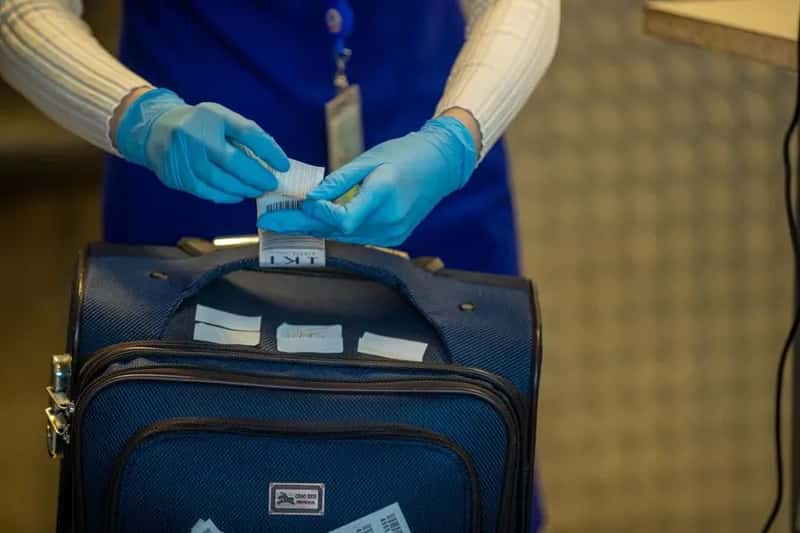
This one genuinely surprises most travelers over 60. In secondary inspection, CBP officers may inspect electronic devices – laptops, phones, tablets – and they don’t need a warrant to do so at the border. The legal authority CBP holds at ports of entry is broader than at almost any other point in the country. For a returning traveler who did any freelance work, sold goods, bought antiques for resale, or conducted anything that looks commercially motivated while abroad, the evidence is often sitting in the device they’re carrying through the door.
This matters specifically for travelers over 60 because many retirees do consulting, hobby selling, antique buying, or remote work during international trips – activities that blur the line between personal travel and commercial activity in ways that weren’t true for previous generations of retirees. If the declared purpose was “vacation” but emails, invoices, or business contacts tell a different story, that gap can turn a routine return into a lengthy secondary inspection conversation that nobody planned for and nobody wants.
#1 – The Specific Way You React the Moment the Officer Looks Up From Your Passport
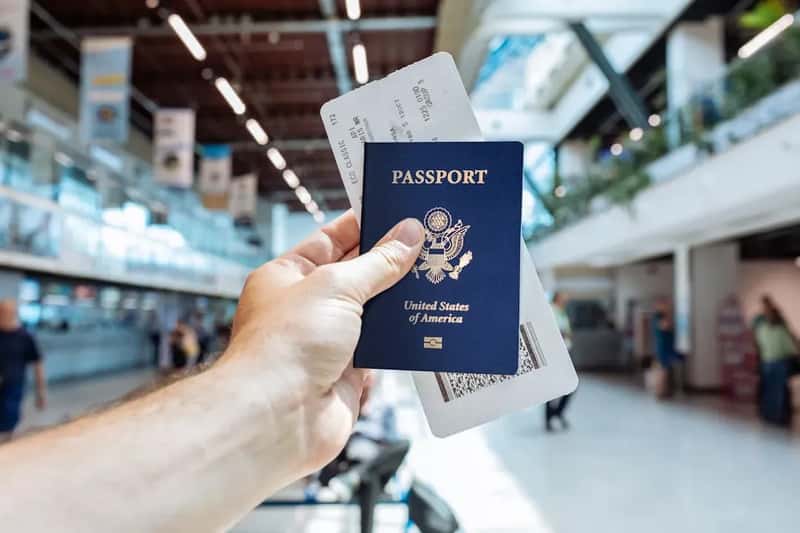
This is the detail that actually sets the tone for the entire interaction – and it’s the one almost nobody talks about. The precise moment an officer looks up from your passport and makes eye contact is when the behavioral read begins in earnest. Experienced officers describe this as the most informative second of the whole encounter. A returning traveler over 60 who meets that glance steadily, appears tired but calm, and answers the first question without visible agitation is almost always waved through quickly. The exhaustion of a long flight doesn’t read as suspicious. Visible anxiety does.
A traveler who looks away, tightens up noticeably, or launches into an unprompted explanation before being asked anything is sending a very different signal. Officers are trained to flag excessive nervousness and contradictory statements at primary inspection as reasons to escalate – and the hard reality is that guilt and anxiety produce almost identical physical signals. Officers are not in a position to distinguish between them in real time. After a long international flight, the single most useful thing you can do before reaching the front of the line is slow your breathing. Everything else follows from that one decision.
The passport desk is less than two minutes of your life – watched by someone who has screened hundreds of thousands of travelers and can tell the difference between an exhausted retiree coming home from a river cruise and someone whose story has a problem. For travelers over 60, none of the details above are reasons to be anxious. They’re reasons to be prepared. Keep your passport photo current. Know your declaration. Declare the cash. Have a clear, honest one-sentence summary of your trip ready before the plane touches down. The desk was never the obstacle for most people. The gap between what travelers assume officers are looking for and what they’re actually watching – that’s the gap worth closing.