Most people pack for a coach tour as if they’re packing for the sights. Coach drivers pack for the seat, the rest stops, and the long hours in between. They watch the same small disasters play out every season: a dead phone, a pill bottle stuck in the luggage hold, a shivering passenger, someone wandering a parking lot full of identical white coaches.
The surprise is that the smartest items on this list aren’t gadgets. Most cost a few dollars, fit in a daypack, and look almost boring on paper. But one of them is the item that still works when everything else fails, and it sits at the very end of the countdown.
#17 – The Refillable Water Bottle Everyone Thinks They Can Skip
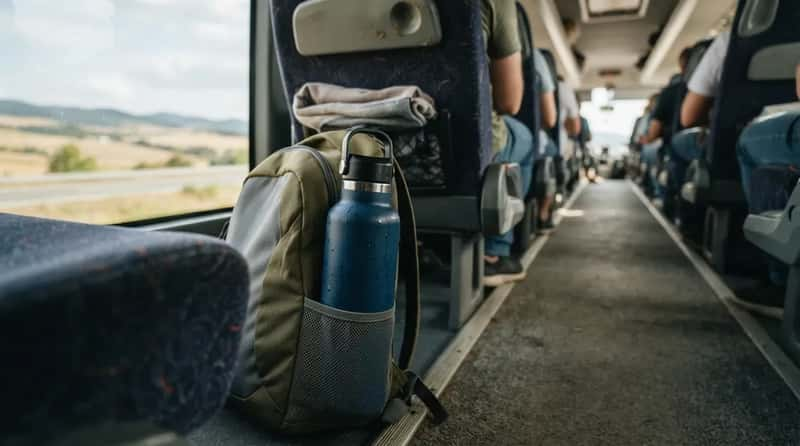
“I’ll just buy something at the stop” is a plan that fails more often than you’d expect. Rest stops are timed, the line snakes past the restroom door, and the coach leaves on schedule whether your bottle is paid for or not. A bottle in your bag means you drink when you’re thirsty, not when the clock allows.
Coach cabins can feel surprisingly dry after hours of air conditioning, and a sip every so often makes the afternoon easier. A refillable bottle also keeps empty plastic from rolling around the aisle. Many hotels and attractions have fountains or filling stations, so the bottle quickly earns its spot.
The next item solves a problem that hits nearly every passenger by noon…
#16 – A Light Layer, Because the Cabin Temperature Isn’t Yours to Control
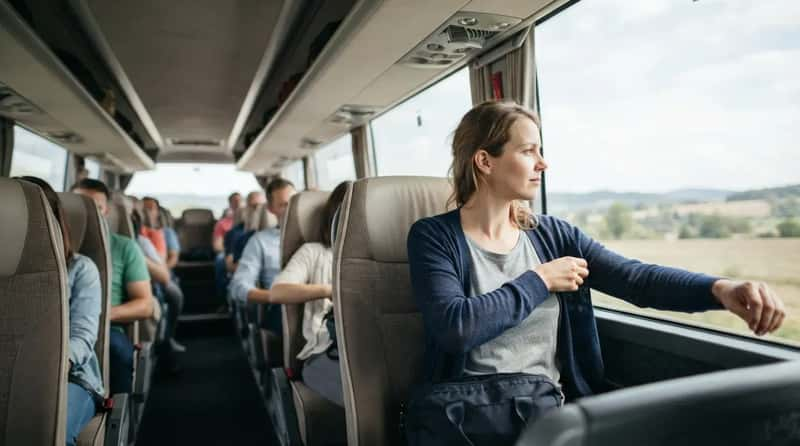
Here’s the mistake that starts a thousand quiet standoffs: assuming the coach will feel like the weather outside. The air conditioning is set for a full load of people, and every seat feels it differently. The seat under a cold vent and the seat baking in direct sun can feel like two different vehicles.
A thin jacket, cardigan, or scarf fixes it in seconds. A driver can’t please forty people with one thermostat setting, so a layer is the fairest solution. Pick something that squashes small and can double as a lap blanket or a pillow cover.
And then there’s the item that decides whether your whole day runs on a full battery or a prayer…
#15 – A Power Bank and a Short Cable That Quietly Save the Day
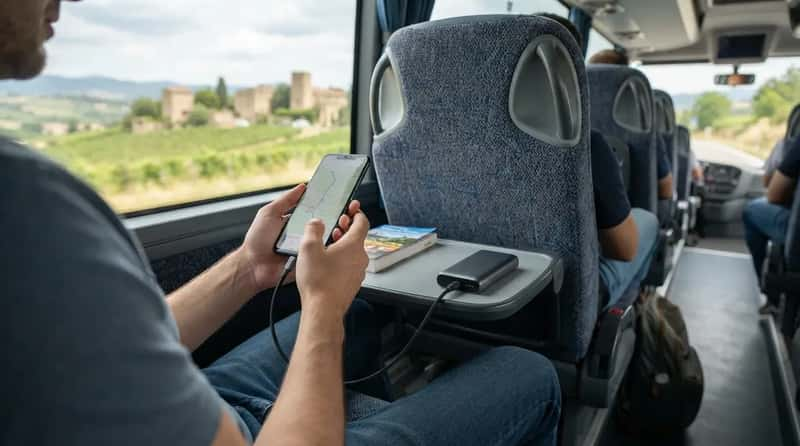
A phone drains faster on a touring day than almost anywhere else. You’re taking photos, checking maps, watching departure times, and maybe playing music, all on one battery. Not every coach has working outlets at every seat, and the ones that do are often shared.
A small power bank fixes most of it. The real trick is a short cable, because a long one tangles in the aisle and gets stepped on. Charge the bank the night before and keep both in the top pocket of your bag where you can reach them without unpacking.
At a Glance
- Charge the power bank fully the night before departure.
- Choose a short cable that won’t snake into the aisle.
- Keep both in the top pocket, not buried under your lunch.
- Treat seat outlets as a bonus, never a guarantee.
The next item causes real stress when it goes missing…
#14 – Daily Medications in Your Daypack, Never in the Luggage Bay
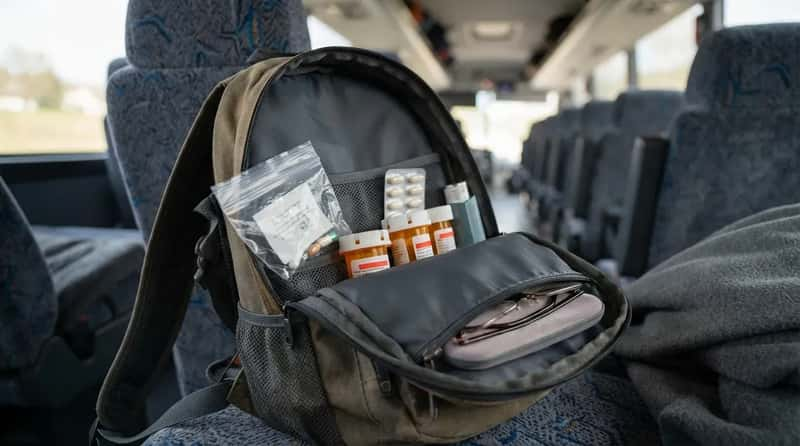
Here’s the frustrating truth: the luggage hold under the coach is usually closed between stops. If your pills, inhaler, or glasses are down there, they might as well be in another state. It’s one of the most avoidable problems on any tour.
Keep anything you might need before the next hotel in the bag at your seat. That means prescriptions, allergy medicine, pain relievers, and anything for blood sugar or breathing. Keep prescription items in their original labeled packaging, which helps if someone has to explain them to a pharmacist or medical worker.
The next item is one most people only think about when it’s too late…
#13 – Pocket Tissues or Travel Toilet Paper for the Stop That Runs Out

Ask any driver about rest-stop surprises, and this one comes up fast. A busy facility at peak travel time can run out of paper, and the line behind you doesn’t get shorter while you wait. Smaller roadside stops and some attraction restrooms can be even less predictable.
A travel pack of tissues weighs almost nothing. It also handles runny noses, spills, and sticky fingers after lunch. Think of it as the cheapest insurance in your bag.
The next item comes with a number most people never check…
#12 – Hand Sanitizer That Actually Meets the Standard
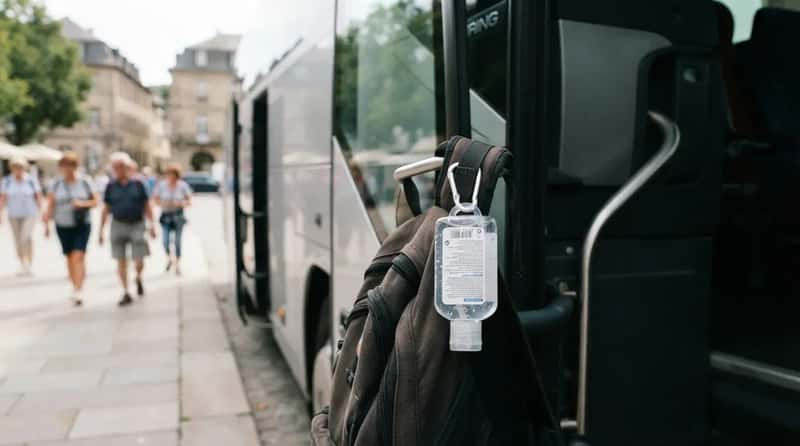
Everyone packs sanitizer, but hardly anyone reads the label. A bottle of weak gel gives you a false sense of safety, especially after you’ve pushed the same restroom door as the rest of the group. Wash with soap when you can, and use sanitizer when you can’t.
Think about the handrails and door handles on a coach tour. An entire group touches them at every stop, all day. Clip a travel-size bottle to the outside of your bag so you aren’t digging for it with sticky hands.
But the next item does something sanitizer can’t…
#11 – Wet Wipes: The Small Pack That Fixes Messes Nobody Planned For
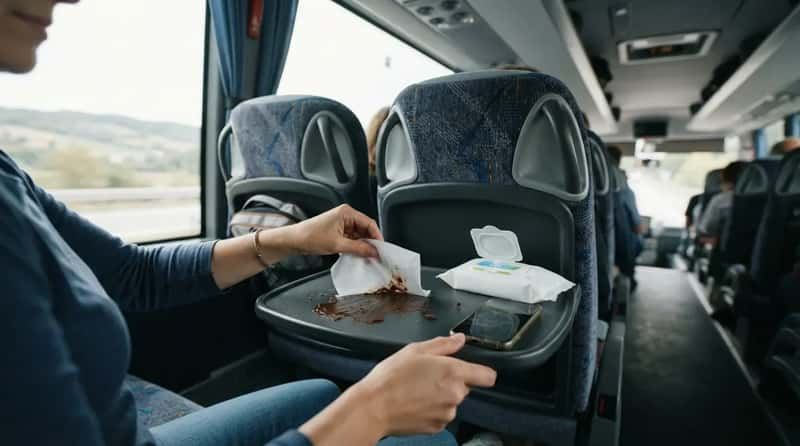
Every coach has a story about a spilled coffee, a melted chocolate bar, or a sticky seat tray. Wet wipes handle all of them in seconds. They also help when a restroom has no soap, or when you need to wipe down a phone, a tray, or a pair of sunglasses.
The next group boards the same seats, so cleaning up after yourself matters. A small resealable pack takes almost no space. Pick unscented if you can, since a strong fragrance in a closed cabin bothers more people than you’d think.
Quick Compare
- Wet wipes: best for sticky trays, spills, phone screens, and sunglasses.
- Hand sanitizer: handy when there’s no sink, but it won’t lift visible mess.
- Soap and water: still the winner for truly dirty hands whenever a sink is nearby.
The next item is where most daypacks go wrong…
#10 – Snacks That Don’t Smell, Crumble, or Melt
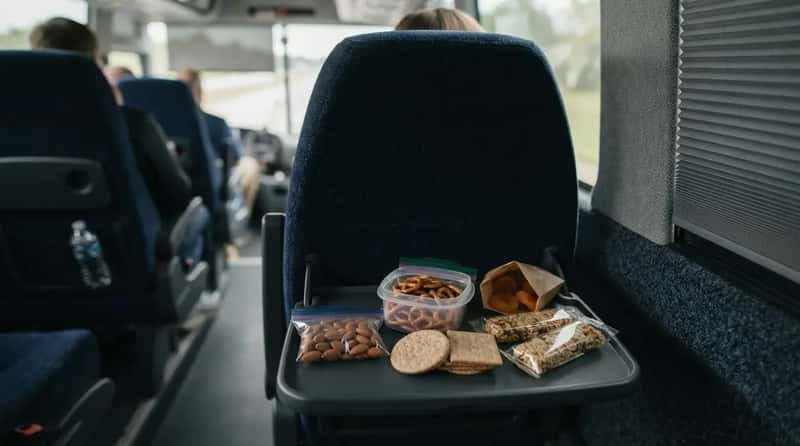
The fastest way to turn a coach full of strangers against you is a tuna sandwich at 10 a.m. Smell travels farther than people expect in a closed cabin, and there’s nowhere for it to go. The best coach snacks are quiet, dry, and low-mess.
Think pretzels, plain nuts, crackers, dried fruit, and granola bars without chocolate. Skip anything greasy or powdery, because those marks end up on the seat and your clothes. Some operators also set rules on food inside the vehicle, so check before you pack a full picnic.
And what you do with the wrappers says a lot about you…
#9 – One Small Trash Bag That Drivers Quietly Love
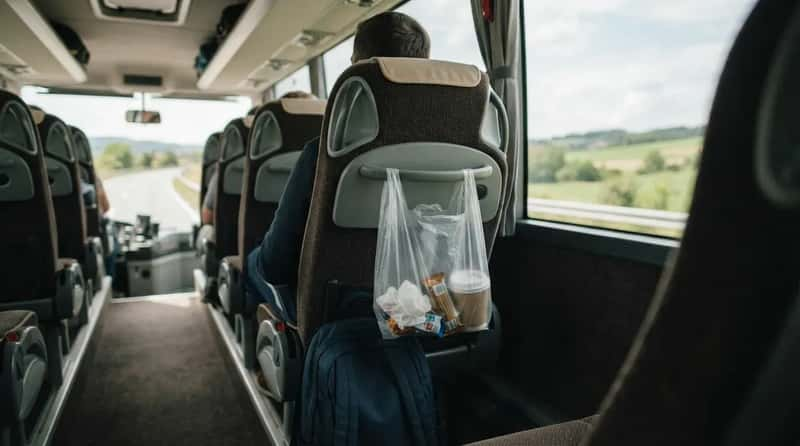
Here’s a small thing that makes drivers silently grateful: a passenger with their own trash bag. Empty cups, wrappers, and tissues pile up over eight hours, and the bins on a coach fill fast. A bag in your pocket keeps your seat area tidy.
It also doubles as a rain cover for shoes, a holder for a wet swimsuit, or a place to stash something messy. Any bag works, from a spare grocery bag to a zip-top. The best travelers leave nothing behind at their seat.
But the next item protects something you can’t replace…
#8 – Sunglasses and Sunscreen, Because the Window Doesn’t Protect You
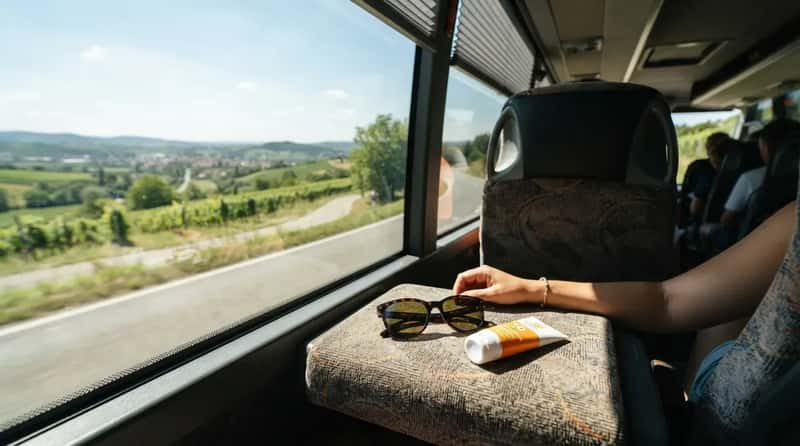
The sun through a coach window feels mild until you’ve sat on the sunny side for four hours. Glare also makes it harder to enjoy the view and can bring on a headache. Sunglasses help, and they make a midday window far easier to look through.
Pack a small sunscreen for your arms, face, and neck too. The American Academy of Dermatology recommends broad-spectrum, water-resistant sunscreen with an SPF of 30 or higher. Reapply at stops, since attraction visits often mean long stretches outdoors.
The next item is all about the part of you that suffers most on a long day…
#7 – Extra Socks and Comfortable Shoes: The Blister Fix Nobody Mentions

Touring days are walking days, and your feet take the hit. Picture the passenger in brand-new shoes, limping by the third stop and still smiling for the group photo. Break shoes in before the trip, not during it.
A spare pair of socks is the quiet fix. Damp or tight socks cause blisters, and a fresh pair can rescue an afternoon. The CDC also advises moving around and stretching your legs regularly on long trips, and loose-fitting footwear and clothing make that easier.
Worth Knowing
- Feet often swell a little after hours of sitting, so slightly roomy shoes feel better by evening.
- Moisture-wicking socks usually handle sweat better than thick cotton ones.
- Swap socks at lunch, not after the blister appears.
- Stretch your ankles and calves in your seat between stops.
The next item divides coach drivers almost down the middle…
#6 – The Neck Pillow Debate: Genius or Total Waste of Space?
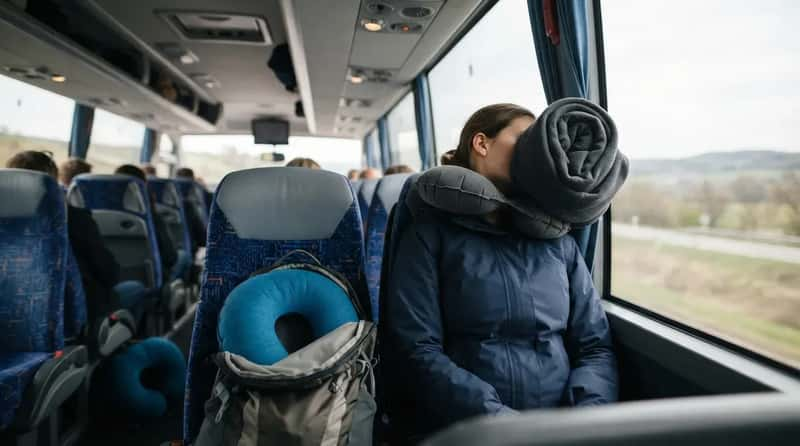
Plenty of travelers swear by the neck pillow, yet many coach regulars see it as the biggest waste of bag space on board. Bulky ones don’t fit well and end up under a seat or in the aisle. Some passengers say they push the head forward instead of supporting it.
A slim inflatable or scarf-style version is a better choice for most people. Others do just as well with a rolled-up jacket against the window. Whatever you pick, make sure it compresses small, because a daypack is already crowded.
But the next item keeps the peace for everyone around you…
#5 – Earbuds or Headphones: The Courtesy Item Every Coach Needs
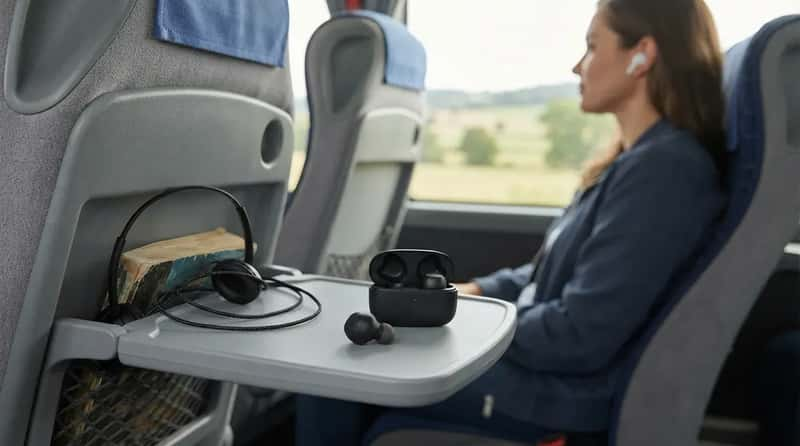
Nobody boarded the coach to hear your video, your phone call, or your playlist. Phone speakers in a closed cabin are one of the fastest ways to become the story of the day. Earbuds fix the problem before it starts.
Download music, podcasts, or shows before you go. Mobile signal can disappear on rural stretches, and streaming drains your battery. Keep the buds in a small case so they don’t vanish into the seat, and keep one ear free if you want to hear the guide’s commentary.
Why It Stands Out
- It weighs next to nothing and fits in a coat pocket.
- It protects the mood of a cabin full of strangers.
- Downloaded playlists keep working when the signal drops.
- One free ear means you still catch the driver’s announcements.
The next item can make or break your whole afternoon…
#4 – A Motion-Sickness Plan Before the Winding Road Starts
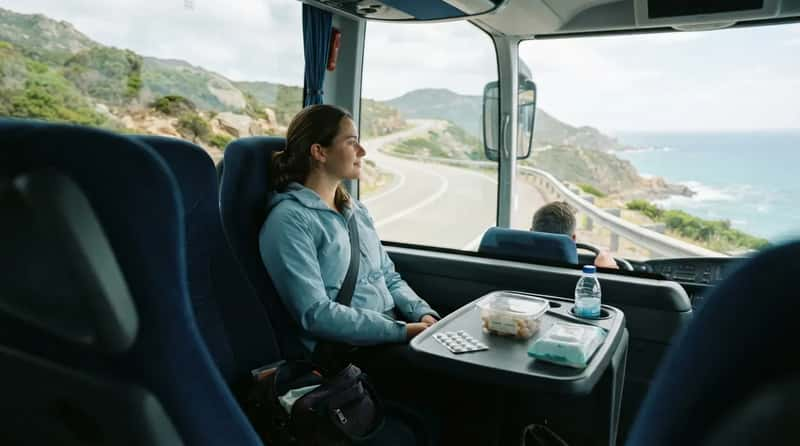
Here’s the mistake that ruins the afternoon: waiting until you already feel sick. Motion sickness is much easier to prevent than to stop once it starts. Mountain roads, winding coastlines, and stop-start city traffic are classic triggers.
Ask a pharmacist about options before you travel, especially if you take other medication. Many people find that sitting toward the front and looking at the horizon helps. Ginger candies are popular, though the evidence for them is mixed, so don’t rely on them alone. Skip reading and scrolling during twisty stretches.
The next item is old-fashioned, but it’s the one that saves the most awkward moments at rest stops…
#3 – Small Bills and Coins for the Stops Where Cards Don’t Work

Not every restroom, snack stand, or market takes cards. Some small attractions still prefer cash, and the coach won’t wait while you hunt for an ATM. A few small bills in your pocket make stops a lot smoother.
Cash is also handy for tipping. Customs for drivers and guides vary by operator and region, so check what your tour recommends and keep the amounts easy to hand over. Store the cash separately from your wallet, and keep valuables zipped and close to your body, since crowded stops and tour groups attract pickpockets.
But nothing prepares you for the panic the next item can prevent…
#2 – A Photo of Your Coach Number and the Meeting Spot
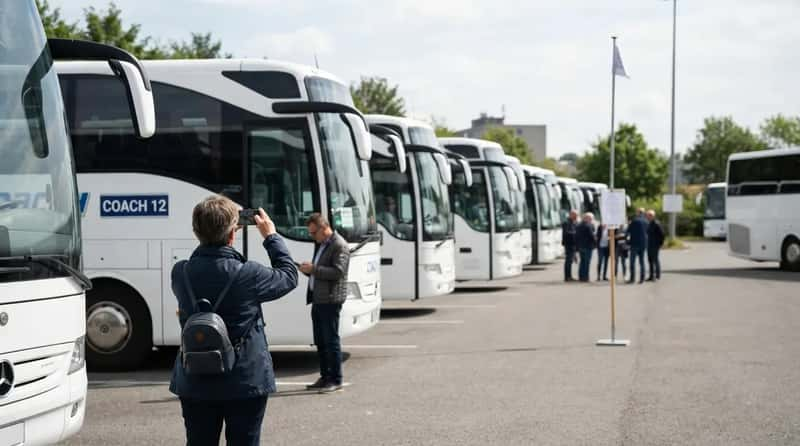
Picture a huge parking lot with a dozen white coaches that all look alike. This is where people get turned around, and it happens more often than anyone admits. A quick photo of the front or side of your coach, plus the number or plate, can save you real panic.
Take a second photo of the meeting point and note the departure time. A single passenger who can’t find the spot can hold up the whole group, and everyone remembers it. Share the photos with a travel partner too, so both phones have them.
But the final item is the one that works even when your phone doesn’t…
#1 – A Paper Copy of the Itinerary and the Operator’s Emergency Number
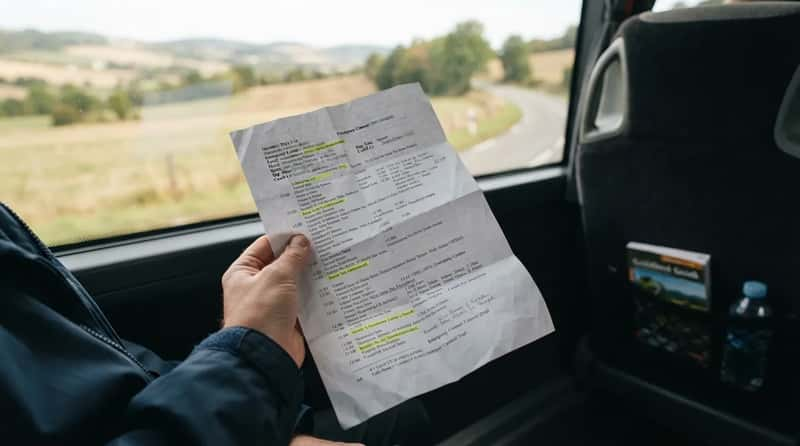
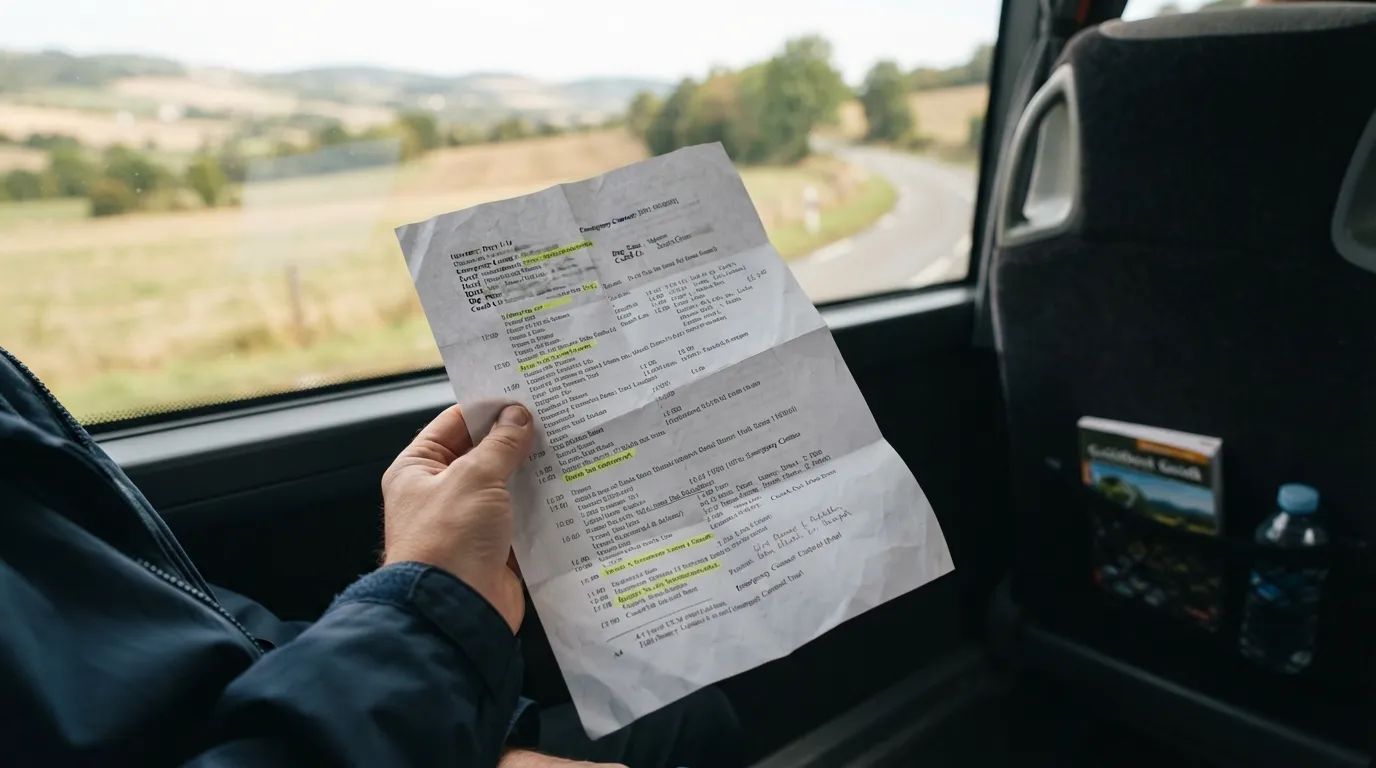
Here’s the quiet truth: every tool on this list can fail, and phones fail first. A dead battery, a lost signal, or a cracked screen can leave you with no hotel name, no meeting time, and no number to call. A folded sheet of paper never runs out of power.
Write down the tour operator’s phone number, the hotel name and address, and the day’s departure time. Add an emergency contact and any key medical details. Schedules on a coach tour are tight, and federal rules limit how long passenger-carrying drivers can drive, so one late return can ripple through the whole day.
That’s the one drivers wish every single passenger would pack.
The best coach-day bag isn’t stuffed with gadgets. It’s packed with small, dull things that fix small problems before they become the story of the trip. A bottle of water, a spare layer, a charged phone, and one folded piece of paper will do more for your day than any expensive gear.
The coach will leave on time either way. The only question is whether you’re ready for the stop.