Most passengers think a ship crossing runs itself. You set a course, switch on the autopilot, and wait for the buffet. The reality is stranger. While you sleep, eat, and scroll, a small team on the bridge is making call after call that never reaches the loudspeaker.
Some of those calls happen at 3 a.m. Some decide how fast you travel, whether the deck is open, or when you arrive. One is a legal duty so strong it can pull a ship off its route for a total stranger. Every item here rests on real maritime rules and standard practice, and the heaviest one is waiting at #1.
#17 – The Quiet Call That Moves Every Clock on Board
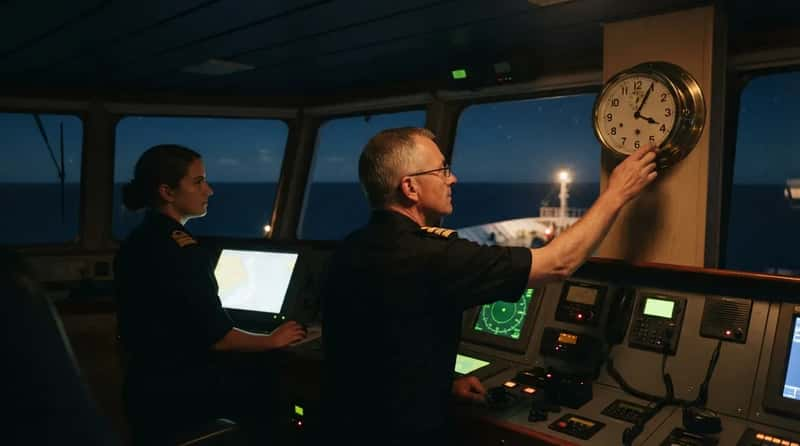
Your ship’s clock changes because someone on the bridge decided it should. On a long crossing, a ship passes through time zones, and the captain chooses when to adjust. It’s usually done in one-hour steps, often overnight, and passengers get a note in the daily program. The exact timing is a judgment call, not a fixed rule.
That choice ripples outward. It decides when dinner seatings, shows, and port arrivals line up with local time. It also affects the crew’s watch rotation, which runs around the clock. A badly timed jump can cut someone’s sleep short, so officers plan it with care.
But the clock is nothing compared to the handoff that happens every few hours, up next in #16…
#16 – The Handover Where an Officer Can Refuse to Leave
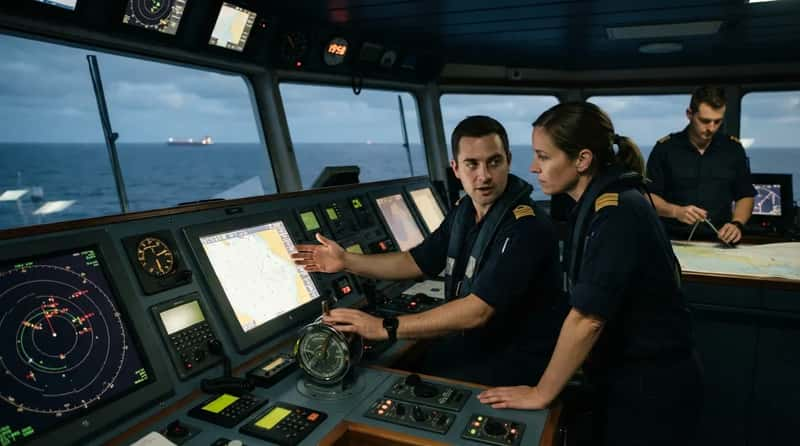
Every few hours, one officer hands the ship to another, and the handover is a decision in itself. Under international watchkeeping standards, the officer on watch should not hand over if there’s reason to believe the relief isn’t fit to take the watch. An officer can actually delay leaving until they’re satisfied. That covers tiredness or anything else that clouds judgment.
The outgoing officer briefs the new one on course, traffic, weather, and any standing orders. The relief checks the radar, the chart display, and the compass readings. Only then does the watch officially change hands. It takes a few minutes, and you’ll never see it.
At a Glance
- Many ships rotate watches in a four-hours-on, eight-hours-off pattern, though schedules vary.
- The briefing covers course, nearby traffic, weather, and standing orders.
- The relief officer checks radar, chart display, and compass before taking over.
- If the relief seems unfit, the outgoing officer can hold the handover.
The next decision happens in near darkness, and it’s more physical than you’d expect in #15…
#15 – Why the Bridge Is Kept Almost Pitch Black at Night
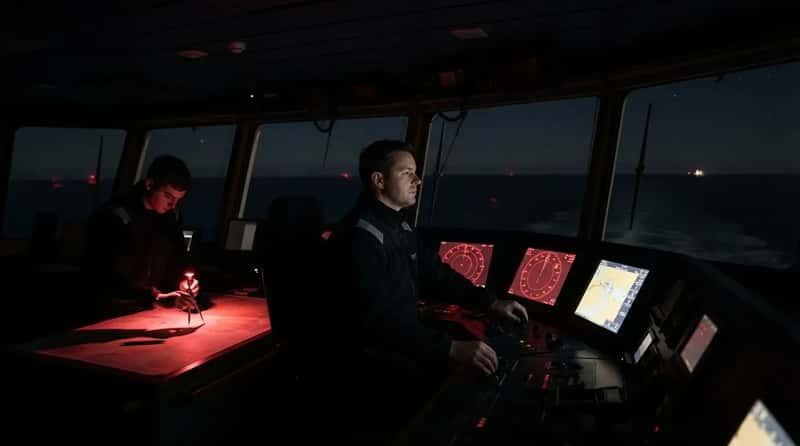
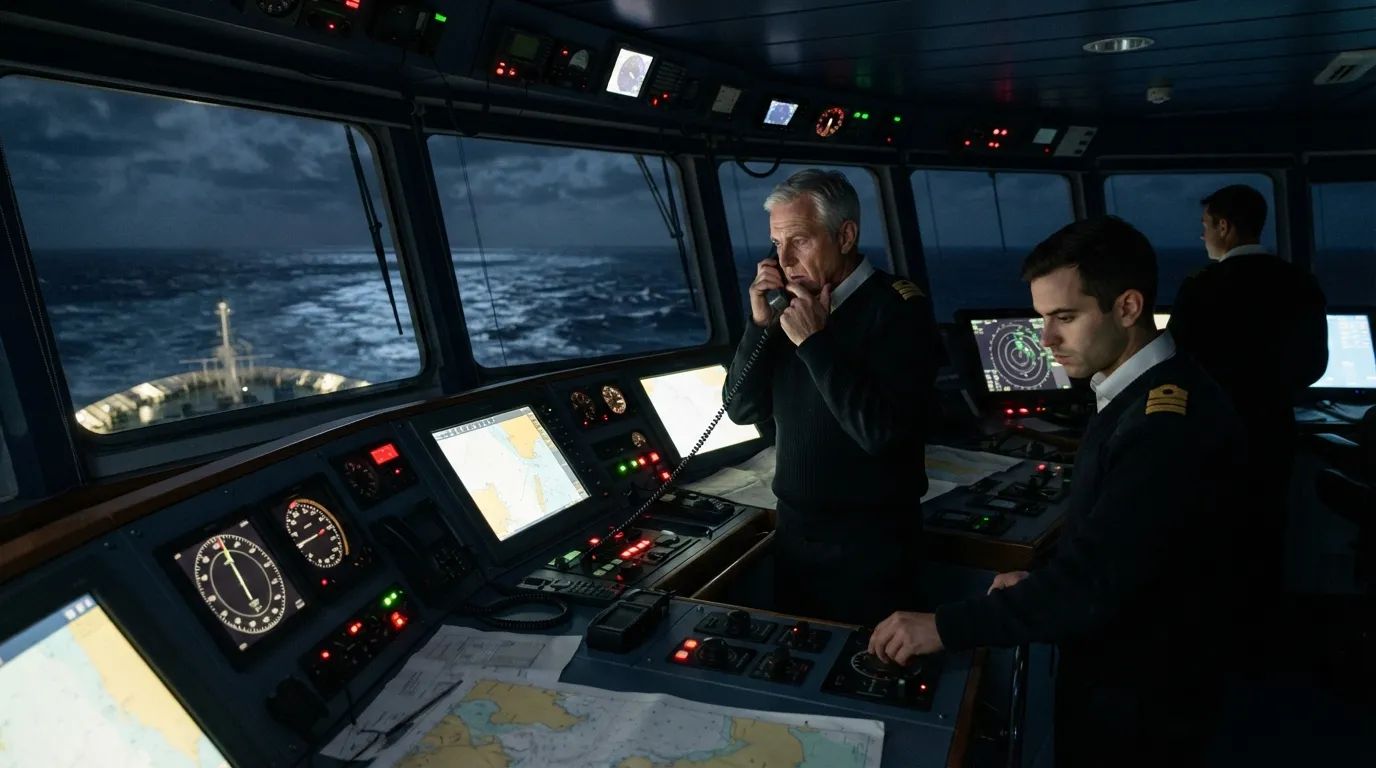
That dim glow you see from the deck isn’t a design choice. Officers deliberately keep the bridge dark so they can see out. Bright screens and lights throw glare on the windows and wreck night vision. Eyes can take up to roughly half an hour to fully adjust to the dark.
So officers dim the displays and use low-level, often red, lighting for chart work. They also decide how much light they can tolerate before it costs them a distant fishing boat or an unlit buoy. Many mariners will tell you a lit-up bridge is a blind bridge.
The screens they do look at hide another set of choices, and it’s waiting in #14…
#14 – The Invisible Line on the Chart That Triggers Alarms
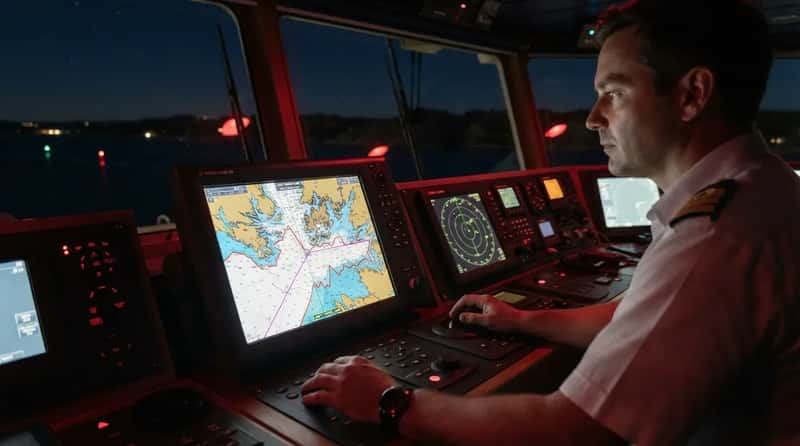
Modern ships navigate on electronic charts, and officers set the danger lines themselves. They choose a safety depth and a safety contour, which tell the system what counts as too shallow for this particular ship. The same stretch of water can be safe for one ship and a hazard for another. It all depends on how deep the vessel sits in the water.
They also set look-ahead alarms that warn if the planned route crosses a danger. Set them too tight and the alarms never stop, which breeds the habit of tuning them out. Set them too loose and the warning arrives late. Finding that balance is a quiet daily task.
Even a perfect chart can’t tell you what’s actually on the water, which brings us to #13…
#13 – The Target on the Screen That Might Not Be Real
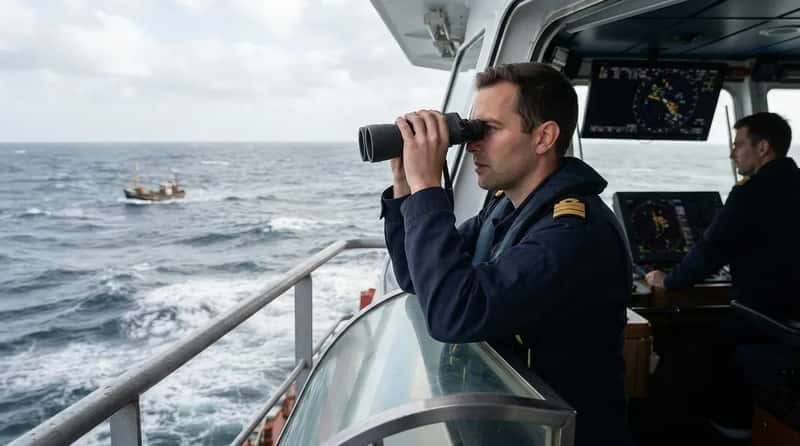
Passengers assume every boat shows up on a screen. It doesn’t. Larger ships carry transponders that broadcast their identity, but not every vessel does. Small fishing boats and some pleasure craft may not transmit at all. Radar can also miss small wooden or fiberglass boats in rough seas.
So officers constantly decide which source to trust. They cross-check radar, transponder data, and their own eyes. A target that appears on one and not the other gets extra attention. That’s why the lookout never becomes redundant.
Then comes a question mariners still argue about, and it’s up next in #12…
#12 – Autopilot or Hand Steering? The Call Sailors Still Argue About
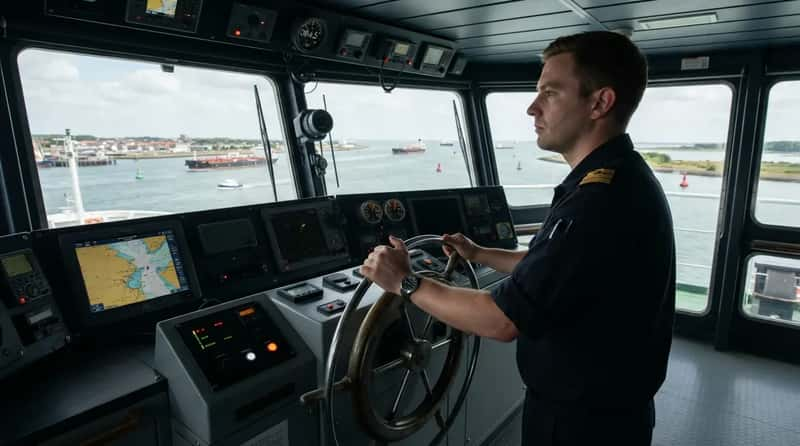
On open water, the ship usually steers itself. In busy channels, fog, or heavy traffic, officers often switch to manual control so a person’s hands are on the wheel. The decision to take over is made before trouble starts, not after. That gives the helmsman time to feel how the ship responds.
Here’s the friction. Some seafarers argue that heavy automation has made watchkeepers too comfortable, while others say it frees them to watch the horizon. Both sides agree on one thing. The system is a tool, and someone has to decide when to stop trusting it.
The next choice touches your schedule and the company’s wallet, and it’s in #11…
#11 – The Speed Decision That Quietly Shapes Your Whole Trip
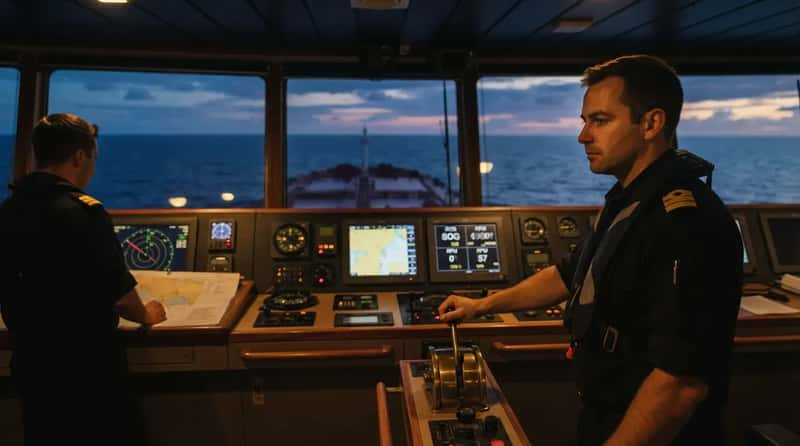
Passengers rarely ask how fast the ship is going, but someone is always deciding. Speed gets balanced against fuel use, schedule, port timing, and weather. As a rule of thumb, hourly fuel burn climbs steeply as speed rises, roughly with the cube of the speed. A small bump in pace gets expensive fast.
Many ships also have berth slots, tides, and pilot boarding times to hit. So the bridge may slow down to arrive on time rather than early. Or it may speed up to make up for hours lost to weather. Either way, the ship’s pace is rarely random.
But the rules about what can leave the ship at sea might be the most overlooked part, and #10 explains…
#10 – The Rules on What Can Legally Leave the Ship at Sea
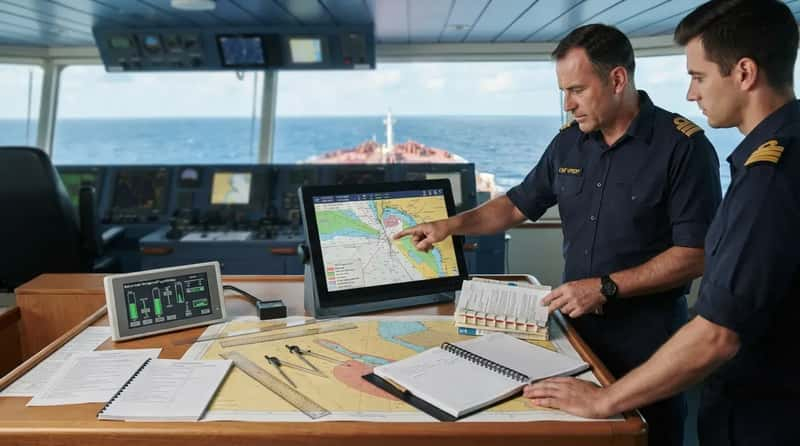
Waste doesn’t just vanish at sea, and officers have to track where discharges are allowed. International pollution rules ban dumping plastics into the ocean anywhere. Other waste rules depend on how far you are from land and which sea area you’re in. Some areas are protected far more strictly than others.
Ballast water is another one. Ships take on water to stay stable and may need to treat it to a standard before releasing it, so invasive species don’t hitch a ride. The officers plan this around the route, the ports, and the rules there. Passengers see none of it.
Fast Facts
- The plastics ban sits in Annex V of the MARPOL pollution convention, which took effect in 1988.
- Designated “special areas,” such as the Baltic and Mediterranean seas, carry tighter discharge limits.
- The Ballast Water Management Convention entered into force in September 2017.
- The same ship can face different rules within a single day’s sailing.
Now for something passengers do notice, and often resent, in #9…
#9 – The Decision to Lock You Out of the Open Decks
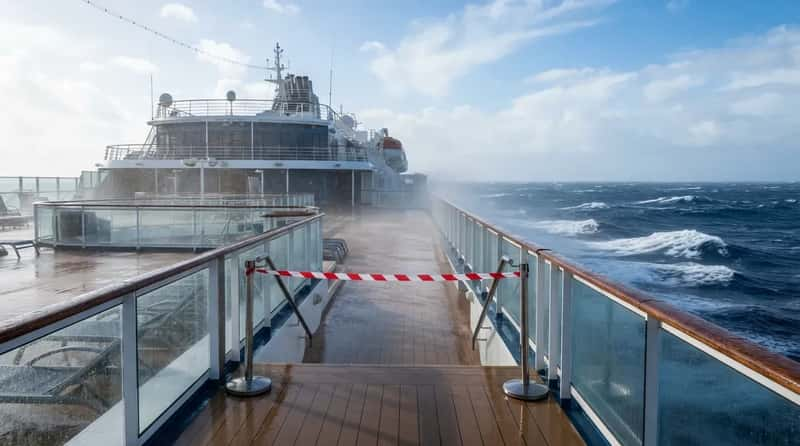
You’ve seen the sign: outer decks closed. Passengers often grumble that it’s an overreaction on a bright, windy day. The decision is made on wind speed, spray, and how the ship is moving, not on how the sky looks. A gust that seems fine at the rail can knock someone off their feet.
Many officers figure that closing a deck too early earns a few complaints, while closing it too late can mean an injury. They’ll take the complaints. Decks usually reopen once conditions ease, and the bridge makes that call too.
The next call is aimed at something you’d never think to look for, in #8…
#8 – Slowing Down for Whales Nobody Can See Yet
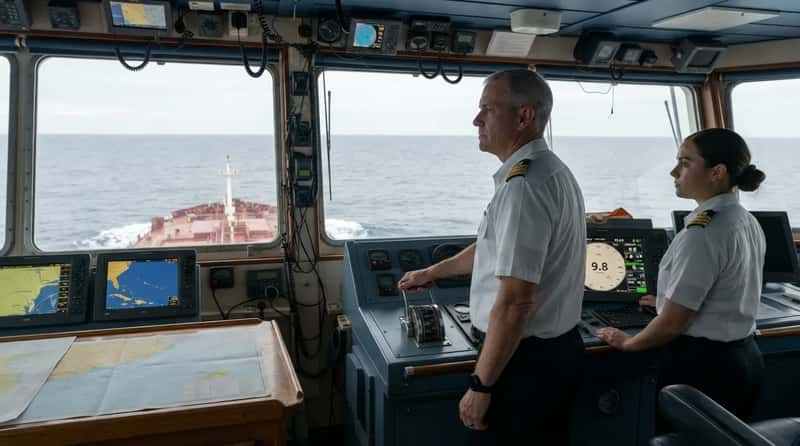
In some waters, the bridge adjusts for animals that aren’t in sight. Off the U.S. East Coast, federal rules limit the speed of larger vessels in designated seasonal zones to protect endangered North Atlantic right whales. Officers have to know exactly when they’re entering those areas. Whales are hard to spot from a high bridge, which is why the rule relies on speed, not eyesight.
Ships also watch for marine mammal sightings and may alter course if they spot animals ahead. Collisions can injure whales and damage vessels. The decision is part law, part caution.
Another call involves sound, and passengers rarely connect it to safety, as #7 shows…
#7 – The Fog Decision That Slows the Whole Ship Down
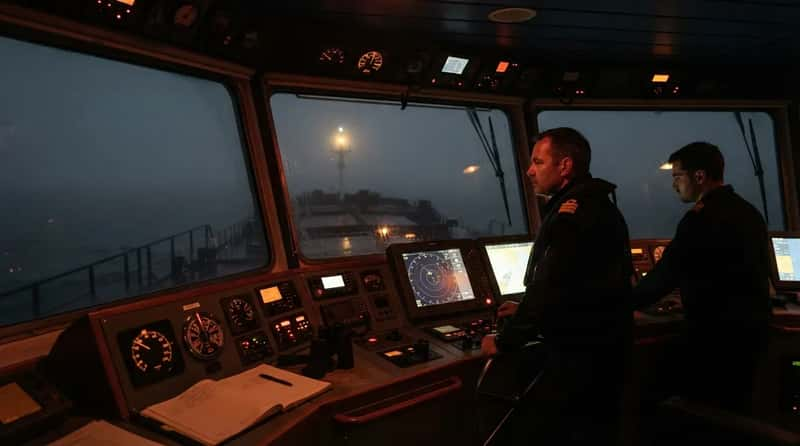
When visibility drops, the ship’s behavior changes. International collision rules require a safe speed at all times. In restricted visibility, vessels must go at a moderate speed and keep engines ready for immediate maneuvers. That’s why a foggy crossing often feels strangely slow.
The ship also sounds its horn at set intervals, which explains those long blasts you hear in the night. Officers decide how much to slow, whether to post extra lookouts, and when to call the captain. It’s a stack of small choices, each leaning on the last.
Quick Compare
- Underway and making way: one long blast, repeated at least every two minutes.
- Underway but stopped: two long blasts in a row, also at least every two minutes.
- What counts as “long”: a blast of four to six seconds.
But even in clear weather, the real test is how officers handle other ships, in #6…
#6 – Giving Other Ships Room Earlier Than Feels Necessary
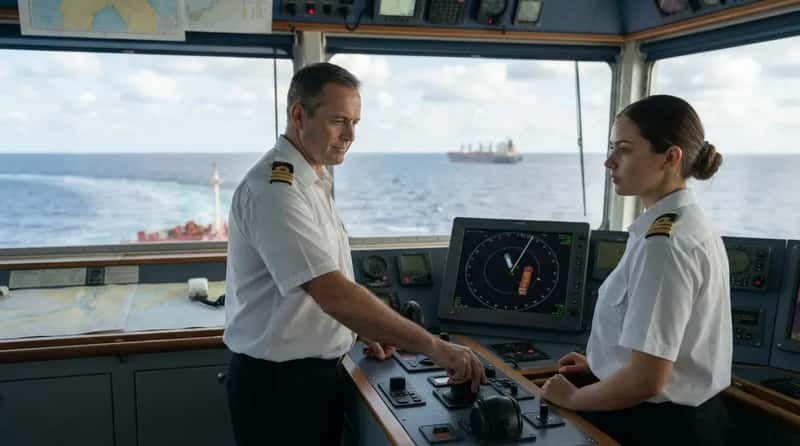
When two ships approach, officers track the closest point they’ll pass. They set the distance they’re willing to accept, and they act before it gets uncomfortable. The collision rules say action to avoid a collision should be early and substantial. A tiny change in course is often useless because the other ship may never notice it.
So officers prefer a bold, obvious turn, and then they return to the plan. To a passenger, it may feel like a gentle bend. To the other ship, it’s a clear message.
The weather-dodging decisions are even more dramatic, and #5 covers them…
#5 – The Storm Detour That Never Makes the Announcement
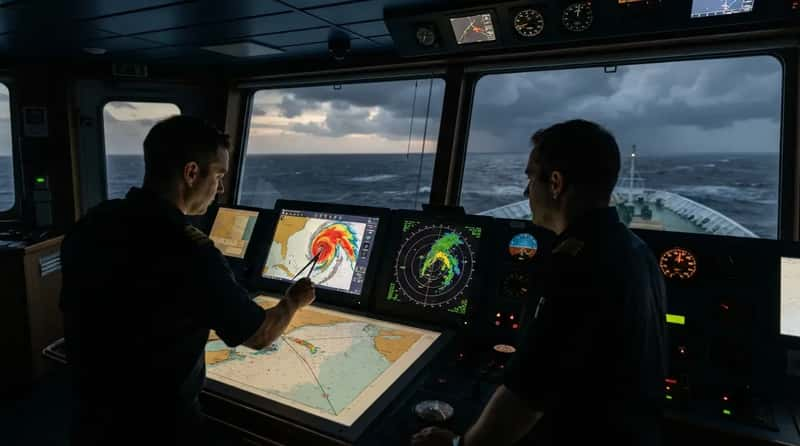
When a tropical storm is forecast, the bridge doesn’t wait for it. Officers use weather forecasts and routing advice to plan a course that keeps the ship well clear. In the Northern Hemisphere, they try to avoid the storm’s right-hand side. That side is considered the dangerous semicircle because the storm’s own movement adds to its wind speed.
That can mean a longer route, a slower pace, or a change of port order. On North Atlantic routes, officers also consider iceberg information from the International Ice Patrol, which was created after the Titanic disaster. Most passengers only learn about any of it when the itinerary changes.
Then there’s a stranger who boards the ship just to help make decisions, and #4 looks at them…
#4 – The Harbor Pilot Who Advises, But Doesn’t Take Command
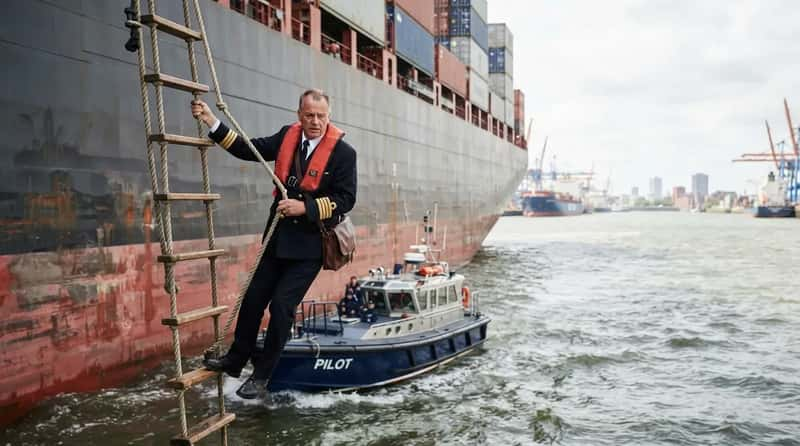
When a ship enters a busy port, a local pilot climbs aboard. Passengers assume that person takes the wheel and the responsibility. In most cases, the pilot is a local expert who advises. The captain generally keeps overall responsibility for the ship.
So the bridge team runs a quick exchange of information. They discuss the ship’s handling, the plan, and the tugs. Then they decide, moment by moment, whether to follow the advice. If something doesn’t look right, the team is expected to speak up.
Worth Knowing
- Pilots usually board at a pilot station outside the harbor, often by climbing a rope ladder from a small boat.
- Under international safety rules, a plain pilot ladder is meant for climbs of up to 9 meters above the water.
- The bridge team stays on watch the whole time the pilot is aboard.
- Before the first turn, the pilot and bridge team share the plan and the ship’s handling quirks.
And speaking up is exactly the issue in #3, which might change how you picture the night shift…
#3 – The Moment an Officer Has to Wake the Captain
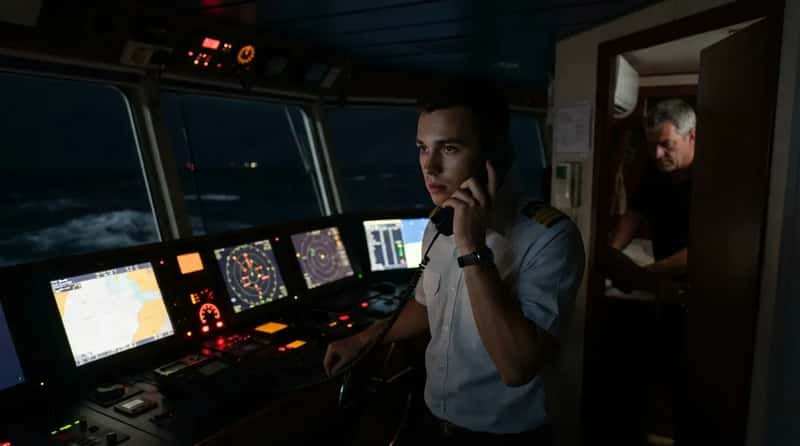
Captains leave written standing orders that spell out when they want to be called. These cover things like heavy traffic, poor visibility, or any doubt about the ship’s safety. The orders usually tell officers to call early, rather than wait until they’re sure there’s a problem. That’s an intentional design.
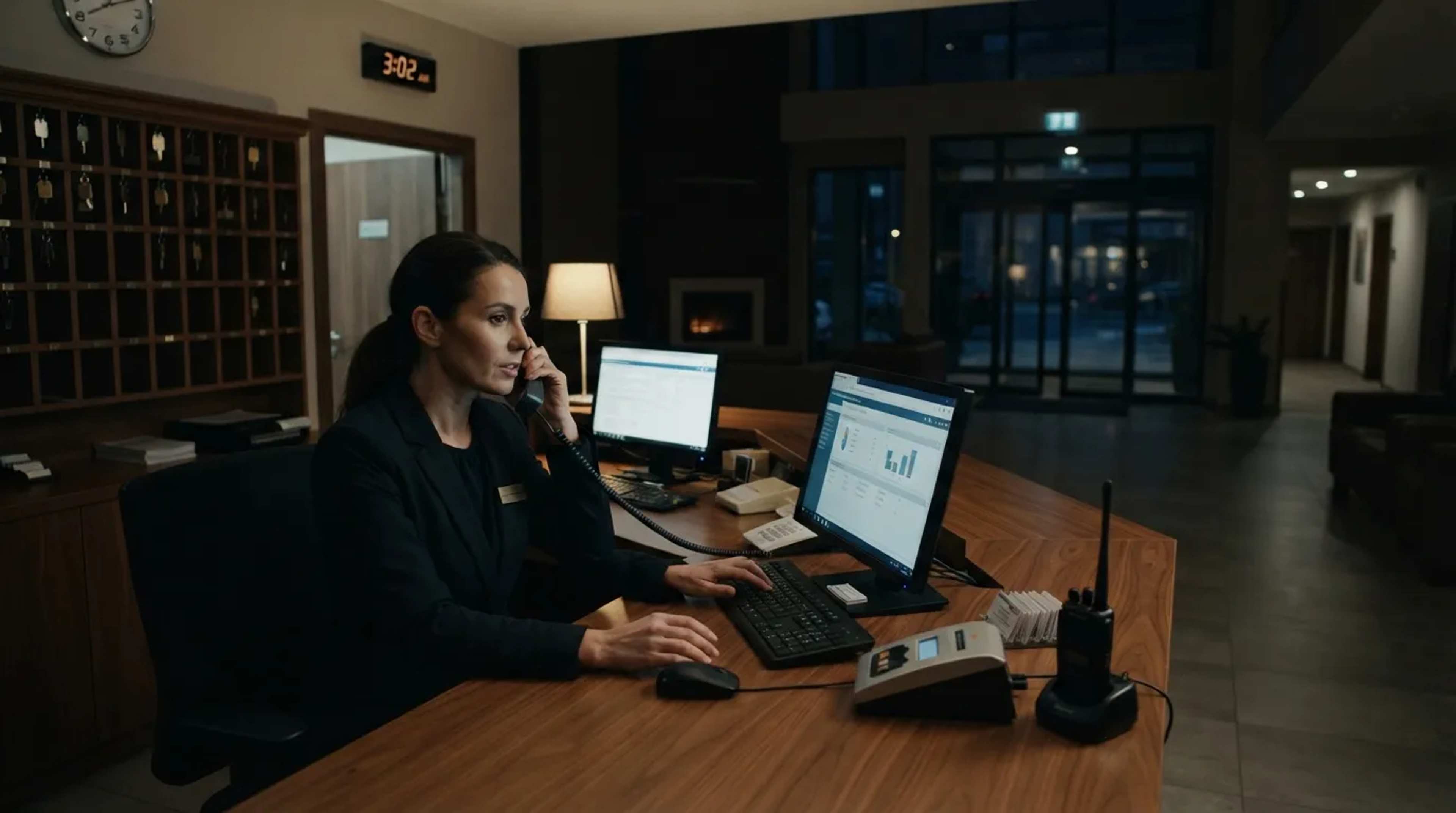
Still, it’s a hard moment. Nobody enjoys waking the boss at 3 a.m. Experienced mariners often say the real danger is hesitation, not the call itself.
But the toughest call of all involves a person in trouble, and it’s coming in #2…
#2 – Turning a Ship Around for One Sick Passenger
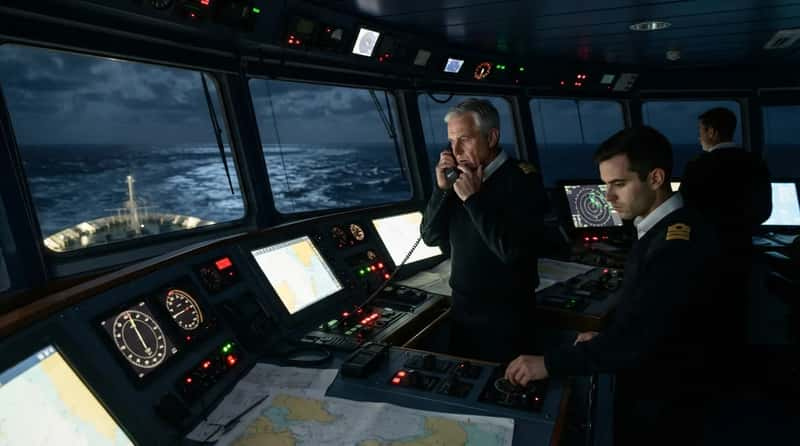
Medical emergencies happen at sea, and the bridge has to decide what to do. Officers and the ship’s medical team often seek shore-based medical advice by radio or satellite. Then the captain weighs the options. Sometimes the ship changes course for the nearest port or a rendezvous point.
That choice affects every passenger on board. It can change the schedule, the fuel plan, and the next port. It also depends on weather, distance, and what help can actually reach the ship.
And the hardest rule of the sea, the one that overrides everything else, is in #1…
#1 – The Legal Duty to Drop Everything for a Stranger
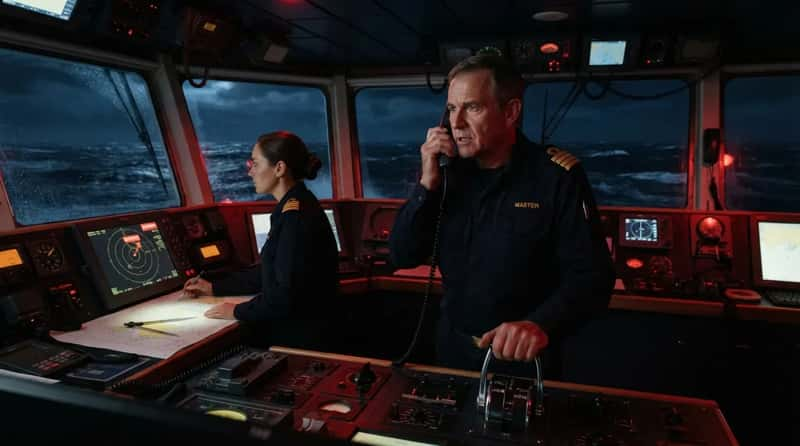
If a ship’s crew hears a distress call, the law doesn’t leave much room. Under international maritime rules, the master of a ship at sea who learns of people in distress must go to their assistance at full speed. The obligation applies to anyone in danger, regardless of nationality or circumstances. The master can be released only if unable to help, or if help is unreasonable or unnecessary.
Think about what that means. A cruise or ferry captain may have to change the route and delay arrival for an emergency involving people they’ll never meet. They weigh the risk to the ship, the passengers, and the rescue itself. It may be the most human decision on the bridge, and passengers only hear a short announcement.
So the next time a crossing feels perfectly smooth, remember what smooth actually is. It’s the sound of dozens of decisions going right before anyone could notice them.
The clocks, the dark bridge, the quiet detour around a storm were all someone’s call. And somewhere out there, a crew is ready to change course for a stranger.