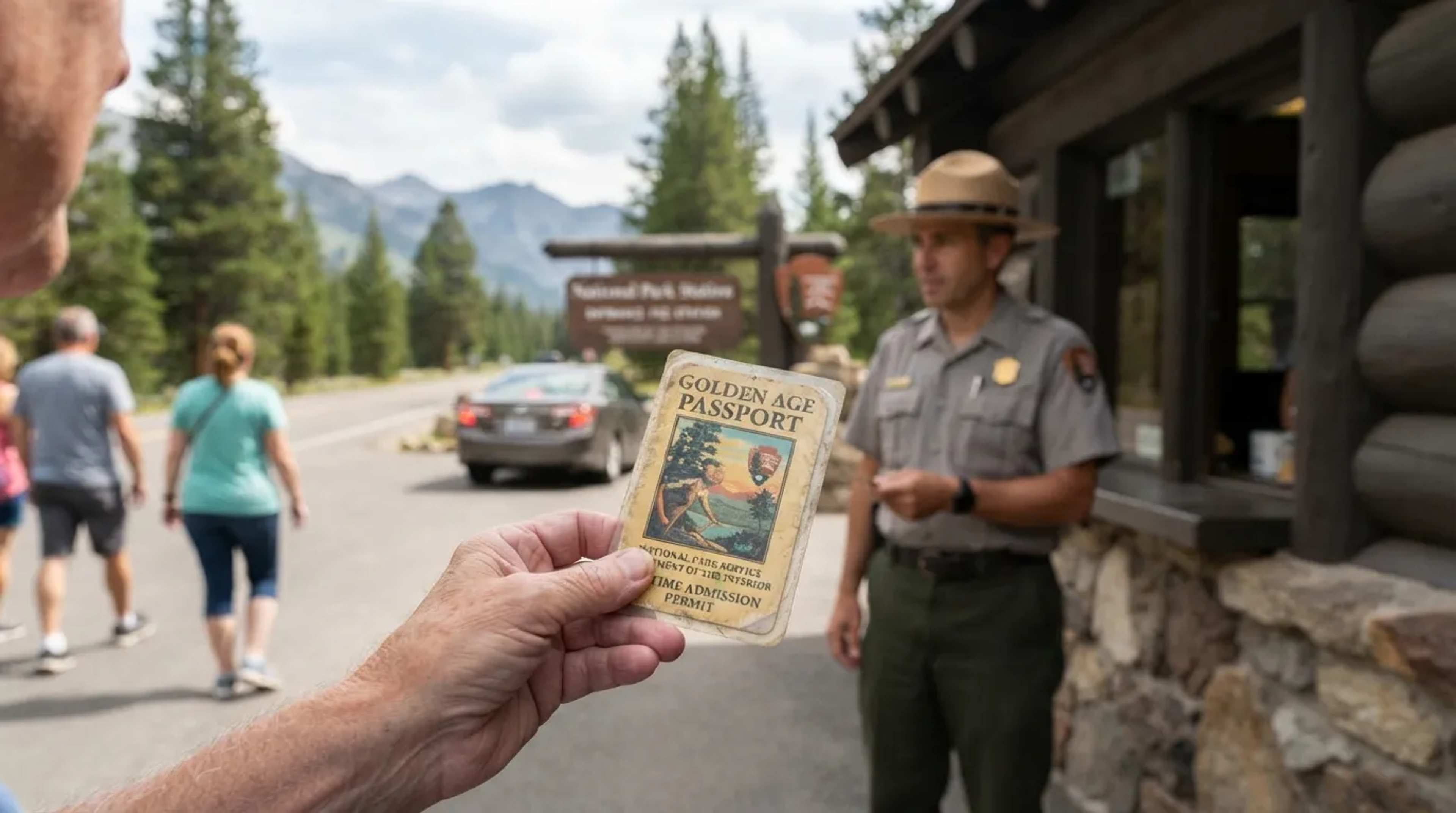
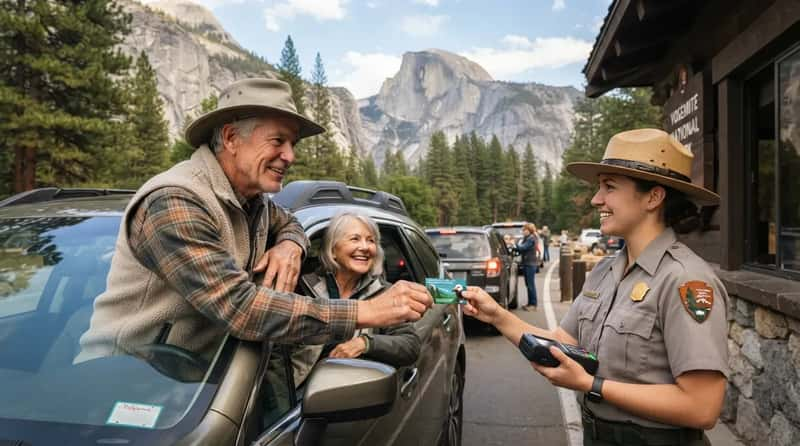
Picture a busy July morning at a national park entrance. A couple in their late sixties digs out a card and pays the full vehicle fee, with no idea that a one-time $80 pass could have waved them through for the rest of their lives. That pass is the federal Senior Pass, it starts at 62, and it opens the gate to more than 2,000 federal recreation sites.
The age is the first surprise, and it’s the smallest one. Further down the list are a trade-in that turns four cheap cards into a lifetime one, a half-price perk with a hookup catch, and a $10 pass from the old days that may still be sitting in a drawer.
#17 – Age 62 Is the Real Starting Line, Not 65
The 65 myth probably comes from Medicare, which starts at 65, and from Social Security’s full retirement age. Neither has anything to do with this pass. Federal law sets the Senior Pass at 62, and you only need to have turned 62 before you buy. Wait until 65 and you’ve handed over three extra years of gate fees.
Federal law asks for two things: you’re at least 62, and you’re a U.S. citizen or permanent resident. A green card counts. There’s no income test and no health requirement, so the price is where it gets interesting.
#16 – The $80 Price Shield That Stayed Put While Others Climbed
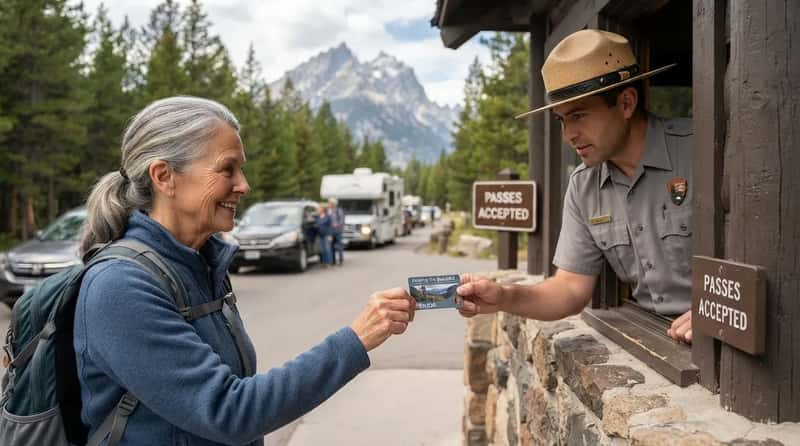
Park pricing got more complicated in 2026, especially for visitors from abroad. Nonresidents without an annual pass now pay an extra $100 at 11 of the most popular parks. The standard annual pass for U.S. residents sits at $80.
Seniors didn’t take a hit. The senior annual and lifetime passes stayed at $20 and $80. Everyone else pays $80 every year, while you pay $80 once for life. The break-even math is even better than it sounds.
#15 – Two or Three Gate Visits Can Pay Off the Whole Pass
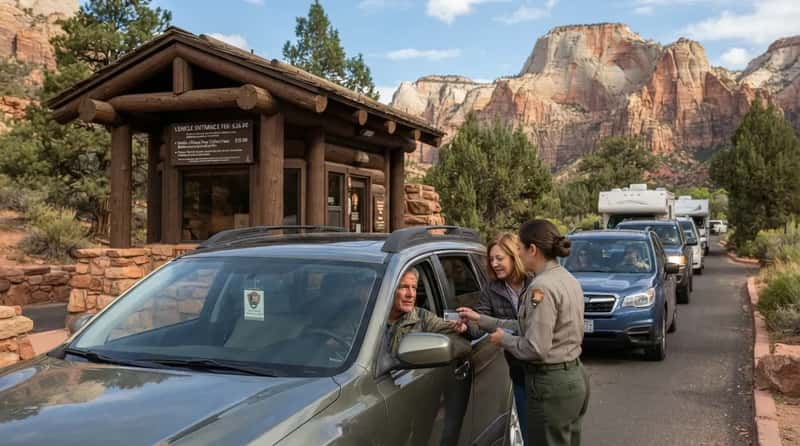
Gate fees add up fast. Most fee-charging parks ask $30 to $35 per vehicle, so two visits get you close to the $80 price and a third puts you ahead. After that, every entrance is effectively free.
There’s a counterpoint worth knowing. Fewer than 25% of the 400-plus National Park Service sites charge entrance fees. If your trips mostly land in free-entry parks, the $20 annual pass may be the smarter first buy, and that choice sets up a clever trade-in.
Fast Facts
- Senior Annual Pass: $20, valid for one year from the month you buy it.
- Senior Lifetime Pass: $80 once, with no renewals ever.
- Typical gate fee: $30 to $35 per vehicle at fee-charging parks.
- Break-even point: about three paid visits for the lifetime pass.
#14 – Four $20 Passes Can Quietly Turn Into a Lifetime One
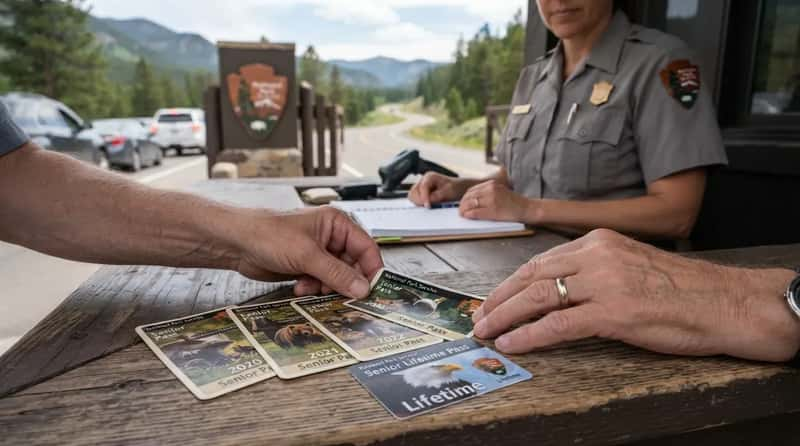
Annual holders have a path most people never hear about. The USGS store lists a trade: four Senior Annual Passes for a Senior Lifetime Pass at $0, or three for $20. You can effectively earn the lifetime pass by renewing the cheap one.
The swap is handled where the Senior Pass is issued, so ask at a federal fee site before you pay for another annual card. And an older card may still be waiting in a drawer at home.
#13 – That Faded Golden Age Passport Still Opens Gates
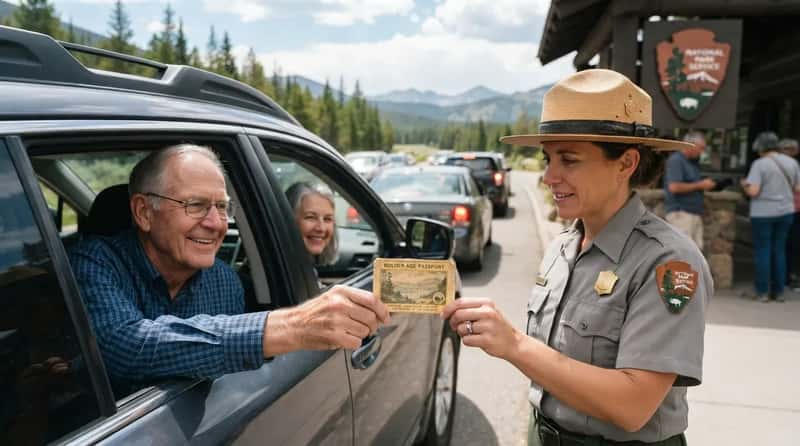
Some people still own a card from before 2007. The program stopped issuing Golden Age Passports that year, but existing ones remain valid for a lifetime. A card you got decades ago can still get you through the gate today.
The Park Service encourages holders to swap it for a new Senior Lifetime Pass for free. The exchange happens in person at a park that charges an entrance fee, and you should bring the old card. It’s a nice upgrade, though the original still works if you’d rather keep it. Now, who gets to ride in with you?
#12 – Your Whole Carload Rides In on One Card
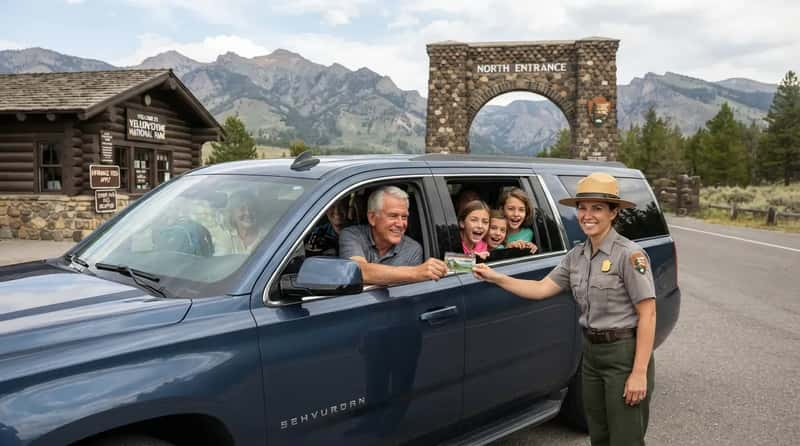
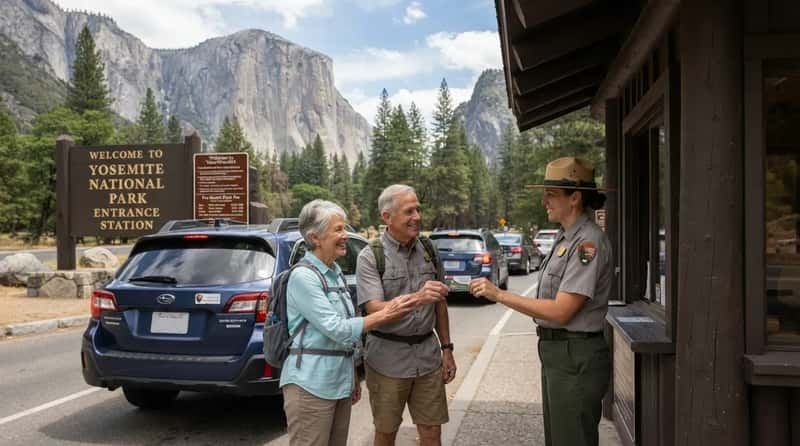
This one catches people off guard. At per-vehicle fee areas, the pass admits the holder and every passenger in a non-commercial vehicle. One card can cover everyone in your car.
The grandkids, a neighbor and a road-trip friend all get in on a single pass. The catch is that the pass is non-transferable, so you can’t lend it out. It’s tied to you, and you need to be in the vehicle. Some sites count people instead of vehicles, and that changes the math.
#11 – Walk-In Fees Still Cover Three Adult Guests
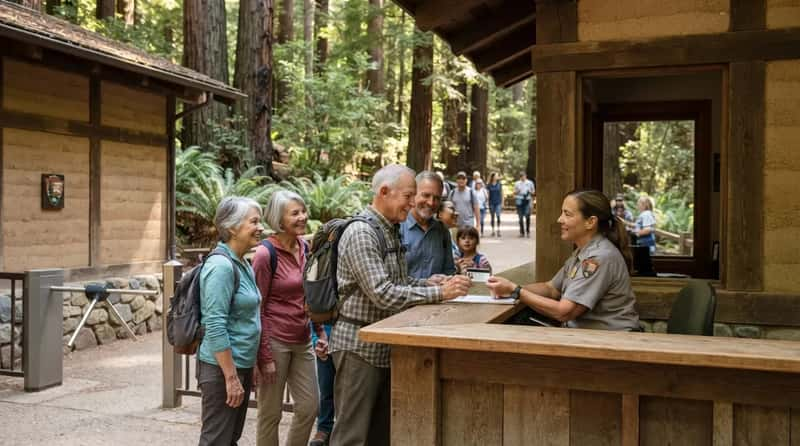
Not every site charges by car. At per-person fee areas, the pass covers the holder plus three adults, up to four adults total, and children under 16 get in free. Three adult guests can come in on your pass.
Plenty of travelers end up paying for friends before anyone mentions the pass. A single question at the window can fix that. Then there’s the phone in your pocket.
#10 – The Pass Can Now Live on Your Phone
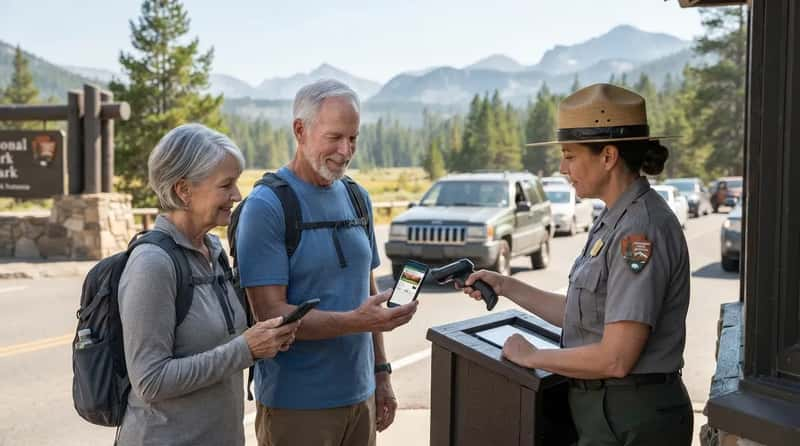
The glove box no longer has to be its home. Digital passes launched on Recreation.gov on November 20, 2025, and in 2026 all America the Beautiful passes, Senior included, are available that way. If you’ve ever torn the house apart for a missing card, that’s welcome news.
The digital Senior Annual Pass costs $20, the same as the plastic card. The digital lifetime option adds a processing fee. Convenience, it turns out, has a price tag, and the next entry shows how big it gets.
#9 – Buying in Person Beats Buying Online by Roughly $10
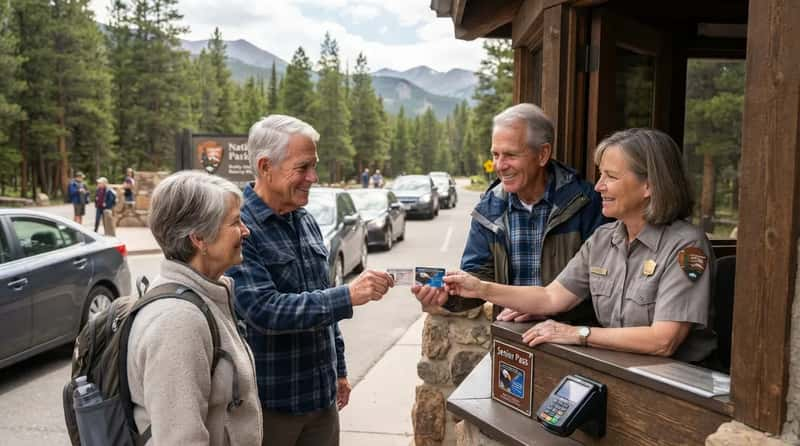
The easy way to buy is the pricey one. Ordering online adds a processing fee, which brings the lifetime pass to roughly $90 to $92.50, while buying at a federal fee site costs exactly $80. Skip the screen and you keep the difference.
A USGS Store order adds a $5 document fee and a $7.50 handling fee. The in-person route saves money, and it puts the pass in your hand the same day. Once you have it, you’ll find it reaches much further than the famous parks.
Quick Compare
- In person at a federal fee site: exactly $80, pass in hand that day.
- Online order: roughly $90 to $92.50 for the lifetime pass.
- USGS Store order: $80 plus a $5 document fee and a $7.50 handling fee.
#8 – Six Federal Agencies Honor It, Not Just the Park Service
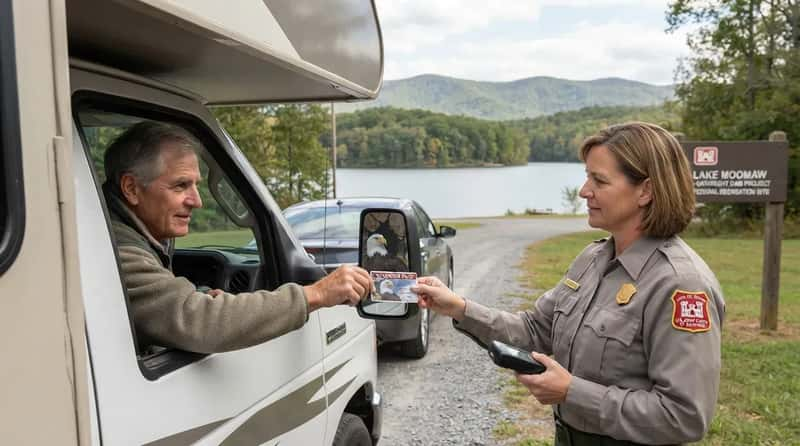
Most people picture Yellowstone and stop there. The pass covers lands run by the National Park Service, Fish and Wildlife Service, Forest Service, Bureau of Land Management, Bureau of Reclamation and Army Corps of Engineers. That includes lakes and reservoirs managed by the Corps, which is a lot of quiet shoreline.
There’s a boundary, though. The Senior Pass is valid only at participating federal recreation sites. Every state runs its own park system with no connection to the federal pass, and many travelers find that out at the gate. The real savings, though, show up after dark.
#7 – Half Off the Campsite, Night After Night
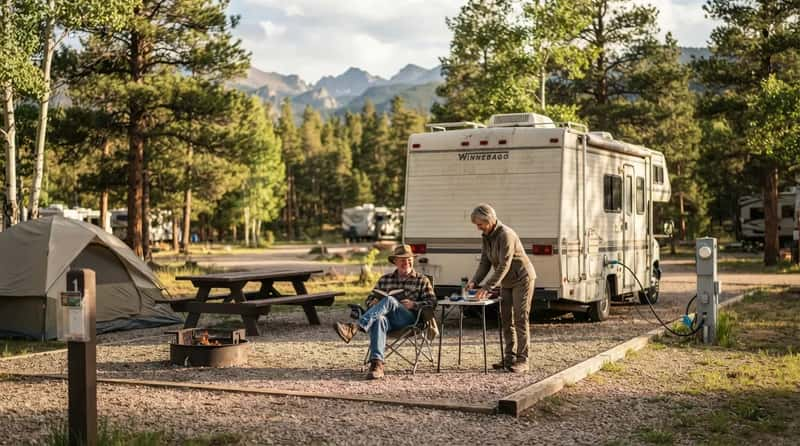
This is where the pass earns its keep. At many Forest Service, BLM, Reclamation and Park Service sites, the pass triggers a 50% discount on standard camping fees. Federal campgrounds often charge $20 to $35 a night, so you’d pay about $10 to $18.
A one-time gate waiver can’t compete with a discount that repeats every night. But the discount has a catch, and it involves hookups.
#6 – The Hookup Fine Print Nobody Reads at Check-In
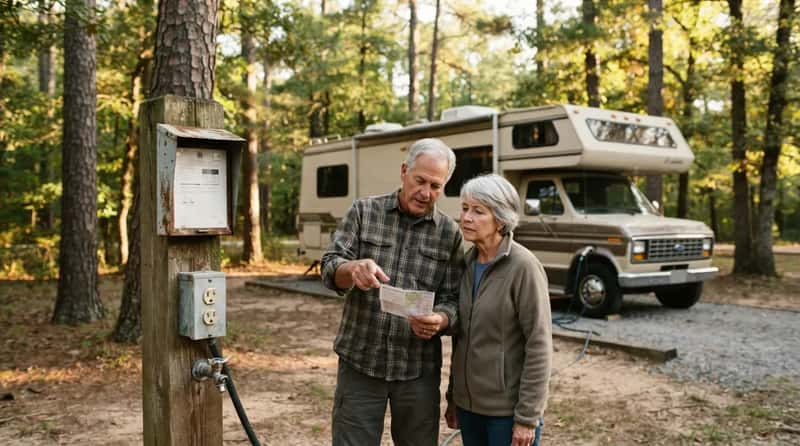
The half-off may not cover your whole bill. If a site has water or electric hookups, you may pay full price for those and get 50% off only the basic campground fee. Rules differ by site, and the booth won’t always explain the split.
Many federal campgrounds are basic, with no hookups at all. That makes the discount a natural fit for tent campers dry-camping RVers who like quiet sites. The discount also stretches beyond the campsite.
#5 – Boat Launches, Swimming and Cave Tours Can Get Half Off Too

The half-price rule goes beyond camping. It can apply to expanded amenity fees for camping, swimming, boat launches and specialized interpretive services. Cave tours are one example, and they can be pricey for a family.
Here’s the limit. In some cases, only the pass holder gets the 50% reduction. The discount may cover just your own ticket. Private operators play by different rules entirely.
#4 – The Lodge and Tour Operator Gamble
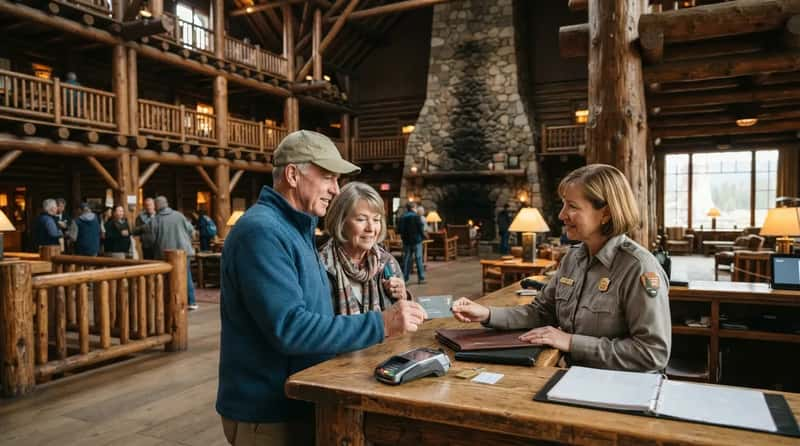
Private companies inside parks are a gray area. The pass generally doesn’t cover or reduce fees charged by concessionaires, which includes private companies running guided tours, boat rides or lodges. That’s why a $90 lodge room can stay $90 even with the pass in your pocket.
Some will honor it anyway. Concessionaires aren’t required to accept the pass for a discount, though many do, and each has its own agreement with the Park Service. Asking costs nothing, and the worst answer is a polite “no.” The next entry may save you even more than a discount.
At a Glance
- Usually covered: entrance fees at participating federal sites.
- Often half off: camping, swimming, boat launches and interpretive services.
- Up to the operator: private tours, boat rides and lodges.
- Not valid: state park systems.
#3 – Two Free Passes Could Make the $80 Unnecessary
The Senior Pass isn’t always the cheapest option. The Access Pass is a free lifetime pass for citizens or permanent residents with permanent disabilities. It carries the same 50% amenity discount.
Veterans need a DD-214 or other military documentation. If you qualify for a free pass, you can skip the $80. And if you don’t, the paid pass has a feature that’s easy to overlook.
#2 – No Renewals, No Means Test, No Expiration Date
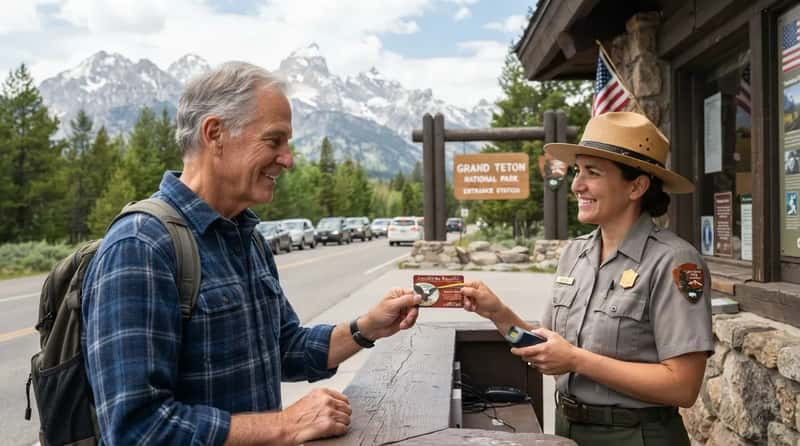
Look at what the lifetime pass doesn’t require. It’s valid for the rest of your life and never needs renewing. There’s no income test and no health criteria, so you never have to prove anything again after the first purchase.
The annual version works differently. It stays valid for one year from the month of purchase, through the last day of that month. Lifetime means exactly that. One last entitlement comes with a bit of history.
#1 – An Old $10 Pass Still Works for Life
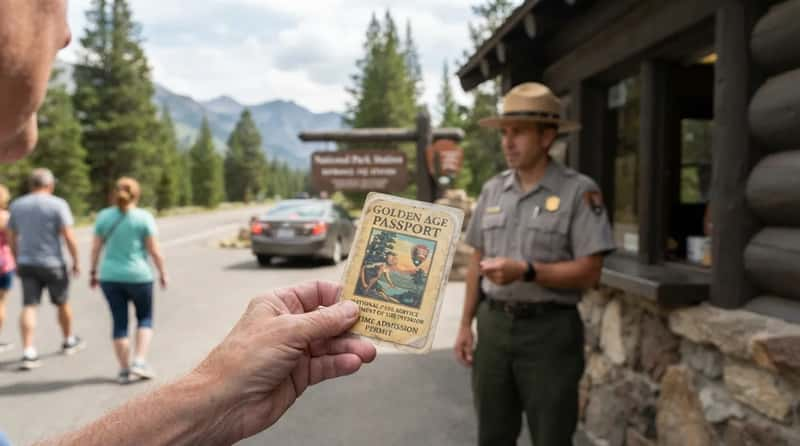
Some people have held this perk for years and barely noticed. In August 2017, the Senior Pass price rose for the first time since 1994, jumping from $10 to $80. All older versions of the Senior Pass, including Golden Age Passports, are still valid.
The increase came from legislation Congress passed in December 2016. The extra revenue is meant to help improve the visitor experience in parks. A card bought for $10 before 2017 may still be worth far more than that.
The pass is a small piece of plastic or a phone screen, yet it has quietly covered more entrances than most people ever ask about. Check the wallet and the glove box before your next trip.
And if you’ve been paying full price, you now know exactly what to ask for.