


A seat map shows rows and letters, but it never shows which seats an airline will hold back or reassign for a passenger who truly needs them. That blind spot costs older flyers comfort on long flights, and sometimes a scramble at the gate when the request comes too late. The 17 requests below are the ones with the most weight behind them, from small courtesies to rules tied to health and safety.
Here is the twist: none of them is keyed to turning 65. The last one explains why that matters more than any seat number on the map. First, the walk off the plane.
#17 – A Row Close to the Door You Will Use
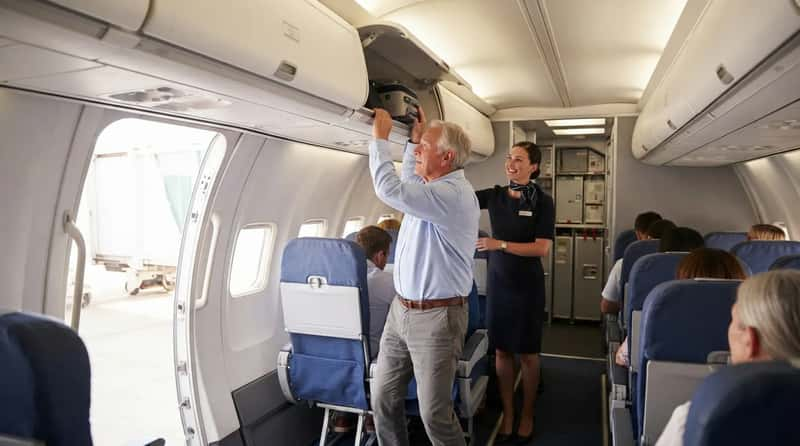
The shortest walk off the plane belongs to the rows nearest your exit door. That makes a forward row a smart request when a connection is tight or a knee is slow.
Some airlines charge extra for particular rows, so ask what is open at no charge before you pay for anything. On a short connection, a row near the front is worth more than a window.
A short walk off the plane does nothing for the walks during the flight. Those depend on how close the restroom is.
#16 – A Few Rows From the Lavatory, Not Beside It
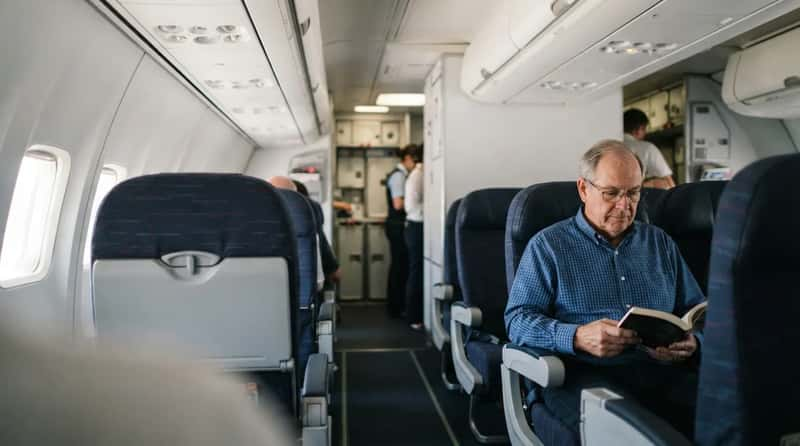
Rows beside the lavatories get the most foot traffic. Expect a line in the aisle, door noise and, at the very back, seats that often recline little or not at all.
A few rows away is the better request. You are close enough for a short walk and far enough that you are not sitting in the queue.
It pairs well with an aisle seat, because you will not be asking neighbors to stand. Ask at booking or check-in, before the remaining seats are simply whatever is left.
Quick Compare
- Right beside the lavatory: a line at your elbow, door noise, and limited recline at the very back.
- A few rows away: a short walk, a quieter seat, and no queue forming beside you.
- Add an aisle seat: you can get up without asking anyone to move.
Once the doors close, some empty seats become tempting, though not all of them are yours to take.
#15 – Moving to an Empty Seat, After Asking
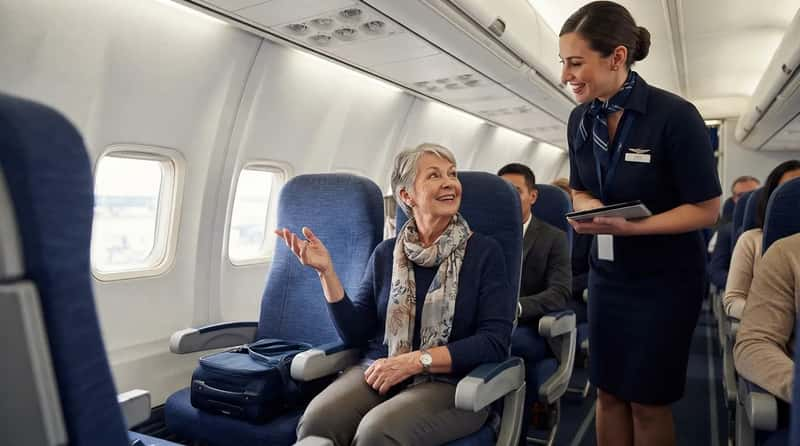
On a flight with open seats, asking to spread out is reasonable, but ask before you move. Agents hold seats back for late elite flyers and standby passengers.
Switching without telling the crew can cause delays, especially when someone is waiting for that very seat. Moving on your own is the one version of this request worth skipping.
Asking the gate agent first costs about thirty seconds, and a flight attendant can usually answer once boarding is finished.
An open seat only helps if you can reach it and use it, and aircraft differ in what they offer a passenger who cannot step over an armrest.
#14 – Asking What the Aircraft Can and Cannot Do
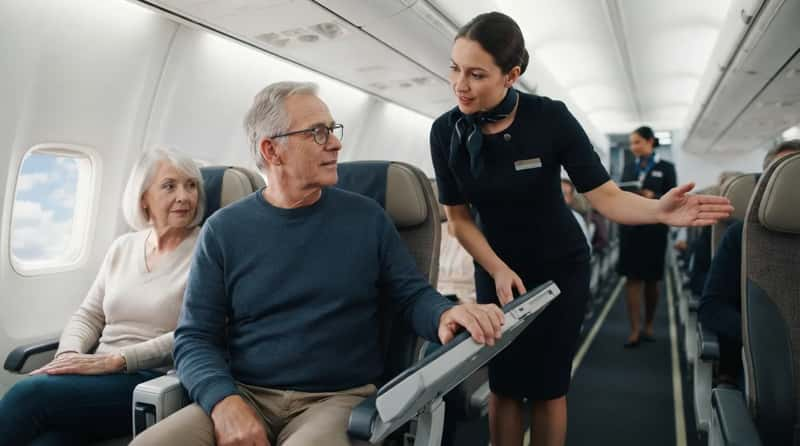
Before you pick a seat, you can ask what the aircraft offers. The Department of Transportation lists a right to information about the location of seats with movable aisle armrests and whether the aircraft has an accessible lavatory.
It also covers which services are not available on your flight. The answer changes with the plane, since the same route can be flown by a small regional jet one day and a wide-body the next.
Ask on the phone before you book, not at the gate.
Knowing which seat you want does not get you down the jet bridge ahead of the crowd. That falls under a separate rule.
#13 – Preboarding to Get Settled Without a Rush
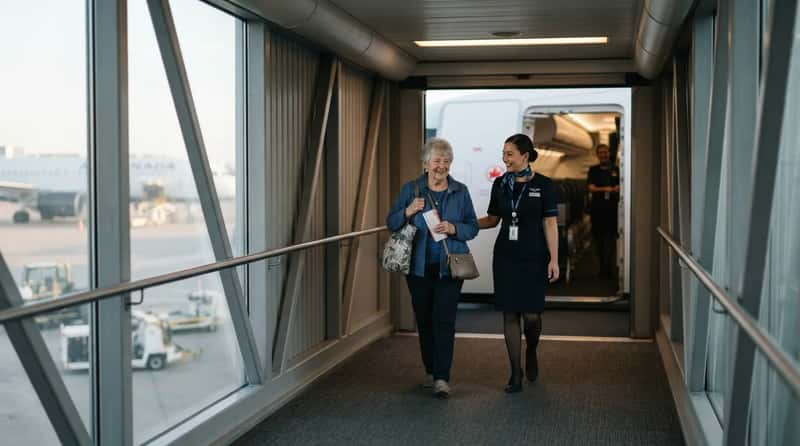
Federal rules say airlines must let a passenger with a disability who self-identifies at the gate board early. The need is additional time or assistance to board, stow accessibility equipment, or be seated.1
That rule runs on need, not on a birthday, and gate staff judge in the moment whether someone needs extra time. If your reason is time and not overhead-bin space, ask the agent instead of paying a priority boarding fee.
Say before general boarding begins that you need extra time to reach your seat and get settled.
On an airline that does not assign seats ahead of time, preboarding carries an added benefit.
#12 – Choosing Your Seat First Where Seats Are Not Assigned
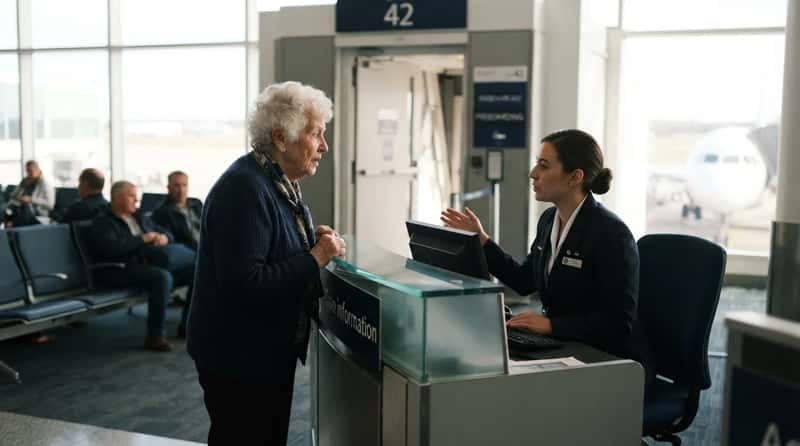
Airlines have three ways to deliver seating accommodations: the block method, the priority method, or preboarding (if the airline does not provide advance seat assignments). On an airline without advance assignments, passengers who identify as needing a seating accommodation must be allowed to preboard and select the seat that best meets their needs.
So on that kind of airline, the gate is where you make the request, and you make it before boarding starts. Airlines change how they assign seats, so check your carrier’s current method when you book.
Choosing at the door is one route. The other is telling the airline well before the flight, and that timing has its own rule.
#11 – A Seat Assignment That Fits Your Need, Requested Early
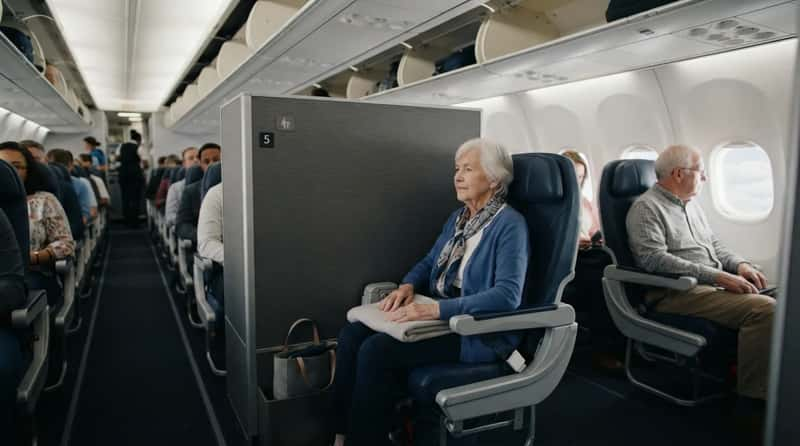
Beyond the listed categories, airlines must provide a seat assignment that best accommodates a passenger’s disability if the passenger meets the airline’s procedures. Those procedures can include advance notice, and a bulkhead seat, for one, can require 24 hours.
My advice is to call within a day of booking, not at check-in. If you miss the window, the airline must still provide the accommodation if it can with reasonable efforts and without delaying the flight.
The bulkhead row is the seat most often named in these procedures, and it has two different standings.
#10 – The Bulkhead Row, When You Have a Reason for It
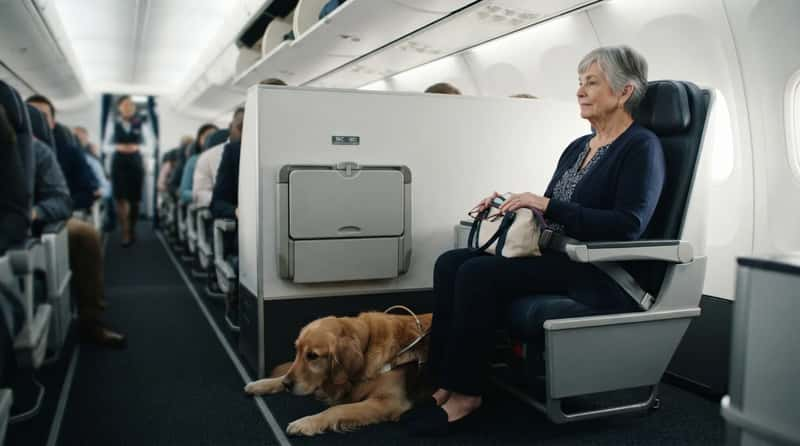
DOT says you are entitled to a bulkhead seat if you are traveling with a service animal or have a fused or immobilized leg. Airlines must also provide other available bulkhead seats to passengers with other disabilities if they need one to readily access the air transportation service.2
The airline may ask how a particular seat will let you do that. If your reason is only leg room, I would pass, because bulkhead seats often lack under-seat storage and your bag goes overhead.
A service animal changes the picture, because the passenger decides whether a bulkhead seat is wanted at all.
#9 – A Non-Bulkhead Seat for a Service Animal
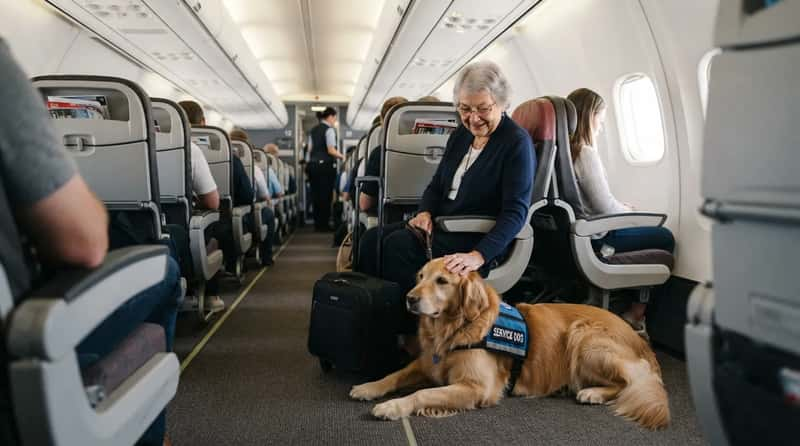
The rule on service animals hands you the choice. For a passenger with a disability traveling with a service animal, the airline must provide, as the passenger requests, either a bulkhead seat or a seat other than a bulkhead seat.3
The reason to choose a regular row is practical. The best spot depends on the animal’s size and on where your bag and feet need to go, so the airline lets you decide instead of assigning one.
A bad leg raises the same question from another side, since the right row depends on which side of the aisle the leg falls.
#8 – Extra Legroom on the Right Side of the Aisle
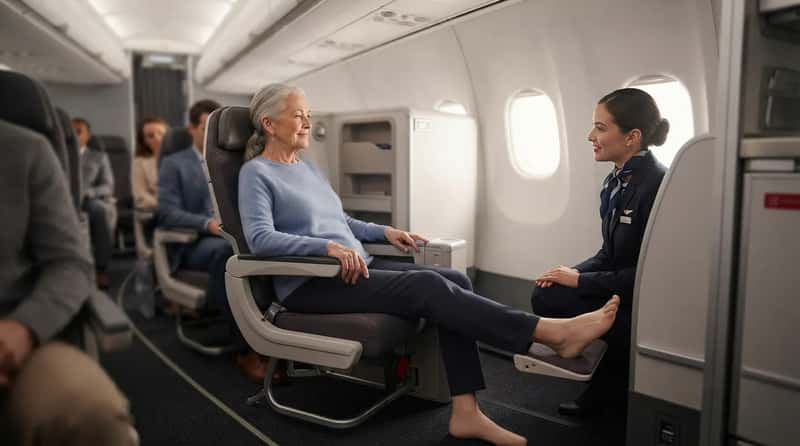
For a passenger with a fused or immobilized leg, the airline must provide a bulkhead seat or other seat with greater legroom than other seats, on the side of the aisle that better accommodates the disability. DOT describes this as a seat that can include an aisle seat or a bulkhead seat.
The wording says fused or immobilized. A knee that still bends is a judgment call, so treat the request as a courtesy and explain what the leg can and cannot do.
At a Glance
- Fused or immobilized leg: a bulkhead or greater-legroom seat, on the better side of the aisle.
- Service animal: a bulkhead or non-bulkhead seat, as the passenger requests.
- Personal care attendant: an adjoining seat, when the attendant performs a function the crew is not required to.
- Aisle chair user: an aisle seat with a movable armrest when a fixed one blocks the transfer.
Legroom helps once you are seated, but getting into the seat from a wheelchair is a different problem with its own hardware.
#7 – A Seat With a Movable Aisle Armrest
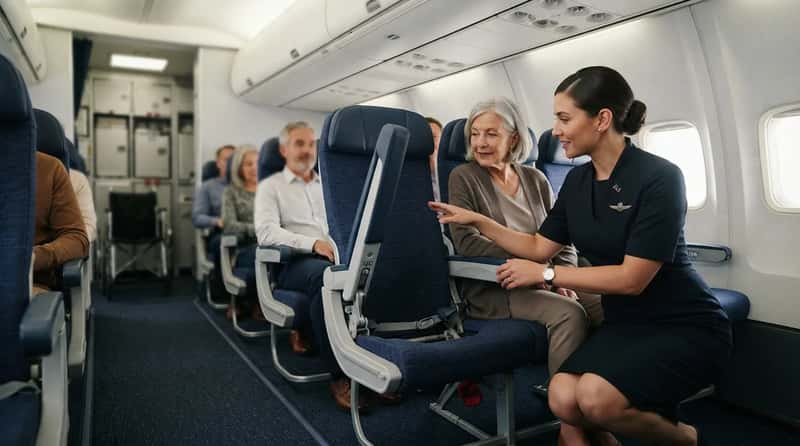
Movable armrests are for passengers who use an aisle chair to access the aircraft and cannot transfer readily over a fixed aisle armrest. If that describes you, ask for an aisle seat with a lifting armrest when you book, and confirm it again at the gate.
The seat map will not show which aisle seats have the feature. The airline has to tell you, which ties back to the information request earlier.
A seat that lets you transfer solves one problem, but some passengers also need someone beside them to help with another.
#6 – The Seat Next to the Person Who Helps You
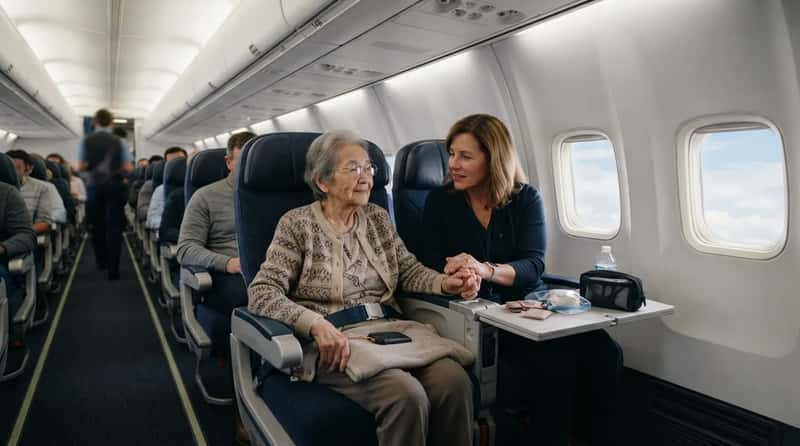
When a passenger with a disability travels with a personal care attendant, the airline must provide an adjoining seat. The condition is that the attendant will perform a function during the flight that airline personnel are not required to perform, such as assistance with eating.3
That is narrower than it sounds. A spouse who simply wants the next seat is making an ordinary seat request, and the way to get it is to book together early.
Airlines hold seats for these needs by marking them as priority seats, and that has consequences for whoever already holds one.
#5 – A Priority Seat Freed Up for You
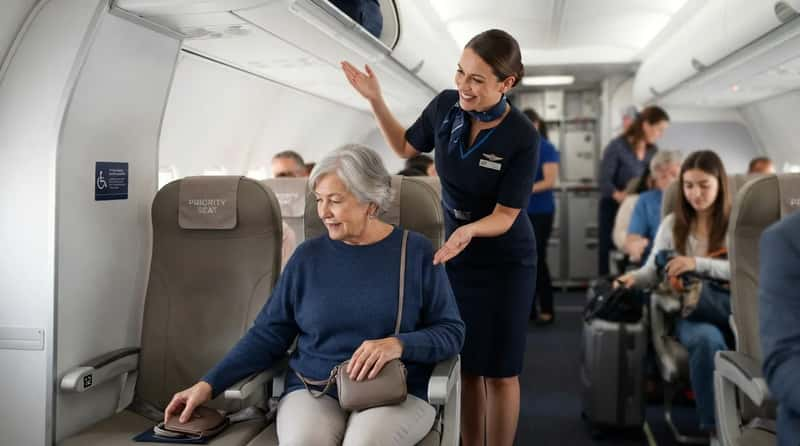
Airlines may designate an adequate number of the seats used for seating accommodations as “priority seats” for passengers with a disability. The airline must also give notice that other passengers in those seats can be moved if necessary to provide an accommodation.
If you land in one of those seats without needing it, expect to be asked to move. If you need it, ask the agent whether it can be freed up for you.
Even this reassignment happens inside the class of service you bought, and the rules do not stretch to a better one.
#4 – A Seat in a Higher Class, Which Is Not Guaranteed
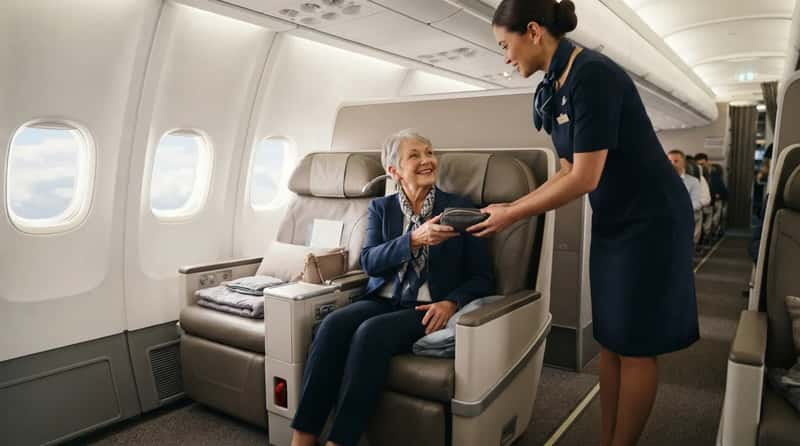
Seating accommodations come within the cabin you paid for. DOT’s accessible-seating pamphlet says that if you bought an economy ticket, the airline is not required to put you in another class of service.4
Its guide for travelers with developmental disabilities adds that on some aircraft, the bulkhead seat may not be available in standard economy. So a move up is a courtesy, not a right, and I would not build a trip around the answer.
If you have a real medical reason, ask politely at the gate. Safety rules also limit a seat request from the other direction, and the exit row shows it best.
#3 – Moving Out of an Exit Row You Cannot Staff
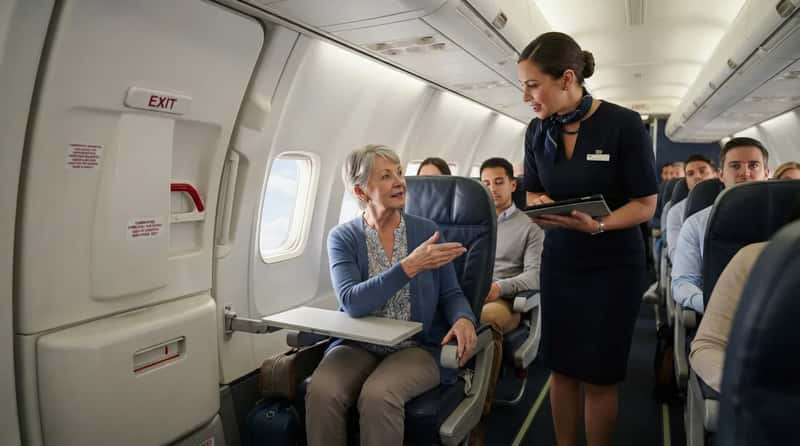
An exit row is the one place where asking to move is the right call. Federal exit-seat rules bar anyone who lacks sufficient mobility, strength, or dexterity to do the exit’s functions, and passengers must verbally confirm they meet the criteria before each flight.5
If you cannot meet them, say so. The airline must provide a comparable alternative seat where available, so speaking up costs you a seat change and nothing more.5
Exit rows offer legroom, but that does little for a passenger who needs to leave the seat often. That is a different problem altogether.
#2 – An Aisle Seat on Any Flight Over Four Hours
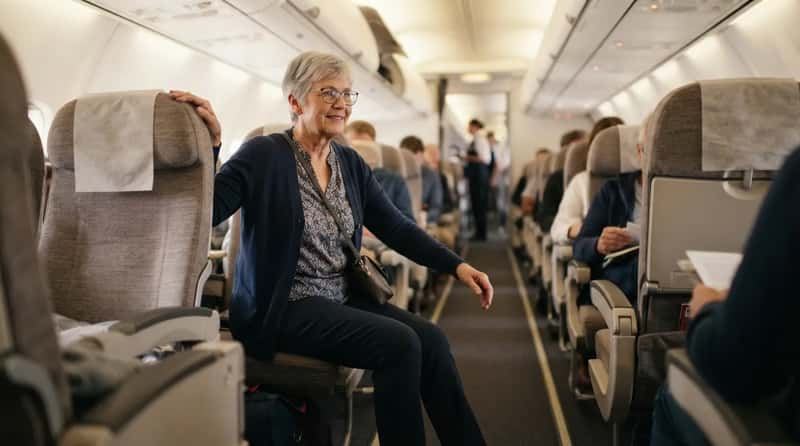
The CDC advises travelers to select an aisle seat when possible so they can walk around during the flight.6 Its travel page says anyone traveling more than 4 hours by air, car, or bus can be at risk for blood clots.7
CDC pages give slightly different walking intervals, from every 1-2 hours to every 2-3 hours, so the safe takeaway is to get up regularly. If I could make only one request on a long flight, it would be this one.
People with a previous clot or a family history should talk to a doctor about compression stockings or medicine before departure.6 The CDC says taking aspirin to prevent blood clots when traveling is not recommended.
Whether an aisle seat is possible on a full flight depends on how the request is worded at the desk.
#1 – Describing the Need Instead of Your Age
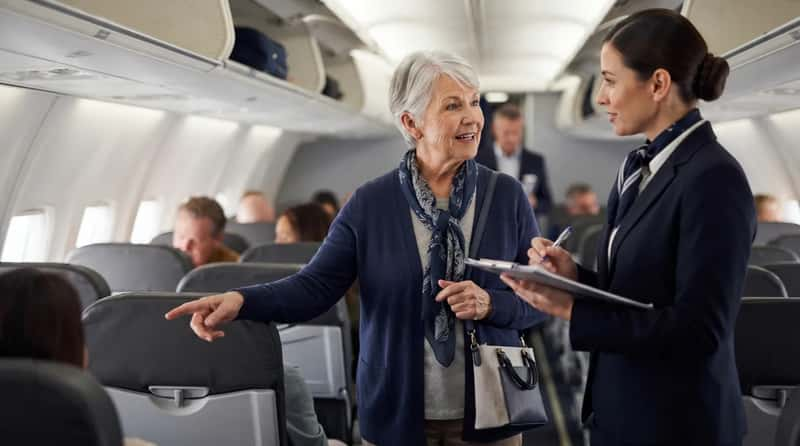
Every seating accommodation DOT lists is built on what a passenger needs. Airlines must provide certain accommodations to passengers with disabilities who self-identify as needing to sit in a certain seat, and nothing in that list turns on being 65.2
That is why the sentence you say matters more than your birthday. Staff decide in the moment, so “I need the aisle so I can stand up and walk” or “I need extra time to board” gives them a function to act on.
Worth Knowing
- Name the function: stand and walk, reach the seat slowly, or straighten a stiff leg.
- Name the timing: say it at booking, at check-in, or before general boarding begins.
- Skip the age pitch: a birthday gives an agent nothing to act on, while a need does.
If your need does not match a listed category, the airline must still provide a seat that best accommodates it, as long as you follow its procedures. Every earlier request runs on the same footing: the aisle for circulation, the legroom row for a stiff leg, the early walk down the jet bridge.
Check your own airline’s procedures before you travel, since details differ from carrier to carrier.
Before You Pick a Row, Say What the Row Is For

Seat selection screens invite you to start with the map. A better first step is the sentence: what your body needs on this flight, and how long it will be in the seat.
Once you can say that in one line, the right request tends to follow. It may be an aisle for walking, extra time at the gate, or a few rows from the lavatory.
Say it early, to the airline and not only to the agent at the gate. Which seat has treated you best on a long flight, and what did you say to get it?
Sources
- U.S. Department of Transportation: Seating Accommodations
- U.S. Department of Transportation: Airline Passengers with Disabilities Bill of Rights
- U.S. Department of Transportation: Accessible Seating Accommodations in Air Travel (PDF)
- U.S. Department of Transportation: Developmental Disabilities Guide (PDF)
- 14 CFR Part 382, Subpart F: Seating Accommodations
- 14 CFR § 121.585 Exit seating (GovInfo)
- CDC Travelers’ Health: Prevent Blood Clots
- CDC: Understanding Your Risk for Blood Clots with Travel
- DOT Disabilities Bill of Rights: https://www.transportation.gov/airconsumer/disabilitybillofrights
- DOT Seating Accommodations: https://www.transportation.gov/individuals/aviation-consumer-protection/seating-accommodations
- eCFR 14 CFR 382.81: https://www.ecfr.gov/current/title-14/chapter-II/subchapter-D/part-382/subpart-F/section-382.81
- DOT Accessible Seating Pamphlet: https://www7.transportation.gov/sites/dot.gov/files/docs/Accessible_Seating_Accommodations_in_Air_Travel-Pamphlet.pdf
- eCFR 14 CFR 121.585: https://www.ecfr.gov/current/title-14/chapter-I/subchapter-G/part-121/subpart-T/section-121.585
- CDC Prevent Blood Clots: https://wwwnc.cdc.gov/travel/page/dvt
- UAB Blood Clot Travel Tips: https://www.uab.edu/news/news-you-can-use/traveling-take-these-steps-to-prevent-blood-clots-during-your-summer-travels
