Picture the usual coach stop: a restroom line out the door, a lunch counter in chaos and one poor soul jogging back with half a sandwich while the driver checks his watch. Now look closer. Scattered through that scene are a few travelers over 60 who are strolling, unbothered and already heading back with time to spare. They aren’t walking faster, and the 22 habits below are why they look so calm.
The strange part is that most of these moves happen before the coach even stops. A few look too small to matter until you see what they prevent. And the habit at #1 has nothing to do with gear, phones or shoes, yet it changes the mood of the entire coach.
#22 – They Set the Alarm for the Walk Back, Not for Departure

A 30-minute stop sounds generous when the guide announces it. Then a queue, a photo and a wrong turn quietly eat it alive. Seasoned travelers set a phone alarm for about five minutes before departure, and some go ten when the site is large.
That buffer is the whole trick. It turns “I lost track of time” into a calm walk back to the door. Most people forget the return trip counts as part of the stop, and it’s usually the part that goes wrong.
#21 – They Photograph the Coach Before Taking a Single Step Away
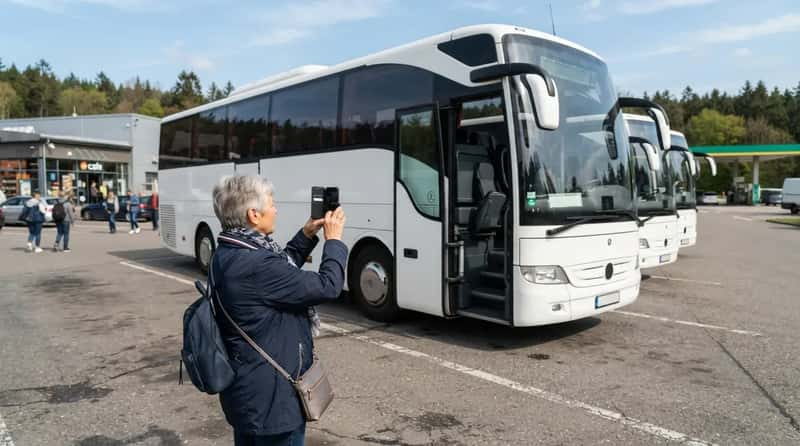
At a busy rest area, a dozen white coaches can look exactly alike. Smart travelers snap a quick photo of their own, including the number or plate and whatever is parked beside it. The whole thing takes about three seconds.
That picture rescues people from the classic, embarrassing mistake of climbing aboard the wrong vehicle. It also gives staff something concrete to work with if anyone gets turned around. The cheapest time-saver on the trip lives in your camera roll.
#20 – They Hit the Restroom First, Before the Line Becomes the Whole Stop

The restroom queue is the biggest hidden clock at any stop. Experienced travelers head straight there, before the gift shop and before the café. They know the line only grows once the whole coach unloads.
Getting there first often means being done while the rest of the group is still shuffling forward. Plenty of people save it for last, and that mistake has a visible price: a sprint back to the coach just as the doors are about to close.
#19 – They Wear Shoes That Go On Fast and Never Cause Blisters

Laces, buckles and stiff new boots steal real minutes over a trip. Veteran travelers choose supportive, broken-in shoes that are easy to get on and off. They test them at home, not on the tour.
The goal isn’t fashion. It’s stepping off the coach with confidence and climbing back on without fumbling at the top of the stairs. A blister forces slow walking, and slow walking quietly shrinks the part of the stop you actually get to enjoy.
Quick Compare
- Slow shoes: stiff new boots, fiddly laces and buckles that need two hands.
- Fast shoes: broken-in, supportive and easy to fasten.
- The payoff: more minutes enjoying the stop, fewer spent at the top of the steps.
#18 – They Carry One Small Day Bag, Packed the Same Way Every Time
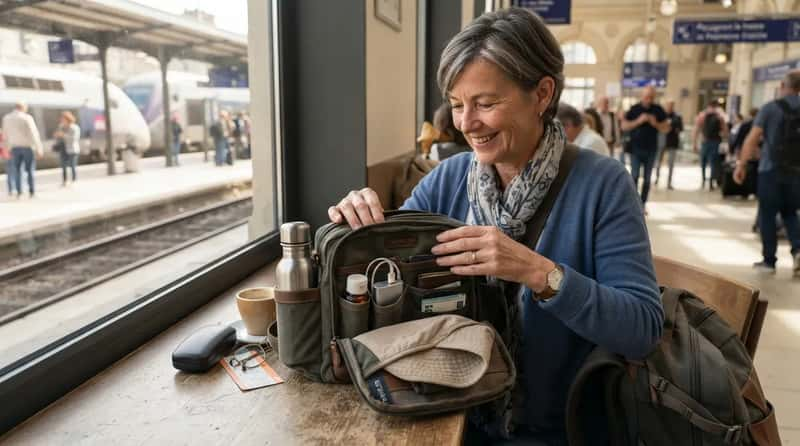
Rummaging for glasses, tissues or a ticket is a stop-killer. Experienced travelers keep one lightweight bag with the same items in the same pockets every single day. They never have to hunt.
The usual contents are a water bottle, medications, a charger, small bills and a hat. Because everything has a home, they can grab the bag and go in one motion. Many tour operators also suggest keeping valuables and essentials on you rather than in the luggage hold.
#17 – They Decide What to Eat Before the Coach Even Parks

On group tours, lunch stops often run on tight timing with set menus or buffets. Savvy travelers ask the guide early what’s on offer and whether dietary needs can be flagged ahead. By the time they walk through the door, the decision is already made.
That means no staring at a long menu while the clock runs. When allergies or restrictions are involved, a heads-up also avoids a slow back-and-forth at the counter. The traveler who orders first very often finishes first.
#16 – They Keep Small Change Ready for Pay Toilets
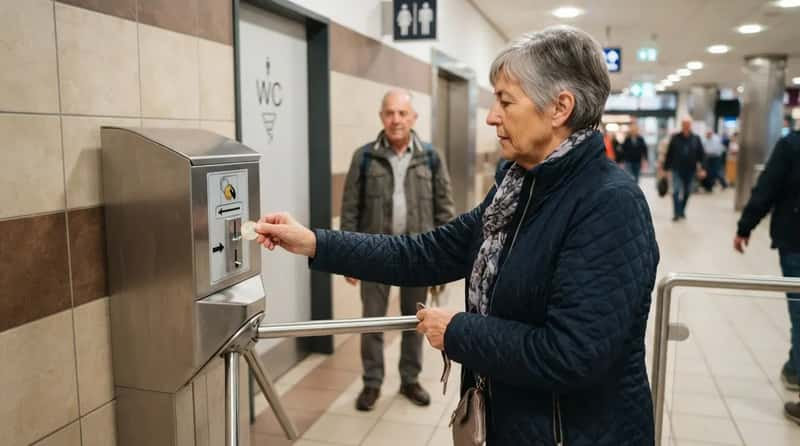
On many routes, especially in parts of Europe, rest-stop restrooms charge a small fee. Travelers who arrive without coins end up digging for change while the line builds behind them. Veterans keep a few small coins or low-value bills in an easy pocket.
It sounds trivial, but it’s a classic stop-slower. The guide’s briefing usually mentions whether the next stop charges. Few things waste more minutes than a turnstile that refuses your card while a whole queue watches.
#15 – They Pick One Landmark as Their Anchor Point
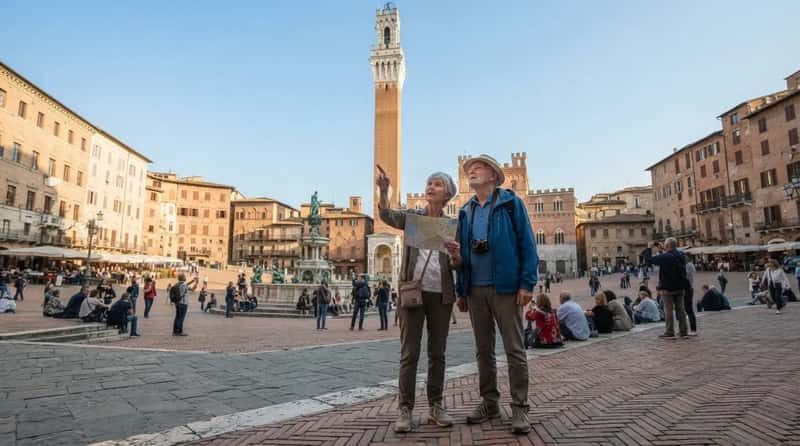
Big stops, like a historic square or a sprawling travel plaza, can swallow you whole. Experienced travelers pick one visible landmark, such as a fountain, a statue or a distinctive sign, and measure everything from it. They check where it is before they wander off.
Navigation becomes a loop instead of a guess. Even if they stray, they know which way to turn. The best anchor is something you can spot from far away, not a small shop sign that vanishes in a crowd.
#14 – They Buddy Up, Even If They’d Rather Wander Solo
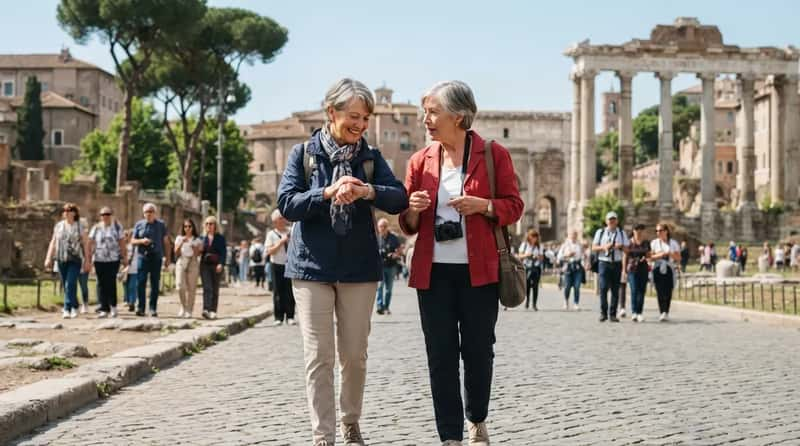
Pairing up is one of the oldest group-travel habits for a reason. Two people can watch the time, share the load and notice if the other is falling behind. If one gets slowed down, the other can flag the guide.
Plenty of independent travelers hate this idea. But on a tightly timed stop, a second set of eyes often prevents the one delay that holds up fifty people. It’s a quiet form of insurance.
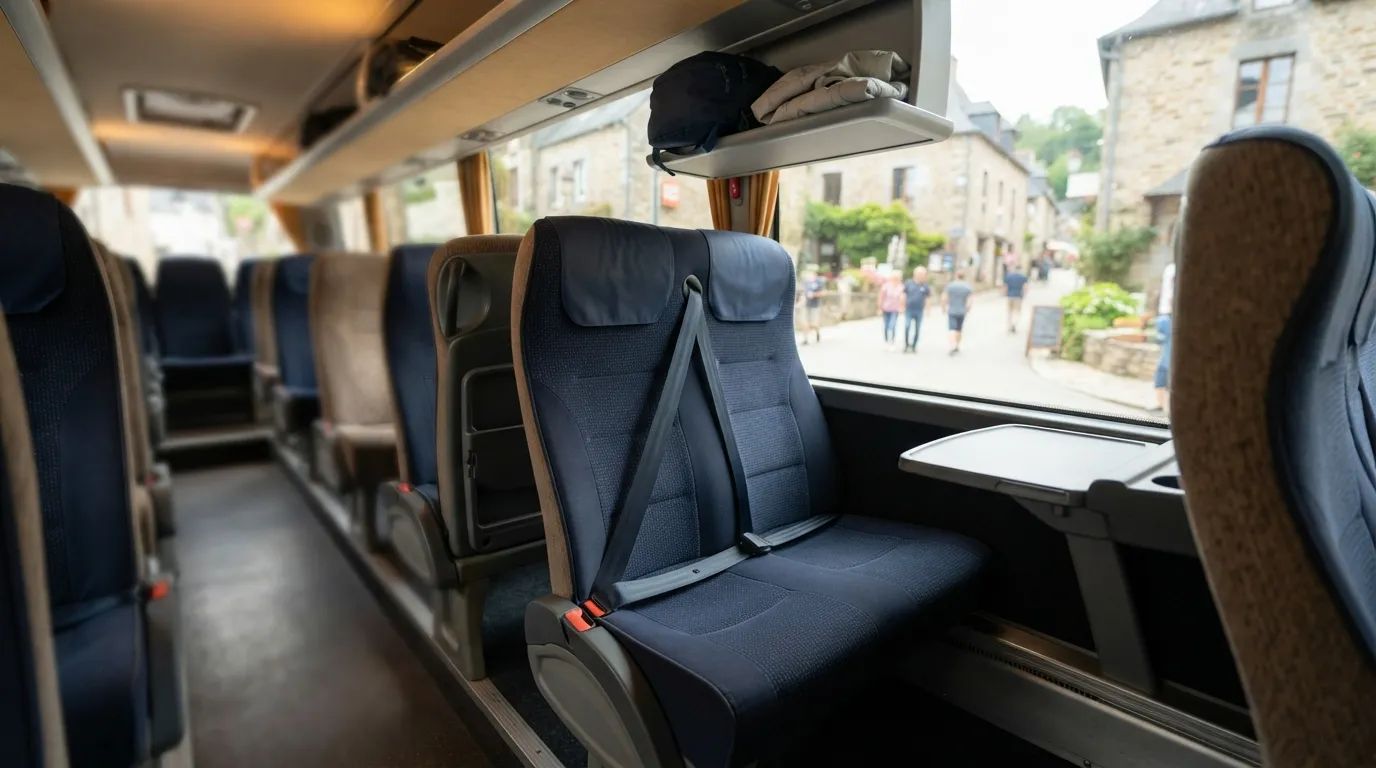
#13 – They Pack Up Early but Stay Seated Until the Coach Fully Stops
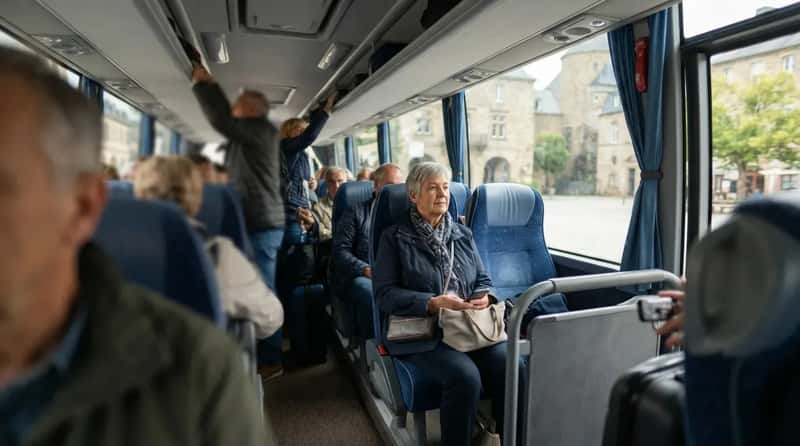
The slowest part of any stop is the first two minutes: everyone standing, reaching and blocking the aisle. Experienced travelers get their bag, jacket and phone together as the coach slows down. Then they stay seated until it has fully stopped.
They move once the aisle clears, holding the handrail on the steps. It’s safer and, strangely, often faster than pushing forward. Falls on coach steps are a real concern for older passengers, so a steady exit is worth the extra seconds.
At a Glance
- As the coach slows: gather the bag, jacket and phone.
- Until it stops: stay seated, even when others stand.
- Once the aisle clears: step out without squeezing through.
- On the steps: keep a hand on the rail and go one step at a time.
#12 – They Stretch Their Legs Before the Stop, Not Just During It
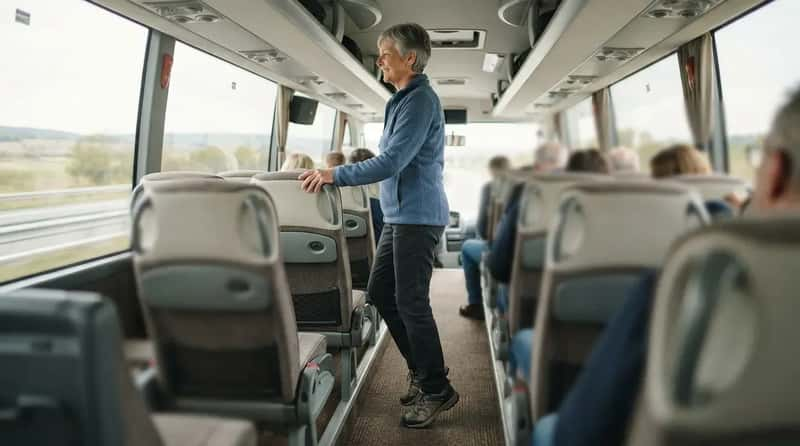
Stiff legs after hours of sitting mean a slow, shuffling first few steps. Experienced travelers flex their ankles and knees in their seat and shift position regularly. By the time the coach stops, they’re ready to walk briskly.
Health agencies agree on the basics. The CDC advises moving around regularly on long trips to lower the risk of blood clots. That same bit of mobility pays off the moment your feet hit the pavement.
#11 – They Sip Water All Day Instead of Skipping It to “Save Time”

Many travelers cut back on water to avoid restroom stops. Experienced ones don’t. They take small sips steadily and avoid chugging a big bottle right before the stop.
Dehydration can bring headaches and fatigue, and that slows people far more than a restroom visit does. Skipping water to save five minutes can cost you a whole afternoon of feeling flat. The trade almost never pays off.
#10 – They Match Their Medication Schedule to the Itinerary

Missing a dose because the stop was too rushed is a stress nobody needs. Travelers over 60 often use a weekly pill organizer and tie doses to anchor moments like breakfast or the first coach departure. They don’t leave it to chance at a crowded stop.
Doctors commonly advise carrying medications in a bag you keep with you, not in checked luggage. That also means no frantic dig through a suitcase under the coach. Anyone with a complex regimen should check timing with their own doctor before the trip.
#9 – They Save the Guide’s Number Before Leaving the Hotel

It takes thirty seconds to save the guide’s or driver’s phone number. Experienced travelers do it on day one. A written copy goes in the day bag in case the phone dies.
If something goes wrong, they can reach the group in seconds instead of searching for the right contact. That turns a possible panic into a short message. Many tour companies also print an emergency number on the itinerary.
#8 – They Dress in Layers So Nobody Goes Back for a Jacket
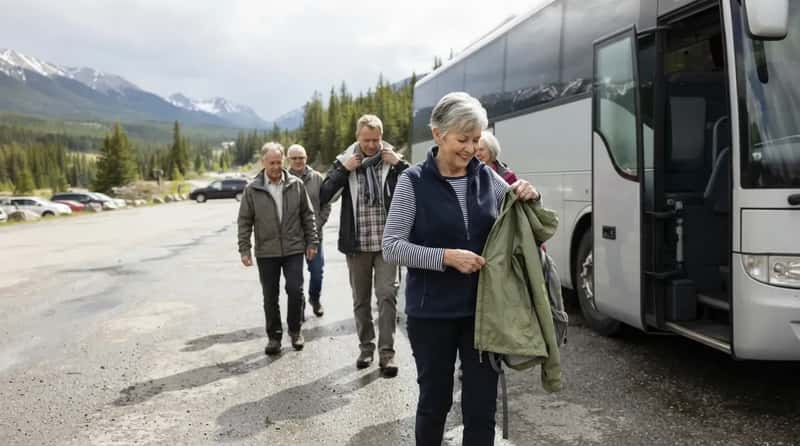
Coach interiors can be colder than the outdoors, or the other way around. Savvy travelers wear a thin layer they can remove or add in seconds. A light rain jacket lives in the day bag.
The payoff is simple: no return trip to the seat and no cold, soggy walk through a stop. It also removes one of the most common reasons people hold up the line to re-board. Weather can swing sharply at roadside stops, especially in the mountains.
#7 – They Download Offline Maps While the Hotel Wi-Fi Still Works
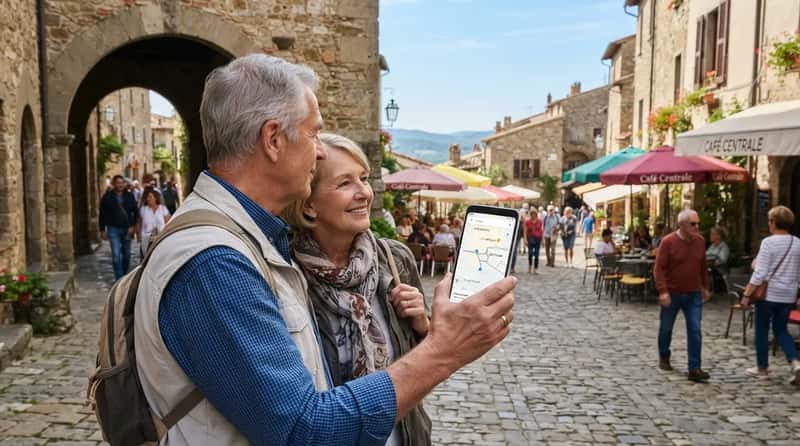
Roadside stops and remote sites often have weak signal. Experienced travelers download offline maps of each destination in advance, while the hotel Wi-Fi is still strong. They can find their way without a connection.
That means no standing still and squinting at a spinning loading wheel. It also helps them find the restroom, the café and the meeting point quickly. The trick is to use the map to get oriented, then put the phone away.
#6 – They Skip the Souvenir Shop Line on Purpose
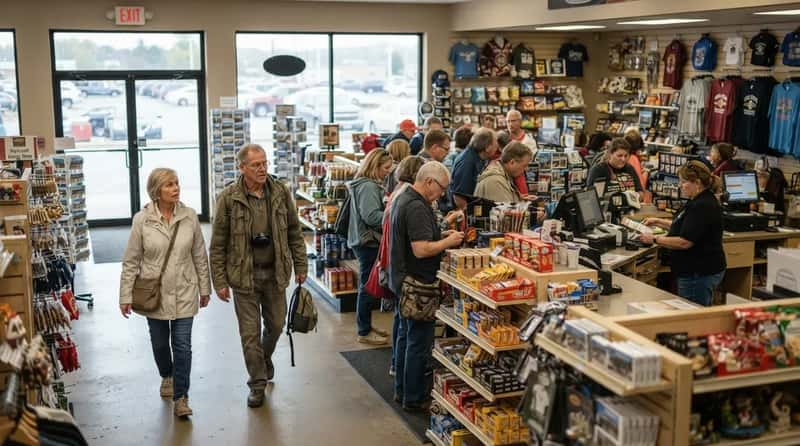
The gift shop at a rest stop is built to hold you, with a long checkout line and plenty to browse. Experienced travelers decide beforehand whether they actually want anything. If they don’t, they walk right past it.
Many frequent travelers will tell you most roadside souvenirs aren’t worth the minutes. Photos and a good local shop at the final destination usually offer better choices. Spending that time on a walk or a hot coffee often feels like a better deal.
Worth Knowing
- The checkout line, not the browsing, is usually what eats the clock.
- Deciding before you step off the coach saves you from impulse detours.
- Shops at your final destination often have a wider, more local choice.
- A short walk or a hot coffee is the favorite trade among veterans.
#5 – They Choose One Thing to Do Per Stop, Not Five
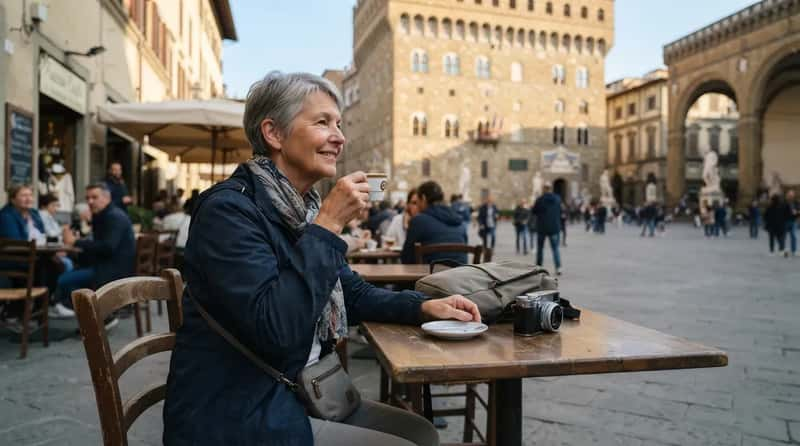
Rushing through a to-do list ruins a short stop. Experienced travelers pick one priority, whether that’s the restroom, a photo or a coffee, and do it well. Everything else is a bonus.
The result is a stop that feels full instead of frantic. They also avoid the stress of watching the clock while queuing for something minor. Less ambition per stop often means more satisfaction per trip.
#4 – They Pack Their Own Snacks to Skip the Buffet Line
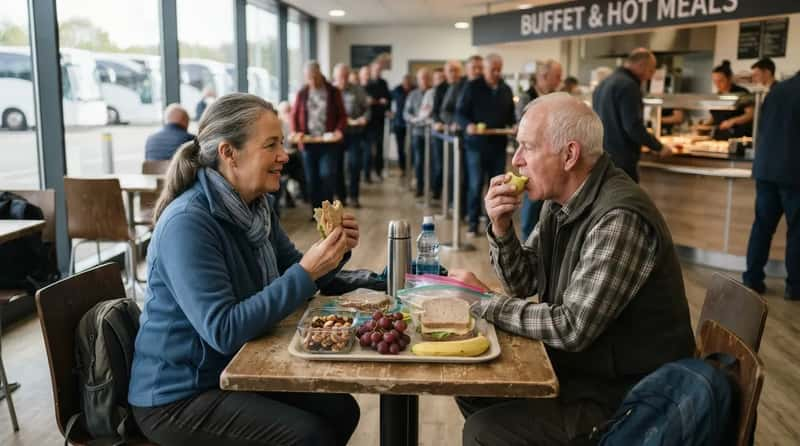
Buffet queues at rest stops can swallow half your break. Travelers who carry a simple snack, such as nuts, fruit or a sandwich, can sit down and eat in minutes. They save the hot meal for the proper lunch stop.
Snacks also help keep energy steady between meals, which matters on long travel days. Food rules vary by country, so it’s worth checking what you can bring across borders. A well-stocked bag can spare you a rushed, overpriced meal.
#3 – They Keep Their Seat Tidy and Their Valuables on Them
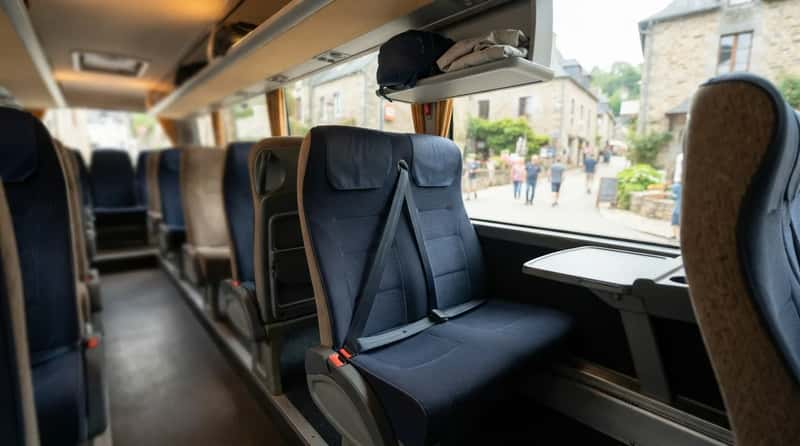
A messy seat means a slow, awkward re-boarding. Experienced travelers keep belongings compact and in the bag they carry off the coach. A phone or wallet never gets left on the seat.
That habit means fewer lost items, fewer “has anyone seen my glasses?” delays and fewer interruptions for the driver. Tour operators commonly remind passengers not to leave valuables unattended. It’s also a small act of respect for the whole group.
Fast Facts
- Phone, wallet and glasses go into the day bag, never the seat pocket.
- Jackets and chargers come off the seat before the doors open.
- A two-second look back at the seat catches what memory misses.
- Loose items rolling in the aisle are what slow everyone’s return.
#2 – They Know Why the Stop Can’t Be Stretched or Skipped
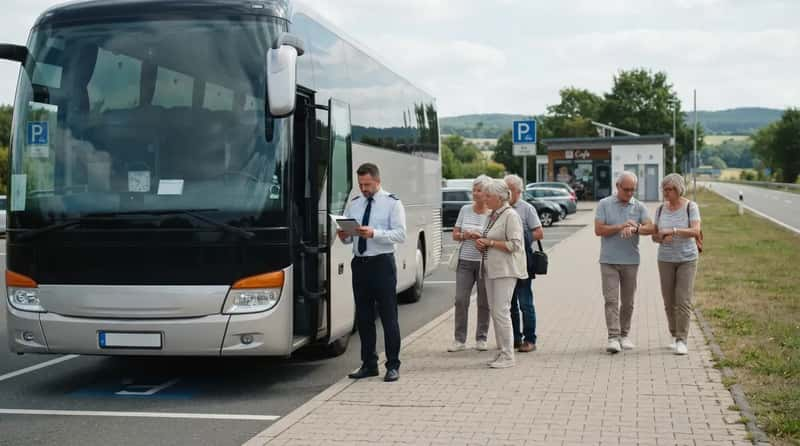
Coach stops aren’t random. In the European Union, drivers must take a 45-minute break after 4.5 hours of driving, and that rule exists for safety. Experienced travelers know the schedule is fixed for a reason.
That understanding changes how they behave. They don’t argue for a longer stop or beg to skip one, because both can affect the driver’s legal hours. It’s a rare habit built on respect for the person at the wheel.
#1 – They Never Want to Be the Last Person Back
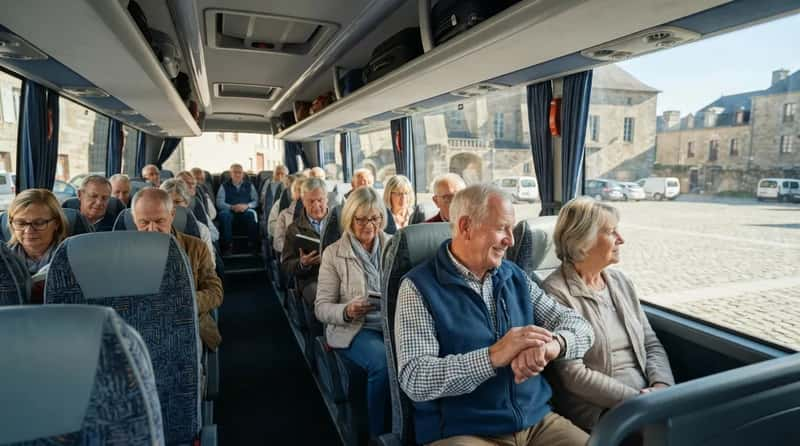
This is the habit behind all the others. Experienced travelers treat the group’s time as shared, because being last back means everyone else sits and waits. They’ve been on the other side of that silence, and they remember it.
So they return a few minutes early, settle in and let the coach roll out on time. Nobody hands them a medal, but the whole group feels the difference. That quiet courtesy is the real secret to shorter stops.
None of these habits need fitness, speed or special gear. They need a little planning and some thought for everyone sharing the coach. Put together, they turn a frantic 30 minutes into a calm, useful break.
The people who look so relaxed at every stop aren’t lucky. They just decided, long before the doors opened, that nobody would have to wait for them.