
Most of us were taught that the cheapest trip is the one with the lowest number on the booking screen. Travelers over 60 who have been burned a few times know better, and the 23 things below are what they quietly stopped paying for.
Some of it comes from federal rules that only kicked in recently. Some is an age-based perk sitting in plain sight at the park gate. And the last few entries involve bills that can climb into five or six figures, which is exactly why they’re ranked the way they are.
#23 – The Hotel Fee That Used to Show Up Only at the Front Desk

That “$129 a night” room often wasn’t the real price. Since May 12, 2025, a Federal Trade Commission rule has required companies that sell hotel rooms and other short-term lodging to show the total price up front and in all advertising. Experienced travelers now compare only the all-in number.
Here’s the catch: the rule doesn’t ban any fees or cap what a company can charge. One consumer guide puts these fees at $25 to $55 a night, which adds up fast on a week-long stay. The fee still exists. It just can’t hide anymore. But the next item involves money airlines used to hold onto by default…
#22 – The Travel Voucher They Offered Instead of Your Cash

When an airline canceled or significantly changed your flight, a voucher was often the first thing dangled in front of you. Many passengers never realized they had a right to cash instead. Savvy travelers now know to say no.
The DOT’s final rule requires refunds to be automatic, prompt, in the original form of payment, and for the full amount paid when you decline the alternative the airline offers. Credit card refunds are due within 7 business days. A voucher is allowed only if you affirmatively choose it. And airlines owe refunds on a few smaller things most people never think to ask about…
#21 – Wi-Fi That Never Actually Worked at 35,000 Feet

You paid for in-flight internet, and that little signal icon just kept spinning. Most travelers shrug and let it go. Experienced ones file a claim.
The DOT rule is clear about it. Passengers are owed a refund when an extra service they paid for, like Wi-Fi, isn’t provided. A service that failed is not a charge you have to absorb. It’s a small amount, but small amounts are exactly what airlines count on you ignoring. Still, that’s nothing compared to what happens when your suitcase goes missing…
#20 – The Bag Fee on a Suitcase That Arrived Two Days Late
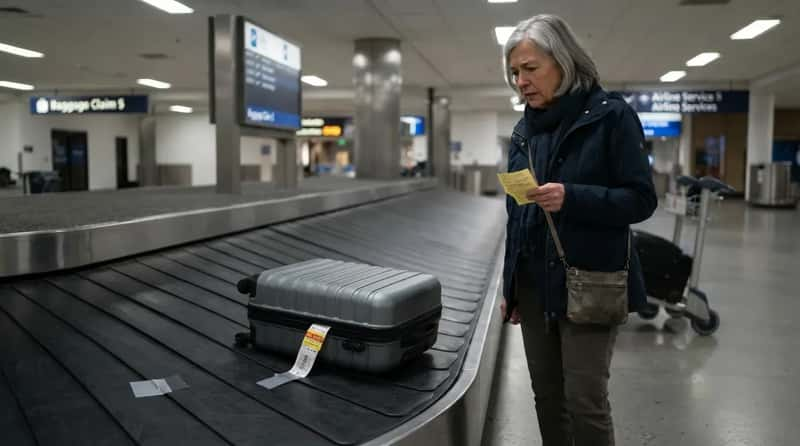
You land in one city, your bag lands in another, and you still paid to check it. That fee isn’t automatically yours to lose. Under the DOT’s refund rules, a significantly delayed bag can entitle you to money back.
A significant baggage delay is defined as 12 hours or more on domestic flights. Longer thresholds apply on international trips. Pros memorize the numbers because airlines rarely volunteer them. Now on to a perk that costs less than a dinner out…
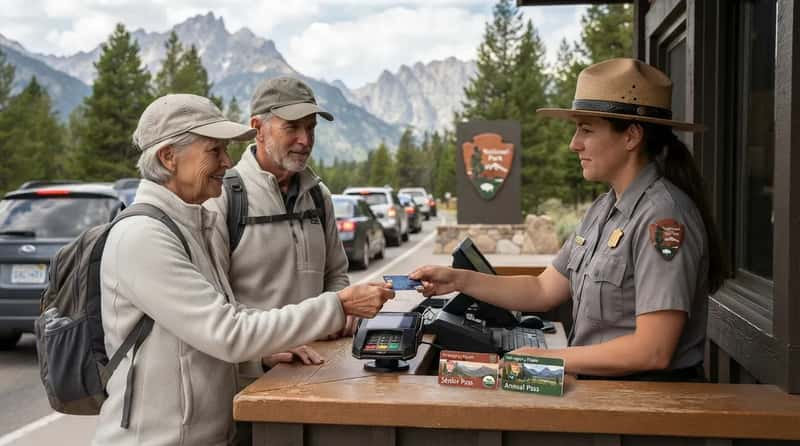
#19 – Paying Park Gate Prices With a 62+ Birthday in Your Wallet

Most people don’t realize one of the best deals in American travel is aimed squarely at them. U.S. citizens and permanent residents 62 and older can buy a lifetime America the Beautiful Senior Pass for $80. There is no income test.
A senior pays $80 once for life, the same amount a standard annual pass costs everyone else every year. At parks that charge per vehicle, it covers the holder and everyone in the private vehicle. That makes it one of the cheapest travel decisions you’ll ever make. But the pass has a second benefit most holders never use…
#18 – Full-Price Camping Fees at Federal Sites

Many pass holders flash the card at the gate and stop there. That’s where their savings end. The pass can also lower what you pay once you’re inside.
The Senior Pass may provide a 50 percent discount on some amenity fees, such as camping, swimming, boat launch and specialized interpretive services. The word “some” matters, so ask at each site. Not every campground honors it. The ones that do shave the bill without any coupon hunting. Next up is a pricing trick that rewards patience…
At a Glance
- Who qualifies: U.S. citizens and permanent residents age 62 or older
- Lifetime pass: $80, with no income test
- Annual senior pass: $20
- Possible perk: 50 percent off some amenity fees, including camping
#17 – Four $20 Passes That Turn Into a Free Lifetime Pass

You don’t need $80 on day one. The annual senior pass is $20, and it quietly works like a layaway plan. Buy it a few times and it converts.
Trade in one annual pass and the upgrade costs $60. Two make it $40, three make it $20, and four get you the lifetime pass for free. This works even if the annual pass has already expired. Old passes in a kitchen drawer are worth real money. But there’s a way to accidentally overpay on the very same pass…
#16 – The $12.50 Add-On for Ordering Your Pass Online
Convenience costs extra, even with a government pass. Ordering a physical card through the USGS online store adds fees on top of the price. Oddly, the people who dodge the entrance line by ordering online end up paying more than the people who stand in it.
The online order adds a $5 processing fee and a $7.50 handling fee, so a lifetime pass runs $92.50 and a senior annual pass runs $32.50. Buying in person at a staffed federal site avoids those add-ons. Check current pricing with the National Park Service before you go. Now we’re back to hotels, where the headline price can still mislead…
#15 – The “Lowest Price” Banner That Wasn’t the Final Price

Booking sites love a big, bold, low number. For years, resort fees often stayed out of that first price, which made cheap hotels look cheaper than they were.
Under the FTC rule, the total price has to be shown more prominently than any other price. Experienced travelers now treat the first number as a teaser and the total as the truth. Screenshot the total at booking and compare it with your confirmation email. If the two differ, ask questions before you arrive. But some hotel extras are still legally optional, and that’s where it gets interesting…
#14 – The Parking Charge You Could Have Skipped

Hotels can still add some charges after the total price. Optional extras aren’t covered the same way mandatory ones are. Parking is the classic example.
One analysis of the rule notes that government taxes and optional ancillary services, like parking, may still be added after the total-price disclosure. The fix is simple: ask whether a charge is mandatory before you agree to it. Review your itemized bill at checkout, not after you get home. Next is a timing move that retirees have mastered…
#13 – Peak-Week Prices When the Calendar Is Wide Open

Retired travelers have a superpower most workers don’t. They can leave on a Tuesday. Flexible dates are the quietest discount in travel.
Some seasoned travelers call holiday-week trips the biggest waste of money in travel. Others insist the family gathering is worth every dollar. Both can be true, but only one of them is a pricing decision. Shoulder-season trips often bring smaller crowds too. Now for a rail perk that’s easy to miss…
#12 – Full-Fare Train Tickets Without Asking About Senior Rates

Amtrak has long offered a senior fare discount, around 10 percent off on many trains for riders 65 and older. Terms vary by route and fare type, so check before you buy. The discount doesn’t apply itself.
You usually have to select the senior fare at booking. Bring photo ID, because staff may ask for proof of age. It’s a modest discount, but modest discounts stack up across a long trip. And some of the best senior deals aren’t advertised at all…
Worth Knowing
- The typical Amtrak senior discount is around 10 percent on many trains
- The age cutoff for that fare is 65, three years later than the national park pass
- The fare is selected during booking, not applied automatically
- Terms vary by route and fare type, so read the fare details first
#11 – The Senior Rate Nobody Posted at the Ticket Window

Many museums, theaters, tour operators, and attractions offer reduced pricing for older visitors. The catch is that the discount often isn’t listed where you’d expect. Experienced travelers simply ask.
Age cutoffs differ widely. Some places start at 55, others at 60, 62, or 65. The only way to find out is to ask before you pay. It’s the oldest trick on this list, and still the most ignored. But money gets lost in far sneakier ways at the airport…
#10 – The Airport Exchange Kiosk That Takes a Quiet Cut

Those glowing currency counters in terminals are built for convenience, not value. Their rates typically include a markup, and some add fees on top. Seasoned travelers tend to skip them unless they’re desperate.
Many withdraw local cash from a bank ATM at their destination instead. Others use a card with no foreign transaction fee for most purchases. The mistake is exchanging a large amount in the terminal “just in case.” Check your own bank’s fees before you leave, because they vary a lot. The checkout counter has its own version of this trap…
#9 – The “Pay in Dollars?” Question That Costs You

You’re in a shop abroad, and the card reader asks whether you want to pay in dollars or local currency. Dollars feels comforting and familiar. It’s also usually the more expensive answer.
This service is called dynamic currency conversion. The convenience is real, but so is the markup built into the rate. Experienced travelers decline it every single time. It takes one tap. Next, a phone bill that still catches people off guard…
#8 – Roaming Charges for the Convenience of Checking Email

Turning on your phone abroad can get expensive if you haven’t checked your plan. Carriers handle international use very differently. Some include it, some charge daily fees, and some charge by the megabyte.
Many travelers lean on hotel and café Wi-Fi to avoid the issue entirely. The expensive mistake is assuming your normal plan works the same abroad. A five-minute call before departure usually settles it. But one airline fee has a surprising workaround…
#7 – The First Checked Bag Your Credit Card Already Covers

Many airline-branded credit cards include a free first checked bag for the cardholder. The benefit usually extends to companions on the same reservation. Plenty of travelers pay the fee anyway because they never read the benefits page.
The rules differ by card and airline, so check yours. You often have to book with that card for the benefit to apply. Even if the annual fee isn’t worth it for you, a card you already carry may have the perk. It’s worth a look before your next flight. Now we’re heading out to sea, where one pricing myth runs deep…
#6 – The Cruise Excursion Markup People Swear Is Worth It

Ship-sold shore excursions are easy. You tap, you pay, and the bus is waiting. Many experienced cruisers now book independent local operators for similar outings, and often pay less.
This one divides cruisers. Some call the ship’s tours the biggest overpay of the whole trip. Others say the peace of mind is the product they’re really buying. Either way, compare prices and read the late-return policy first. The next five items are where the stakes get serious…
#5 – A Medigap Benefit You May Already Have for Trips Abroad

Some Medicare supplement plans quietly include a foreign travel emergency benefit. Medigap plans C, D, F, G, M and N include it, and it’s easy to overlook. It generally applies to emergency care during the first 60 days of a trip.
But the benefit has limits, and nothing in it pays for the flight home. Check your plan documents before you buy more coverage than you need. Or less. Which brings us to the question of what to actually buy…
#4 – A Travel Policy That Pays Everything Except the Big Bill
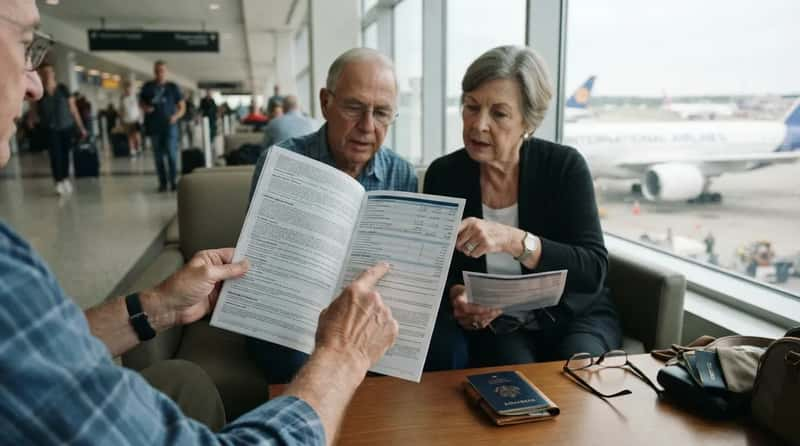
Not all travel insurance is equal. Some policies cover canceled trips and lost luggage but carry thin medical limits. Guides aimed at older travelers point to medical coverage and evacuation as the parts that matter most.
One guide recommends medical coverage of at least $100,000, plus emergency evacuation coverage. Prices vary widely. That guide says $50 to $200 or more per trip, while a sample quote for a 70-year-old on a 12-day, $5,300 trip started at $343 for $500,000 in evacuation coverage. Compare policies line by line. And then there’s a place where Medicare simply goes quiet…
Quick Compare
- Medicare alone: generally no coverage for medical costs outside the U.S.
- Medigap foreign travel benefit: 80 percent of emergency care in the first 60 days, up to a $50,000 lifetime cap, with no evacuation
- Travel medical policy: one guide suggests at least $100,000 in medical coverage, plus evacuation
#3 – The Cruise Ship Where Your Medicare Goes Silent

Many retirees assume a cruise is basically U.S. coverage with an ocean view. It isn’t, not for long. Medicare’s coverage depends on where the ship is, not where it’s registered.
On a cruise, Medicare generally stops paying once the ship is more than six hours from a U.S. port. Some Medigap plans pay part of a foreign hospital bill up to a lifetime cap, but that benefit doesn’t cover an evacuation. Which makes the next one worth reading carefully…
#2 – The Foreign Hospital Bill Medicare Won’t Touch

This is the surprise that hits hardest. The State Department says Medicare does not cover medical costs outside the United States. Many travelers hear that and assume it can’t be right.
The U.S. government doesn’t pay medical bills abroad, and you are responsible for all hospital and medical costs. Medicare Advantage plans have different rules, so don’t assume yours matches your neighbor’s. A short phone call can head off a very bad day. But the biggest line item isn’t even the hospital…
#1 – The Flight Home That Can Cost $20,000 to $200,000

Nobody budgets for this one. If you’re seriously ill abroad, the biggest bill may be the ride home. The State Department says medical evacuation by air ambulance to the U.S. can cost from $20,000 to $200,000, depending on where you are and your condition.
Most health plans don’t pay to bring you back to the United States by air ambulance. The State Department suggests buying medical evacuation insurance as part of your travel insurance. That’s why many experienced travelers happily spend on evacuation coverage while refusing to pay for most of the rest of this list. It may be the smartest money on the whole list.
Fast Facts
- Air ambulance home: roughly $20,000 to $200,000, per the State Department
- Medicare: does not cover medical costs outside the United States
- Medigap foreign benefit: capped at $50,000 for a lifetime
- Sample evacuation quote: $500,000 in coverage started at $343 for one 70-year-old’s 12-day trip
The pattern is hard to miss. Experienced travelers aren’t cheaper, they’re better informed. They know lodging prices now have to include mandatory fees, that canceled-flight refunds should be automatic, that an $80 senior pass can cover years of park visits, and that Medicare mostly stops at the border.
They ignore the headline price and read what’s underneath. The savings are nice, but the protection is the real prize.