
Hotel bills are full of little surprises, and most guests just pay them without a second thought. Yet a surprising number of these charges are actually negotiable, especially when a guest asks politely and at the right moment. Front desk agents often have more discretion than they let on, and a calm, reasonable request can make certain fees disappear entirely.
Below are six charges that travelers regularly get waived just by asking, along with the reasoning that tends to work and the situations where hotels are most likely to say yes.
1. Resort and Destination Fees

Resort fees are mandatory daily charges that cover things like WiFi, pool access, and gym use, and they typically average about $42 per night in the U.S., though luxury properties in Las Vegas, Miami, and New York regularly charge $50 to $55 or more[1]. Since May 2025, federal rules have forced hotels to disclose these fees upfront, but disclosure does not mean the charge is locked in. Disclosure rules don’t ban the fee itself, staff can still choose to waive it when a guest asks with a good reason[2].
The strongest cases involve amenities you genuinely couldn’t use. As one travel finance outlet points out, if the hotel pool is closed or the gym is not operating, it doesn’t make sense for guests to pay for those services, and if you’re staying briefly without using the amenities, that’s also worth pointing out[3]. It also helps to call the property directly rather than a central reservations line, since calling the front desk and politely asking if the resort fee can be waived can save $150-$200 on a multi-night resort stay[1].
2. Parking Fees

Free parking has become the exception rather than the rule at many hotels, particularly in cities. Even so, this is one of the more winnable requests at the desk. The most important thing you can do to avoid parking charges is to simply ask to have them waived, since a sympathetic front desk clerk is usually empowered to waive parking charges to assure guest satisfaction[4].
Timing and framing matter here too. Guests have gotten better results by making the case before committing to a booking rather than after, and by pointing out that they arrived without a car. As one guide notes, a guest staying several nights can often get parking folded into the room rate or waived outright, and if you arrived by taxi, train, or drop-off, you have an open-and-shut case[2]. It’s worth remembering, though, that hotels can likely waive the fee if the parking facility is owned by the hotel, but not if it’s operated by a third party[5].
3. Early Check-In Fees

Many hotels now charge a formal fee for arriving hours before the standard check-in window, sometimes structured as a percentage of the nightly rate. Even so, this remains one of the more flexible charges on a hotel folio. One of the best ways to avoid or minimize early check-in fees is by negotiating with the hotel directly, since many hotels are willing to waive or reduce these fees, especially for frequent guests or special occasions[6].
Availability is the real deciding factor, not just politeness. A courteous request can sometimes accomplish more than an argument, and if occupancy is low and rooms are available, front desk employees may have discretion to waive fees, so being polite often improves your chances[7]. Loyalty status helps as well, since higher elite tiers frequently come with complimentary early arrival built into the program itself.
4. Late Checkout Fees
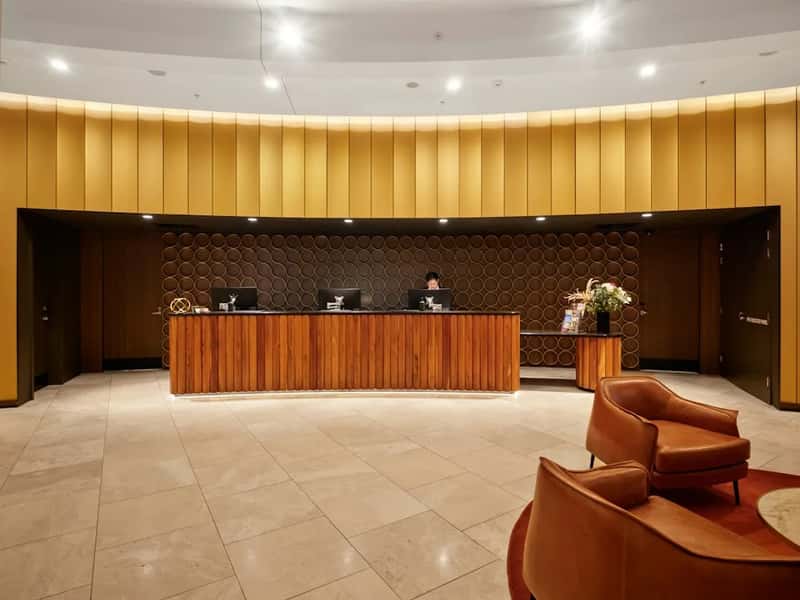
Late checkout works on a similar logic to early arrival, tied closely to how full the hotel is that day. A short delay is usually easy to arrange, but a longer stay in the room requires more effort. According to one hotel-booking guide, if you’re hurriedly tossing items into your suitcase and need an extra 20 minutes, a phone call to the front desk probably isn’t a big deal, but if you’re looking to spend longer in your room, it’s worth a chat at reception, since a staff member is more likely to grant late checkout during a face-to-face conversation[8].
Loyalty programs also formalize this benefit at higher tiers. For example, Marriott Bonvoy Gold Elite status holders get a 2 p.m. late checkout[8], while Platinum Elite members and above have until 4 p.m., which can be requested through central reservations, at check-in, via the mobile app, or at any time during the stay[8]. Even without status, simply asking at the desk rather than assuming a fee applies is often enough to get a small grace period for free.
5. Premium WiFi Upgrade Fees

Basic WiFi is usually free, but many hotels still charge extra for a faster, “premium” connection, particularly at properties that also charge a resort fee bundling in standard internet. This creates an odd overlap that savvy guests can use as leverage. Marriott’s own loyalty terms even acknowledge this, since participating properties that have mandatory resort or destination charges which include internet access will provide a replacement benefit, determined at each property’s discretion[9].
In practice, many guests don’t know this rule exists, which is part of why it goes unused. As one loyalty forum discussion put it, if people don’t make the property aware of this thing exists, the property either never knows or, knowing it, can get away with it[10]. Asking specifically for a WiFi upgrade waiver, rather than accepting the daily surcharge, is a low-effort way to squeeze extra value out of a fee you’re likely already paying elsewhere on the bill.
6. Accidental Minibar and Incidental Charges

Minibar sensors and incidental holds are notorious for generating charges that don’t reflect what a guest actually used, and hotels are generally receptive to correcting them when asked directly. Modern shelf sensors can be overly sensitive, since sensor shelves can log a charge the instant an item is lifted, even if it’s placed right back[2]. Similarly, courtesy arrangements made verbally at check-in don’t always make it into the billing system, so early check-in fees can appear even if the front desk originally offered early access as a courtesy, since that verbal “of course, no problem” doesn’t always mean the fee was waived in the system[2].
The fix is usually a quick conversation rather than a formal dispute. The rule is simple: if nobody told you there would be a charge, don’t assume there was one, so ask for it to be removed and explain the circumstances[2]. Reviewing the folio before leaving the property, rather than after checkout, gives staff the best chance to fix an error on the spot.
None of these waivers are guaranteed, and front desk agents ultimately decide case by case based on occupancy, hotel policy, and how the request is made. Still, the pattern across resort fees, parking, check-in timing, WiFi, and incidental charges is consistent: guests who ask calmly, with a clear and reasonable explanation, tend to walk away paying less than those who simply accept whatever appears on the final bill. A five-minute conversation at check-in or checkout costs nothing, and in a lot of cases, it’s the only thing standing between a traveler and a smaller invoice.