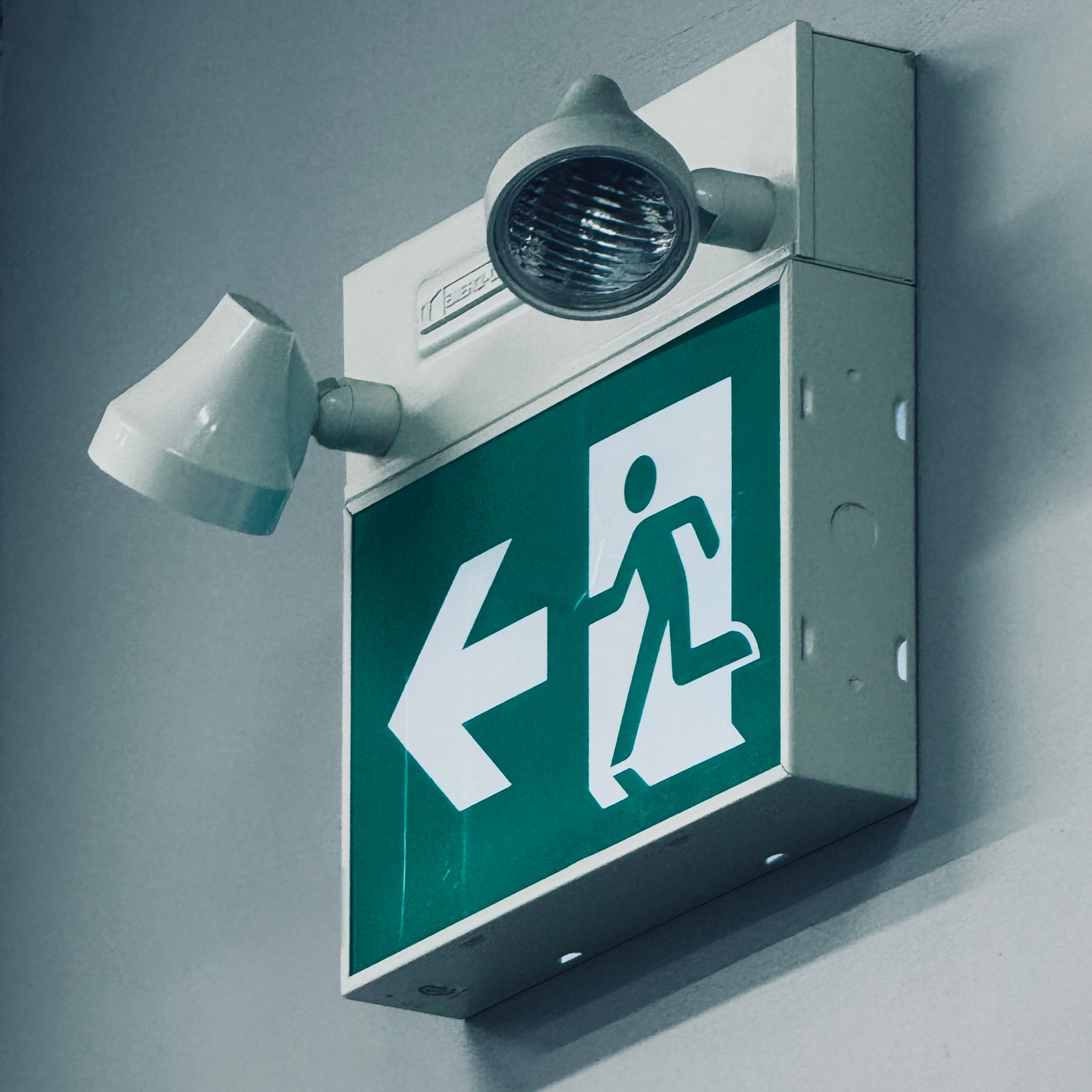
Most people walk into a hotel room, drop their bags, and head straight for the shower or the minibar. Frequent travelers tend to do something different first, and it has nothing to do with comfort. It involves a small laminated sign that most guests barely notice, tucked on the back of the door or on a nearby wall, and it can matter far more than the thread count of the sheets.
That sign is the fire evacuation diagram, and the habit of checking it before settling in is common enough among road warriors that it shows up repeatedly in fire safety guidance from agencies and hospitality groups alike. Here is what the sign actually says, why it exists, and why some guests treat it as a non negotiable first stop.
What This Safety Sign Actually Is

The sign in question is usually a small floor diagram showing the guest’s exact room location along with marked routes to the nearest exits. According to fire code guidance compiled by evacuation sign manufacturers, the International Fire Code requires the posting of evacuation diagrams in each guest room and at each elevator bank.[1] It is not a decorative fixture. It is a code required piece of life safety equipment.
The diagram typically includes more than just an arrow pointing toward a door. As one fire safety resource describes it, a typical guest-room diagram includes the room location highlighted on the floor plan, the routes from the room to exit stairs, extinguisher and pull-station locations along the route, assembly-point information, and emergency contact numbers including the front desk and 911.[2] In other words, it is a compact emergency briefing meant to be absorbed in under a minute.
Why It’s Posted on the Back of the Door
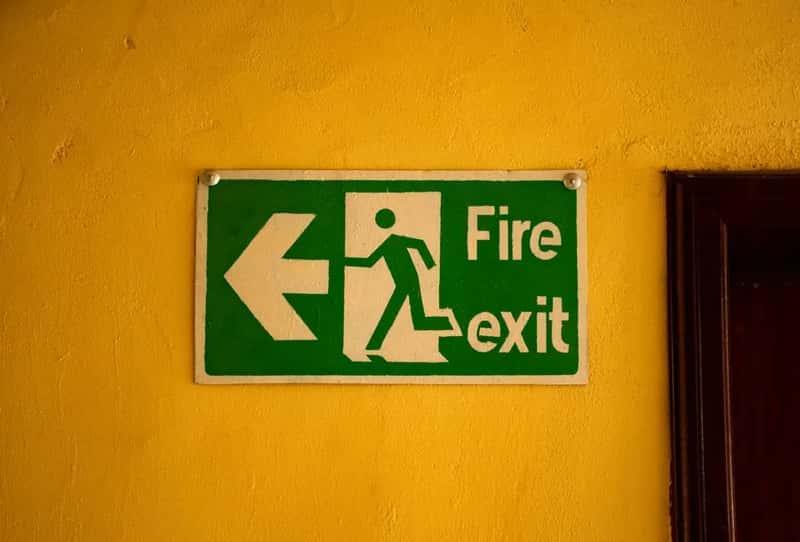
The placement is deliberate. Several fire departments that publish hotel safety guidance note that the plan is meant to be seen right when a guest is closest to leaving the room, which is why upon checking into your hotel or motel room, locate the fire escape plan, which is usually posted on the back of the door.[3] That location puts the diagram directly in a guest’s line of sight on the way out, which matters more than it sounds during a real emergency.
Local fire code language reinforces this positioning requirement rather than leaving it to hotel discretion. New York City’s fire code, for example, states plainly that a diagram depicting two evacuation routes shall be posted on or immediately adjacent to every required egress door from each hotel guest room, motel guest room, or dormitory room.[4] The rule exists precisely because a sign buried in a drawer or folder does nobody any good in a hurry.
The Legal Requirements Behind the Sign

This is not a courtesy hotels offer out of goodwill. It is a legal obligation with specific technical standards attached, and inspectors check for it. Under the NYC building code referenced in fire safety plan formats, the diagram must show the following: 1. A visual representation of the number of doors opening onto the public corridor which must be passed to reach each exit stair.[4]
The code goes further than just distances. It also mandates a written description or visual representation of the procedures to be followed in the event of fire or smoke conditions.[4] Jurisdictions vary in the exact wording, but the underlying obligation, two visible routes and clear instructions, shows up in fire codes across the country in one form or another.
What Information the Diagram Must Show
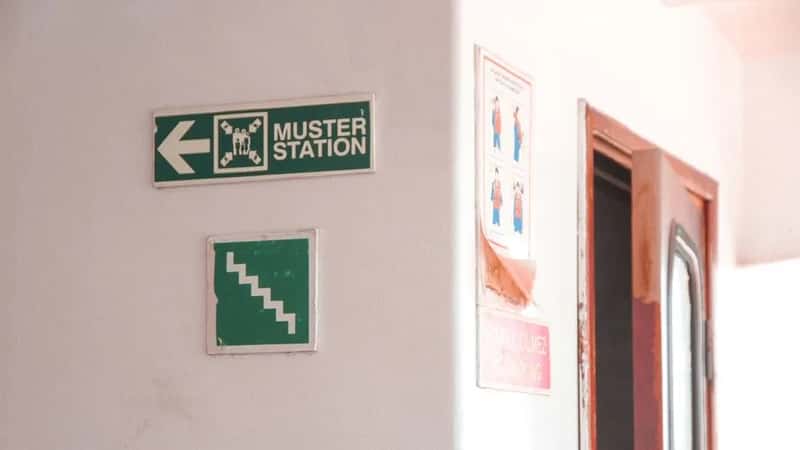
Beyond the basic exit routes, evacuation sign specialists list a fairly detailed checklist that a compliant diagram needs to meet. Among the requirements, the emergency evacuation map must indicate the viewer location (You Are Here), a minimum of two evacuation routes to fire exits must be shown, fire extinguishers and fire alarm pull stations must be indicated where required, and written safety instructions (call 911) as indicated by fire code.[1] That is a lot of information packed into a sign most guests glance at for two seconds.
The sign is also supposed to be physically durable and hard to tamper with, not just informationally complete. Guidance on installation notes that signs should be permanently fastened, and vandal and tamper resistant signs are recommended.[1] That detail matters because a diagram peeling off the door or missing entirely defeats the entire point of posting it.
Why Frequent Travelers Check It First

Ask anyone who travels for work regularly, and many will describe a near identical routine the moment they walk into a room. One travel guide summarizing these habits notes that right after dropping their keycard on the desk, experienced guests glance at the evacuation diagram posted on the back of the door and physically walk to the nearest stairwell.[5] The walk is the part casual travelers skip, and it is arguably the most useful step.
The logic is simple. A hallway that looks familiar in daylight with clear sightlines can look completely different filled with smoke, and muscle memory from an actual walk to the stairwell holds up better under stress than a mental note. Fire safety literature backs this instinct, pointing out that the first five minutes in a new room set the tone for the entire stay, and a few quick habits can save you from bed bug bites, security scares, or simply a room that smells off.[5] The evacuation check fits into that same window of quick, practical habits.
The Fires That Changed Hotel Safety Rules
These posted diagrams did not appear out of abstract caution. They trace back to a long history of hotel fires that exposed how poorly guests understood their surroundings during actual emergencies, prompting building and fire codes to tighten requirements over the decades. Modern fire codes reflect lessons learned from incidents where guests could not locate exits quickly enough, which is why current standards insist on multiple marked routes rather than a single path that might be blocked.
Industry data on the broader value of signage backs up why regulators kept pushing for better in room information. One safety signage overview notes that the risk of fire related deaths or injuries can be decreased by 55% with the presence of fire safety materials.[6] That is a substantial number, and it is part of why fire marshals treat the guest room diagram as a mandatory item during inspections rather than a nice to have.
Other Safety Signs Worth a Glance

The evacuation diagram is the headline sign, but it is not the only one worth a quick look. Seasoned travelers who check the door diagram often extend the habit to the room itself, confirming that it is equipped with a smoke detector, and that it has a sprinkler system in place.[7] Neither of those checks takes more than a few seconds, and both matter for the same reason the diagram does.
Signage in hallways plays a supporting role too, particularly illuminated exit markers that stay legible if power fails. Fire safety equipment guidance for hotels stresses that exit signs should be posted at all exits, since during a fire guests may become confused and panicked, and seeing the exit sign is the roadmap to safety.[8] Together, the door diagram and the corridor signage form a system, not two separate safety features.
How These Signs Vary by State and Country

Not every hotel room diagram looks identical, and that is by design rather than inconsistency. Jurisdictions adopt different editions of model codes and layer on their own amendments, so a diagram compliant in one state might need adjustments in another. One evacuation mapping resource notes that the IFC only applies where a jurisdiction has adopted that edition, and local amendments can change or remove the requirement, so your authority having jurisdiction controls what actually applies to your property.[2]
California adds its own layer on top of the baseline federal guidance, requiring extra postings beyond the guest room door itself. Evacuation sign specialists note that some regions require a posted evacuation map (sign) at elevator (include staircase entrances; California only).[1] Travelers moving between states or countries may notice the diagram’s format shift slightly even though its core purpose, two visible routes to safety, stays constant everywhere.
Making the Most of the Sign During Your Stay

Reading the diagram is only half the habit. Fire safety educators recommend pairing the visual check with a short physical walk, since reviewing the hotel evacuation plan located on the back of your hotel room door should include noting the location of all fire exits on your floor and locating nearby fire alarms and fire extinguishers.[9] That short walk means a guest is not relying purely on memory of a static picture if the hallway fills with smoke or the lighting fails.
It also helps to keep the room key accessible rather than buried in a bag, in case a guest needs to return to the room during an evacuation attempt. Fire safety checklists commonly advise that travelers take your room key with you when you evacuate in case emergency exits are blocked by fire and you must return to your room.[9] None of this takes more than a couple of minutes total, which is a small price for the peace of mind it buys for the rest of the stay.