Charm is hard to measure. It rarely comes from one thing, and it tends to show up in small details: a bridge, a roofline, the way a lane bends. Ask ten travelers for their favorite village and you’ll get ten different answers.
The five places below keep turning up in guidebooks, heritage lists and photo feeds, and each earns its reputation for a different reason. Some are famous for their water, others for their roofs or their winding streets. All of them are real communities, so each comes with a few honest caveats.
Hallstatt, Austria
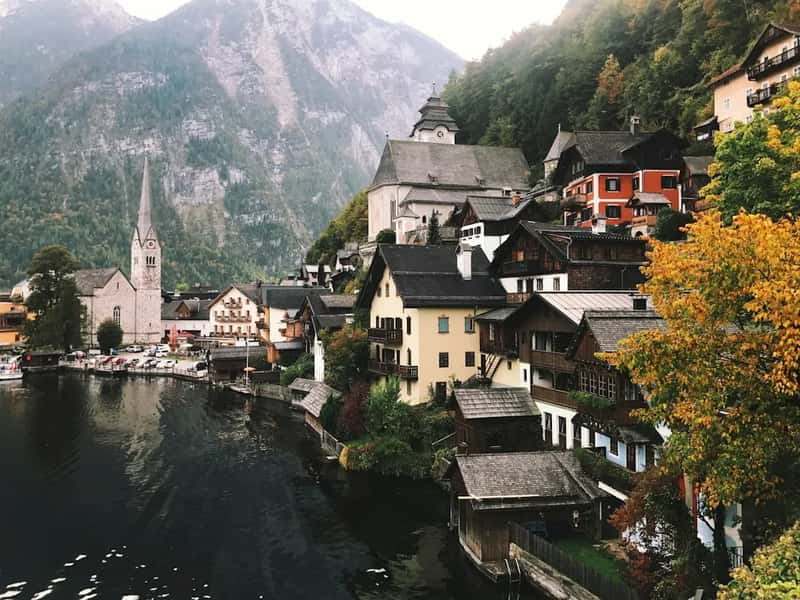
Hallstatt sits on the western shore of a lake in the Salzkammergut, with steep mountains behind it and colorful houses stacked along a narrow shoreline. It was declared a World Heritage Site in 1997[1], and the postcard view hasn’t changed much since. Few villages look so complete from a single spot on the water.
Popularity has a cost, though. On peak days Hallstatt sees up to 10,000 tourists, according to the deputy mayor[2], in a village where only about 750 locals live[2]. Local leaders have proposed a daily cap of around 5,000 to 5,500 visitors[2], so it’s worth arriving early or staying overnight.
Giethoorn, the Netherlands
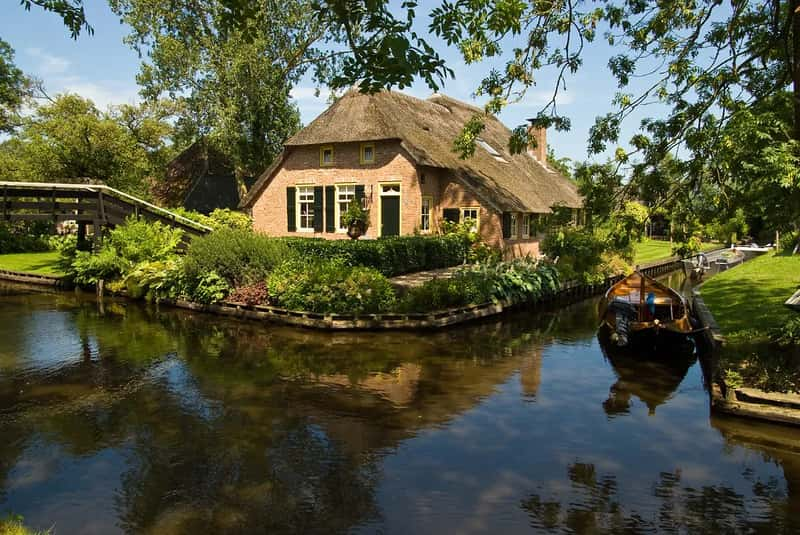
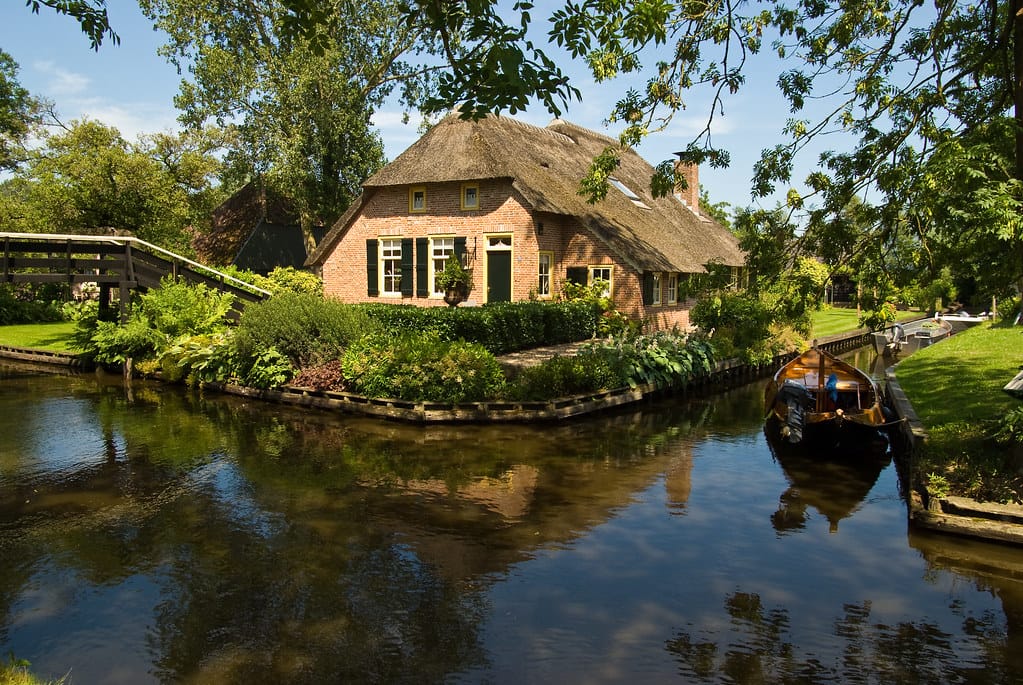
Giethoorn is in the province of Overijssel, and its old center has no roads. The historic village centre has only canals, footpaths and bridges[3]. The layout goes back centuries, because peat cutters dug the lakes and canals that form the water network in the 13th century[4].
Thatched farmhouses sit on small private islands, linked by 176 bridges[5]. Most visitors rent a whisper boat, a sloop, or join a guided boat tour[3]. It’s still a lived-in place, so visitors are asked to respect private property and keep noise down[4].
Shirakawago, Japan
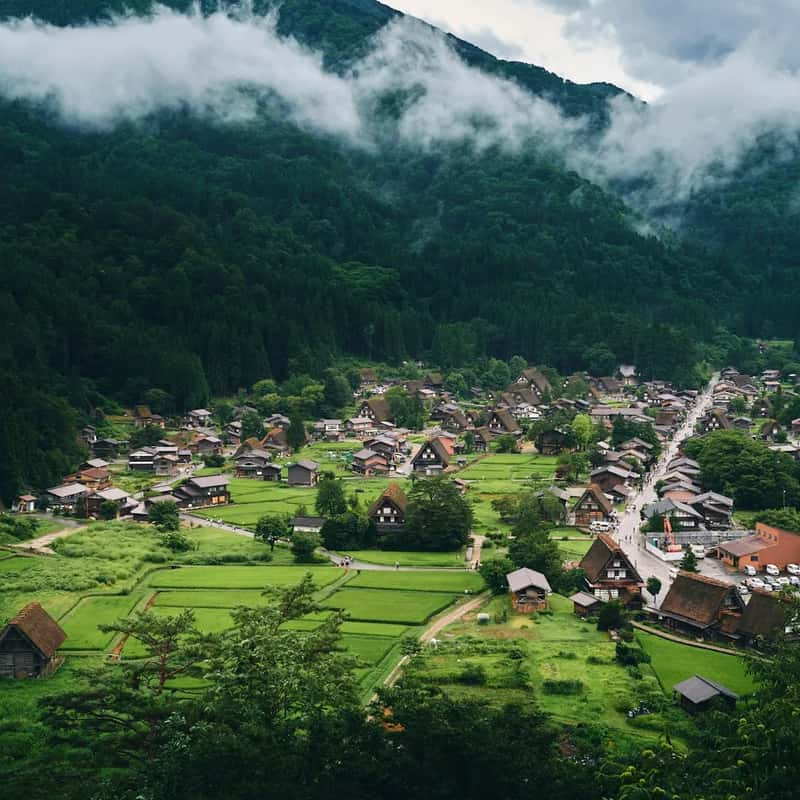
Shirakawago lies in the mountains of Gifu Prefecture, and its fame rests on one architectural style. UNESCO listed the area in 1995, and some of its gassho zukuri farmhouses are more than 250 years old[6]. The name means constructed like hands in prayer[6], a nod to the steep thatched roofs.
The design is practical as well as pretty. It was built to withstand the heavy snow that falls here each winter[6], and the roofs, made without nails, left a large attic for raising silkworms[6]. The community still keeps a tradition called yui, in which residents work together to rethatch the roofs[7].
Eguisheim, France
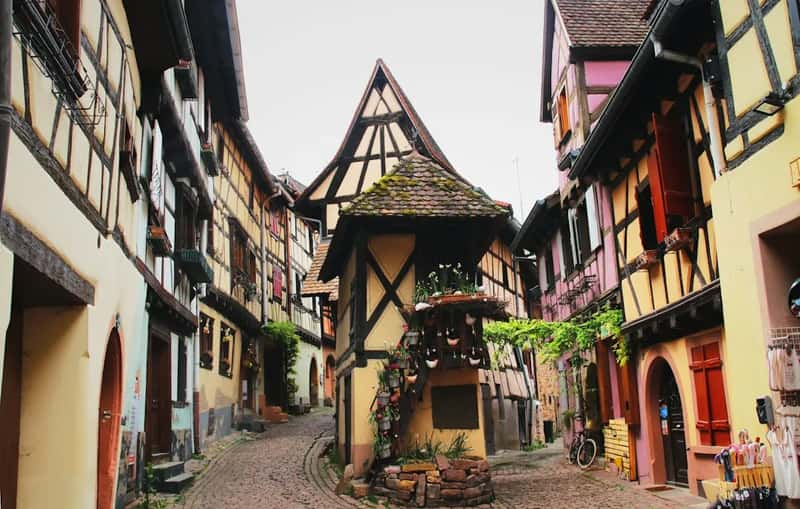
Eguisheim is a wine village on the Alsace Wine Route, a few kilometers from Colmar. Its streets curl around the center in rings, a pattern that successive lines of fortifications shaped over the centuries[8]. The settlement grew around a castle that, according to one account, the Dukes of Alsace built in the 11th century[9].
The recognition is well documented. In 2013, television viewers chose it as France’s favorite village[8], and it belongs to the Plus Beaux Villages de France association. The old center is small, and the full circuit of the rampart streets is roughly 800 metres[8]. Two Grands Crus, Pfersigberg and Eichberg, grow on its land[10], so a stop at a cellar suits the walk.
Lauterbrunnen, Switzerland
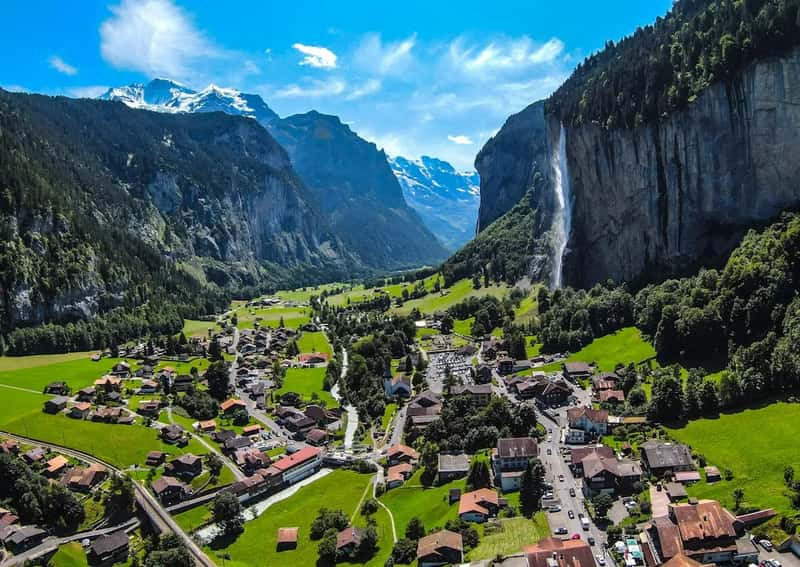
Lauterbrunnen fills a deep, glacier carved valley in the Bernese Oberland, with sheer cliffs on both sides. The valley is often described as having around seventy waterfalls. The best known, Staubbach Falls, drops close to three hundred meters beside the village.
Cars aren’t allowed in the nearby villages of Wengen and Mürren, and the mountain railway and cable cars carry people up from the valley floor. That keeps the upper villages quiet, with views across the Alps. Summer is the busiest season, so spring and early autumn can feel calmer.