
Our summit attempt started practically in the middle of the night. In mountaineering, it’s called an alpine start; heading out in the early morning hours gives you time to go up to the summit and back down before afternoon storms have a chance to roll in. And when we woke up in our tent at 3:00 am, it was very, very cold.
My tentmate and I began putting on our jackets and headlamps, and we already heard the voices of our other group members outside. Waking up for a summit attempt on Cerro Plomo doesn’t call for a soft, slow morning; we rushed to get our day packs ready, pull on our boots, and eat a bit of our own breakfasts before finally unzipping our tent and stepping out into the cold night, where the base camp was lit up only by distant light from the moon and stars. Our climb on Cerro Plomo was about to start, and we would have to give it our all.
Beginning the Summit Push
After a quick, crammed group huddle inside our dining tent and filling our thermos bottles with hot water and tea packets to drink on the way up, we were ready to head out by about 4:30 am. The group started slowly and all together, over a dozen of us in a single file line with our headlamps lighting the way. The pace was deliberate and steady, like it usually is at high altitude. Our guides told us there’d be five main stops, including one at a small refuge. But in the cold weather, the last thing I thought about doing was to stop moving..
There was only the sound of the moderate wind and footsteps shuffling along the rocky mountainside. Our group stretched out naturally into people going different speeds. I saw some climbers ahead of us, and some trailed far behind. In these moments on a mountain like Cerro Plomo, I simply try to concentrate on my breathing and my footsteps. I tried not to think about how heavy I was breathing, how the cold was seeping in through all of my layers and gloves. With nothing but a dark pre-dawn sky, the next step ahead of me, and my rhythmic breathing, it felt almost meditative.

Inner Turmoil on the Ascent & Refugio Agostini
Even during the first hour of the ascent, and in fact, earlier that morning and even the night before, something was going awry in my stomach. I’d never had stomach problems as a result of the altitude, and I was convinced it was something to do with the food I’d eaten, but regardless of the cause, I started to suffer after that first hour. Unfortunately for myself, my guide, and the other couple of hikers I was with at that time, I started having to make frequent stops. Needless to say, it was brutally uncomfortable, combined with the freezing weather and wind. Yet I took some medicine I had with me and decided to try my best to press on.
After a couple more hours, we made it to Refugio Agostini, which is at around 4,600 meters. By this point, I was hiking practically doubled over from stomach pain, feeling weak and dehydrated. I was relieved to crawl inside the tiny wooden shelter with a few other climbers and sip on black tea. These climbers, as it turned out, had decided that this was their turning point; they each felt like they were done with their summit attempt. And in that moment, I knew that I had two choices: continue with my own group, or turn around with one guide and these other climbers.
I’d made the decision to turn around on other high-altitude mountains. In my opinion, even the most iconic and beautiful Andes mountain isn’t worth a summit attempt that could potentially turn into a dangerous situation. And given the chaos happening in my body on that frigid morning, I decided that this mountain hut at 4,600 meters would be the highest I’d get to this time around. With my newfound little climbing group, we snapped some photos there at the refuge as the sun was rising, and we started making our way back down.
Back to Base Camp & Glacier Views
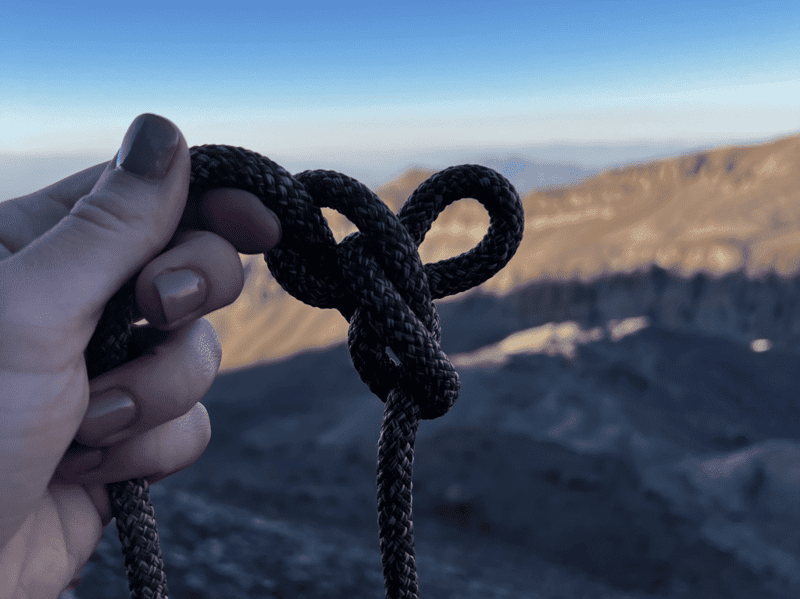
On our way back down, we had to descend one very steep section that was pure scree, meaning you could easily slide down the loose dirt since there was no place to securely place your feet. So, with our guide’s help, we tied a safety rope to a rocky wall above the scree section and used that to walk down relatively safely. We left the rope for the rest of our group to use on our way down, which would’ve been just a few hours later.
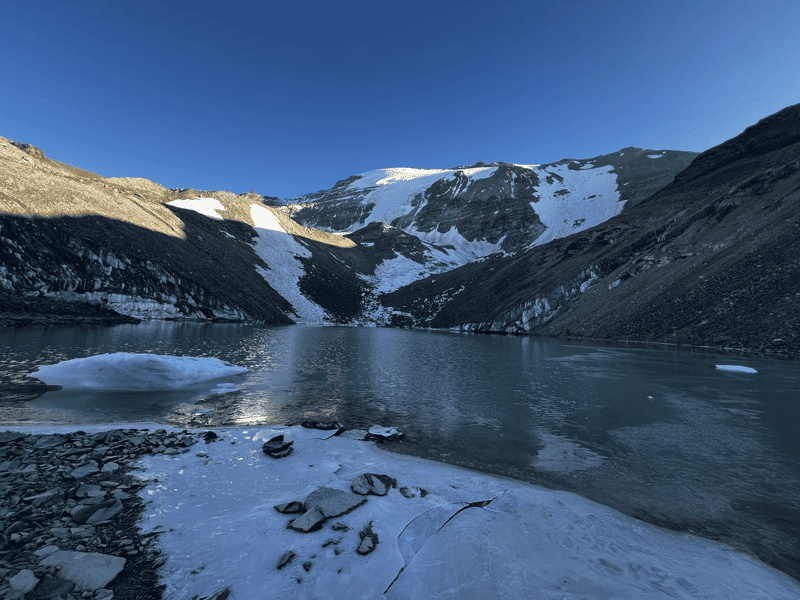
Along the path on the way down, our guide asked if we felt up to a quick detour to see a glacial lake just to the side of the main trail. I felt much safer knowing that we were practically at the base camp, so I accepted the offer. We curved to the right rather than following the main trail, and suddenly, a gorgeous turquoise lake surrounded by a snowy glacier came into view, twinkling in the morning sunlight. Feeling grateful for the chance to enjoy this unexpected scenery despite my condition, we snapped some photos before continuing on our way down.

Reflecting on Cerro Plomo: A Peak for Another Day
Being at the peaceful base camp before most of the other climbers gave me time to reflect on what had just happened (and time to nap, of course). And although I had to leave Cerro Plomo’s summit for another attempt, I was grateful just to have experienced everything that the trek up to 4,600 meters had to offer.
When we finally descended the rest of the way down through the valley and back to the ski lift, back to La Parva, and ultimately back to Santiago, I knew that the trip was complete just as it was. Every chance to escape into the Andes is special and valuable, even if the outcome this time was different than what I’d initially expected.