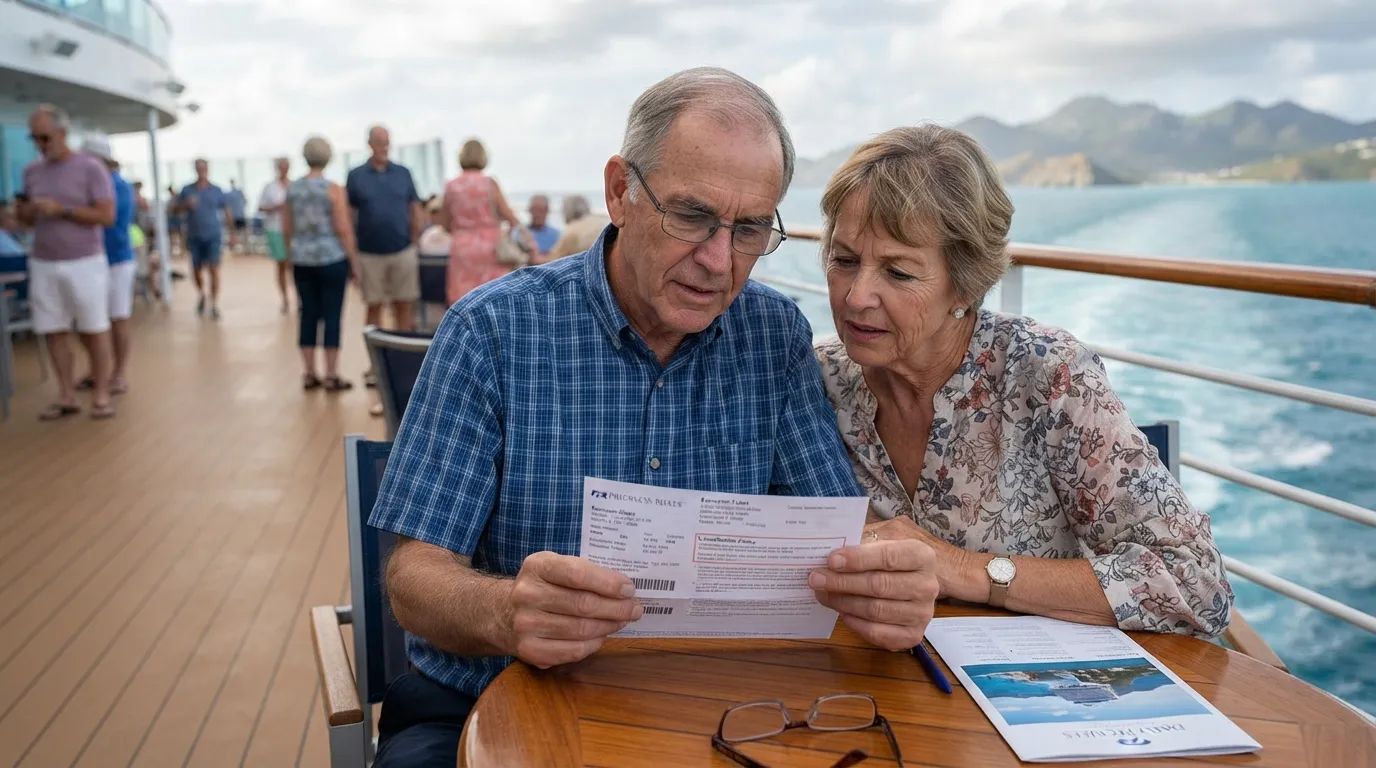
The word “moderate” on a tour ticket sounds like a promise. It isn’t one. The activity level printed beside the price is advisory rather than contractual.
The money side is just as blunt. Princess, for one, makes no refund on an excursion unless notice of cancellation is given before the closing time. That is a lot of cash riding on a single adjective.
This list covers the fine print the brochure skips, from booking dates to bus steps to the tender line. The last item answers the one question that decides who pays if a tour runs late and the ship leaves on schedule. It changes how you read the price of every tour above it. First, the desk itself, and when to go there.
#12 – Booking Before You Sail, Not at the Desk
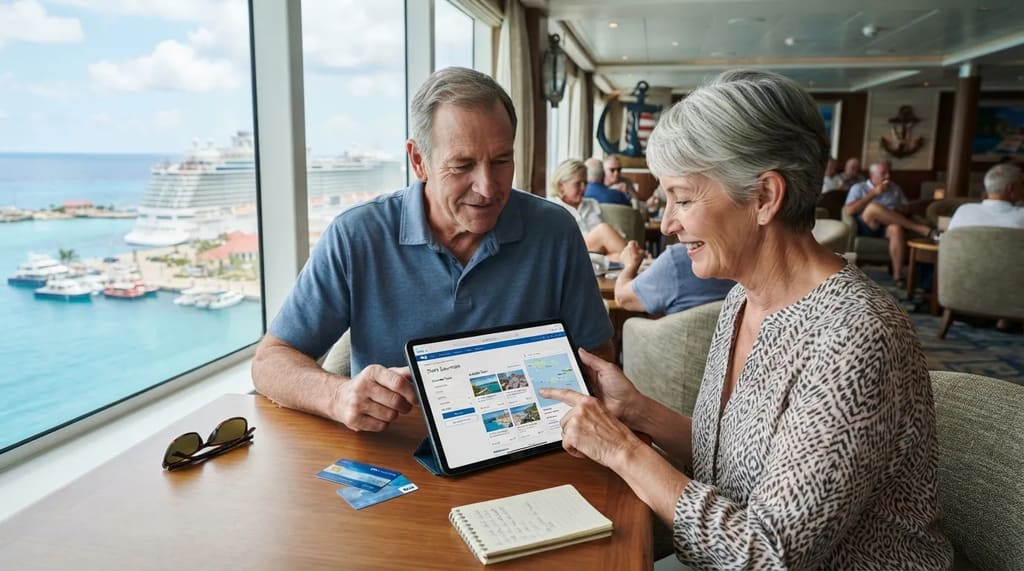
Princess says booking before sailing can save up to 20% on popular tours. Wait for the counter on board and you may give that saving up.
The onboard desk is still an option. Princess notes, though, that availability may be limited or sold out. Tours generally become available several weeks before your cruise departure, so the best choices show up first on the line’s website and app.
Carnival adds a step. Pre-sail shore excursion orders must be booked online, and the guest’s cruise booking must be fully deposited. If you’re booking for a spouse or friends, that requirement applies to each of them, so confirm everyone’s payment status first.
Booking early locks in a seat, but it doesn’t lock in the lowest price. There’s one date worth circling to find out whether the line has cut it.
#11 – A Price Check a Month Before Sailing

The price you paid in the spring may not be the price on offer in the summer. One booking guide says many lines cut prices on unsold excursions. It suggests re-checking 30 to 45 days before sailing and rebooking at the lower rate.
That only works if the original ticket can be canceled cleanly. Shore activities can usually be canceled for a full refund with 48 hours’ notice, but each line sets its own cutoff. A fee would swallow the saving, so read the terms before you rebook anything.
This pays on the expensive tours and rarely on the cheap ones. Spend your fifteen minutes on the one or two big-ticket days. Don’t risk a seat on a popular tour over a small difference in price.
Fast Facts
- Re-check window: 30 to 45 days before sailing
- Booking early on Princess can save up to 20% on popular tours
- Many shore activities cancel free with 48 hours’ notice, but each line sets its own cutoff
- Best use of your time: the one or two priciest tour days
Set a reminder on your phone the day you book. The check is easy to forget, and the price drop, if there is one, won’t announce itself.
The price is the easy number to check. The activity label beside it is harder, because it means something different from one cruise line to the next.
#10 – What Easy, Moderate and Strenuous Promise

Every line puts an activity level or an accessibility symbol on its tours, and those symbols are advisory rather than contractual. They also vary by line, so a moderate tour with one company can ask more of your legs than a moderate tour with another.
The grades are written for a general audience, and no distance is published behind them. Easy, Moderate and Strenuous give you the line’s opinion, not the number of hours you’ll spend on your feet.
So build your own measure from what the tour page does say: hours or miles on foot, steps onto the vehicle, and seating along the way. Judge the tour by those details, not by the photo. A terrace looks the same whether you reach it by elevator or by a long climb.
The label can’t tell you how steep the bus steps are. Three plain questions at the desk can.
#9 – Three Questions the Desk Can Answer

Before you pay, put these questions to the desk or the line’s phone team. The answers tell you more about your day than the tour’s title does.
- How many steps are on the vehicle?
- What’s the longest stretch between rest stops?
- Is a restroom available along the route?
The step count is the one that settles things. Princess says guests who can manage three to five steps onto and off a tour bus, and who have a collapsible mobility device, should generally be able to book standard tours. Three to five bus steps and a collapsible device is Princess’s benchmark.
If steps are the problem, Princess says it can request accessible vehicles from its tour operators. Make that request before you’ve paid for the tour, not at the curb on the morning of the port.
#8 – The All-Aboard Time Before Sailing Time
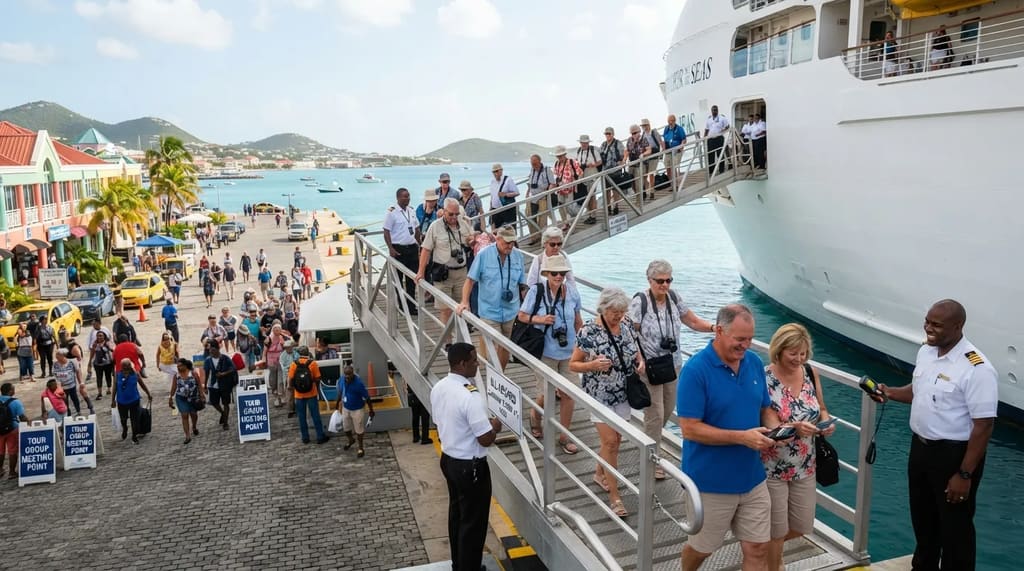
All-aboard comes earlier than the time the ship actually sails. The departure time on your itinerary isn’t the one to plan around, so ask the desk for the all-aboard time at each port.
Match the tour to the ship’s arrival, too. If the ship docks at 10 a.m., an 8 a.m. tour can’t work. A long tour that starts late also eats the cushion you want at the end of the day.
On the morning itself, know where your group meets and plan to be there at least 10 minutes before the posted time. If the guide gives you free time, note the meeting place and how to find your way back before you wander off.
That cushion matters most where the ship anchors offshore and small boats do the ferrying. The line you stand in there has a price.
#7 – Skipping the Tender Line With a Ship Tour
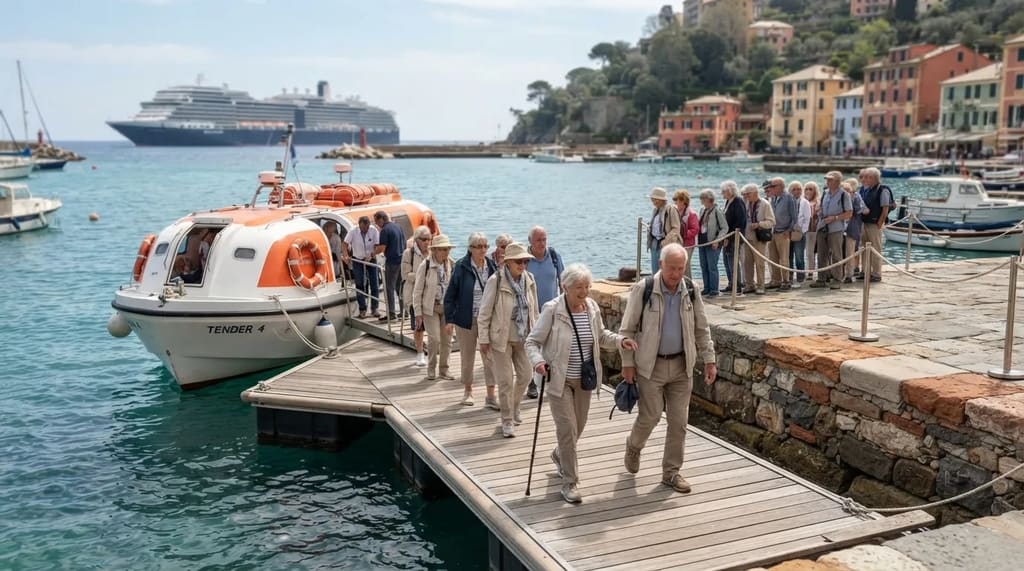
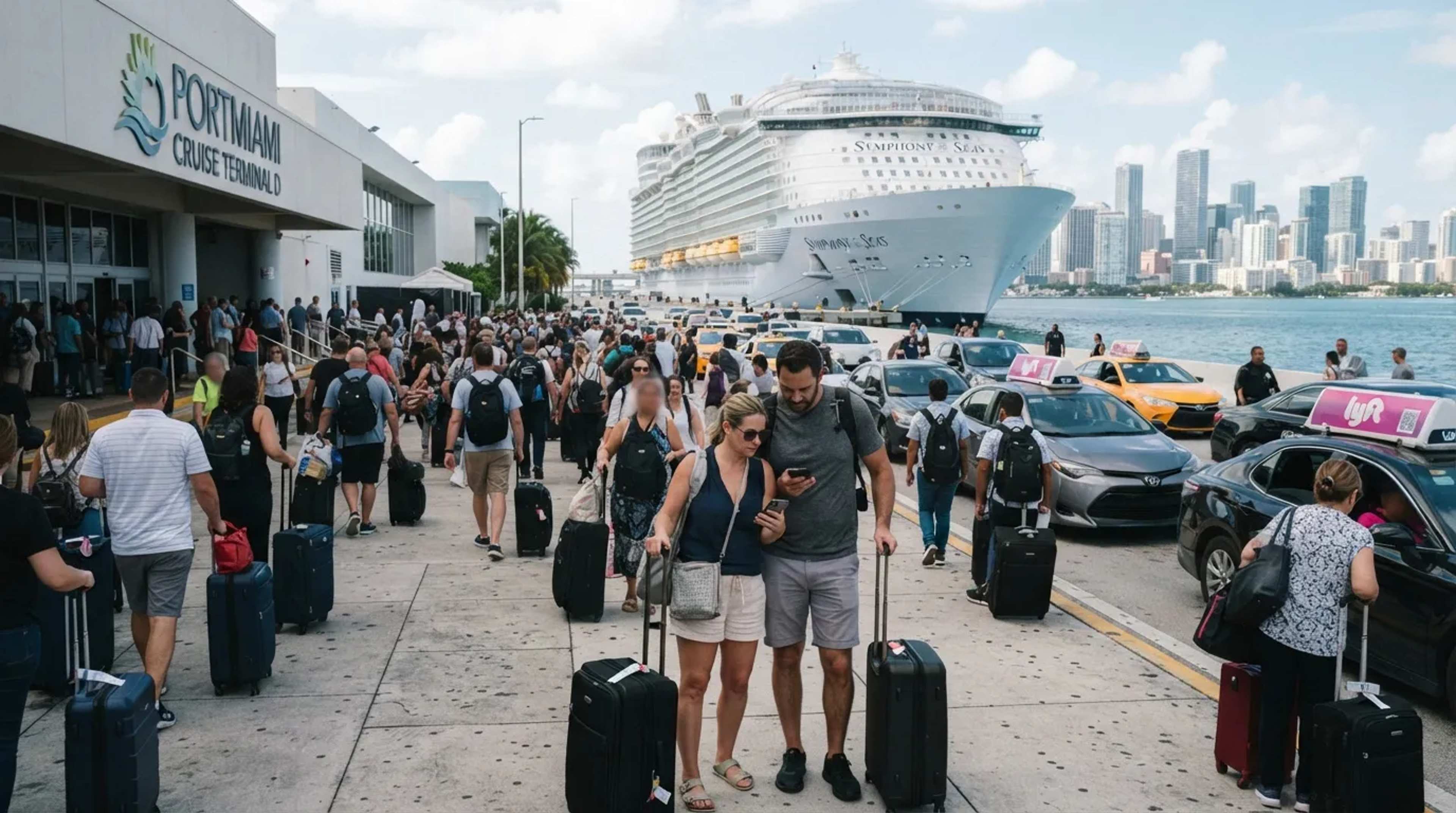
At a tender port, the ship anchors offshore and small boats carry passengers to land. Ship-sponsored excursions get priority tendering, so those passengers are among the first ashore.
One senior-focused guide says that can save 30 to 90 minutes over the general queue. That’s time you’d otherwise spend waiting before your day has even started.
This is where early booking from #12 pays off twice. A tour reserved before sailing gives you a seat on the ship’s schedule and a place near the front of the tender line.
If standing in a queue is hard on your back or knees, the ship’s higher price at a tender port buys comfort along with the tour. Ship-sponsored tours usually cost more than independent ones, but this is one place where the premium has a clear use.
A front-of-line seat only helps if the boat will take you and your equipment. Those rules differ from one line to the next.
#6 – Scooters and Tenders Don’t Always Mix
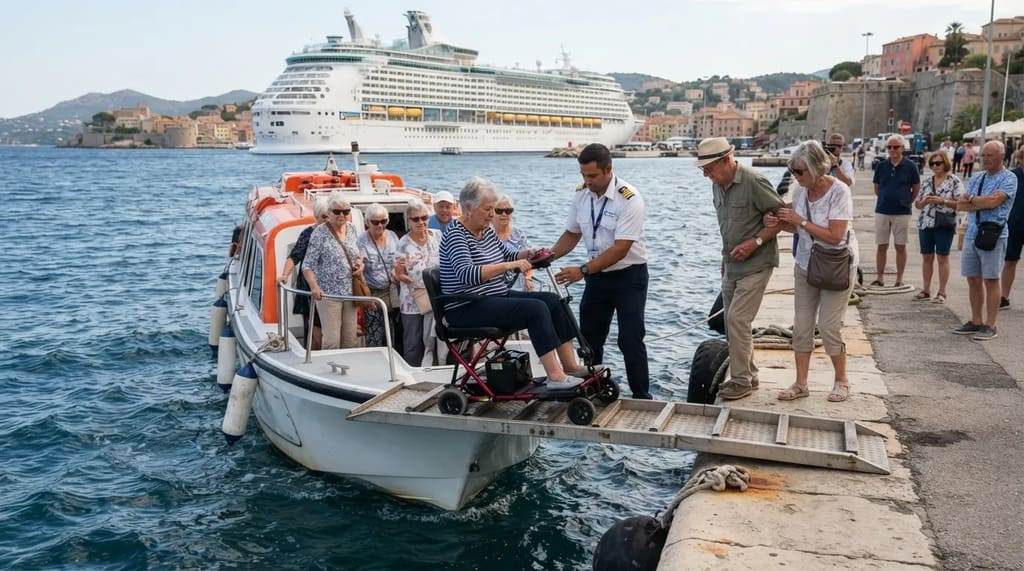
Royal Caribbean says most tenders require steps and a collapsible manual wheelchair. Power chairs and scooters are generally possible only on roll-on tenders, and the captain makes the final decision.
Princess says wheelchair and scooter access at tender ports is limited, and that the Captain decides on safety grounds. Stepping from a moving tender onto a dock is challenging for passengers with mobility issues, and accessible tenders are limited in availability.
So the port list is a bigger decision than the ship’s amenities. Count the tender ports on an itinerary before you count the pool decks, because a folding scooter and a non-folding chair lead to very different trips.
Confirm you can board the tender before paying for any excursion. Otherwise you may be holding a ticket for a port you can’t reach, and the cutoff rules at #4 decide whether you get the money back.
Even a confirmed place on the tender can vanish. The weather can decide before the captain does, and it can erase the port altogether.
#5 – When the Port Call Itself Falls Through
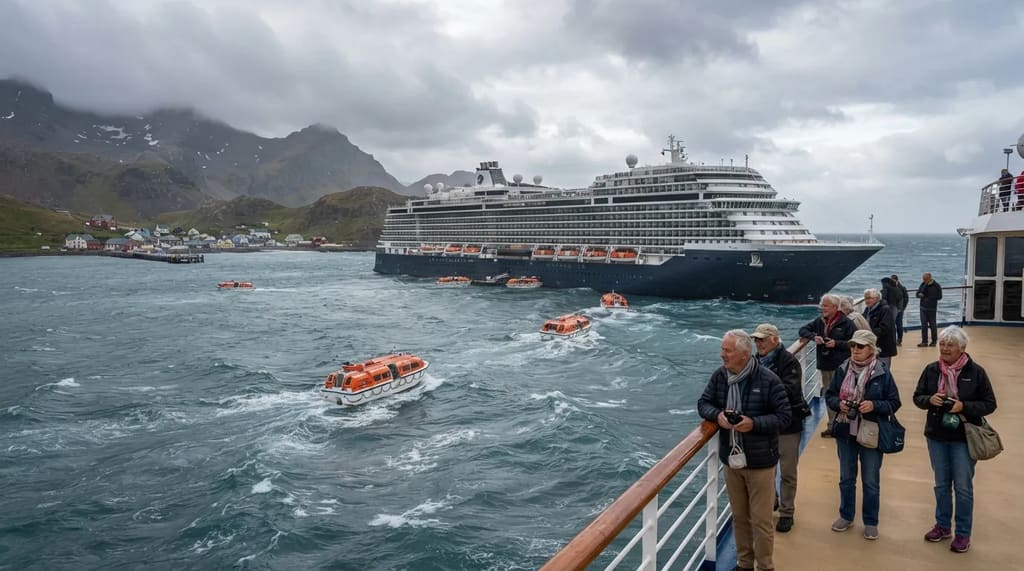
If the water is too choppy to board tenders safely, the cruise line will skip that port of call. Tender ports are the most exposed, and the plan can change midway through the cruise.
How you booked decides what happens to your money. When a cruise line cancels an excursion sold through the ship, passengers generally receive a refund or onboard account credit. Princess refunds all shore excursions if a port is canceled or arrival is delayed.
Independent bookings follow a different rule. When an independently booked operator cancels, the operator’s own refund policy applies. Weather rules can get complicated if the ship docks and the operator believes the activity can go ahead.
Quick Compare
- Ship-booked tour: refund or onboard credit when the port is skipped
- Independent tour: the operator’s own refund policy applies
- Either way: save every confirmation and message
Ship-booked tours are refunded or credited when the port is skipped. After any cancellation, check your cruise line app, stateroom messages, email and onboard account. Save the confirmation and every message from an independent operator.
#4 – The Cancellation Cutoff Printed on Your Ticket
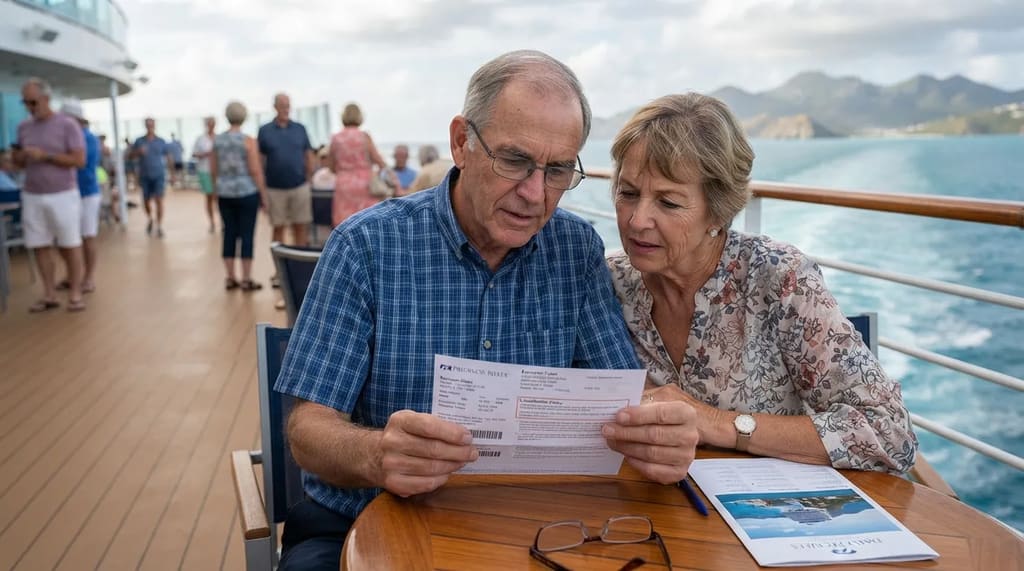
Princess is blunt: it can’t cancel an excursion past the closing time, and it won’t refund one you simply choose not to go on. The deadline on the ticket is the whole policy.
Carnival draws its line differently. Within 24 hours of arrival in port, orders become non-refundable1, and if the line cancels an activity, your sole recourse is a refund of the amount paid.2 Within 24 hours of the port, a Carnival excursion is non-refundable.
Other lines and operators set their own windows. Find the cutoff on each ticket the day you buy it, since that’s the date a sick day or a bad forecast will test.
For an outdoor tour in a season of unsettled weather, a late cutoff is worth more than a small discount. It’s the same flexibility that makes the price check from #11 workable.
When a cutoff has passed and you’re ill, a different kind of paper may cover what the line won’t.
#3 – What Your Trip Policy May Already Cover
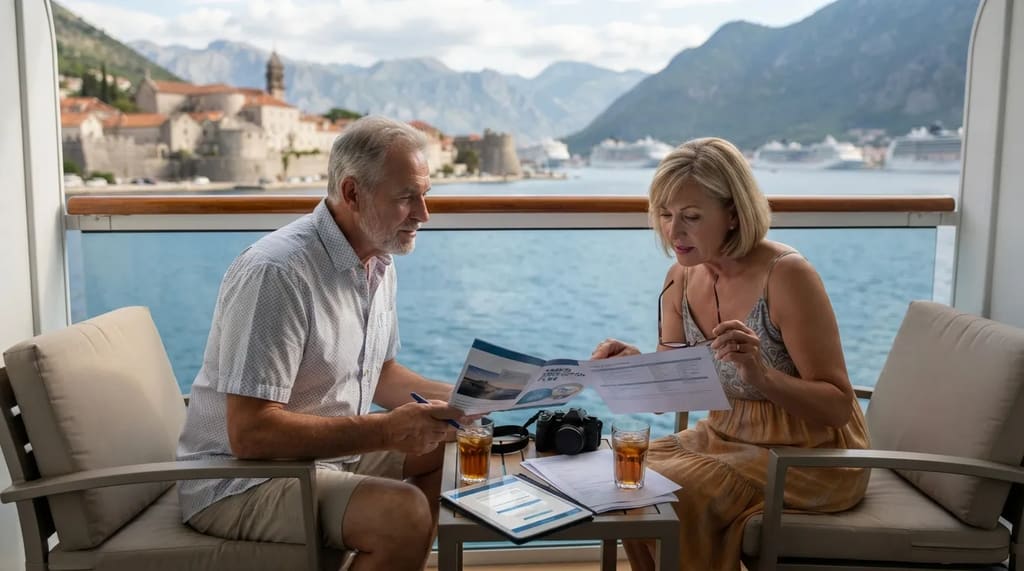
AXA’s Cruise Explorer plan, for example, may reimburse up to $500 for eligible unused prepaid shore excursions affected by an itinerary change. More broadly, travel insurance may cover prepaid excursions canceled for a covered reason.
The catch is overlap. A policy may not pay a claim when the excursion has already been fully refunded, and coverage depends on the policy language and the reason for the loss. That leaves insurance for what the refund rules in #4 don’t reach, such as cancelling because of illness or injury.
Carnival encourages guests to buy its protection plan to cover eligible non-refundable shore excursion cancellation charges. Some full-coverage policies also carry a “cancel for any reason” option.
Read what your trip policy says about prepaid excursions before you buy a separate plan just for tours. For a risk the size of one excursion, an add-on may duplicate what you already hold. Confirm the details with your insurer, because the wording decides.
Related Stories From Travelbinger


Insurance is for when things go wrong. Choosing a cheaper tour that skips the ship’s protection changes who carries that risk to begin with.
#2 – Where Independent Tours Beat the Ship’s Price
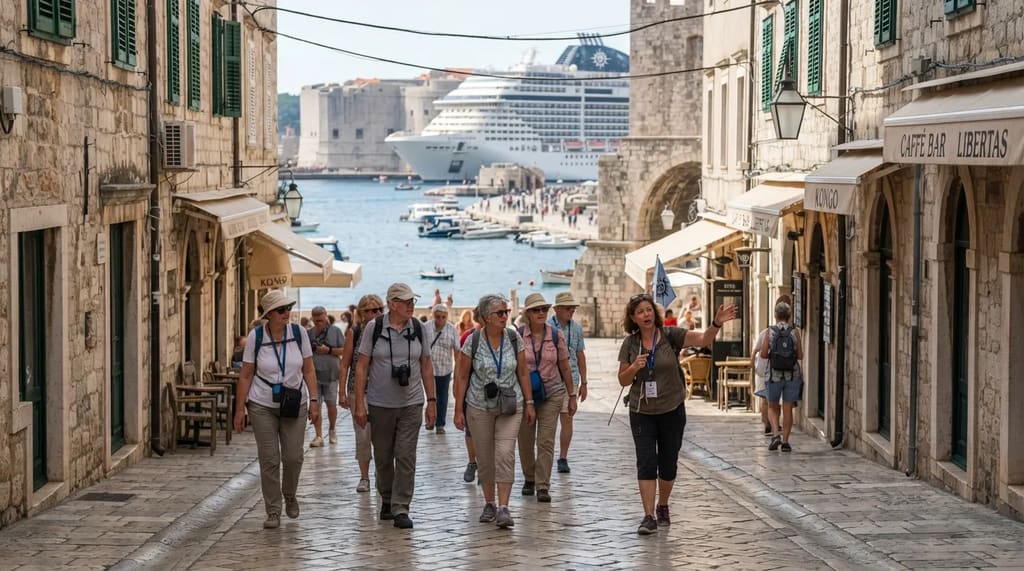
Independent tours often cost less, and the Points Guy notes that they take smaller groups and can go to less touristy places. For a short walk from the pier, that’s a real advantage.
The savings depend on where you are. Book through the ship where logistics are tricky, such as tender ports, remote ruins and complex transfers. Go independent in walkable cities and beach destinations. Ports where the main sights sit far from the terminal, like Rome from Civitavecchia or Pompeii from Naples, belong with the ship’s tours.
At a Glance
- Choose the ship: tender ports, remote ruins, complex transfers
- Choose the ship: Rome from Civitavecchia, Pompeii from Naples
- Go independent: walkable cities and beach destinations
- The trade-off: an independent operator’s cancellation policy can be stricter
A tender port adds the queue from #7 and the device rules from #6, so it’s a poor place to go solo. Go independent only where the sights are close to the pier.
Cancellation is the other trade. With an independent tour, you’re at the mercy of that operator’s cancellation policies, which can be stricter than the ship’s.3 If this is your first cruise, pay the ship’s premium and learn how a port day runs before you start saving on it.
The biggest cost on this list isn’t a tour price. It’s what happens when a tour runs long, and one sentence from the operator tells you who pays.
#1 – Who Pays When the Ship Sails Without You
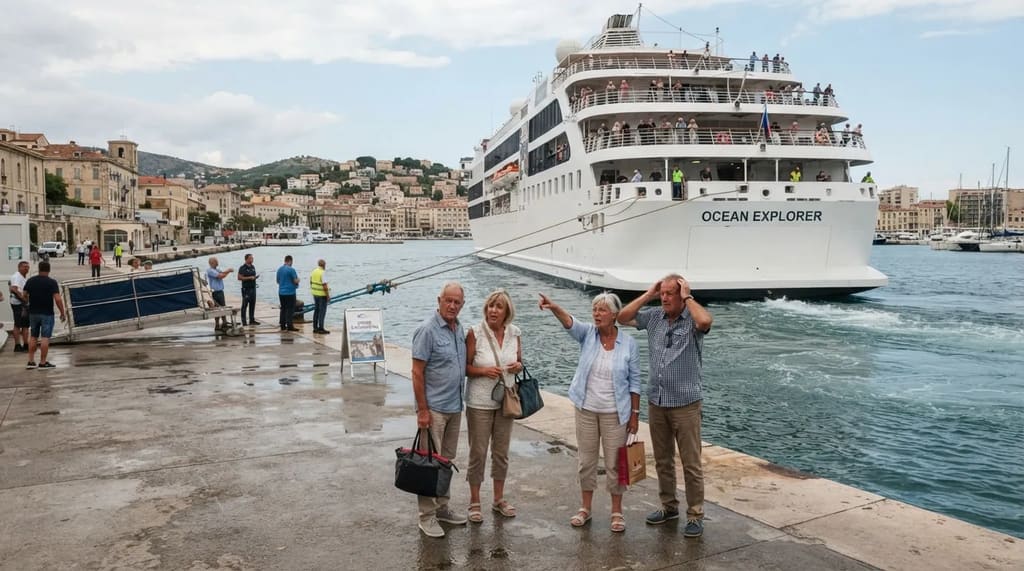
Ship-sponsored tours come with a guarantee: the ship will wait if delays occur.3 Independent tours may not accommodate itinerary changes or late returns. The reason is simple. Communications between the excursion guide and your ship are tight, so the ship knows where your bus is.
An independent tour has no such link. If it runs long, the ship likely won’t wait, and you could be left making your own arrangements to meet the ship or return home.3
Getting to the next port is your responsibility and your expense.4 That can mean transport and a night’s lodging, which dwarfs whatever you saved back at #2.
Some independent operators advertise a guaranteed return to the ship, but third-party guarantees are not identical to the cruise line’s own. The wording to look for is a promise to return you before your ship’s all-aboard time, tied to your sailing.
Ask who pays to reach the next port if the tour runs late. Then ask what happens if the guarantee fails. A vague answer is the answer. Missed-port or missed-connection insurance exists for this exact gap, though a reply in writing is better than a policy you hope applies.
Every tour looks good on the day you buy it. A ticket’s real quality shows when the coach runs late, the tender stops running, the forecast turns or your knee complains on the cobblestones.
So before you pay, ask what the line or operator does in each of those cases, and write down the answer. The price tells you what you’ll spend if everything goes to plan. The terms tell you what you’ll spend if it doesn’t.
What’s the most steps, or the longest walk, a tour has ever asked of you that the brochure never mentioned?
- Carnival Shore Excursion Conditions: https://www.carnival.com/about-carnival/legal-notice/mobile-application-terms-conditions
- Carnival Shore Excursion FAQs: https://carnival–tst.custhelp.com/app/answers/detail/a_id/2866/~/shore-excursion-faqs
- Points Guy Ship vs Independent: https://thepointsguy.com/cruise/ship-sponsored-vs-independent-cruise-excursions
- Independent Tour Guaranteed Return: https://www.goldencircledaytours.is/blog/shore-excursion-guaranteed-return