Picture the airport at 5 a.m.: blinking screens, a line snaking past the coffee stand, someone frantically digging through a purse. Now picture the traveler who walks through all of it like they’re strolling through a park. That person usually did the hard part the evening before, with a phone, a printed page, and a couple of quiet calls.
These 15 night-before moves are why. Some are simple habits. Others are tied to firm federal deadlines most people have never heard of. And one common belief about “senior perks” at security turns out to be flat-out wrong, which might change how you plan your next trip.
#15 – The Airport Hotel Room That Buys Back the Sleep a 4 a.m. Alarm Steals

Nobody warns you that an early flight can wreck the day before it even starts. Plenty of experienced travelers lock in a room near the terminal the night before a dawn departure. That swaps a long, dark drive for a short shuttle ride and a few extra hours in bed. They also confirm the shuttle’s first run time, because some hotel shuttles don’t start as early as the first flights do.
Here’s the part that sparks arguments. Plenty of travelers swear by an airport hotel for every trip, while others call it a waste of money for any flight after mid-morning. If your departure is at 11 a.m., a good night in your own bed usually beats a stiff mattress beside a runway. The room only earns its price when the alternative is a middle-of-the-night drive.
At a Glance
- Ask when the first shuttle leaves and compare it to your boarding time
- Ask whether the shuttle runs on demand or only on a set schedule
- Ask if the rate includes parking if you’re driving in
- Set a backup wake-up call in addition to your phone alarm
The room is the easy part. The next item is what people forget once they’ve parked themselves near the airport.
#14 – The Parking Reservation That Spares You a Frantic Lap Around a Full Garage
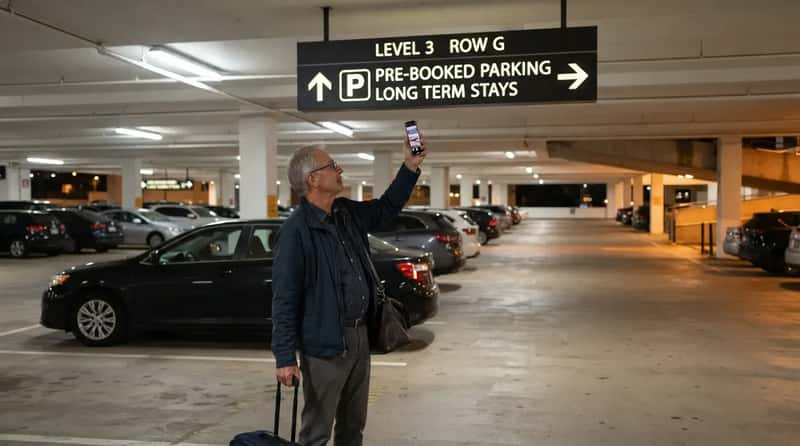
Circling a packed garage with a boarding time ticking is one of the fastest ways to turn a calm trip into a frantic one. So travelers who drive often reserve parking, or confirm an existing reservation, the evening before. They check the lot name, the shuttle schedule, and whether the shuttle actually runs at their hour. A lot that’s “close” on a map can mean a long walk or a long wait in practice.
They also plan for the return. After a long flight, the last thing anyone wants is to wander a huge garage trying to remember where the car is. Many snap a photo of the level and row sign the moment they park. That tiny habit saves a very tired stretch at the end of a trip.
Parking is one thing. The ride to the airport is where even confident travelers get burned.
#13 – The Ride That Has to Show Up Before the Sun Does
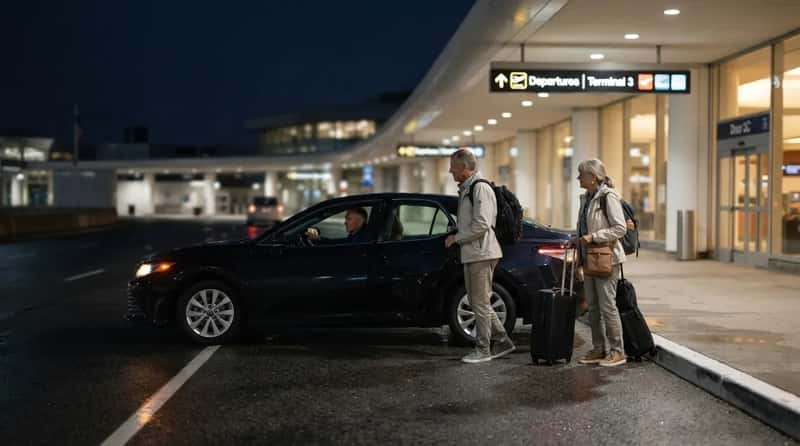
A cab or ride-share that “should be easy” can turn into a no-show at dawn. That’s why many older travelers arrange rides the night before. Some book a scheduled pickup with a car service. Others ask a friend or relative and get a firm yes in writing. The goal is simple: no scrambling for a driver while a flight clock runs.
They also work out the other end. Where does the driver drop you? Which terminal, and which door? Big airports often put different airlines in different terminals, and a wrong curb can mean a long walk dragging luggage. Writing the airline, terminal, and drop-off point on a slip of paper takes a minute and prevents a lot of frustration.
And speaking of last-minute surprises, the next one ambushes people on their own phones.
#12 – The Boarding Pass That’s Already in Hand When the Wi-Fi Dies

Most major U.S. airlines open online check-in about 24 hours before departure. Savvy travelers check in the night before and get the boarding pass in hand, which moves the stress to a calm evening instead of a crowded kiosk. Many also screenshot the pass and print a paper copy, since a dead battery or weak signal can strand a digital-only traveler.
It’s also the moment to double-check the details. Does the name match the ID exactly? Is the departure time the same one in the confirmation email? Flight times shift, and a quiet schedule change is far easier to catch at 8 p.m. than at 6 a.m. A few minutes of checking can head off a bad morning.
That’s tame compared to seat choices, which quietly shape your entire flight.
#11 – The Seat Choice That Decides How Your Whole Flight Feels

Where you sit matters more after 60 than most people admit. Many experienced travelers pick their seat the night before, choosing what suits their body. That often means an aisle for easy bathroom trips and stretching. Others choose a seat nearer the front to shorten the walk off the plane. A “cheap” seat in the far back can mean a very long shuffle at the end.
Here’s a take that divides readers. Many frequent flyers say paying for seat selection is a rip-off, since you can often get a free seat at check-in. Others call it the best money they spend on a trip. The honest answer depends on the airline, the fare class, and how much a few rows of walking actually matter to you.
- Aisle: easier movement and fewer “excuse me” moments
- Near the front: a shorter walk to the exit when you land
Next comes a document check that still trips up thousands of travelers.
#10 – The ID Check That Quietly Ends Trips at the Checkpoint
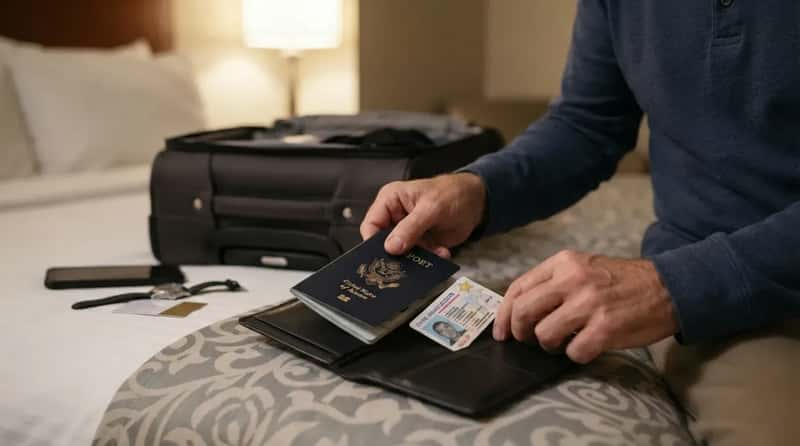
The ID in your wallet matters more than it used to. TSA began enforcing REAL ID on May 7, 2025, and every traveler 18 and older needs a compliant ID or another accepted one, such as a passport. That includes TSA PreCheck members. Careful travelers pull out their license the night before and look for the star marking, or they set their passport right on top of the bag.
The consequences aren’t theoretical. TSA has said travelers without acceptable ID can expect delays and extra screening, and may be turned away from the checkpoint if their identity can’t be verified. Those who find out at the counter have no good options. Those who find out at 8 p.m. can still dig out the passport.
The ID is the easy one. The next item involves something you can’t replace at the gate.
#9 – The Medication Bag That Never, Ever Goes in the Checked Suitcase
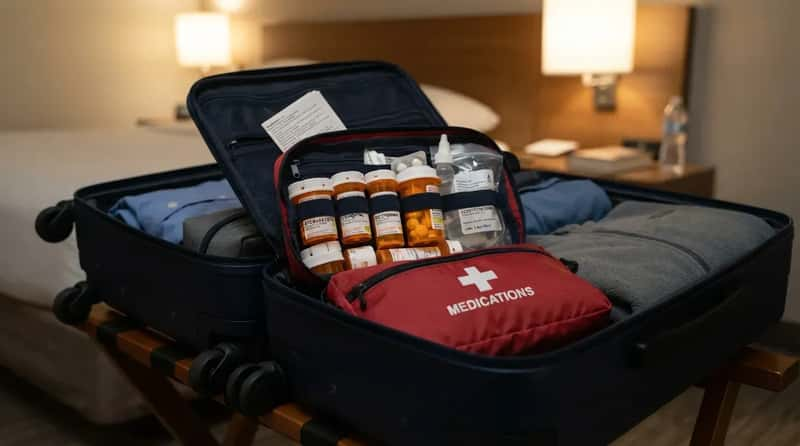
Ask any veteran traveler what they’d never check, and prescriptions top the list. Many sort their pills the night before and move them into a carry-on. If a bag gets delayed, a missing medication can turn a lost suitcase into a medical problem. They keep medicines in original labeled containers when possible and bring a printed list of names and doses.
They also check TSA’s rules for medically necessary liquids, which can be treated differently from regular carry-on liquids. The usual advice is to separate these items and tell the officer at the checkpoint. Packing them in one easy-to-reach pouch avoids digging through a bag in front of a long line.
Still, there’s a free helpline few travelers use until something goes wrong.
#8 – The Free TSA Helpline With a Deadline Most People Miss
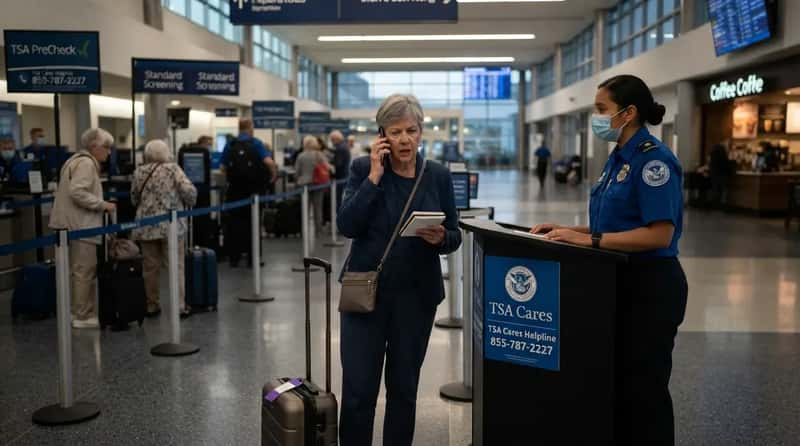
TSA Cares is a free helpline for travelers with disabilities, medical conditions, and other situations that make screening harder. The catch is timing. TSA recommends contacting it 72 hours before travel, so the night before is technically late. If your flight is inside that window, you can still call 855-787-2227. The line runs weekdays from 8 a.m. to 11 p.m. ET and weekends and holidays from 9 a.m. to 8 p.m. ET.
What does it actually do? It can line up a Passenger Support Specialist at the checkpoint, and it can explain what to expect with a medical device. What it doesn’t do is carry you to the gate. That part is the airline’s job, which is exactly why the next item gets its own spot.
The help that actually gets you from the curb to the gate has its own rules.
#7 – The Curb-to-Gate Help Airlines Must Provide, But Only if You Ask
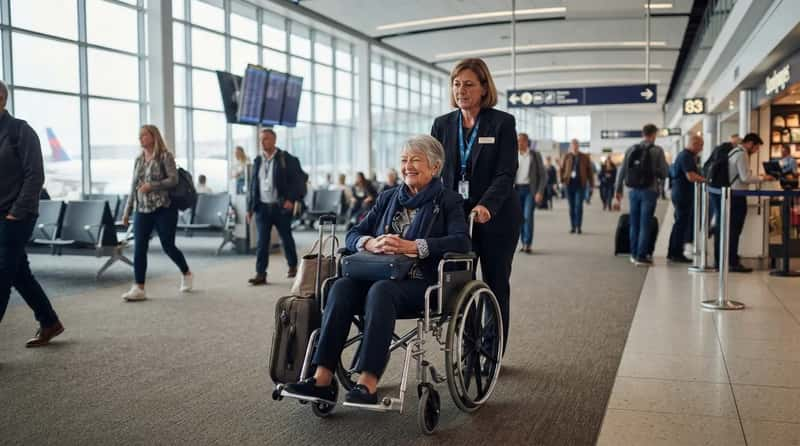
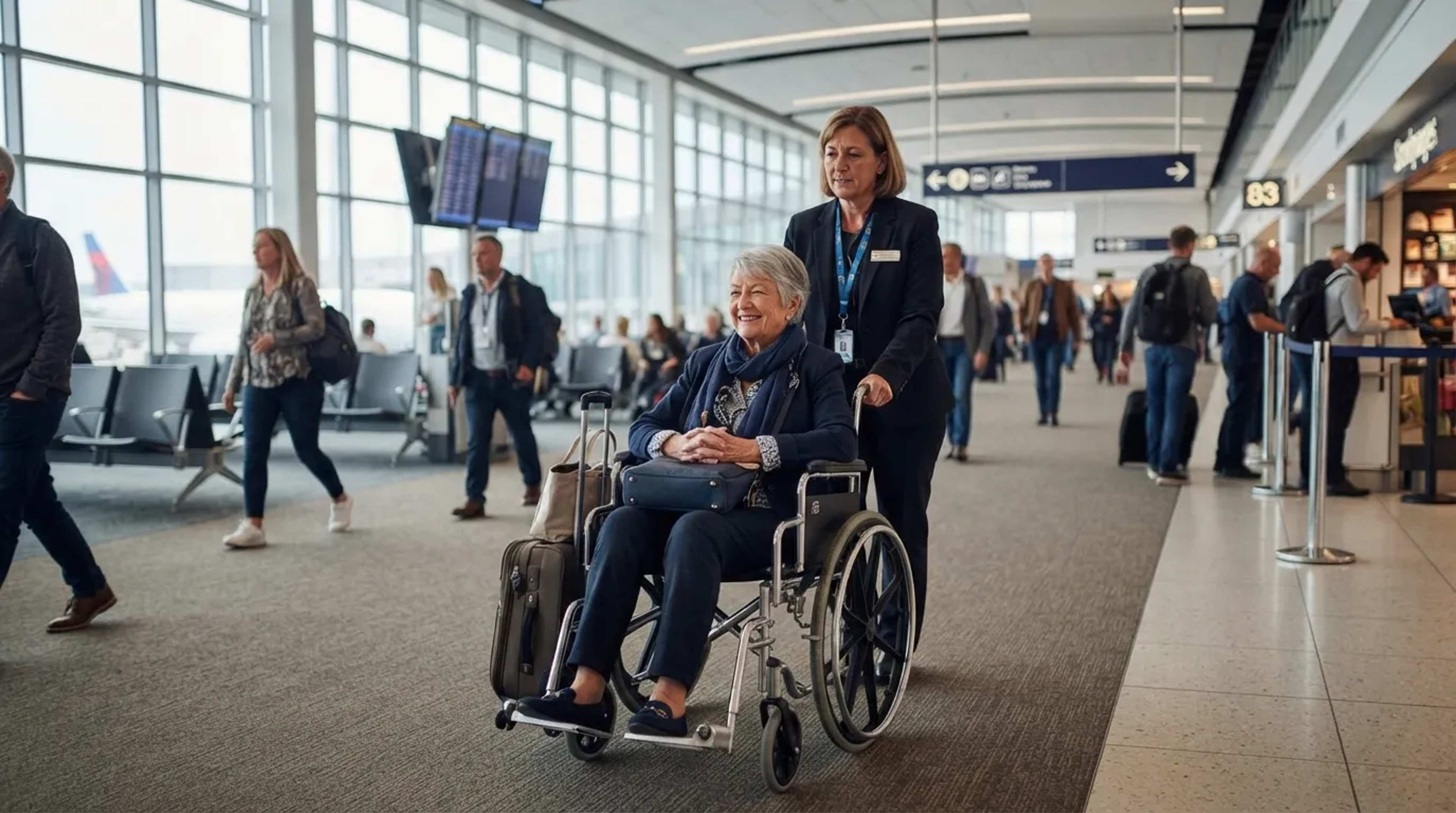
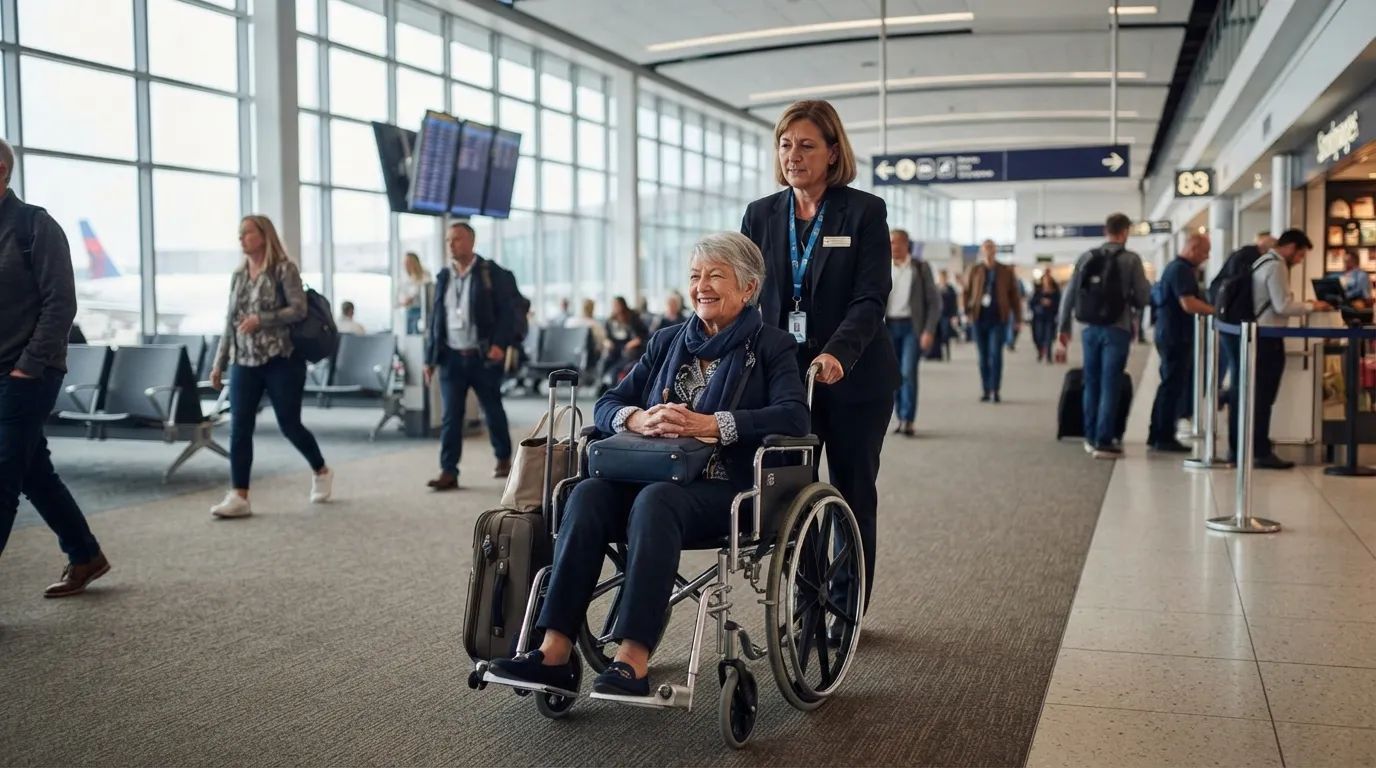
Wheelchair or guided assistance at the airport is provided by the airline, and it’s free. Travelers who need it typically request it when booking or confirm it at least 48 hours ahead. Same-day requests are often handled on a “best effort” basis. Calling the night before is a last-chance check, not a first request. Still, it’s far better than showing up and hoping.
Federal rules in this area have been in flux. The Department of Transportation issued a wheelchair-handling rule in December 2024, and the timing and enforcement of its pieces have been debated since. Rules like this can change again, so confirm the current details with your airline before you go.
But here’s a myth that trips up more travelers than any rule.
#6 – The “Over 60 Fast Lane” That Doesn’t Actually Exist
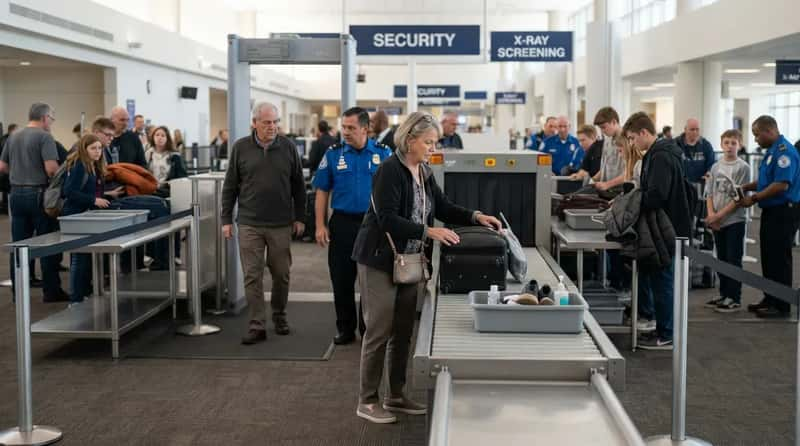
Plenty of people believe turning 60 or 65 unlocks a secret lane at security. It doesn’t. TSA’s age-based screening break starts at 75, not 60. Travelers 75 and older may get expedited screening, such as keeping a light jacket on. If an alarm goes off, they can get an extra pass through the scanner before a pat-down. Anyone can ask to be seated for a pat-down.
Quick Compare
- Ages 60 to 74: standard screening, unless you’re enrolled in a program like PreCheck
- Age 75 and older: may qualify for expedited screening and an extra scanner pass
- Any age: you can ask to be seated for a pat-down
So what do savvy 60-something travelers arrange instead? They prepare. Many pick shoes that slip on and off, skip heavy metal jewelry, and wear a simple layer. If they fly often, they also weigh whether a program like TSA PreCheck is worth it, rather than assuming it is.
Next up is a quiet request that can spare you the worst part of boarding.
#5 – The Pre-Boarding Ask That Spares You the Gate Crush
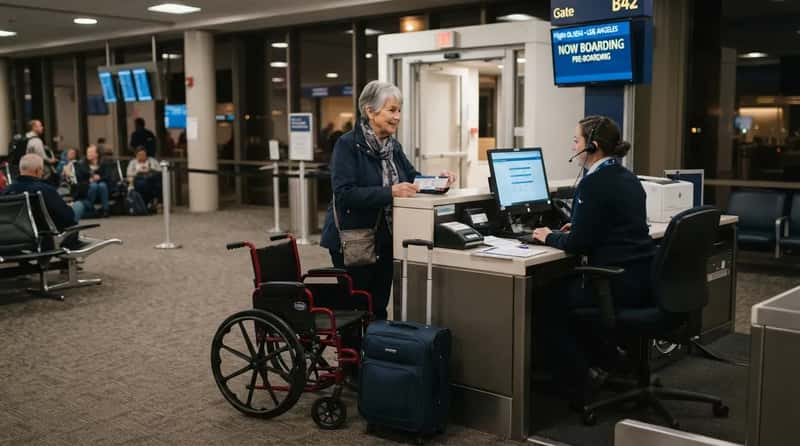
Early boarding isn’t a birthday perk. It’s tied to needing extra time or assistance. Experienced travelers decide the night before whether they’ll ask for it, then say so quietly at the gate desk before boarding begins. Asking after the crowd has formed leaves you stuck at the back of the line.
For travelers with a folding manual wheelchair, pre-boarding has another purpose. Airlines must provide priority stowage space for at least one on aircraft with 100 or more seats, and you generally need to pre-board to use it. Knowing that in advance means no surprise at the jet bridge. A calm, specific request usually works better than a hopeful look at the agent.
The next item is a small piece of paper that can change how a checkpoint conversation goes.
#4 – The Free Card That Explains Your Hearing Aid or Implant for You
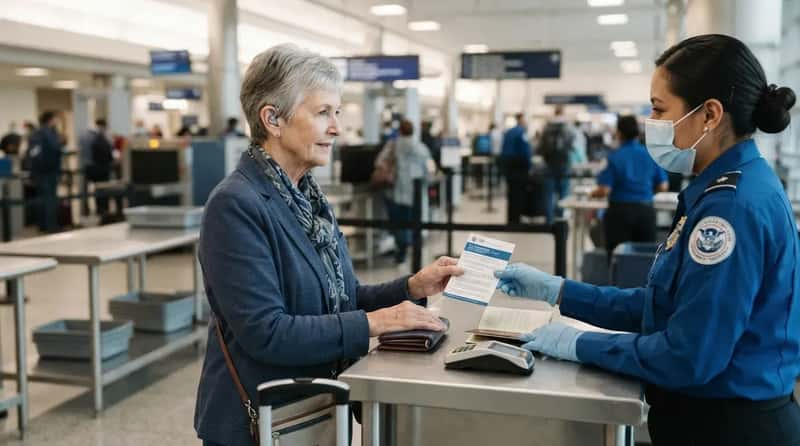
TSA offers a free Notification Card you can download from TSA.gov. It lists conditions, disabilities, or devices that may affect screening. You can hand it over instead of explaining everything out loud in a noisy line. That’s useful for pacemakers, joint replacements, insulin pumps, or hearing devices.
Many travelers print it the night before and tuck it in with their ID. They also tell the officer about any device before stepping into the scanner. A quick word early beats a long, awkward conversation later, especially when the line behind you is growing.
Yet the thing most likely to cause real, expensive damage isn’t a card at all.
#3 – The Photos of a Mobility Aid Before Someone Else Handles It
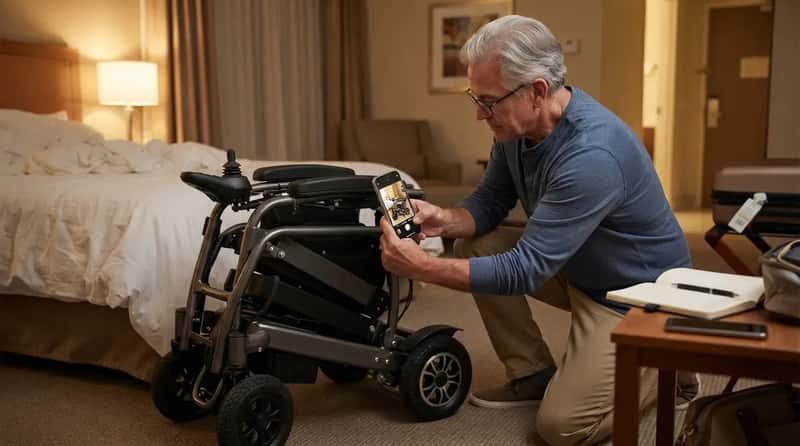
For travelers with a wheelchair or scooter, the night before includes a quiet documentation step. They photograph the device from several angles, note any existing scratches, and write down the model and battery type. If it gets damaged in transit, those photos are the proof. They also keep the airline’s disability contact information handy.
Worth Knowing
- Take photos in good light, including wheels, joystick, and frame
- Snap a close-up of the model label and any serial number
- Save the photos to your phone and email them to yourself as a backup
- Ask the airline about removable parts, such as cushions, before you reach the gate
The risk is real. One accessibility guide citing federal data reports that airlines mishandled or damaged 10,548 wheelchairs and scooters in 2023. If a problem does happen, travelers can ask for the airline’s Complaint Resolution Official, who is the airline’s disability expert. A loaner chair, a claim, or a DOT complaint all go better with evidence in hand.
The second-to-last item is the one that quietly rescues trips when everything else goes sideways.
#2 – The Paper Backup That Outlasts a Dead Phone

The calmest travelers often carry a simple folder. Inside are their itinerary, hotel confirmations, a medication list, emergency contacts, and the airline’s special-assistance number. When a phone dies or an app crashes, paper still works. They assemble it the night before, when there’s time to think instead of react.
They also save the replies. If an airline confirms an assistance request by email or message, they keep it with the travel documents. At the airport, they repeat the request calmly at the counter and again at the gate, since notes can get lost between booking systems. It sounds like overkill until the one time it isn’t.
And the final item matters most when a trip doesn’t go as planned.
#1 – The Help Request That Has to Follow You Through Every Connection
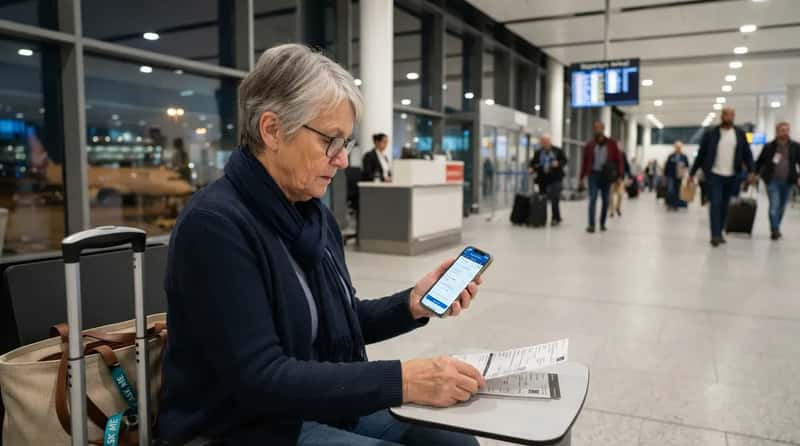
Here’s the mistake that leaves travelers stranded: assuming one assistance request covers the whole trip. The advice for older travelers is to ask for help on every flight segment and to confirm it with every airline on the itinerary. A request for the first leg doesn’t automatically guarantee a wheelchair waiting at the connection. Travelers who learn this the hard way often describe standing at an empty gate, wondering who was supposed to meet them.
So the night before, they check each leg. They look at the layover time, the terminal change, and who is meeting them at the destination. If a family member is picking them up, they share the flight number and a meeting spot. It’s not glamorous planning. It’s the difference between a smooth handoff and a long wait in a strange terminal.
Fast Facts
- Each flight on your itinerary is its own assistance request
- Two airlines on one trip means two confirmations to check
- Handoff points to ask about: the connecting gate, baggage claim, and the curb
- Your pickup person should have your flight number and a named meeting spot
Look back over the list and a pattern shows up. Almost nothing here is about luck or speed. It’s about knowing which deadlines are real, which “perks” are myths, and which help only arrives if somebody asked for it first. The biggest surprise is still that the age-based security break starts at 75, not 60.
The 72-hour and 48-hour windows also mean the night before is often a final check rather than a first step. But that final check is exactly what separates a smooth morning from a scramble. The best airport mornings are usually decided before anyone sets an alarm.