You’d think a conductor’s eyes go straight to the ticket. They don’t. By the time the doors close, a good crew has already read half the car: who boards like they own the aisle, who goes quiet, and who is working very hard to look fine.
And the passengers over 60 are often the most readable people on the train. Not because they’re fragile, but because decades of travel have left them with habits that say a lot. Some of what crews pick up is practical, some is quietly moving, and one of these will make you look at your own parents differently.
#17 – The Pause on the Top Step That Crews Read as a Good Sign
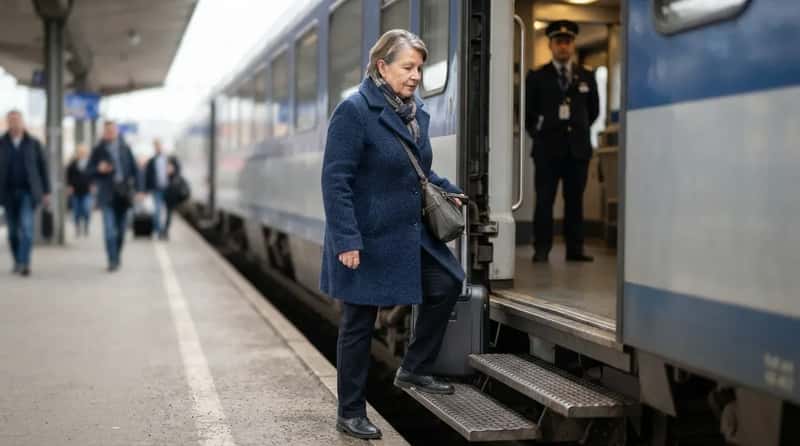
The first clue comes before anyone sits down. Many older riders stop at the top of the boarding steps and take a second to find their footing. Train steps are steeper than most people expect, and the gap between platform and car can catch anyone off guard.
That pause is rarely weakness. It’s usually the habit of someone who has learned not to rush. The CDC reports that more than one in four people 65 and older fall each year, so a careful step is just good sense. The riders crews watch more closely are the ones who skip the pause and still look unsteady.
#16 – The Ticket Already in Hand Before Anyone Asks
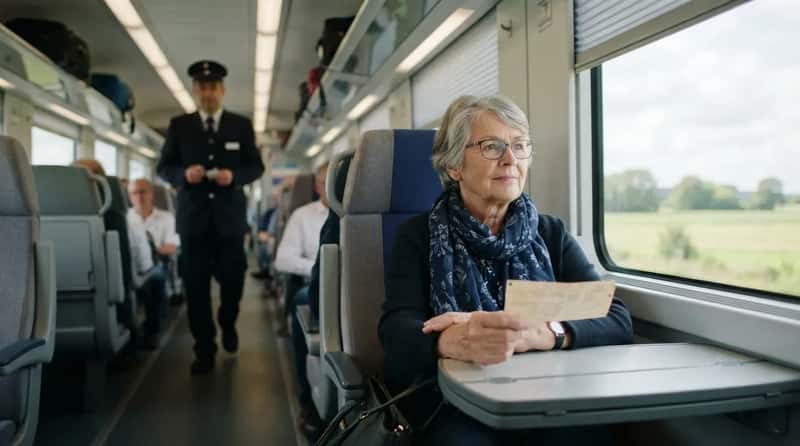
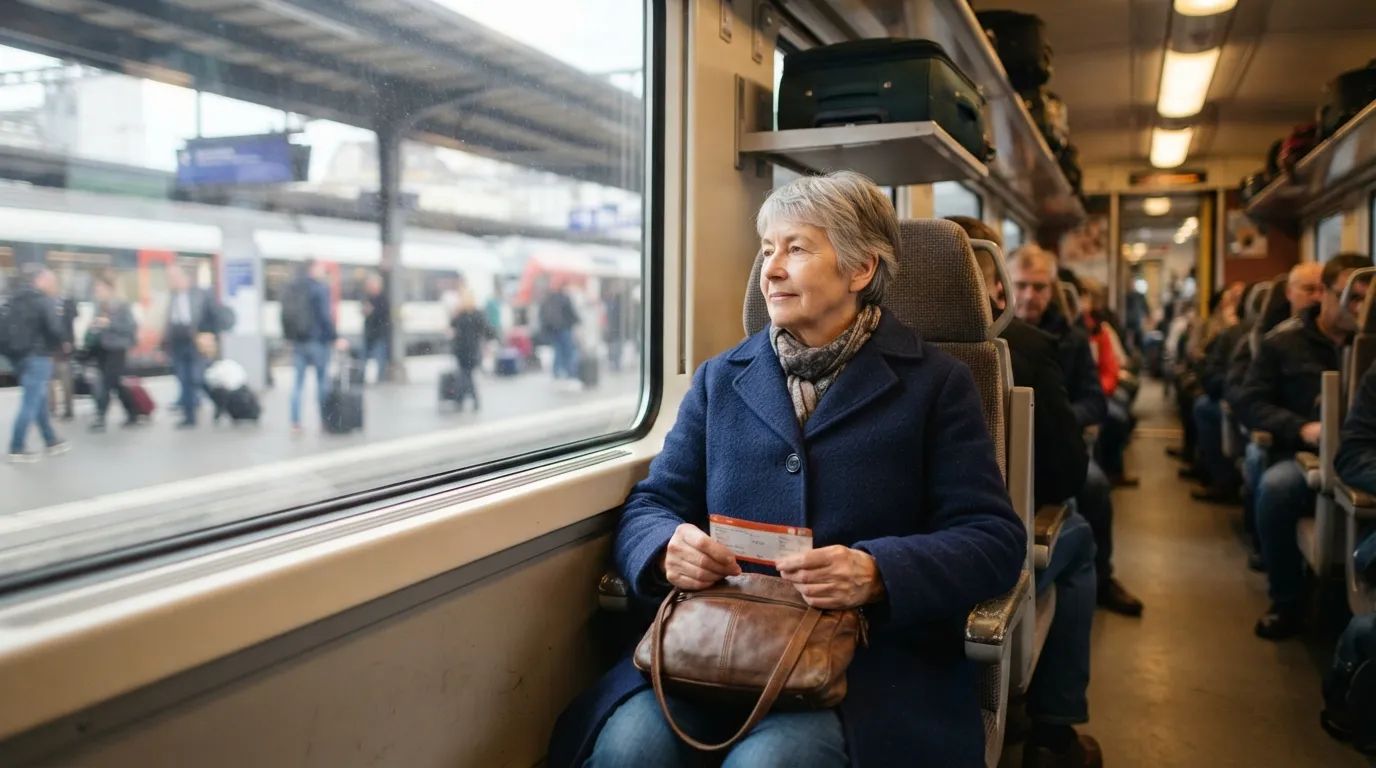
Walk through a car and you’ll spot them fast. Their ticket is out, flat, and ready, sometimes tucked into a seat-back clip or held in a folded hand. It’s no accident. Many riders from this generation grew up when missing paperwork meant real trouble, and the habit never left.
For a crew working a full train, that’s a small gift. No pocket-patting, no bag excavation, no line building behind a seat. It’s one of the quiet reasons these riders are often a conductor’s favorite part of the walk-through.
#15 – The Seat They Choose Like a Chess Move
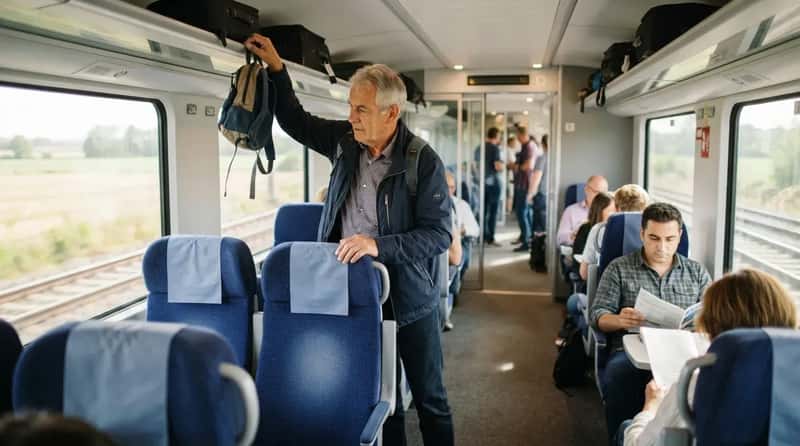
Seat choice is rarely random. Many older riders go for an aisle seat, a spot near the door, or a seat close to the restroom. An aisle seat means easier standing, and a seat near the door means a shorter walk when the stop comes.
These riders are mapping out the whole trip before the train moves. Here’s the twist for newer travelers: many give up the scenic window seat on purpose. They trade the view for confidence, and honestly, it’s a trade that makes the ride better.
Quick Compare
- Aisle seat: Easy to stand up without asking a neighbor to move.
- Near the door: A shorter, safer walk when the stop arrives.
- Near the restroom: Fewer steps down a swaying aisle.
- Window seat: Best scenery, but the hardest spot to leave in a hurry.
#14 – The Small Bag Packed Like a Survival Kit
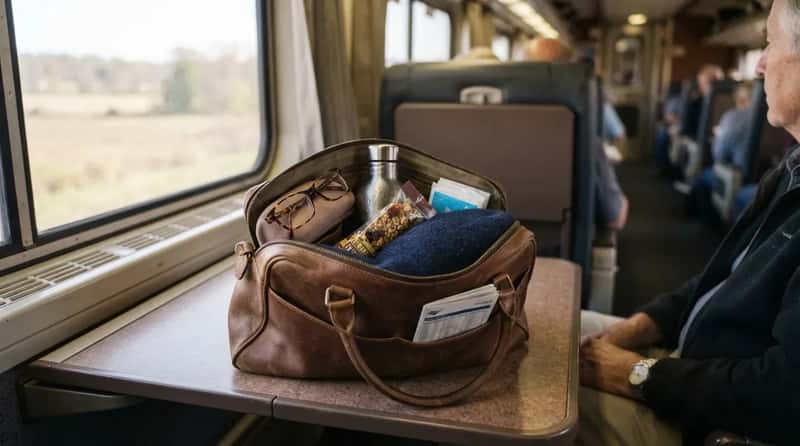
Look at what comes out of a seasoned rider’s bag. Reading glasses, a water bottle, a snack, a sweater, tissues, and sometimes a folded paper schedule. It’s often more organized than a carry-on packed by someone half their age.
It’s a system built on experience with delays and freezing cars. Anyone who has sat on a stopped train for an hour knows exactly why that sweater matters.
#13 – The Hand That Never Leaves the Seat Back
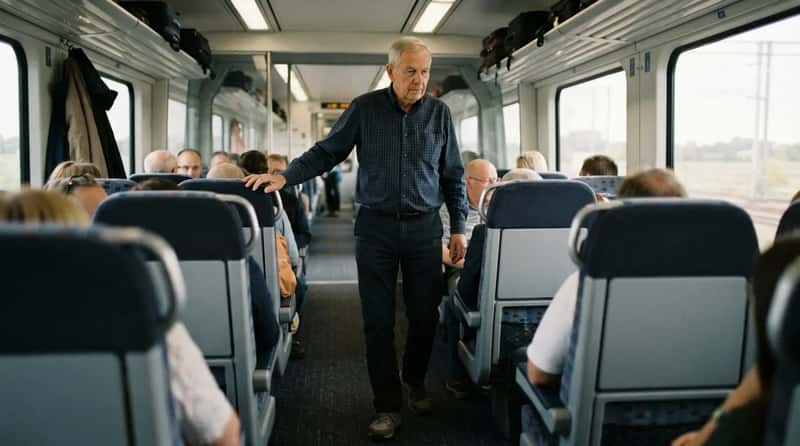
Trains sway, jolt, and shift without warning, especially between cars. Riders over 60 often move down the aisle with one hand touching a seat back the whole way. It looks casual, but it’s a way of keeping steady contact with something solid.
Compare that to the passenger striding down the aisle with a coffee in each hand. Crews have seen which one tends to need a steadying arm when the train lurches, and it isn’t always the one with gray hair.
#12 – The Water Bottle That Comes Out Before They Feel Thirsty
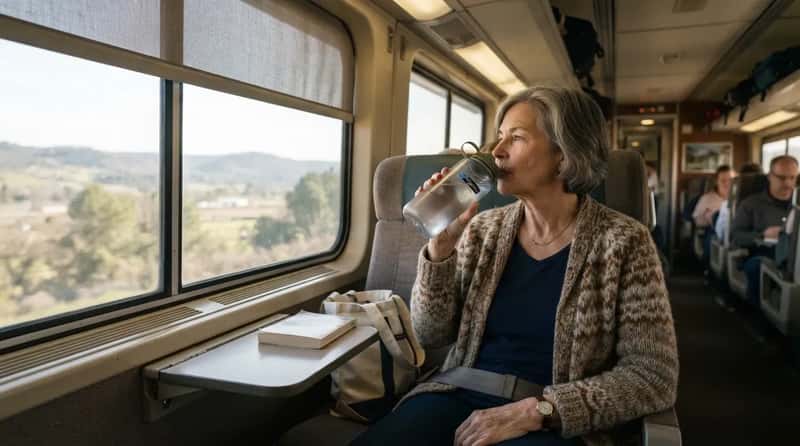
It sounds minor, but conductors notice who sips steadily and who doesn’t. The National Institute on Aging notes that older adults may not feel thirsty as easily, so dehydration can sneak up on them. A long ride in a warm, dry car only makes it easier to miss.
Riders who sip steadily have often learned the lesson the hard way, once. Those who don’t can look flushed or drained well before the halfway point, and a good crew files that away.
#11 – The Pill Organizer Moment Nobody Talks About
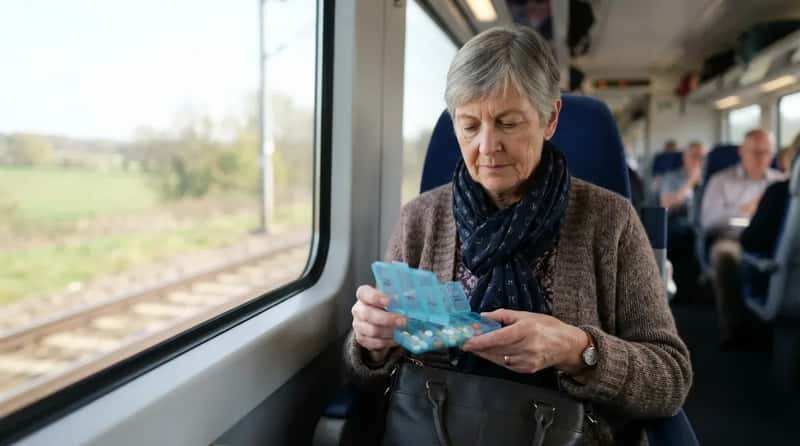
Somewhere around mid-morning, a small plastic case appears. Most adults over 65 take at least one prescription medication, so a travel pill organizer is as normal as a phone charger. It usually vanishes into a purse or pocket within seconds.
The truth is, that tiny moment shows a lot of discipline. Travel scrambles meal times and routines, and these riders plan around that. Crews who happen to notice it tend to read it the same way: this passenger is prepared and in control.
#10 – The Head Tilt That Gives Away How Well They’re Hearing
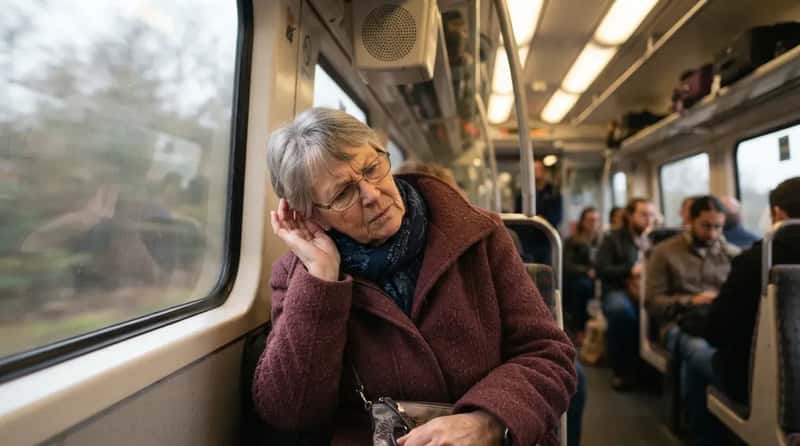
Station announcements can be muffled, rushed, and full of static. Conductors often notice riders leaning toward the speaker, watching the crew’s lips, or asking a neighbor to repeat the stop. The National Institute on Deafness and Other Communication Disorders says about one in three adults aged 65 to 74 has hearing loss, and nearly half of those over 75 do.
So a thoughtful crew slows down and faces the passenger when giving instructions. Many riders also lean on the screen displays, which only helps if the text is big enough to read.
#09 – The Reading Glasses Shuffle Over the Ticket

A familiar scene plays out in every car. A rider pats a pocket, finds the glasses, slides them on, and squints at the ticket. Printed times and seat numbers are small, and near vision gets harder for most people from their 40s onward.
Conductors notice who struggles to find a seat number or read a departure time. Many older riders would rather muddle through than admit a problem, so crews learn to offer help lightly. A friendly “I can read that for you” saves the whole exchange.
Worth Knowing
- The smallest print on a ticket is often the detail riders need most, like the car or seat number.
- Glasses tucked in a bag are the first thing people reach for, and the last thing they can find.
- A quick, casual offer to read it aloud feels kinder than a long explanation.
- Riders who keep glasses in the same pocket every trip rarely have to hunt for them.
#08 – The Phone Ticket Standoff
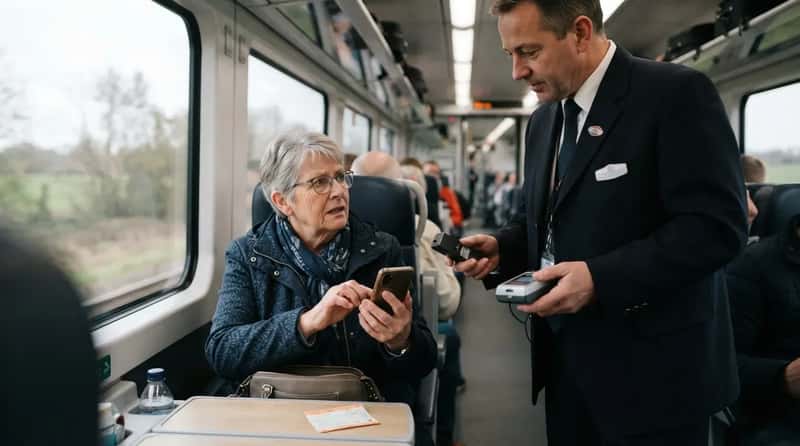
Some of the most stressful moments for older riders involve a screen. Pew Research has long found that older adults adopt smartphones and apps at lower rates than younger groups. But plenty of riders over 60 handle mobile tickets with ease, so crews have learned not to guess.
The riders who struggle most are often the ones whose battery died or whose screen dimmed at the worst moment. A printed copy ends that problem instantly, which is why plenty of veterans carry both.
#07 – The Travel Companion Who Quietly Runs the Trip
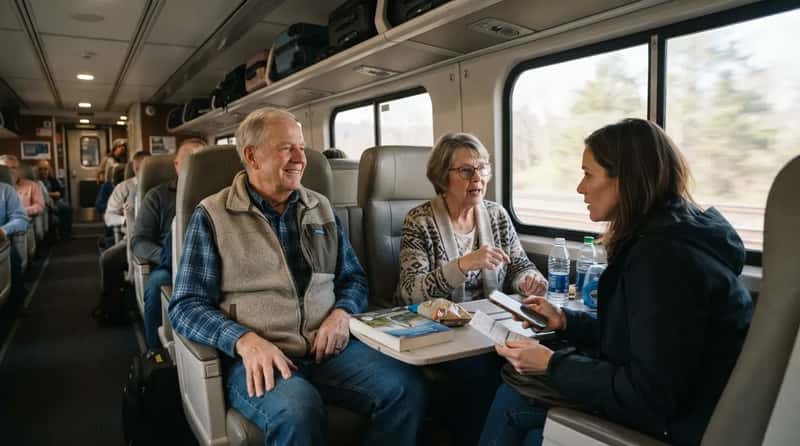
Conductors pay attention to who’s sitting beside an older rider. A spouse, a grown child, or a friend often handles the logistics, from tickets to luggage. Sometimes the person who looks like the “helper” is actually the one being helped.
It works both ways. Plenty of passengers in their 60s and 70s are traveling to care for someone else or to see grandkids. Crews learn to speak to everyone in the group instead of assuming who’s in charge, and that small courtesy changes the whole mood.
#06 – The Senior Fare Question That Trips Everyone Up
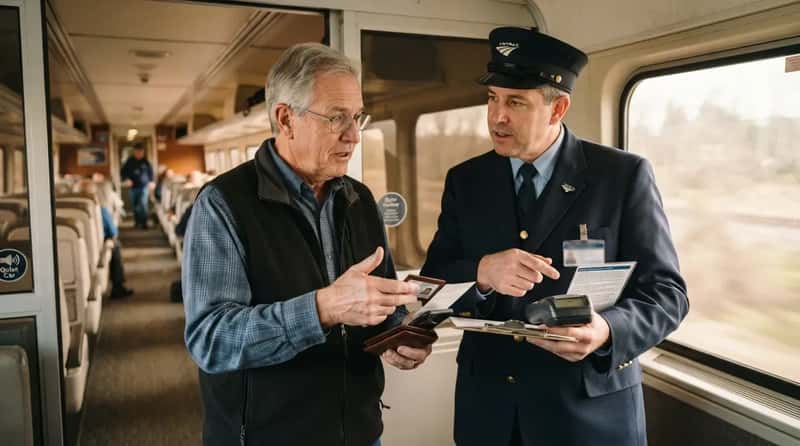
Here’s a detail many riders miss. Senior discounts don’t start at the same age everywhere. Amtrak’s senior fare begins at 65, while some commuter systems start reduced fares at 62.
That means a 63-year-old can board expecting a discount that doesn’t exist on that line. Crews field this question constantly, and it can get awkward fast. The fix is simple: read the fare rules ahead of time.
#05 – The Early Stand-Up That Starts Two Stops Ahead
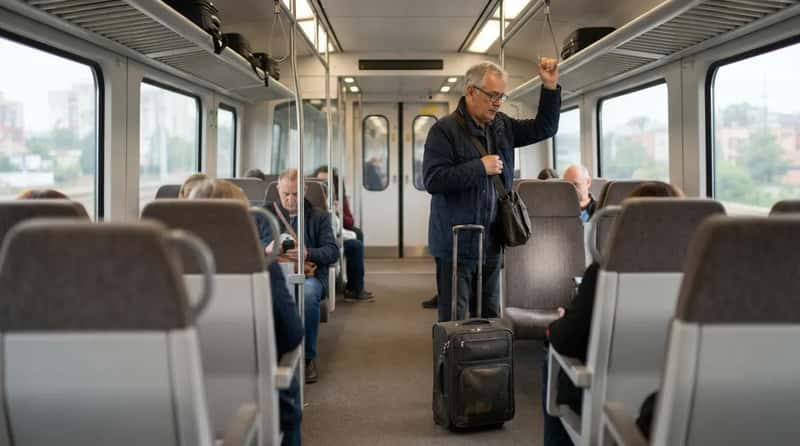
Watch a car long enough and you’ll see it. Some riders stand and gather their things well before the stop. Younger travelers may see that as overkill, but a slow, safe exit simply takes more time than a quick one.
A swaying aisle is not where anyone wants to be when the brakes go on. The rider who gets up early avoids the scramble, and the rider who waits until the last second is usually the one grabbing a pole.
#04 – The Window Watching That Isn’t About the Scenery
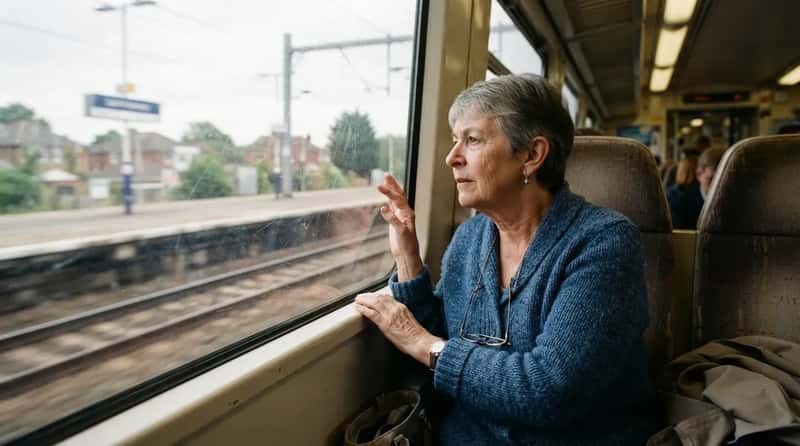
Many older riders keep a close eye on the passing stations. It’s rarely sightseeing. They’re tracking landmarks, checking signs, and counting stops to be sure they don’t miss theirs.
Crews who notice this will often offer a quiet heads-up before the stop. It costs them ten seconds. For the rider, it can lift an hour of low-level anxiety.
#03 – The Rider Who Remembers When It All Looked Different
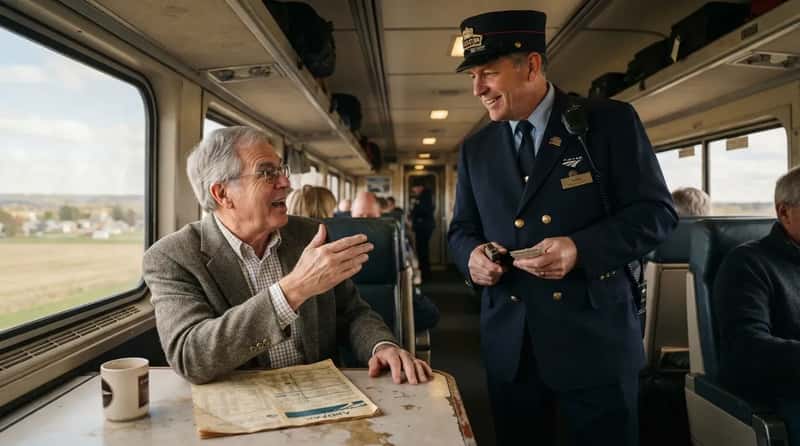
Then there’s the passenger who starts talking before you ask. They remember older stations, older schedules, and a time when dining cars and paper timetables were routine. Passenger rail in the U.S. has changed a great deal over the decades, and some riders have watched all of it.
These stories can be the best part of a crew’s day. A passenger who rode as a kid in the 1960s has seen trains go from everyday transportation to a deliberate choice. Many conductors say these chats are what make the job feel human.
Why It Stands Out
- It turns a routine ticket check into a real conversation.
- The details are firsthand: stations, schedules, and meals that most riders never saw.
- Nearby passengers often lean in, and a quiet car suddenly feels warmer.
- For many crews, it’s the moment the job stops feeling like a checklist.
#02 – The Rider Who Will Never Ask for Help
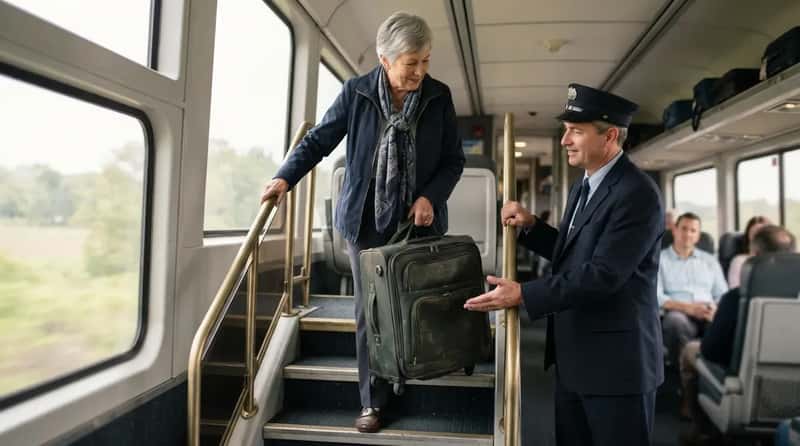
This is the one crews watch for hardest. Some older passengers struggle quietly with a heavy bag, a high step, or a confusing connection, and they’d rather wait than ask. Independence matters a lot to people who have managed their own lives for decades.
The best crews learn to phrase help as a courtesy, not a rescue. That small difference matters more than any announcement. It’s the moment a proud traveler stays proud and still gets where they’re going.
#01 – The Calm of Someone Who Has Done This a Thousand Times
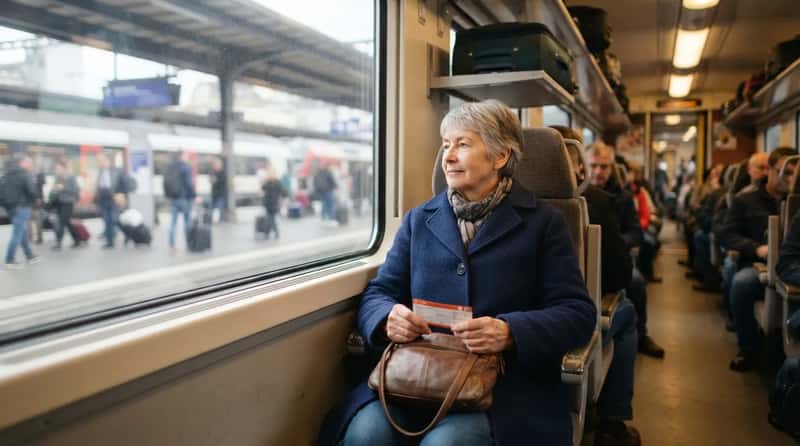
It’s hard to describe, but crews know it right away. This rider sits down, settles in, and doesn’t fuss over delays or detours. They’ve seen late trains, changed platforms, and missed connections, and they know it works out. That calm can spread through a whole car of nervous first-timers.
Conductors don’t just spot a rider’s age. They read preparation, patience, and a lifetime of travel habits, all before the train has pulled out of the station.
The steady hand, the ready ticket, and the early stand-up aren’t signs of frailty. They’re the habits of people who know how a train really works. Next time you ride with a parent or grandparent, watch what they do before the wheels even turn.