You said yes before anyone finished asking.
Keys in hand. Sunglasses already on.
You didn’t volunteer. You claimed it.
There is a version of you that exists only in the driver’s seat. Decisive. Unhurried. Quietly sovereign. That version doesn’t show up at the office. Doesn’t show up at the dinner table when everyone is talking over each other. Doesn’t show up when the calendar is a color-coded cage of other people’s schedules.
The identity gap is real. It’s the distance between who you are inside institutional walls – agreeable, deferential, endlessly negotiated – and who you become when the road opens up and no one can vote on which lane you take.
Most people call this a preference. A quirk. “Oh, she just likes to drive.” But preferences don’t explain the almost visceral relief you feel when you settle into that seat. Something deeper is happening. Something that has very little to do with the car and everything to do with the self.
1. The Locus Shift
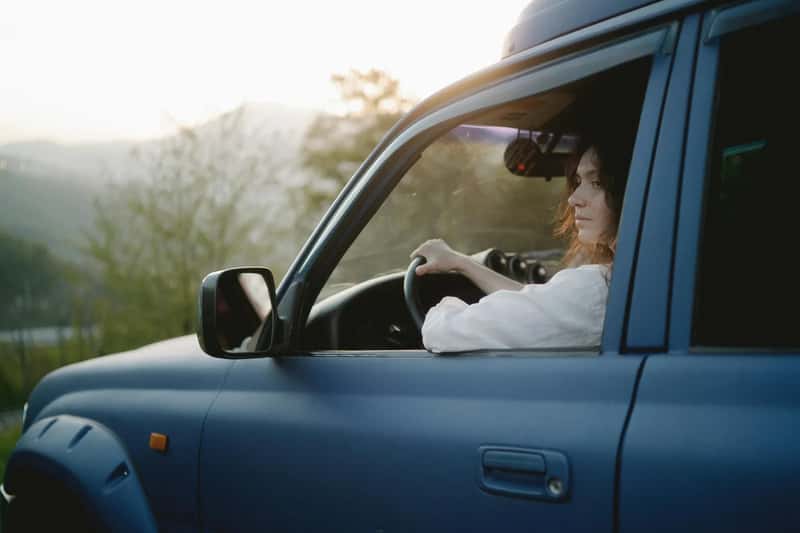
Every day, the world negotiates your autonomy away from you in small, polite increments.
A meeting you didn’t need to attend. A decision made above your head. A detour through someone else’s priority.
The psychology of choice suggests that exercising genuine autonomy over consequential decisions strengthens internal locus of control – the belief that outcomes result from one’s own actions rather than external forces.
The driver’s seat is one of the last remaining arenas of genuine consequential choice in a modern life over-managed by consensus.
You choose the speed. The route. The rest stop. The radio.
No one approves the decision. No one revises it in a follow-up email. A controlling context results in autonomy frustration, accompanied by a series of negative outcomes, from decreased autonomous motivation to lower task engagement. The road breaks that loop. Every mile is evidence that causality still runs through you.
Not around you. Through you.
That distinction, small on the surface, is enormous beneath it.
2. The Passenger Problem
Being a passenger is not simply a physical state.
It is a psychological condition.
In the passenger seat, you watch the road happen. You observe the turns being made. You adjust to someone else’s rhythm, someone else’s tolerance for speed, someone else’s willingness – or unwillingness – to stop.
Psychologists have found that people with a high need for autonomy often feel constrained by the rigid schedules and lack of control that come with flying. The same is profoundly true of sitting passenger on a road trip.
The anxiety is not about safety. It is not about trust in the other driver.
It is about authorship.
When you are not driving, you are not writing the story. You are a character in someone else’s narrative, watching the landscape scroll past a window you did not choose to look out of. Behind the wheel, you’re faced with trust, risk, and the unpredictable actions of total strangers. But you’re the one making the calls. That weight is not a burden. It is a relief.
3. The Temporary Identity
There is a version of yourself that only exists in motion.
Not the self that has a job title. Not the self that has a role in the family system. Not the self that other people’s expectations have slowly sculpted into a shape that fits the room.
This is the road self. Quieter. Sharper. More honest.
Travelling alone removes external influences and expectations. Every decision, big or small, comes from your own preferences. This clarity helps surface who you are when you are not performing a role or responding to others’ expectations.
The driver on a group road trip achieves a version of this even in company.
Because the wheel is a container. A boundary. It says: this seat is mine, this decision is mine, this three hundred miles is mine. The social dynamic of the car shifts around the driver. The driver sets the cadence. The driver decides when the silence is comfortable enough to keep.
It is a temporary identity. But temporary doesn’t mean false. Sometimes it’s the truest one you’ve got.
4. The Exit Strategy
Consider what it means to always know where the exit is.
Control-seeking behavior – the kind that makes a person volunteer for the wheel before anyone else can – is often rooted in something quieter than ambition. It’s rooted in a low-grade, ever-present fear of being trapped.
Individuals with a high need for control show characteristics such as assertiveness, decisiveness, and activity. They further prefer to make decisions alone, and they might even try to manipulate situations to ensure a given outcome.
The driver always has the exit strategy.
The driver can pull over. Can reroute. Can choose to stop for gas at a different station just because something about the first one felt wrong. No explanation required. No committee vote. The driver answers to the road, and the road doesn’t ask for justification.
This is not control for control’s sake. It is the architecture of psychological safety. The door you can always reach. The window that is always yours to open.
5. The Confession
I need to tell you something.
A few years ago, I sat passenger on a seven-hour drive and spent roughly four of those hours quietly cataloguing every decision the driver made that I would have made differently. The route. The speed. The playlist. The choice to stop at a chain restaurant when there was clearly a diner two miles further that would have been better.
I was not anxious about safety. I was anxious about authorship.
I understood, somewhere around hour five, that I was not actually upset about the diner. I was upset because the trip – an event I had been looking forward to for weeks – was not mine. I was present in it but not author of it. And the distinction was making me quietly, irrationally miserable.
Solo travel dramatically reshapes one’s identity by shedding attachments and inner roles. Each independent decision in travel, from routes to meals, conveys preferences.
That is the truth about the driver. The driver is not being helpful. The driver is being honest.
6. The Pace as Language
The pace you choose when you drive is not arbitrary. It is a language.
The driver who lingers at forty-five miles per hour through a small town they’ve never been to before is saying something. The driver who pushes through without stopping is saying something else. Neither is wrong. Both are fluent.
Anyone who chooses to drive cross-country instead of taking a three-hour flight has made peace with delayed gratification. This patience often extends to other life areas. These are typically the people who can work on long-term projects without needing immediate results, who understand that good things take time.
The pace of a journey is an expression of a self.
To be controlled in pace – to be passenger to someone else’s urgency or laziness – is to be translated into someone else’s language. The words almost fit. But not quite. And after enough hours of almost-fit, the dissonance becomes exhaustion.
The driver gets to speak their native tongue. Mile by mile. Exit by exit. Stop by quiet stop.
7. The Control Paradox
Here is the strange thing about the person who always volunteers to drive.
They are not, in the clinical sense, a control freak.
They are not trying to dominate the trip. They are not trying to deny their companions agency. They are trying to create a pocket of the world where their own choices are visible to them. Where the feedback loop between decision and consequence is immediate and clean.
Driving is more than getting from point A to point B. It’s a stage for our humanity, a daily test of how we navigate chaos, connection, and control.
Psychologically, a lack of autonomy can lead to depression and anxiety, resulting in increased emotional distress, low self-worth, and a diminished sense of control over life.
The driver is not avoiding that. The driver is inoculating against it.
The road is the one context in which effort and outcome are still meaningfully connected. You press the accelerator. The car moves. You turn the wheel. The world adjusts. It is immediate. It is honest. It is, in the most elemental psychological sense, what it means to have agency.
8. The Social Architecture of the Car
There is a social contract inside every moving vehicle.
Passengers defer to the driver. Not always graciously. Not always consciously. But structurally, this is true. The driver sets the temperature. The driver decides when a silence is comfortable or awkward enough to fill with music.
According to Self-Determination Theory, individuals’ psychological wellbeing and life meaning enhancement stem from fulfilling the three basic psychological needs: autonomy, competence, and relatedness.
The driver satisfies all three simultaneously.
Autonomy: the route is theirs. Competence: the successful navigation of a seven-hour drive is no small thing. Relatedness: the car is an unusually intimate space, and the driver is its quiet architect. Those epic road trip conversations that somehow never happen in regular life – there’s something about being in a car together for hours that breaks down barriers. The driver engineered the conditions for that to happen.
The driver is not in control of the journey. The driver is in conversation with it. There is a significant difference.
9. The Return Problem
Here is something no one talks about.
The driver on the way there is often a different person than the driver on the way back.
The outbound journey is expansion. Possibility. The identity that exists in the gap between home and destination.
The return is contraction. The road is the same but running in reverse. And the self that got loose out there is already beginning to be re-contained by the approaching familiarity of ordinary life.
Your identity may have expanded during travel, but your environment at home may not have changed. The discomfort signals growth and the need to intentionally integrate your new experiences into daily life.
The driver on the return trip drives differently. A little faster. More purposeful. The stops fewer. Not because they want to get home. Because the space is closing.
The pace is still theirs. But what they’re protecting is changing. On the way out, it was possibility. On the way back, it’s the memory of who they were for those three days when the road was theirs and the schedule was loose and the self that doesn’t fit the room finally had room.
10. The Weight of the Wheel
The wheel is not a burden.
This is the final truth, and it is heavier than it looks.
Every person who volunteers to drive – who reaches for the keys before the question is fully formed, who adjusts the mirrors with a kind of quiet ceremony, who pulls out of the driveway with a specific exhale – is doing something that has very little to do with the trip and everything to do with a self that needs, with some urgency, to be the author of its own movement.
Counterintuitively, placing yourself in uncertain situations ultimately builds greater confidence. Travel increases our tolerance for uncertainty and enhances our psychological flexibility, contributing to a stronger sense of self.
The deeper reason for travel may be identity enhancement, recognition for going places and seeing things. But for the driver, the destination was never really the point. The point was the choosing. The point was the mile where no one could override the decision. The point was the specific, irreplaceable experience of a self moving through the world at its own chosen speed.
Driving transforms a mundane task into a theater of human psychology. And the person behind the wheel is not performing for an audience. They are, for the first time in perhaps a long time, performing only for themselves.
The weight of the wheel is the weight of a life that is, for these hours, genuinely yours.
There is a particular quality to the light at sixty miles per hour through an open stretch of nowhere. The trees come and go. The signs promise towns you’ll never stop in. The sky is doing something enormous and slow that you only notice because you are moving just fast enough to see the whole of it.
The person in the passenger seat might be looking at their phone. Might be asleep. Might be having a conversation about something that will be forgotten before the next rest stop. The driver is not doing any of those things. The driver is present in a way that the rest of the car is not, because the driver is required to be. The road demands full residency. And that demand, paradoxically, is the most restful thing in the world for a mind that has spent weeks living at a forced half-attention across seventeen open browser tabs of other people’s emergencies.
You don’t always know, in the moment, why you reached for those keys. You told yourself it was practical. Told yourself it was easier. But somewhere between the second hour and the third, when the conversation in the back seat fades and the road opens up and the only sound is the hum of something working exactly as it should – you know. You’ve always known. This was never about driving. It was about the one place left where the pace of your life is set by your own hands, your own instincts, your own quiet and unhurried sense of who you are and where, exactly, you are willing to go.