Fossils reveal a prehistoric crocodile relative that walked on two legs – Image for illustrative purposes only (Image credits: Unsplash)
New Mexico – A fossil discovery at a well-known quarry has added a striking new member to the family tree of early archosaurs. Researchers have described a shuvosaurid that lived 212 million years ago and moved on two legs, a posture more commonly associated with dinosaurs than with crocodile relatives. The find underscores how diverse locomotion strategies were among Triassic vertebrates long before the rise of the dinosaurs that would later dominate.
Distinctive Features of the New Species
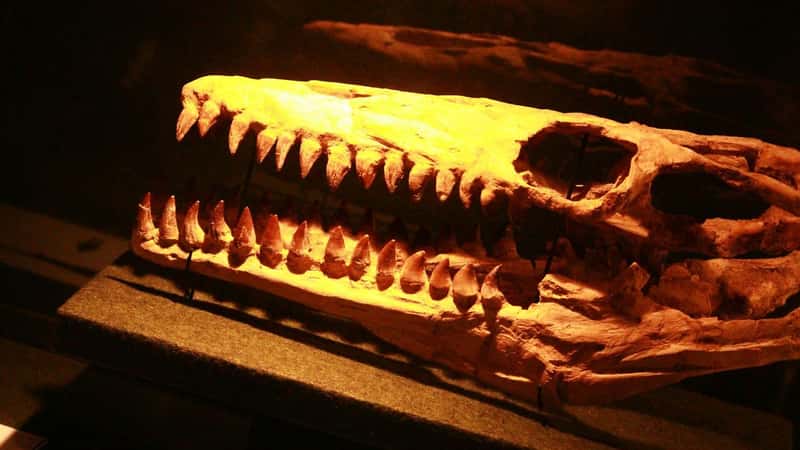
The animal, named Labrujasuchus expectatus, stood out immediately from its crocodile kin. It possessed a beak instead of teeth, unusually small forelimbs, and clear adaptations for upright, two-legged movement. These traits set it apart from modern crocodilians and from most other known shuvosaurids, which were typically quadrupedal. Fossil bones recovered at the site show a lightweight build consistent with bipedal habits. The combination of a toothless beak and reduced arms suggests a lifestyle that may have involved foraging or rapid movement across open terrain. Such anatomy challenges assumptions that bipedalism was largely a dinosaurian innovation during this period.
Context of the Hayden Quarry Find
The specimens came from the Hayden Quarry at Ghost Ranch, a site renowned for its rich Late Triassic fossils. Sediments there have already yielded numerous dinosaur remains, allowing direct comparison between the new shuvosaurid and contemporary two-legged dinosaurs. The shared environment indicates that bipedal forms occupied similar ecological niches at the time. Excavations at the quarry continue to produce material that refines the picture of Triassic ecosystems in what is now the southwestern United States. The presence of both dinosaur and non-dinosaur archosaurs in the same layers highlights a period of evolutionary experimentation before dinosaurs achieved their later dominance.
Etymology and Research Perspective
The genus name draws from an older Spanish designation for the Ghost Ranch area, while the species name serves as a deliberate reference to an earlier shuvosaurid discovery. Study co-author Nathan Smith noted that the first described shuvosaurid was originally misclassified as a dinosaur and named Shuvosaurus inexpectatus to emphasize how unexpected such a creature seemed in Late Triassic deposits. The new name flips that surprise into an acknowledgment that researchers had anticipated finding additional shuvosaurid material at the site. This naming choice reflects the incremental nature of paleontological work, where each specimen builds on prior expectations and occasional surprises. The research team emphasized that the find fits within a broader pattern of shuvosaurid distribution across what was then the supercontinent Pangaea.
Broader Implications for Triassic Vertebrates
The discovery adds weight to the view that bipedalism evolved multiple times among early archosaurs. It also illustrates how crocodile-line reptiles experimented with body plans that later became rare or lost in their descendants. Continued study of the Ghost Ranch material may clarify whether these traits were more widespread than currently recognized. What matters now is how such fossils help calibrate the timing and drivers of locomotor diversity in the Triassic. Further analysis of bone microstructure and associated fauna could reveal more about the daily lives of these animals and the selective pressures that favored upright posture in certain lineages.